The Kabala of Numbers (1911)

 74
74

The Kabala of Numbers (1911)
Sepharial's The Kabala of Numbers offers a meticulously structured approach to numerology, a welcome departure from more loosely compiled guides. The 1911 publication date situates it firmly within the early 20th-century occult revival, making it a valuable historical document. Its strength lies in the systematic method for calculating and interpreting numbers derived from both names and birth dates, providing a clear framework for analysis. The author's methodical presentation, including tables and detailed explanations for each digit, aids in practical application. However, the text's inherent limitation is its adherence to a specific, somewhat rigid, interpretation of numbers. For instance, the section detailing the 'Path of Life' derived from birth dates, while precise, offers little room for nuanced individual expression beyond the prescribed numerical framework. The book provides a robust, if sometimes dogmatic, system for understanding personal destiny through numerical analysis. It serves as a foundational text for those committed to a systematic exploration of numerological principles.
📝 Description
74
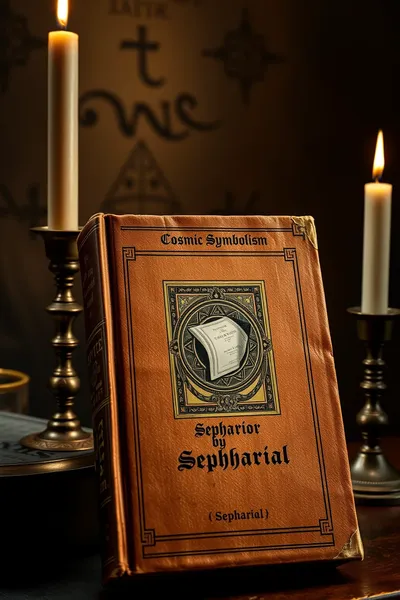
Sepharial published The Kabala of Numbers in 1911, detailing a Pythagorean numerological system.
This 1911 work by Sepharial outlines a numerological system derived from Pythagorean principles and their esoteric extensions. It moves beyond simple number associations to analyze the symbolic weight and energetic quality of digits one through nine, along with the master numbers eleven and twenty-two. The book provides concrete methods for using these ideas to interpret personality, life paths, and the patterns behind events. Sepharial includes tables and charts to aid in calculating and analyzing names and birth dates, aiming to offer insight into both the individual and the wider cosmos.
The text is written for individuals seriously studying numerology, occult philosophy, and esoteric symbolism. Those familiar with basic Kabbalistic or Pythagorean concepts will find a focused, applied numerological framework here. It is suitable for practitioners seeking to enhance divinatory or predictive abilities through numerical analysis, or for those interested in historical occult methods. While its practical and divinatory orientation may not suit purely academic or historical inquiries, the book remains a notable historical document in the field.
Published in 1911, The Kabala of Numbers appeared during a surge of Western interest in occultism and esoteric thought. This period saw a resurgence of Hermeticism, Kabbalah, and various divinatory arts, influenced by movements like Theosophy and the Hermetic Order of the Golden Dawn. Sepharial, an established astrologer and occultist, contributed to this intellectual climate. His work built upon existing numerological frameworks, including those influenced by figures such as Eliphas Lévi, aiming to organize these concepts for a wider audience.
💡 Why Read This Book?
• Gain a systematic method for calculating personal numerological profiles from birth dates and names, as detailed in Sepharial's specific tables for letter-to-number conversion. • Understand the foundational Pythagorean and Kabbalistic influences on early 20th-century numerology, as presented in the context of 1911 occult thought. • Learn to interpret the unique symbolic meanings and vibratory essences assigned to each digit from one to nine, as described in Sepharial's detailed chapter-by-chapter analysis.
⭐ Reader Reviews
Honest opinions from readers who have explored this book.
❓ Frequently Asked Questions
What is Sepharial's original publication date for The Kabala of Numbers?
The Kabala of Numbers was first published in 1911. This places it within a significant period of occult revival and esoteric study in the early 20th century.
How does Sepharial's numerology differ from modern systems?
Sepharial's system is deeply rooted in Pythagorean and Kabbalistic traditions prevalent around 1911. It emphasizes a more direct correlation between letters, numbers, and specific life paths, often with less emphasis on psychological nuance found in some contemporary numerology.
What is the 'Life Number' in Sepharial's system?
The 'Life Number' in The Kabala of Numbers is calculated from a person's birth date. Sepharial uses this number, along with others derived from names, to interpret character, destiny, and life's patterns.
Is The Kabala of Numbers suitable for beginners in numerology?
It is suitable for beginners who are serious about learning a systematic, historical approach. However, its dense explanations and specific framework may require dedicated study compared to more introductory guides.
What is the Kabbalistic influence on this book?
Sepharial integrates Kabbalistic concepts, particularly the numerical values assigned to Hebrew letters (Gematria), although his primary focus is on the Pythagorean numerical system and its application to Western names and dates.
Does the book discuss the master numbers 11 and 22?
Yes, The Kabala of Numbers (1911) does address master numbers, specifically detailing the significance and interpretation of eleven and twenty-two within its numerological framework.
🔮 Key Themes & Symbolism
Numerical Vibrations and Essence
Sepharial posits that each number, from one to nine and the master numbers eleven and twenty-two, possesses a unique vibratory essence that influences individuals and events. This work details these specific vibrations, explaining how the numerical value of a birth date or name can reveal inherent characteristics, potentials, and challenges. The exploration moves beyond simple mathematical assignment, suggesting a cosmic language where numbers act as conduits for universal energies and archetypal forces, guiding the practitioner toward understanding the subtle mechanics of existence.
Personal Destiny Calculation
A central theme is the calculation of personal destiny through numerological analysis of both birth dates and names. Sepharial provides explicit methods, including tables for converting letters into numerical values, to derive a 'Life Number' and a 'Destiny Number'. These calculations are presented as keys to unlocking an individual's karmic patterns, inherent strengths, and the unfolding trajectory of their life. The book serves as a practical manual for self-understanding and for analyzing the potentials and challenges inherent in one's unique numerical blueprint.
Pythagorean and Kabbalistic Roots
The work is deeply grounded in the ancient Pythagorean tradition, which asserted that 'all is number,' and draws upon esoteric interpretations of Kabbalah. Sepharial synthesizes these ancient streams of thought, applying them to the context of early 20th-century esoteric inquiry. The numerical correspondences and symbolic meanings ascribed to digits are presented as part of a larger, interconnected mystical cosmology that seeks to reveal divine order through mathematical principles, bridging the material and the spiritual realms.
Applied Numerological Interpretation
Beyond theory, The Kabala of Numbers emphasizes practical application. Sepharial guides readers through the process of interpreting the numbers derived from personal data, offering specific insights into personality traits, relationships, and future probabilities. The book's systematic structure facilitates this applied learning, making it a working tool for those seeking to utilize numerology for divination, self-discovery, or understanding the underlying patterns governing human experience and the cosmos.
💬 Memorable Quotes
Direct passages from the work, attributed to the author.
“The number One is the beginning of all numbers; it is the symbol of unity, of the divine, of the origin of all things.”
— This highlights Sepharial's foundational view of '1' as the prime mover and ultimate source, connecting the numerical to the divine and the genesis of creation.
“Two represents duality, partnership, and the principle of opposition, essential for manifestation.”
— This captures the essence of '2' as a number of balance and interaction, essential for the unfolding of any phenomenon which requires more than a singular point.
“Each digit vibrates with a specific frequency, influencing the material and spiritual planes.”
— This interpretation expresses Sepharial's core thesis that numbers are not static symbols but dynamic forces carrying energetic signatures that affect reality.
💡 Key Ideas
Editorial paraphrase of the work's core concepts — not direct quotes.
The calculation of the Destiny Number from the name reveals the inherent qualities and the path one is destined to walk.
This paraphrased concept emphasizes the predictive and analytical power Sepharial attributes to name numerology, linking it directly to an individual's fated journey.
Master Numbers eleven and twenty-two possess a higher potential and a greater challenge than the single digits.
This summarizes Sepharial's acknowledgement of the amplified power and difficulty associated with the master numbers within his numerological system.
🌙 Esoteric Significance
Tradition
This work is firmly rooted in the Western Esoteric Tradition, specifically drawing from Pythagorean numerology and its later Kabbalistic interpretations. It fits within the Hermetic stream that seeks to understand the universe through symbolic correspondences and mathematical principles. Sepharial synthesizes these ancient ideas into a systematic framework for personal divination and self-understanding, departing from purely theoretical Kabbalah by offering concrete methods for applying numerical analysis to names and birth dates.
Symbolism
Key symbols include the individual digits from 1 to 9, each representing archetypal forces and specific vibratory qualities. The number 1 signifies unity and leadership, while 2 embodies duality and partnership. The master numbers 11 and 22 are treated separately, representing higher spiritual potentials and significant challenges. The conversion of letters in names to their numerical equivalents also acts as a symbolic bridge, translating the spoken word into the language of number and cosmic influence.
Modern Relevance
Sepharial's systematic approach continues to influence contemporary numerologists who seek a structured, historical method. Modern practitioners of Western Esotericism, particularly those interested in the intersection of Kabbalah, astrology, and divination, often reference his work. The emphasis on calculating 'Life Numbers' and 'Destiny Numbers' remains a common practice in many numerological schools, demonstrating the enduring appeal of his analytical framework for self-discovery.
👥 Who Should Read This Book
• Students of Western Esotericism seeking to understand the practical application of Kabbalistic and Pythagorean number systems as developed in the early 20th century. • Aspiring numerologists looking for a foundational text that provides a systematic method for calculating and interpreting numbers from names and birth dates. • Occult historians and researchers interested in the intellectual currents of the early 1900s and the work of prominent esotericists like Sepharial.
📜 Historical Context
The Kabala of Numbers, published in 1911, emerged from a fertile ground of esoteric revival in late Victorian and Edwardian England. This era saw a surge in interest in spiritualism, Theosophy, and occult orders like the Hermetic Order of the Golden Dawn, which explored Kabbalistic and Hermetic traditions. Sepharial, a prolific writer and occultist, was a significant figure in this milieu, alongside contemporaries such as Aleister Crowley and Arthur Edward Waite. His work sought to systematize numerological practices, drawing heavily from Pythagorean thought and earlier Kabbalistic interpretations of letters and numbers. This period also witnessed a critical engagement with ancient wisdom traditions, as scholars and mystics alike attempted to reconcile them with modern scientific and philosophical developments. Unlike purely academic treatises on ancient history, Sepharial's book offered a practical, divinatory application of these systems to everyday life and personal destiny.
📔 Journal Prompts
The core vibration of your Life Number and its manifestation.
Sepharial's interpretation of the number 7 and its personal resonance.
The influence of consonant versus vowel numerical values in your name.
Applying the 'Path of Life' concept from your birth date.
The meaning of repeating numbers in your personal calculations.
🗂️ Glossary
Life Number
A number derived from the sum of the digits in one's birth date, interpreted by Sepharial to reveal inherent character traits and life path potentials.
Destiny Number
Calculated from the numerical values of the letters in a person's full name, this number is interpreted to represent their path, opportunities, and challenges in life.
Vibratory Essence
The concept that each number possesses a unique energetic frequency and symbolic meaning that influences individuals and events, as detailed by Sepharial.
Pythagorean Numerology
A system of numerology based on the teachings attributed to the ancient Greek philosopher Pythagoras, positing that numbers hold mystical significance and govern the universe.
Kabala
A complex system of Jewish mysticism concerned with the nature of God and the universe, often involving numerical interpretations of Hebrew scripture (Gematria).
Master Numbers
In numerology, specific double-digit numbers (commonly 11, 22, and sometimes 33) that are believed to possess greater power, potential, and challenge than single digits.
Gematria
A method of assigning numerical values to letters or words in Hebrew (and sometimes other languages) to find hidden meanings or connections, influencing Kabbalistic numerology.
🔮 Readers Also Liked
Browse all →








More by Sepharial
All books →




More Free Occult Philosophy Books
View all →