Handbook for Hot Witches
 80
80

Handbook for Hot Witches
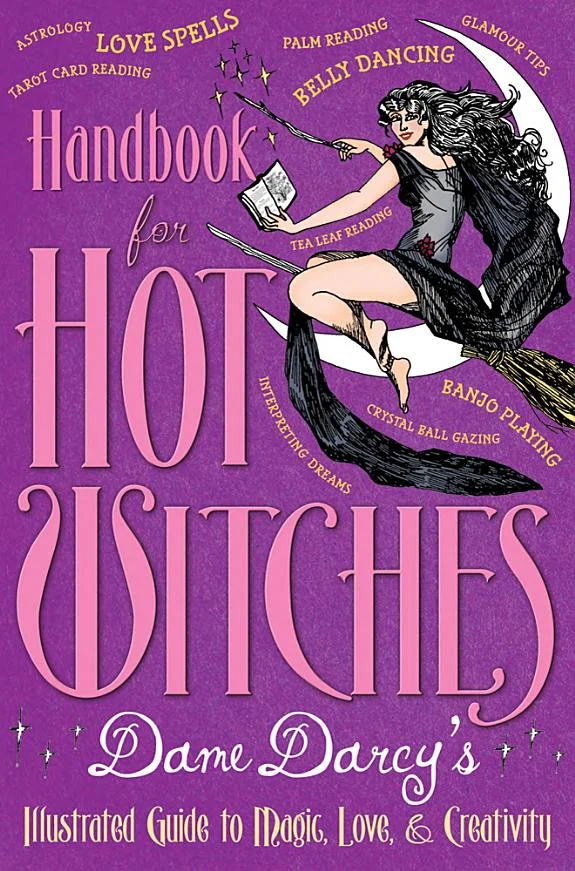
Dame Darcy's *Handbook for Hot Witches* is a charmingly illustrated introduction that avoids the often dense prose found in many esoteric texts. Darcy's distinctive artistic vision imbues the work with a unique personality, making abstract concepts feel more tangible. The sections on dream interpretation and the Wheel of the Year are particularly well-rendered, offering clear guidance for beginners. However, the book's brevity sometimes leaves one wishing for deeper exploration of certain topics; for instance, the discussion on crystal ball gazing, while visually appealing, could benefit from more practical exercises. Despite this, the work's strength lies in its accessibility and the personal, artistic flair it brings to witchcraft education. It is a solid, visually engaging entry point for young witches.
📝 Description
80
Dame Darcy's Handbook for Hot Witches, published in 2012, is an illustrated primer on Wicca.
This handbook by artist Dame Darcy uses a blend of text and original artwork to introduce individuals to Wicca and witchcraft. Originally released in 2012, it covers basic concepts and practices for those new to the craft. The book aims to make magical principles and traditions accessible, particularly for younger readers interested in nature-based spirituality and personal ritual. It assumes no prior knowledge, offering a gentle entry point for exploring divination, meditation, and ethical considerations within witchcraft. The work is also a resource for parents or educators seeking age-appropriate materials on paganism for children.
Handbook for Hot Witches emerged in the early 2010s, a time when witchcraft and paganism saw increased public interest. While it avoids academic discussion, its visually oriented approach reflects a modern trend in accessible guides for practitioners. It follows in the tradition of earlier Wiccan how-to books but is distinguished by Darcy's unique artistic style. The handbook introduces readers to fundamental elements of modern witchcraft, including the Wheel of the Year, dream interpretation, scrying with tools like crystal balls, and the importance of connecting with nature and the divine.
Published in 2012, Handbook for Hot Witches situates itself within contemporary Neopagan and Wiccan traditions. It follows a lineage of introductory guides that aim to demystify witchcraft for a new generation. The book's visual emphasis and focus on accessible practices echo trends in modern spiritual movements that value personal experience and connection to the natural world. It provides a foundation in core concepts such as seasonal cycles and divination, drawing from established Wiccan frameworks while presenting them through Dame Darcy's distinct artistic lens.
💡 Why Read This Book?
• Gain an accessible, visually rich introduction to Wiccan holidays and the Wheel of the Year, presented with Dame Darcy's unique art, offering a learning experience distinct from text-heavy alternatives. • Understand the basics of dream interpretation and scrying using a crystal ball, concepts presented with clear illustrations that aid comprehension for those new to divination practices. • Explore foundational meditation techniques and the symbolic meaning of the 2012 publication year within the context of modern witchcraft literature, providing specific historical and practical takeaways.
⭐ Reader Reviews
Honest opinions from readers who have explored this book.
❓ Frequently Asked Questions
What age group is the Handbook for Hot Witches primarily intended for?
The handbook is primarily designed for young Wicca enthusiasts and beginners interested in witchcraft. Its accessible language and illustrative style make it suitable for younger readers exploring spiritual and magical concepts for the first time.
When was Dame Darcy's Handbook for Hot Witches first published?
Dame Darcy's Handbook for Hot Witches was first published on August 21, 2012. This places it within the early 2010s wave of accessible witchcraft literature.
What kind of topics are covered in the book?
The book covers fundamental topics for new witches, including holidays, dream interpretation, crystal ball gazing, and meditation, all presented through a combination of text and original artwork.
Does the book require prior knowledge of witchcraft?
No, the handbook is intended as a primer and assumes little to no prior knowledge. It aims to introduce core concepts in a straightforward and engaging manner for absolute beginners.
What is the artistic style of the illustrations in the book?
Dame Darcy is known for her distinctive, often gothic and folk-art-inspired illustration style. The artwork in the handbook is integral to its presentation, adding a unique visual dimension to the educational content.
Is this book suitable for adult beginners as well?
Yes, while geared towards younger enthusiasts, the clear explanations and foundational concepts make it a valuable and engaging resource for adult beginners seeking an introduction to witchcraft.
🔮 Key Themes & Symbolism
The Wheel of the Year
The book emphasizes the cyclical nature of time as observed in Wiccan traditions, detailing the eight major festivals that mark the solar year. These include Samhain, Yule, Imbolc, Ostara, Beltane, Litha, Lughnasadh, and Mabon. Each festival is presented with its significance and potential practices, encouraging readers to connect with the seasonal shifts and the natural world's rhythms. This theme grounds magical practice in terrestrial cycles, a core tenet of many earth-based spiritualities.
Dream Interpretation
Dreaming is presented as a vital channel for intuition and spiritual communication. The handbook guides readers on how to approach their dreams with intention, encouraging the keeping of a dream journal. It explains how symbols and narratives within dreams can offer personal insights, guidance, or warnings. This section highlights the subjective and personal nature of dream work within a magical framework.
Divination Tools
Specific tools for insight are introduced, with a focus on crystal ball gazing (scrying). The book explains the process, suggesting it's less about inherent power in the object and more about focused intent and visualization. It encourages practice and patience, framing divination as a skill to be cultivated rather than an innate gift, making esoteric practices approachable.
Meditative Practice
Meditation is presented as a reference for developing inner focus, connecting with one's higher self, and preparing for magical work. The handbook offers introductory techniques for quieting the mind and cultivating awareness. This theme underscores the importance of inner discipline and mental clarity in the practice of witchcraft, aligning with contemplative traditions.
💬 Memorable Quotes
Direct passages from the work, attributed to the author.
“Keep a dream journal.”
— This simple instruction underscores the book's practical approach. It highlights the value placed on personal experience and record-keeping as essential tools for self-discovery and magical development within the craft.
“The Wheel of the Year turns.”
— This phrase captures the cyclical, nature-based cosmology central to Wicca. It serves as a reminder of the constant flow of seasons and energies, a foundational concept for understanding the timing of rituals and magical work.
“Focus your intent.”
— This directive is crucial for any magical practice. It emphasizes that the practitioner's mental energy and clear purpose are key drivers in manifesting desired outcomes, whether in divination or spellcraft.
“Crystals help you see.”
— This is a simplified explanation of scrying with crystals. It suggests that these tools act as focal points, aiding the practitioner in accessing inner vision or intuitive insights rather than possessing inherent magical power themselves.
“Listen to your inner voice.”
— This advice points to the importance of intuition and inner knowing in witchcraft. It encourages self-trust and discernment, suggesting that personal guidance is a primary source of wisdom.
🌙 Esoteric Significance
Tradition
This work aligns with modern eclectic Wicca, a tradition that draws broadly from Neopaganism, nature spirituality, and ceremonial magic. It departs from stricter, more traditional forms of Wicca (like Gardnerian or Alexandrian) by emphasizing individual interpretation and artistic expression over rigid dogma or lineage. Its focus on practical, accessible techniques places it within the lineage of popular 'how-to' guides for aspiring practitioners seeking a personal spiritual path.
Symbolism
Key symbols include the Wheel of the Year, representing the cosmic and terrestrial cycles that govern life and magic. The crystal ball, while a tool for divination, symbolizes focused consciousness and the potential for inner vision. The act of illustration itself becomes symbolic, translating abstract esoteric concepts into tangible, accessible forms, bridging the gap between the unseen and the seen.
Modern Relevance
Contemporary practitioners, particularly those engaged with social media platforms like Instagram and TikTok for sharing witchcraft content, find resonance in Darcy's visual and accessible approach. The emphasis on personal practice and creative expression aligns with modern trends in spirituality that prioritize authenticity and self-discovery over adherence to strict traditions.
👥 Who Should Read This Book
• Young individuals exploring spirituality and seeking an introduction to Wicca, who will benefit from the book's age-appropriate language and engaging illustrations. • Aspiring witches of any age looking for a foundational, visually-driven primer on core concepts like the Wheel of the Year and basic divination techniques. • Art lovers and collectors interested in Dame Darcy's distinctive illustration style, applied here to esoteric themes, offering a combination of art and practical occultism.
📜 Historical Context
The *Handbook for Hot Witches*, published in 2012, emerged in an era where online resources and visually rich content significantly influenced how esoteric knowledge was disseminated. It followed decades of popularization of Wicca and witchcraft, building on the accessible, gentle approach exemplified by authors like Scott Cunningham in the late 20th century. While not directly engaging with the academic resurgence of pagan studies initiated by scholars like Hutton, Darcy’s work contributed to the broader cultural landscape where witchcraft was becoming more visible and less stigmatized. The book’s artistic, beginner-focused format stood apart from more academic or historically dense texts, catering to a generation accustomed to visually driven media, reflecting a trend towards personalized spirituality and DIY occultism.
📔 Journal Prompts
Reflect on the symbolism of the next upcoming festival on the Wheel of the Year.
Analyze a recent dream using the principles of dream interpretation outlined in the handbook.
Describe your ideal meditation space and posture.
Consider how the concept of 'intent' applies to a non-magical goal in your life.
Explore the visual elements Dame Darcy uses to represent divination.
🗂️ Glossary
Wicca
A modern Pagan religion that typically observes a number of festivals and holidays that celebrate the cycles of nature, often venerating a god and goddess.
Wheel of the Year
The cycle of eight seasonal festivals observed in many Wiccan and Neopagan traditions, marking the solstices, equinoxes, and cross-quarter days.
Scrying
A divination technique involving gazing into a reflective surface, such as a crystal ball or water, to receive visions or intuitive insights.
Dream Journal
A notebook or document used to record dreams upon waking, intended to aid in remembering, analyzing, and interpreting their content.
Meditation
A practice where an individual uses a technique – such as mindfulness, or focusing the mind on a particular object, thought, or activity – to train attention and awareness, and achieve a mentally clear and emotionally calm state.
Intent
In magical practice, the focused will or purpose directed towards a specific outcome; the clear mental aim that guides ritual or spellwork.
Primer
An introductory book or manual serving as a basic guide to a subject.
This book appears in 1 collection
🔮 Readers Also Liked
Browse all →









From the “Crystal Ball Gazing” Collection
View all →






More Free Occult Philosophy Books
View all →