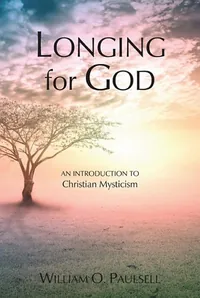
The joy of spiritual growth

 83
83

The joy of spiritual growth
Frank Rose and Robert Maginel's "The Joy of Spiritual Growth" attempts to distill complex spiritual concepts into a usable guide. Its strength lies in its straightforward presentation, particularly in sections detailing practical exercises for self-reflection. The 1999 publication date anchors it within a specific wave of esoteric self-help literature, which can be both a strength and a limitation. While Rose and Maginel offer a clear pathway, the work occasionally feels constrained by the prevailing philosophies of its time, sometimes lacking the deeper nuance found in older esoteric texts. A passage discussing the "inner citadel" as a locus of spiritual resilience is particularly well-articulated. Ultimately, the book serves as a competent, if somewhat conventional, primer on cultivating inner life.
📝 Description
83
Published in 1999, 'The Joy of Spiritual Growth' offers practical steps for deepening one's spiritual connection.
'The Joy of Spiritual Growth,' by Frank Rose and Robert Maginel, was published in 1999. It presents a method for personal spiritual development that goes beyond theory. The authors provide actionable approaches for individuals aiming to strengthen their connection to the spiritual or metaphysical dimensions of life.
This book is for people interested in their inner lives and a more meaningful existence. It suits those drawn to spiritual inquiry but unsure of how to proceed. Readers looking for practical self-improvement methods, informed by broader philosophical ideas, will find value in its pages. The work aims to make spiritual growth understandable and attainable.
Released in 1999, this book emerged during a period of heightened interest in personal transformation and esoteric thought. It aligns with a cultural trend that looked to Eastern philosophies and Western esoteric traditions for meaning outside established religious frameworks. The work reflects the introspection and search for deeper understanding prevalent in the New Age movement, influenced by thinkers like Carl Jung.
💡 Why Read This Book?
• Gain practical methods for fostering inner peace, as detailed in the book's exercises for cultivating self-awareness, a concept Rose and Maginel present as foundational. • Understand the principle of interconnectedness as a guiding force in personal development, a theme explored throughout the work's chapters on universal order. • Learn techniques for consistent spiritual practice, drawing from the book's emphasis on sustained effort, a practical takeaway for dedicated seekers.
⭐ Reader Reviews
Honest opinions from readers who have explored this book.
❓ Frequently Asked Questions
When was "The Joy of Spiritual Growth" first published?
The book "The Joy of Spiritual Growth" was first published in 1999, placing it within the late 20th-century surge of popular interest in esoteric and self-development literature.
What is the primary focus of "The Joy of Spiritual Growth"?
The primary focus is on guiding individuals through practical steps toward personal spiritual development and fostering a deeper connection with their inner lives.
Who are the authors of "The Joy of Spiritual Growth"?
The authors are Frank Rose and Robert Maginel. The work was first published under their names in 1999.
Does the book offer specific exercises for spiritual growth?
Yes, the book aims to provide actionable approaches and practical exercises designed to facilitate self-awareness and spiritual progress for the reader.
What kind of philosophical background does the book draw from?
It draws from general esoteric and metaphysical concepts, focusing on self-awareness, interconnectedness, and consistent practice, making it accessible to a broad audience.
Is "The Joy of Spiritual Growth" suitable for beginners in spirituality?
Yes, its straightforward approach and emphasis on practical steps make it accessible for beginners seeking to explore spiritual growth concepts.
🔮 Key Themes & Symbolism
Cultivating Self-Awareness
The work posits that genuine spiritual growth begins with a deep understanding of oneself. It encourages readers to examine their thoughts, emotions, and behaviors, identifying patterns that may hinder progress. This introspective practice is presented not as an academic exercise but as a vital component for unlocking potential and moving towards a more conscious existence. The emphasis is on honest self-appraisal as the bedrock upon which further spiritual development can be built.
The Principle of Interconnectedness
Rose and Maginel explore the concept that all beings and phenomena are fundamentally linked. This perspective suggests that individual spiritual advancement contributes to a larger, collective evolution. Understanding this interconnectedness, the book argues, fosters empathy, reduces feelings of isolation, and inspires a sense of responsibility towards the wider world and the cosmos. It reframes personal growth as part of a universal unfolding.
The Role of Consistent Practice
Spiritual growth is depicted not as an instantaneous event but as a continuous process requiring dedication. The book outlines the importance of establishing regular practices, whether through meditation, contemplation, or mindful action, to integrate spiritual principles into daily life. This sustained effort is crucial for transforming awareness into tangible inner change and for building resilience against life's challenges, moving beyond mere intellectual understanding.
Finding Inner Fulfillment
Ultimately, the book aims to guide readers towards a state of lasting inner fulfillment and peace. By applying the principles of self-awareness and interconnectedness through consistent practice, individuals can cultivate a more meaningful and satisfying existence. This fulfillment is presented as an internal state, independent of external circumstances, achieved through dedicated inner work.
💬 Memorable Quotes
Direct passages from the work, attributed to the author.
“Our connection to the whole is reflected in our connection to ourselves.”
— This highlights the theme of interconnectedness. It posits a direct relationship between self-understanding and one's place in the larger universe, implying that cultivating inner awareness strengthens our bond with everything around us.
“The inner citadel is built through mindful attention.”
— This concept suggests that inner strength and peace are cultivated by consciously focusing one's attention. It implies that developing a resilient inner life requires deliberate and mindful engagement with one's thoughts and experiences.
“Every step inward is a step towards universal understanding.”
— This interpretation links personal spiritual exploration to a broader comprehension of existence. It suggests that as one delves deeper into their own consciousness, they gain insights that are universally applicable and reveal deeper truths about reality.
💡 Key Ideas
Editorial paraphrase of the work's core concepts — not direct quotes.
True growth is a journey inward, not an outward pursuit.
This quote emphasizes that spiritual development is an internal process. It suggests that lasting change and deeper understanding come from introspection and self-exploration, rather than seeking external validation or achievements.
Consistency is the bridge between aspiration and realization.
This paraphrase underscores the necessity of regular, sustained effort in spiritual practice. It frames consistent action as the essential element that transforms intentions and desires into actual spiritual progress and lived experience.
🌙 Esoteric Significance
Tradition
This work aligns with modern Western esoteric thought, particularly its self-help and New Age manifestations. It draws loosely from perennialist philosophies that suggest a common spiritual truth underlying diverse traditions, emphasizing personal experience and inner transformation over dogmatic adherence. It departs from more rigorous or historically specific traditions by focusing on generalized principles of growth accessible to a broad audience.
Symbolism
While not heavily reliant on dense symbolism, the book implicitly uses the metaphor of the "inner citadel" to represent a fortified, peaceful inner self, cultivated through discipline. The concept of a "path" or "journey" is also a recurring motif, symbolizing the progressive nature of spiritual development from a starting point of seeking to a state of greater awareness.
Modern Relevance
Contemporary practices focusing on mindfulness, emotional intelligence, and positive psychology echo the core tenets of "The Joy of Spiritual Growth." Thinkers and practitioners in fields like life coaching and secular mindfulness often utilize similar frameworks for personal betterment, demonstrating the enduring appeal of its accessible approach to inner development.
👥 Who Should Read This Book
• Individuals new to spiritual exploration seeking a gentle introduction to concepts of inner growth and self-awareness. • Those looking for practical, actionable techniques to cultivate peace and meaning in their daily lives, moving beyond theoretical knowledge. • Readers interested in the broader field of late 20th-century self-help and New Age literature, seeking to understand its key themes and approaches.
📜 Historical Context
Published in 1999, "The Joy of Spiritual Growth" emerged during a period of heightened interest in personal development and New Age spirituality, following the cultural trends of the 1980s and 1990s. This era saw a widespread embrace of self-help literature, often blending Western psychological concepts with Eastern philosophical and esoteric ideas. Authors like Deepak Chopra and Marianne Williamson were prominent, popularizing concepts of mindfulness, positive thinking, and spiritual interconnectedness. The book's approach, focusing on practical application of inner work, fit within this milieu, offering accessible guidance to a public increasingly seeking meaning outside traditional religious frameworks. Its publication predated the explosion of digital spiritual content, positioning it as a tangible resource for seekers of the time, contrasting with purely academic explorations of mysticism.
📔 Journal Prompts
The concept of the 'inner citadel' as a source of resilience.
Reflecting on personal patterns that hinder spiritual progress.
Examining the feeling of interconnectedness in daily interactions.
Daily practices that foster consistent spiritual growth.
Identifying moments of inner fulfillment achieved through deliberate practice.
🗂️ Glossary
Self-Awareness
The conscious knowledge of one's own character, feelings, motives, and desires. In spiritual growth, it involves honest introspection to understand internal patterns and motivations.
Interconnectedness
The philosophical or spiritual concept that all things in the universe are linked and influence one another. It suggests a fundamental unity underlying apparent separateness.
Spiritual Growth
The ongoing process of developing one's spiritual understanding, awareness, and connection to a higher power or the universe. It involves personal transformation and inner development.
Inner Citadel
A metaphor for the fortified, stable inner self that remains peaceful and resilient amidst external chaos. It is cultivated through self-discipline and mindful attention.
Mindful Attention
The practice of bringing one's attention to the present moment, intentionally and non-judgmentally. It is key to developing self-awareness and inner strength.
Consistent Practice
The regular and sustained application of spiritual disciplines or self-development techniques over time. It is essential for achieving lasting inner change.
Fulfillment
A state of deep satisfaction and contentment derived from living a meaningful life and realizing one's potential, often associated with spiritual well-being.
🔮 Readers Also Liked
Browse all →







More Free Mysticism & Contemplation Books
View all →