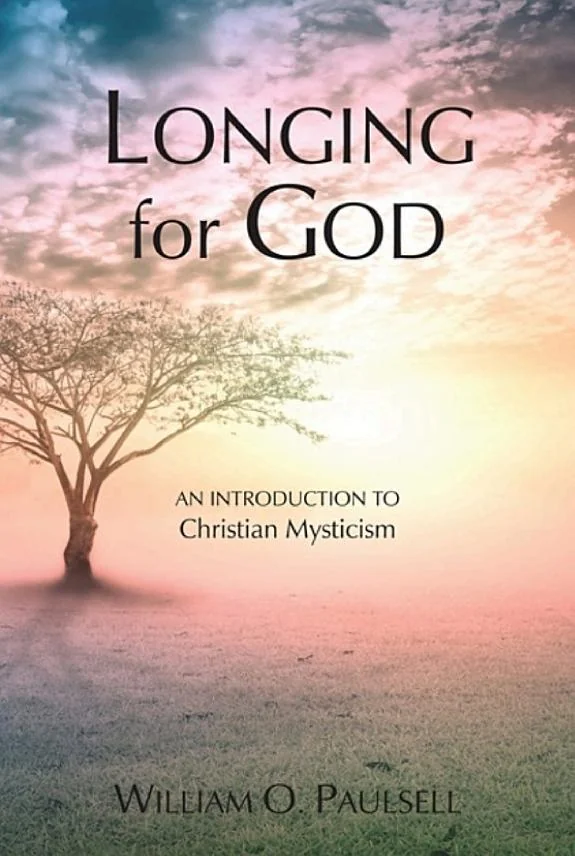
Longing for God
 80
80

Longing for God
Paulsell's *Longing for God* offers a commendable chronological traversal of Christian mystical thought, charting its course from the Desert Fathers' echoes to the 20th-century contemplatives. The author’s strength lies in presenting complex theological ideas with clarity, particularly in his exposition of figures like Meister Eckhart and Julian of Norwich. However, the sheer breadth of the subject matter occasionally leads to a sense of brevity when discussing individual mystics. A passage detailing Bernard of Clairvaux's concept of *caritas* as a driver for spiritual ascent, for instance, feels somewhat compressed. Despite this, the book serves as an accessible yet informed introduction to a profound spiritual lineage. It is a solid overview for those new to Christian esoteric traditions.
📝 Description
80
William O. Paulsell traces Christian mysticism from Augustine to Dorothy Day in *Longing for God*.
William O. Paulsell's *Longing for God* surveys the history of Christian mysticism, beginning with early figures and extending to the mid-20th century. The book examines how individuals sought direct experience of the divine, detailing their theological ideas and personal spiritual lives. Paulsell analyzes the development of these contemplative traditions over centuries, showing how they adapted to different historical and intellectual settings.
The work is suited for students of theology, comparative religion, and Western esotericism. It will interest those curious about the historical development of Christian contemplation and the lives of mystics. Readers interested in the origins of contemporary spiritual thought within Christianity will find this study particularly informative. Paulsell situates his subject within the larger history of Western thought, charting a continuous, though changing, spiritual lineage.
This book examines a specific current within Western spirituality that emphasizes direct, experiential knowledge of God over purely intellectual or institutional religion. It covers figures and movements often categorized under Christian esotericism or mysticism, highlighting their attempts to achieve union with the divine. The work traces this tradition's lineage through various historical periods, demonstrating its persistence and transformation within Christianity.
💡 Why Read This Book?
• Understand the historical arc of Christian mysticism, from Augustine of Hippo's early writings to the mid-20th century figures like Thomas Merton, gaining a sequential perspective on spiritual development. • Grasp core esoteric concepts such as the *via negativa* (apophatic theology) as employed by figures like Pseudo-Dionysius the Areopagite, learning how divine presence can be approached through negation. • Discover the practical application of contemplative life as exemplified by Dorothy Day, seeing how profound spiritual seeking can be integrated with social action and engagement.
⭐ Reader Reviews
Honest opinions from readers who have explored this book.
❓ Frequently Asked Questions
What historical periods does *Longing for God* cover?
The book spans from the early Christian era, beginning with figures influenced by Augustine of Hippo in the 4th century, through the medieval period, and up to the mid-20th century, featuring contemplatives like Dorothy Day.
Who are some key Christian mystics discussed in the book?
Paulsell examines a range of mystics including Augustine of Hippo, Bernard of Clairvaux, Hildegard of Bingen, Meister Eckhart, Julian of Norwich, and later figures such as Dorothy Day and Thomas Merton.
What is the 'via negativa' as explored in *Longing for God*?
The 'via negativa', or apophatic theology, is a concept discussed where the divine is understood through what it is not, emphasizing mystery and transcendence over direct description, as seen in the works of Pseudo-Dionysius.
Does the book focus only on solitary spiritual practice?
No, the book highlights figures like Dorothy Day who integrated deep spiritual practice with active engagement in social justice and service, demonstrating that mystical longing can manifest in worldly action.
When was *Longing for God* first published?
The book *Longing for God* by William O. Paulsell was first published in 2021.
Is this book suitable for beginners in Christian mysticism?
Yes, the book is structured as a survey, making it accessible for beginners to understand the historical development and key figures within Christian contemplative traditions.
🔮 Key Themes & Symbolism
The Via Negativa
The book extensively explores the apophatic tradition, often associated with Pseudo-Dionysius the Areopagite, where the divine is approached through negation. Paulsell illustrates how mystics across centuries used this method to articulate an understanding of God that transcends human conceptualization. This theme highlights the ineffable nature of ultimate reality and the limits of language in spiritual discourse, positioning it as a crucial esoteric pathway for direct, unmediated experience of the divine.
Contemplation and Divine Union
A central thread is the practice of contemplation as a means to achieve union with God. Paulsell traces how figures like Bernard of Clairvaux and Julian of Norwich understood and cultivated this state. The emphasis is on a lived, experiential knowledge of the divine, moving beyond intellectual assent to dogma. This theme speaks to the perennial esoteric quest for direct spiritual apprehension and the transformation of consciousness it entails.
Spirituality in Action
The work challenges the notion that mysticism is purely introspective by highlighting figures like Dorothy Day. Paulsell demonstrates how a profound longing for God can be expressed through active engagement with the world, particularly in service to the poor and marginalized. This theme underscores the esoteric principle that the divine is immanent in all creation and that spiritual realization often involves compassionate action and social justice.
Historical Evolution of Mysticism
Paulsell meticulously charts the evolution of Christian mystical thought from its early foundations with figures influenced by Augustine of Hippo through the medieval period and into the 20th century. This historical perspective reveals how core mystical aspirations were adapted and expressed within varying philosophical and cultural contexts, showing the enduring relevance and adaptability of the contemplative path across different eras.
💬 Memorable Quotes
Direct passages from the work, attributed to the author.
“Mystical experience is often characterized by a sense of unity and direct knowing.”
— This interpretation highlights the experiential core of mysticism, suggesting that it involves a profound, often ineffable, union with the divine that goes beyond rational comprehension.
“Contemplation involves a passive reception of divine grace.”
— This interpretation focuses on the receptive aspect of contemplative prayer, suggesting that it requires a stillness and openness to allow divine influence rather than active striving.
“Service to others can be a manifestation of spiritual devotion.”
— This interpretation underscores the integration of the spiritual and the active life, exemplified by figures like Dorothy Day, showing that love for God extends to love and action for humanity.
💡 Key Ideas
Editorial paraphrase of the work's core concepts — not direct quotes.
The divine is approached by God not by way of affirmation, but rather by way of negation.
This paraphrase captures the essence of the apophatic tradition discussed, emphasizing that true understanding of the divine transcends positive description and is found in acknowledging its absolute otherness and ineffability.
The longing for God propels the soul toward divine union.
This paraphrase points to the central theme of desire and yearning as the driving force in the spiritual journey towards God, as explored through the lives of various mystics.
🌙 Esoteric Significance
Tradition
This work is deeply embedded within the Western esoteric tradition, specifically its Christian mystical branch. It traces a lineage that connects early patristic thought, particularly influenced by Neoplatonism through Augustine, to the rich contemplative developments of the High Middle Ages and figures like the Rhineland mystics. Paulsell's survey positions Christian mysticism not as a deviation, but as a core, albeit often marginalized, current within Christianity itself, focused on direct experiential knowledge of the divine.
Symbolism
Key symbolic motifs include the 'divine darkness' or 'cloud of unknowing,' representing the ineffable nature of God, and the concept of the 'wound of love,' symbolizing the soul’s passionate yearning for union with the divine. The journey itself, often depicted as a path or ascent, symbolizes the process of spiritual purification and transformation. These symbols function esoterically to point towards states of consciousness and direct experience that transcend ordinary perception.
Modern Relevance
Contemporary interest in mindfulness, contemplative prayer, and the integration of spiritual life with social action finds historical precedent in the figures discussed. Thinkers and practitioners in fields like depth psychology, comparative mysticism, and those seeking a more embodied spirituality often draw upon these historical exemplars. The work's focus on lived experience and direct encounter with the divine continues to inform modern spiritual seekers looking for authentic paths beyond dogma.
👥 Who Should Read This Book
• Students of comparative religion and Western esotericism seeking a historical overview of Christian contemplative traditions. • Individuals interested in the lives and thought of key Christian mystics from Augustine of Hippo to Thomas Merton, who wish to understand their spiritual paths. • Seekers exploring the intersection of spiritual practice and social engagement, exemplified by figures like Dorothy Day, who want to see historical models for integrating faith and action.
📜 Historical Context
Published in 2021, *Longing for God* emerges in an era marked by renewed interest in contemplative practices and alternative spiritualities, often seeking roots beyond mainstream religious institutions. Paulsell’s work situates itself within the long lineage of Christian esotericism, a tradition that has historically existed alongside, and sometimes in tension with, orthodox theology. The period covered, from Augustine of Hippo (4th century) through medieval figures like Meister Eckhart and into the 20th century with Thomas Merton, demonstrates the persistence of this path. While figures like Merton engaged with Eastern philosophies, Paulsell primarily traces a distinctly Christian contemplative thread. The book implicitly addresses contemporary seekers who may find traditional religious structures lacking, offering historical figures as exemplars of deep spiritual seeking. Its reception is likely among academic circles and those interested in the history of religious thought and practice.
📔 Journal Prompts
The concept of the 'via negativa' and its application in seeking the divine.
Reflecting on the historical trajectory of Christian mysticism from Augustine to Merton.
The role of divine longing in the spiritual lives of figures like Bernard of Clairvaux.
Contemplative practices as presented by Julian of Norwich and their experiential impact.
Integrating spiritual seeking with worldly action, as seen in Dorothy Day's life.
🗂️ Glossary
Via Negativa
Also known as apophatic theology, this is an approach to understanding God that emphasizes what God is not, rather than what God is. It posits that the divine transcends all positive description and conceptualization.
Contemplation
A form of prayer or meditation characterized by a deep, wordless reflection or direct awareness of God's presence. It often involves stillness, receptivity, and a passive openness to divine grace.
Augustine of Hippo
A hugely influential theologian and philosopher (354-430 AD) whose writings, particularly on grace, divine love, and the soul's journey, laid foundational groundwork for subsequent Christian mystical thought.
Meister Eckhart
A 13th-14th century German theologian and mystic known for his complex philosophical and mystical writings, emphasizing the 'birth of God in the soul' and the concept of detachment.
Dorothy Day
An American journalist, activist, and co-founder of the Catholic Worker Movement (1897-1980), known for her synthesis of radical faith, pacifism, and service to the poor.
Thomas Merton
A 20th-century American Trappist monk, writer, mystic, and social activist (1915-1968) who explored Christian contemplation and interfaith dialogue, significantly influencing modern spirituality.
Divine Union
The ultimate goal in many mystical traditions, referring to a state of profound, direct communion or oneness with the divine, experienced by the soul.
This book appears in 1 collection
🔮 Readers Also Liked
Browse all →






From the “Christian Mysticism” Collection
View all →








More Free Mysticism & Contemplation Books
View all →