The journey of Robert Monroe
 80
80

The journey of Robert Monroe
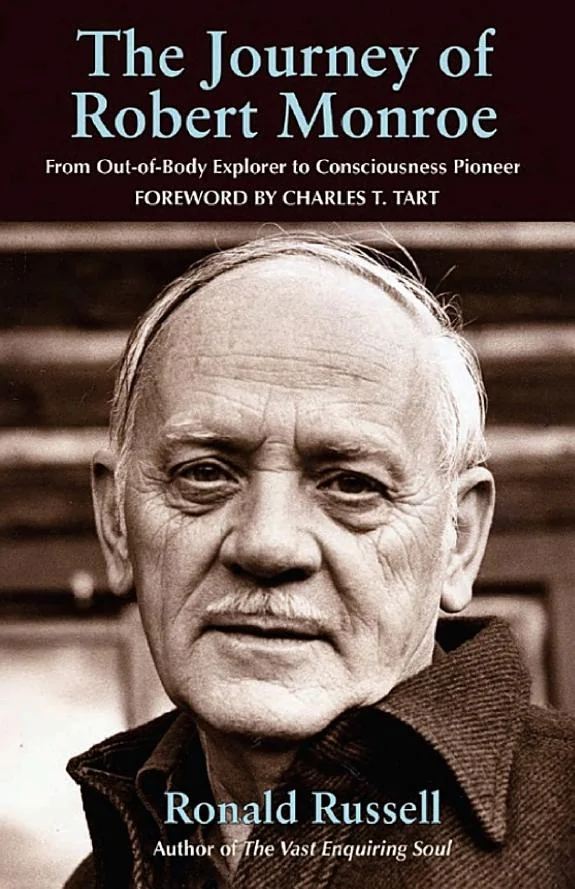
Ronald Russell’s examination of Robert Monroe’s explorations into consciousness offers a clear, if somewhat uncritical, account of a significant figure in 20th-century esoteric inquiry. The strength of "The Journey of Robert Monroe" lies in its detailed exposition of Monroe's own experiences and the foundational principles of the Monroe Institute. Russell effectively conveys the systematic nature of Monroe's investigations, particularly his development of the "Focus Levels" system, which aimed to categorize and facilitate non-physical states. However, the work occasionally falters by presenting Monroe's subjective accounts with an unvarnished acceptance that might leave skeptics wanting more rigorous corroboration. A particularly compelling section details the early experiments with binaural beats and their purported effects on consciousness, highlighting the blend of technological innovation and subjective reporting. While Russell avoids overly sensational language, the book could benefit from a more robust engagement with counter-arguments or alternative interpretations of Monroe’s findings. Ultimately, Russell provides a valuable, accessible overview for those already inclined to explore the outer limits of human awareness.
📝 Description
80
Ronald Russell's 2007 book examines Robert Monroe's pioneering work in out-of-body experiences.
Ronald Russell's "The Journey of Robert Monroe" details the consciousness research of Robert Monroe, a figure known for his work with out-of-body experiences (OBEs). Published in 2007, the book recounts Monroe's personal encounters with non-physical realities and the subsequent establishment of the Monroe Institute. It covers the methodologies and findings from systematic studies into altered states of consciousness that originated from this research.
The work is suited for those curious about the nature of consciousness, esoteric subjects, and the scientific investigation of subjective experience. It speaks to readers interested in human consciousness extending beyond physical limits, including practitioners of meditation and remote viewing.
Russell places Monroe's research within the context of 20th-century consciousness studies, an era that saw growing interest in parapsychology and altered states. Monroe's approach, marked by systematic investigation and the creation of a dedicated institute, distinguished his work from more philosophical or anecdotal accounts.
Robert Monroe's research, as presented by Russell, falls within a tradition of exploring subjective realities and non-physical consciousness. This tradition includes earlier explorations of astral projection and consciousness expansion found in various spiritual and occult movements. Monroe's contribution was his systematic, institute-based approach to studying these phenomena, aiming for reproducible results and practical applications, notably through technologies like Hemi-Sync, which itself draws on principles of sound affecting consciousness, a concept found in various ancient traditions.
💡 Why Read This Book?
• Understand the systematic approach to OBEs pioneered by Robert Monroe, including the development of "Focus Levels" as a structured method for exploring consciousness beyond the physical body. • Gain insight into the founding and early operations of the Monroe Institute, a key institution established in the 1970s for the scientific study of psychic phenomena and altered states. • Explore the practical applications of Hemi-Sync technology, as detailed in the book, which aims to synchronize brainwave activity for specific cognitive and experiential outcomes.
⭐ Reader Reviews
Honest opinions from readers who have explored this book.
❓ Frequently Asked Questions
What is the primary focus of Ronald Russell's book on Robert Monroe?
The book primarily details Robert Monroe's personal experiences with out-of-body phenomena and his subsequent establishment of the Monroe Institute to systematically research consciousness.
When was "The Journey of Robert Monroe" first published?
The book was first published in 2007, offering a retrospective look at Monroe's life and work.
What is Hemi-Sync technology mentioned in the book?
Hemi-Sync (Hemispheric Synchronization) is a patented audio technology developed by Robert Monroe, using binaural beats to encourage specific brainwave states conducive to altered consciousness.
Did Robert Monroe have any scientific background before his OBE research?
While not a formally trained scientist in traditional fields, Robert Monroe was an innovative businessman who applied systematic, almost experimental, approaches to his subjective experiences and consciousness research.
What are 'Focus Levels' as described in the book?
Focus Levels are a classification system developed by Monroe to categorize different states of consciousness, ranging from waking awareness to profound non-physical experiences, often accessed via Hemi-Sync.
Is this book suitable for beginners in esoteric studies?
Yes, the book provides a clear narrative of Monroe's journey and the concepts he explored, making it accessible for those new to subjects like OBEs and consciousness exploration.
🔮 Key Themes & Symbolism
Out-of-Body Experiences
The central theme revolves around Robert Monroe's extensive personal experiences with what he termed Out-of-Body Experiences (OBEs). The book details his initial, often involuntary, separations from his physical body and his subsequent efforts to understand, control, and replicate these states. Russell chronicles Monroe's journey from bewildered subject to systematic investigator, laying the groundwork for his research institute and the methodologies designed to induce and study these non-physical states of consciousness.
Consciousness Exploration & Focus Levels
Central to Monroe's work, and thus this book, is the concept of exploring consciousness as a tangible reality. This exploration is structured through the "Focus Levels" system, a framework categorizing various states of awareness. These levels are presented as distinct environments or states of being accessible through specific techniques, primarily audio stimulation. The book illustrates how these levels were mapped and utilized for diverse purposes, from relaxation and enhanced learning to profound encounters with non-physical realities.
The Monroe Institute & Hemi-Sync
The establishment of the Monroe Institute in the 1970s is a significant outcome detailed in the book. Russell explains how Monroe leveraged his business acumen to create a research and educational facility dedicated to the study of consciousness. A key innovation stemming from the Institute is Hemi-Sync, an audio technology using binaural beats. The book describes how Hemi-Sync was developed to facilitate entry into specific Focus Levels, aiming to make profound states of consciousness accessible to a wider audience.
Non-Physical Realities
Beyond mere OBEs, the book touches upon the existence and exploration of non-physical realities. Monroe's experiences, as recounted by Russell, suggest dimensions or areas of existence populated by various entities and governed by different laws than the physical world. The book explores these encounters, presenting them as extensions of consciousness's potential, moving beyond the individual psyche into what could be interpreted as collective or distinct non-physical environments.
💬 Memorable Quotes
Direct passages from the work, attributed to the author.
“The separation was not painful, nor was it frightening, but it was undeniably real.”
— This statement captures the initial surprise and profound realization experienced by Monroe upon his first distinct out-of-body event. It highlights the subjective certainty of the experience, despite its unusual nature, setting the stage for his lifelong investigation.
“Focus Levels offered a map for the uncharted territories of the mind.”
— This interpretation underscores the organizational aspect of Monroe's work. The 'Focus Levels' are presented not just as states but as a structured system, providing a framework and guide for individuals venturing into the complex field of altered consciousness.
“The Institute became a crucible for exploring the boundaries of human awareness.”
— This conceptual quote speaks to the role of the Monroe Institute. It was established as a dedicated space where rigorous, albeit unconventional, research into consciousness could take place, pushing the limits of what was known and accepted about the mind.
💡 Key Ideas
Editorial paraphrase of the work's core concepts — not direct quotes.
We discovered that sound could be used to tune the brain.
This paraphrased concept refers to the foundational principle behind Hemi-Sync technology. It signifies the realization that specific auditory frequencies could influence brainwave activity, thereby facilitating access to different states of consciousness.
There are more things in heaven and earth, Horatio, than are dreamt of in your philosophy.
While not directly from Monroe's writings, this quote from Shakespeare's Hamlet (Act 1, Scene 5) is often invoked in discussions of consciousness exploration. It reflects the book's underlying theme that human understanding of reality is limited and that vast, unexplored territories of existence await discovery.
🌙 Esoteric Significance
Tradition
Robert Monroe's work, as presented by Russell, significantly bridges esoteric exploration with a pseudo-scientific, systematic approach. While drawing from ancient concepts of astral projection and non-physical realms found in Hermeticism and Theosophy, Monroe's innovation was to create reproducible techniques, particularly through Hemi-Sync. This departure from purely meditative or ritualistic methods places his work in a unique position, aiming to democratize access to altered states often confined to specific lineages or requiring years of dedicated practice.
Symbolism
The primary 'symbol' in Monroe's work is arguably the concept of 'Focus Levels' itself, acting as a symbolic map of consciousness. Each level represents a distinct state or realm, akin to symbolic landscapes in esoteric traditions. The Hemi-Sync technology, with its specific frequencies, can be seen as a modern symbolic key, unlocking these different states. The 'separation' from the physical body, a core motif, symbolizes the transcendence of material limitations and the exploration of the soul or consciousness as an independent entity.
Modern Relevance
Monroe's research continues to influence modern consciousness exploration, biofeedback, and neurofeedback practices. Thinkers and practitioners in fields like lucid dreaming, remote viewing, and even certain therapeutic modalities that utilize auditory stimulation draw inspiration from his methodologies. The Monroe Institute remains active, offering programs that continue to explore the potential of human consciousness, demonstrating the enduring relevance of his systematic approach to subjective experience in the 21st century.
👥 Who Should Read This Book
• Individuals fascinated by the nature of consciousness and the possibility of experiences beyond the physical body, seeking a structured overview of Robert Monroe's pioneering work. • Researchers and practitioners of altered states of consciousness, including those interested in meditation, astral projection, and remote viewing, looking for insights into reproducible techniques. • Readers interested in the history of 20th-century esoteric thought and the development of institutions dedicated to exploring subjective realities, such as the Monroe Institute.
📜 Historical Context
Published in 2007, Ronald Russell’s "The Journey of Robert Monroe" arrived during a period where interest in consciousness studies, parapsychology, and alternative states of awareness had evolved significantly since Monroe's initial explorations began in the 1950s and 60s. This era saw continued research in fields like remote viewing, influenced by government projects, and a burgeoning New Age movement that embraced esoteric concepts. Monroe’s work, particularly his development of the Monroe Institute and the Hemi-Sync technology in the 1970s, offered a more systematic and technologically driven approach compared to the more philosophical or purely meditative practices of earlier esoteric traditions. While figures like J.B. Rhine were pioneering empirical study of psychic phenomena earlier, Monroe focused on subjective states induced by technology. Contemporary authors like Dean Radin continued to explore anomalous psychology, often with a greater emphasis on statistical validation, representing a different strand of consciousness research that engaged with Monroe’s legacy by seeking empirical underpinnings for such experiences.
📔 Journal Prompts
The concept of Focus Levels as a map of consciousness.
Robert Monroe's initial involuntary out-of-body experiences.
The role of Hemi-Sync in facilitating altered states.
Personal reflections on the separation from the physical body.
The potential for consciousness exploration beyond the physical.
🗂️ Glossary
Out-of-Body Experience (OBE)
A subjective experience in which an individual feels their consciousness has detached from their physical body and is capable of perceiving the world from a location outside their physical self.
Focus Levels
A system developed by Robert Monroe to categorize and navigate different states of consciousness, ranging from basic awareness to profound non-physical experiences.
Hemi-Sync
A patented audio technology using binaural beats, developed by Robert Monroe, designed to synchronize brainwave activity and induce specific states of consciousness.
Monroe Institute
An organization founded by Robert Monroe dedicated to the research and exploration of human consciousness, particularly through OBEs and related phenomena.
Astral Projection
A term often used interchangeably with OBE, referring to the idea that consciousness or a spiritual aspect of the self can travel outside the physical body to other realms.
Binaural Beats
Auditory illusions perceived when two different frequencies are presented separately to each ear. The brain creates a third 'beat' frequency, which is claimed to influence brainwave activity.
Non-Physical Reality
A concept referring to dimensions or states of existence that are not bound by the physical laws of the material universe, accessible through altered states of consciousness.
🔮 Readers Also Liked
Browse all →









More by Ronald Russell
All books →
More Free Occult Philosophy Books
View all →