The Pinhoe Egg
 79
79

The Pinhoe Egg
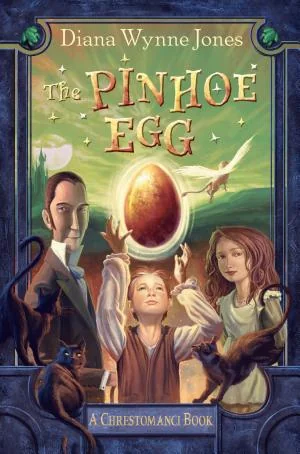
The Pinhoe Egg is a testament to Diana Wynne Jones's enduring ability to craft intricate magical narratives with a delightful, dry wit. The premise—an egg protected by potent "Don't Notice" spells—is immediately intriguing, setting the stage for a familiar yet fresh encounter with the world of Chrestomanci. Jones excels at portraying the subtle complexities of magic and its impact on ordinary lives, particularly through the relationship between Cat and Marianne. The book's primary strength lies in its character interactions and the understated menace that surrounds the discovered artifact. However, the narrative sometimes feels a touch too familiar, relying on established tropes from Jones's own extensive bibliography, which might leave readers seeking entirely novel magical systems wanting. A particularly resonant passage involves the characters’ attempts to understand the nature of the egg's protective enchantments, highlighting Jones’s skill in making magical theory feel both plausible and engaging. Ultimately, *The Pinhoe Egg* offers a charming, well-crafted addition to the Chrestomanci canon.
📝 Description
79
Diana Wynne Jones published 'The Pinhoe Egg' in 2006, a fantasy novel about a magical egg.
In Diana Wynne Jones's 2006 novel, *The Pinhoe Egg*, an ancient artifact with potent 'Don't Notice' spells falls into the hands of Cat Chant and Marianne Pinhoe. This discovery immediately attracts the attention of Chrestomanci, the world's most powerful enchanter, whose involvement escalates the situation. The story follows the children as they contend with the consequences of possessing such a powerful object and the formidable figure who seeks it.
Jones, known for her sophisticated humor and unique magic systems, presents a narrative that appeals to those who enjoy complex world-building. The novel continues her examination of powerful magical families and the repercussions of uncontrolled enchantment. Readers familiar with her previous Chrestomanci stories will recognize characters and themes, while newcomers will find a story rich with magical intrigue and the clash between ordinary children and extraordinary powers.
Published in 2006, *The Pinhoe Egg* fits within the tradition of British fantasy that often explores the intersection of the mundane and the magical. Jones's work, while accessible, engages with concepts like inherent magical ability and the societal structures that govern it, reminiscent of authors like C.S. Lewis. The novel also touches on the idea of perception and how magic can manipulate it, a theme present in various occult traditions that explore the nature of reality and illusion.
💡 Why Read This Book?
• Learn about the subtle art of "Don't Notice" spells, a unique magical concept that emphasizes passive concealment over active defense, as explored when Cat and Marianne discover the Pinhoe Egg. • Experience the dynamic between young protagonists and established magical figures, particularly the complex role of Chrestomanci, the world's most powerful enchanter, whose intervention can be both helpful and intrusive. • Understand how Diana Wynne Jones, in her 2006 novel, builds upon the established lore of her Chrestomanci series, offering a specific entry point into a rich magical world for both new and returning readers.
⭐ Reader Reviews
Honest opinions from readers who have explored this book.
❓ Frequently Asked Questions
Is The Pinhoe Egg part of a series?
Yes, *The Pinhoe Egg* is part of Diana Wynne Jones's Chrestomanci series, which features the powerful enchanter Chrestomanci. While it can be read as a standalone story, it connects to the broader world and characters established in earlier books, notably *Charmed Life*.
What kind of magic is featured in The Pinhoe Egg?
The novel features a unique blend of overt enchantment, personified by Chrestomanci, and more subtle, passive magic like the "Don't Notice" spells protecting the titular egg. It explores the consequences and responsibilities that come with wielding significant magical power.
Who are the main characters in The Pinhoe Egg?
The primary protagonists are Cat Chant and Marianne Pinhoe, two children who discover the mysterious egg. Chrestomanci, the powerful enchanter, also plays a significant role in the unfolding events, interacting with Cat due to his proximity to Chrestomanci Castle.
When was The Pinhoe Egg first published?
The Pinhoe Egg was first published in 2006. This places it later in Diana Wynne Jones's prolific career, showcasing her continued mastery of the fantasy genre.
What is the significance of the 'Don't Notice' spells?
The 'Don't Notice' spells are a key magical concept in the book, used to protect the egg. They represent a form of magic that doesn't actively repel but rather makes something so unremarkable that it's overlooked, a subtle yet potent form of concealment.
Does The Pinhoe Egg require prior knowledge of the Chrestomanci series?
While prior knowledge of the Chrestomanci series can enhance the reading experience, *The Pinhoe Egg* is designed to be accessible to new readers. Key concepts and characters are explained or introduced sufficiently within the narrative.
🔮 Key Themes & Symbolism
The Power of Neglect
The 'Don't Notice' spells protecting the Pinhoe Egg are a fascinating exploration of passive magic. Unlike spells that repel or destroy, these enchantments render the object unremarkable, essentially invisible through sheer uninterest. This theme suggests that true power can sometimes lie not in overt force, but in the ability to be overlooked or dismissed, a concept with parallels in various esoteric traditions that emphasize subtlety and misdirection.
Authority and Interference
Chrestomanci, as the world's most powerful enchanter, embodies both ultimate authority and the potential for disruptive interference. His interest in the Pinhoe Egg, while perhaps well-intentioned, immediately raises the stakes and complicates the children's discovery. This dynamic reflects common esoteric concerns about the influence of powerful figures or institutions on individual quests and hidden knowledge, questioning whether intervention always serves the greater good.
Hidden Potential and Discovery
The egg itself is a potent symbol of hidden potential. Its long concealment and the mystery surrounding its origins speak to the idea that significant power or knowledge can lie dormant, waiting for the right moment or the right discoverer. This speaks to alchemical and Hermetic concepts of the prima materia or the philosopher's stone, which represent latent universal forces that can be unlocked through specific processes and understanding.
The Nature of Enchantment
Jones’s work consistently plays with the nature of enchantment, moving beyond simple spell-casting. In *The Pinhoe Egg*, the 'Don't Notice' spells and the inherent power of the egg itself suggest that magic is not merely a tool but a fundamental aspect of reality, with its own rules and consequences. This approach aligns with esoteric thought that views magic as an intricate system, deeply intertwined with the fabric of the cosmos.
💬 Memorable Quotes
Direct passages from the work, attributed to the author.
“The egg had been hidden away in an attic for who-knows-how-many years, protected by some strong "Don't Notice" spells.”
— This foundational description introduces the central mystery and the unique nature of the magic involved. It highlights how potent enchantments can operate not through active force, but through passive obscurity, making the extraordinary seem utterly ordinary.
“Chrestomanci himself, the strongest enchanter in the world, is sure to be interested in the egg.”
— This statement immediately establishes the high stakes of the discovery. The involvement of such a powerful figure suggests that the egg holds significant importance, drawing the attention of established magical authority and hinting at potential conflict or guidance.
“Marianne gives [the egg] to Cat, even though he lives at nearby Chrestomanci Castle.”
— This act signifies the immediate entanglement of the children's find with the world of Chrestomanci. It underscores the interconnectedness of their seemingly separate lives and the inescapable influence of powerful magical entities.
“Interference from the Big Man is the last thing Marian...”
— This fragment implies that the presence or intervention of Chrestomanci ('the Big Man') is viewed with apprehension. It suggests that even benevolent power can be overwhelming or unwelcome when it intrudes upon personal discoveries or plans.
“Cat Chant and Marianne Pinhoe have discovered something exciting--something truly precious, very strange, and valuable.”
— This opening sets the tone of wonder and intrigue, immediately focusing on the children's perspective and the profound significance of their find, framing the egg as an object of immense, albeit mysterious, worth.
🌙 Esoteric Significance
Tradition
While not explicitly aligned with a single esoteric lineage, Jones's work, including *The Pinhoe Egg*, draws from a broad Western magical tradition. The concept of powerful enchanters, magical artifacts, and worlds governed by arcane laws echoes elements found in Hermeticism and Neoplatonism. The focus on the inherent properties of magical objects and the subtle nature of certain spells also touches upon alchemical and ceremonial magic principles, albeit presented through a fantastical lens.
Symbolism
The Pinhoe Egg itself serves as a primary symbol, representing latent potential, hidden knowledge, and the unknown. Its protection by "Don't Notice" spells symbolizes the idea that profound truths or powers can remain concealed not by force, but by being rendered unremarkable or overlooked. Chrestomanci, as the 'strongest enchanter,' symbolizes established magical authority, order, and the potential for both benevolent guidance and overwhelming interference in the unfolding of hidden potentials.
Modern Relevance
Contemporary discussions in esoteric circles often explore the nature of subtle energies and non-obvious forms of magic, making Jones's "Don't Notice" spells a relevant concept. Thinkers and practitioners interested in the psychology of perception and the power of suggestion in magical workings might find parallels. Furthermore, the book's exploration of how power structures (like Chrestomanci's) interact with individual discovery continues to resonate with modern critiques of institutional influence in spiritual and magical paths.
👥 Who Should Read This Book
• Readers interested in the foundational concepts of Diana Wynne Jones's Chrestomanci universe, particularly those curious about the specific nature of "Don't Notice" spells and their implications. • Young adults and adult readers who appreciate fantasy narratives that blend whimsical magic with underlying themes of responsibility, authority, and the hidden nature of power. • Students of comparative literature or narrative theory examining how established authors revisit and expand upon their own magical world-building, as Jones does with Chrestomanci Castle and its inhabitants in 2006.
📜 Historical Context
Published in 2006, *The Pinhoe Egg* emerged during a flourishing period for children's and young adult fantasy, with authors like J.K. Rowling achieving unprecedented global success. Diana Wynne Jones, however, had been a significant voice in the genre since the 1970s, developing a unique style characterized by sophisticated humor, intricate magical systems, and complex character relationships, particularly within her Chrestomanci universe. Unlike some contemporaries who focused on epic quests or dark themes, Jones often explored the mundane implications of magic and the subtle nuances of power dynamics. Her work stood alongside that of authors like Ursula K. Le Guin, who also experimented with social and philosophical underpinnings of fantasy worlds. While *The Pinhoe Egg* received positive reception, it was part of a body of work that cemented Jones's reputation among critics and dedicated readers for her intellectual depth and distinctive narrative voice, rather than through major awards or widespread mainstream controversy.
📔 Journal Prompts
The effectiveness of "Don't Notice" spells in concealing the Pinhoe Egg.
Chrestomanci's role as both protector and potential interferer.
The symbolic weight of the mysterious egg and its hidden value.
Cat Chant's perspective on discovering magic near Chrestomanci Castle.
Marianne Pinhoe's motivations for giving the egg to Cat.
🗂️ Glossary
Don't Notice spells
A type of enchantment designed to make an object or person unremarkable and therefore overlooked by others. It functions through passive obscurity rather than active repulsion.
Chrestomanci
The world's most powerful enchanter, a central figure in Diana Wynne Jones's fantasy series. He wields immense magical authority and resides at Chrestomanci Castle.
Chrestomanci Castle
The formidable residence of the enchanter Chrestomanci, serving as a significant location within the magical world created by Diana Wynne Jones.
Cat Chant
One of the young protagonists who discovers the Pinhoe Egg. He lives near Chrestomanci Castle, connecting him to the world of the powerful enchanter.
Marianne Pinhoe
The other young protagonist who, along with Cat Chant, discovers the mysterious egg and plays a key role in its subsequent fate.
The Pinhoe Egg
A mysterious, ancient egg discovered by the protagonists, protected by powerful "Don't Notice" spells and attracting the attention of Chrestomanci.
Big Man
An informal, potentially apprehensive reference to Chrestomanci, highlighting his imposing presence and the significant impact he has on events.
This book appears in 1 collection
🔮 Readers Also Liked
Browse all →







From the “Witchcraft” Collection
View all →

![The old colony town [Plymouth, Mass.], and other sketches. 1893: Iss 118](/img/thumb/the-old-colony-town-plymouth-mass-and-other-sketches-1893-iss-118-bliss-william-root-1825-1906.webp)


More Free Occult Philosophy Books
View all →