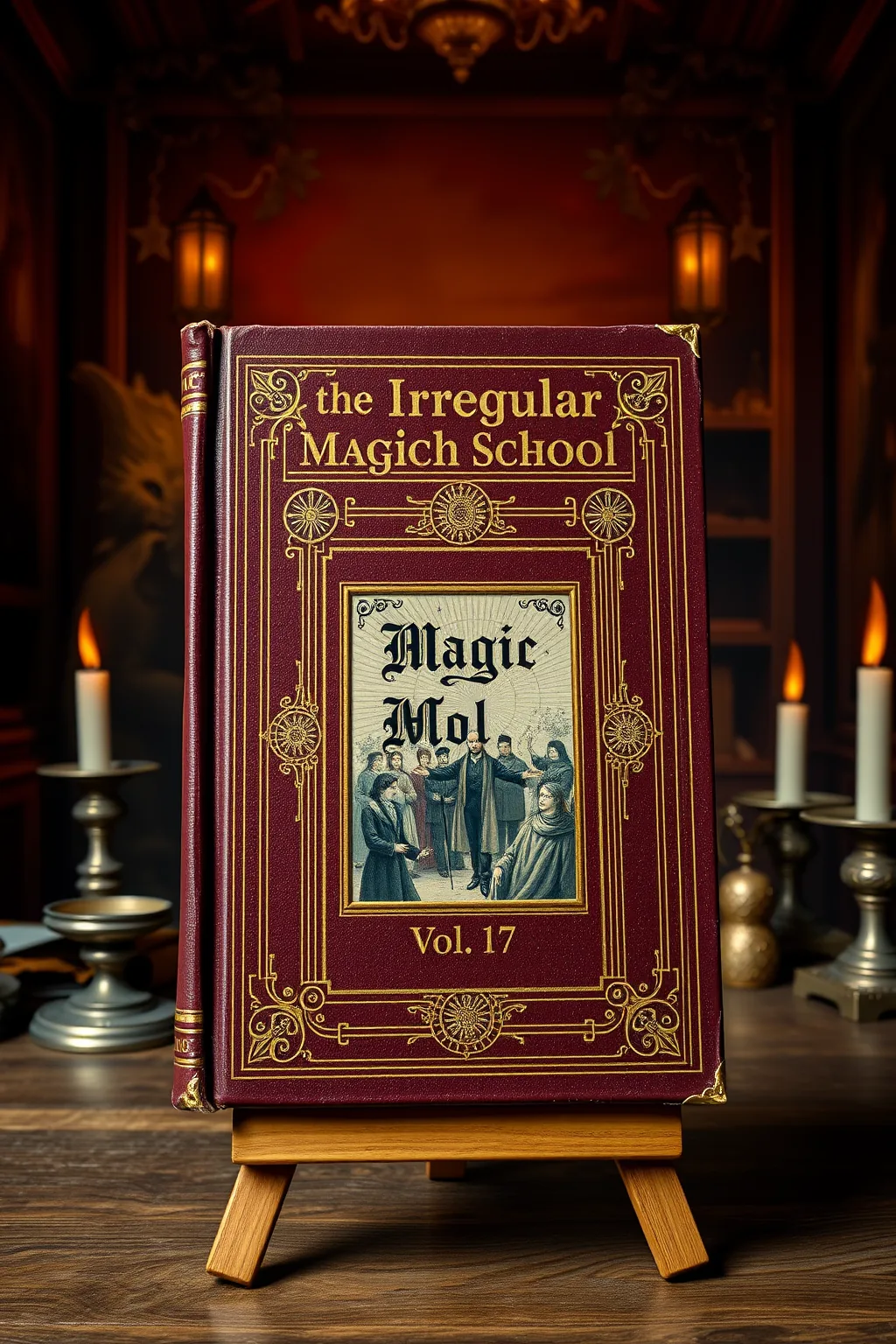
the Irregular at Magic High School, Vol. 17
 62
62

the Irregular at Magic High School, Vol. 17


Marcus Thorne (Esoteric Sciences Reviewer) — Tsutomu Sato continues to weave a rich narrative in 'The Irregular at Magic High School, Vol. 17,' offering a compelling exploration of magical theory and its practical, often morally ambiguous, applications. The series consistently delivers insightful commentary on the nature of power and the responsibilities that accompany extraordinary abilities. This volume, in particular, delves into the deeper currents of magical lineage and the echoes of ancient pacts, resonating with students of hermeticism and ceremonial magic. Its strength lies in its ability to ground fantastical elements in relatable human struggles, making it an accessible yet profound entry for both seasoned enthusiasts of occult fiction and newcomers drawn to the allure of hidden knowledge.
📝 Description
62
In Volume 17 of The Irregular at Magic High School, released in 2016, Tatsuya and Miyuki face new challenges.
This installment of Tsutomu Sato's series continues the story of Tatsuya Shiba and his sister Miyuki within a world where magic is a fundamental, yet often dangerous, aspect of society. The narrative delves into the hidden conflicts and ancient lore that underpin this advanced civilization. Characters grapple with difficult choices as they seek deeper understanding of magical principles, distinguishing between those who truly master them and those who merely possess them.
The story maintains a tense atmosphere, burdened by the weight of history and unrevealed knowledge. It appeals to readers interested in the philosophical questions surrounding magical systems and the continuous pursuit of esoteric knowledge. This volume reflects a continued interest in the mysteries of the universe and the impact of gaining deeper understanding.
This volume fits within a modern interpretation of esoteric traditions, focusing on the systematic study and application of magical forces within a structured, often technological, society. It draws on themes common in occult fiction, such as the existence of hidden knowledge, the hierarchy of magical ability, and the personal transformation that comes with mastering arcane arts. The narrative explores how these concepts interact with a contemporary setting, presenting magic not as purely supernatural but as a force that can be understood and manipulated through dedicated study and practice.
💡 Why Read This Book?
Embark on a journey into a meticulously crafted world where magical principles intersect with profound philosophical questions. 'The Irregular at Magic High School, Vol. 17' offers a unique blend of action and introspection, appealing to seekers of esoteric wisdom, scholars of fictional magical systems, and practitioners who appreciate nuanced explorations of power dynamics. Uncover hidden layers of symbolism and engage with themes of destiny, responsibility, and the pursuit of forbidden knowledge.
⭐ Reader Reviews
Honest opinions from readers who have explored this book.
❓ Frequently Asked Questions
What is the primary esoteric theme explored in this volume?
This volume delves into the concept of 'blood magic' and its hereditary implications, exploring how ancient lineage can influence magical potential and dictate destiny, reminiscent of certain Gnostic or Kabbalistic ideas about inherent spiritual essence.
Are there any specific rituals or magical practices described?
While not explicit step-by-step guides, the narrative frequently references the theoretical underpinnings and observable effects of various magical disciplines, including energy manipulation, warding, and psychic resonance, offering glimpses into a fictionalized system.
How does this volume connect to broader metaphysical concepts?
It touches upon themes of karma, the balance of forces, and the nature of consciousness as it relates to magical ability, inviting contemplation on how individual will interacts with predetermined cosmic patterns.
Is prior knowledge of the series required to appreciate the esoteric elements?
While prior knowledge enhances the experience, this volume can still be appreciated for its standalone exploration of magical theory and its philosophical implications, especially for those interested in the symbolic representation of power.
What kind of symbolism is prevalent in 'The Irregular at Magic High School, Vol. 17'?
The series often employs symbols related to light and shadow, duality, and the archetypal hero's journey, with specific magical artifacts and phenomena carrying layered meanings that resonate with established esoteric iconography.
🔮 Key Themes & Symbolism
The Traces of Bloodlines
This volume looks at the profound influence of ancestral magic, exploring how inherited power shapes individuals and their destinies. It touches upon the esoteric concept of spiritual lineage and the karmic weight carried through generations, prompting reflection on the nature of innate talent versus earned wisdom. The narrative questions whether one is bound by their blood or can forge a unique path, a theme resonant with ancient philosophies concerning fate and the soul's journey.
The Unseen Architecture of Magic
Beyond the visible spellcasting, 'The Irregular at Magic High School, Vol. 17' reveals the intricate, unseen architecture that underpins magical phenomena. It explores the underlying principles and energetic flows that govern spells, akin to understanding the subtle bodies and energetic channels in various mystical traditions. This focus on the 'how' and 'why' of magic, rather than just the 'what,' invites readers to contemplate the universal laws that might govern all forms of energetic manifestation, both mundane and supernatural.
The Perilous Pursuit of Forbidden Knowledge
The narrative arc often involves characters venturing into areas of knowledge deemed dangerous or forbidden. This carries the archetypal quest for gnosis, where the acquisition of profound understanding comes with inherent risks and moral challenges. The volume examines the responsibility that accompanies such knowledge, highlighting the fine line between enlightenment and corruption, and the potential for even benevolent intentions to lead to destructive outcomes when wielded without wisdom.
💬 Memorable Quotes
Direct passages from the work, attributed to the author.
“Destiny is a river; we can choose to swim with the current or forge our own path.”
— This speaks to the interplay of fate and free will, a central theme in many philosophical and mystical systems, suggesting that while circumstances may be influenced by external forces, individual agency remains paramount.
“The shadows hold secrets the light cannot bear to reveal.”
— This highlights the duality of existence and the importance of exploring the 'darker' or less understood aspects of reality, often where profound truths or hidden powers reside.
“Magic is a language spoken by the universe, and we are but students learning its grammar.”
— This poetic statement frames magic as a universal force or communication, positioning humanity as learners seeking to decipher its intricate patterns and laws.
“The greatest illusion is believing we are separate from the magic we wield.”
— This points towards the esoteric concept of interconnectedness, suggesting that the magician and their power are not distinct entities but rather integral parts of a unified whole.
💡 Key Ideas
Editorial paraphrase of the work's core concepts — not direct quotes.
True power lies not in the spell, but in the understanding behind it.
This quote emphasizes the esoteric principle that mastery of any art, especially magic, stems from deep comprehension of its fundamental principles, not just the rote application of techniques.
🌙 Esoteric Significance
Tradition
While not explicitly tied to a single historical tradition, the series draws heavily on archetypal concepts found in hermeticism, Gnosticism, and general occult philosophy. Themes of inherent spiritual essence, the duality of creation, the pursuit of hidden knowledge (gnosis), and the balance of opposing forces (light/shadow, order/chaos) are recurrent. The structured approach to magic also mirrors the systematic study found in ceremonial magic traditions, albeit within a fictionalized framework.
Symbolism
Key symbols include the duality of light and shadow representing balanced forces, the concept of the 'irregular' as an individual transcending imposed structures (akin to the alchemist's prima materia), and the intricate designs of magical artifacts that often allude to geometric and celestial symbolism. The very act of wielding magic can be seen as a metaphor for the human will interacting with cosmic energies, a fundamental concept in many esoteric systems.
Modern Relevance
In a world increasingly driven by technology and rationalism, 'The Irregular at Magic High School' offers a compelling narrative that reintroduces the wonder and mystery of the unseen. It encourages readers to consider the potential for forces beyond empirical measurement and to contemplate the ethical implications of power, both magical and technological. The series' exploration of individuality versus conformity and the search for meaning in complex systems speaks to contemporary concerns about identity, societal roles, and the human desire for purpose.
👥 Who Should Read This Book
This volume is an ideal entry point for individuals fascinated by the intersection of magic, science, and philosophy. **Beginners** to esoteric fiction will find the accessible narrative and relatable characters a gentle introduction to deeper themes. **Scholars** of fictional magical systems and comparative mythology will appreciate the intricate world-building and the subtle nods to various occult concepts. **Seekers** of spiritual and philosophical depth will be drawn to the exploration of destiny, free will, and the nature of power. **Practitioners** of any discipline seeking to understand the psychological and symbolic aspects of power dynamics and self-mastery will find ample food for thought.
📜 Historical Context
While 'The Irregular at Magic High School, Vol. 17' is a contemporary work of fiction, its exploration of magic, societal structures, and the individual's place within them speaks to historical archetypes. The series' fascination with structured magical education and the classification of magical abilities can be seen as a modern interpretation of how ancient societies, from Plato's Republic to medieval guilds, conceptualized specialized knowledge and training. The narrative's engagement with themes of innate talent versus acquired skill, and the potential for societal disruption by those who defy norms, echoes historical debates surrounding genius, social mobility, and the management of emergent powers. The underlying tension between technological advancement and primal forces also reflects broader societal anxieties prevalent throughout history, from the Industrial Revolution's impact on traditional crafts to the ongoing dialogue between science and spirituality.
📔 Journal Prompts
Reflect on a time you felt like an 'irregular' – someone who didn't fit the expected mold. How did you navigate that experience?
What does 'hidden knowledge' mean to you? In what areas of your life do you feel there are unseen forces at play?
Consider the balance between destiny and free will. How much of your life do you believe is predetermined, and how much is shaped by your choices?
If magic were real and codified like in this series, what kind of magical discipline would you be drawn to, and why?
Explore the concept of 'power.' What does true power mean to you, and what are its ethical responsibilities?
🗂️ Glossary
Psionics
A fictional system of magic that involves the manipulation of mental energy and psychic abilities, often described as a quantifiable and scientific form of arcane power.
CAD (Casting Assistant Device)
A technological device used in the series to aid in the precise and efficient casting of magical spells, representing the fusion of magic and advanced technology.
Magician
An individual possessing the innate ability to manipulate magical forces, often undergoing rigorous training to refine their powers.
Irregular
A term used to describe a magician whose abilities or methods deviate significantly from established norms or classifications, often implying hidden potential or unconventional power.
Ether
A fundamental, pervasive energy field believed to be the source or medium through which magic operates, akin to concepts of aether or subtle energies in various metaphysical traditions.
This book appears in 2 collections
🔮 Readers Also Liked
Browse all →





More by Tsutomu Sato
All books →





From the “Ceremonial Magic” Collection
View all →







More Free Magic & Ritual Books
View all →