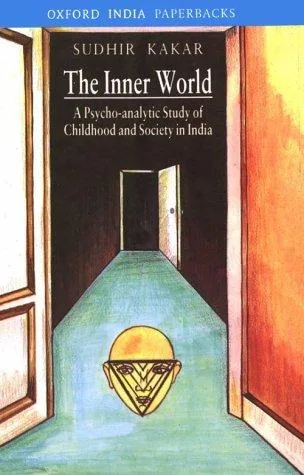
The inner world
 83
83

The inner world
Sudhir Kakar’s "The Inner World" presents a compelling, albeit dense, exploration of the developing psyche. Its primary strength lies in Kakar’s deft synthesis of psychoanalytic theory with ethnographic observations from India. He avoids the common pitfall of universalizing Western psychological models by demonstrating how cultural specificities, like the deeply ingrained mother-son relationship in Indian families, shape fundamental developmental stages. A particularly striking element is his discussion of the Oedipus complex, which he presents not as a static universal, but as a dynamic process influenced by societal structures. However, the book’s academic tone can sometimes feel remote, requiring a significant commitment from the reader to fully grasp its nuances. The prose, while precise, occasionally lacks the accessibility that might draw a broader audience. Despite this, "The Inner World" remains a significant contribution to understanding the intricate relationship between culture and the individual mind.
📝 Description
83
Sudhir Kakar's 1985 book examines the human psyche through psychoanalytic theory and Indian cultural observations.
Published in 1985, "The Inner World" by Sudhir Kakar offers a scholarly look at the human mind. Kakar uses psychoanalytic ideas and observations from different cultures to understand how the mind develops. He focuses on how individual experiences connect with the wider culture.
The book is for readers interested in the psychological roots of behavior, especially how early life shapes adult personality. It seeks to explain universal aspects of human growth, blending Western psychological ideas with non-Western viewpoints. Kakar's work addresses the interplay between individual psychology and cultural norms, particularly within the Indian context.
While not strictly an esoteric text, Kakar's work engages with psychoanalytic traditions that seek to understand the deeper, often unconscious, workings of the human mind. His cross-cultural approach, particularly his focus on Indian society, brings a non-Western lens to concepts like the Oedipus complex and infant development. This method aligns with broader esoteric interests in exploring universal human experiences beyond standard Western frameworks, suggesting that fundamental psychological structures may manifest differently across diverse cultural and spiritual backgrounds.
💡 Why Read This Book?
• Gain a nuanced understanding of the Oedipus complex as it manifests and potentially transforms within non-Western cultural frameworks, challenging purely Freudian interpretations. • Explore the concept of the "primary object" and its critical role in early psychological development, informed by Kakar's studies in Indian child-rearing environments. • Appreciate how cultural norms and religious beliefs, as depicted in Kakar's analysis of Indian society, significantly influence the formation of the ego and personality structure.
⭐ Reader Reviews
Honest opinions from readers who have explored this book.
❓ Frequently Asked Questions
When was Sudhir Kakar's 'The Inner World' first published?
Sudhir Kakar's "The Inner World" was first published in 1985, offering a significant contribution to cross-cultural psychology and psychoanalytic theory during that era.
What is the main focus of Sudhir Kakar's 'The Inner World'?
The book primarily focuses on the development of the human psyche, examining how early life experiences and cultural contexts, particularly within India, shape personality and psychological processes.
Does 'The Inner World' discuss Freudian concepts?
Yes, "The Inner World" engages with Freudian concepts, most notably the Oedipus complex, but critically examines their application and expression within diverse cultural settings, moving beyond a solely Western interpretation.
Who would benefit from reading 'The Inner World'?
Students of psychology, anthropology, and comparative religion, as well as readers interested in the intersection of culture and the individual mind, will find Kakar's work particularly insightful.
What cultural context does Sudhir Kakar primarily draw from?
Kakar draws extensively from the cultural context of India, using observations of Indian child-rearing practices and societal norms to inform his psychoanalytic discussions.
Is 'The Inner World' a theoretical or practical guide?
"The Inner World" is primarily a theoretical and scholarly work, offering an analytical exploration of psychological development rather than a practical guide for self-help.
🔮 Key Themes & Symbolism
Psyche and Culture Nexus
Kakar meticulously investigates the intricate relationship between the developing human psyche and its surrounding cultural milieu. He moves beyond a singular Western lens, demonstrating how societal structures, familial roles, and religious beliefs—particularly those prevalent in India—profoundly shape individual psychological formation. The work posits that fundamental developmental stages and concepts like the ego are not universally identical but are actively molded by the specific cultural context in which they emerge, offering a more nuanced view of human psychology.
Maternal Influence and Early Attachment
A central theme is the profound and often unique influence of the mother figure in early infant development, especially within the Indian cultural context. Kakar examines the concept of the 'primary object' and how the intensity and nature of the mother-child bond, often characterized by a close, prolonged attachment in India, set the stage for later psychological development and the formation of internal object relations. This exploration highlights the critical role of early attachment in shaping the individual's inner world.
The Oedipus Complex Across Cultures
Kakar offers a compelling re-evaluation of the Freudian Oedipus complex, arguing against its monolithic interpretation. He presents evidence and analysis suggesting that the complex, while perhaps a universal dynamic, manifests and is resolved differently across cultures. His examination of Indian society reveals how familial structures and social norms can alter the typical Western experience of the Oedipal triangle, leading to distinct psychological outcomes and adaptations.
Formation of Identity and Self
The book explores how the self, or ego, is constructed through a complex interplay of innate psychological predispositions and external cultural conditioning. Kakar discusses how societal expectations, religious doctrines, and historical influences contribute to the individual's sense of identity. This perspective underscores that the formation of a stable and coherent self is an ongoing process deeply intertwined with one's cultural inheritance and social environment.
💬 Memorable Quotes
Direct passages from the work, attributed to the author.
“The Oedipus complex is not the same everywhere.”
— This concept suggests that the universal psychological conflicts identified by Freud, such as the Oedipus complex, are experienced and resolved differently depending on the specific cultural, familial, and social structures of a society.
“A child's first relationship is with the mother.”
— This highlights the foundational importance of the mother-infant bond in early psychological development, positing it as the primary template for all subsequent relationships and the formation of the inner world.
“Culture shapes how we feel and think.”
— This expresses the book's core argument: that our psychological landscape, including our emotions, thoughts, and personality, is not solely determined by innate factors but is profoundly influenced and sculpted by the cultural environment we inhabit.
“The ego develops through interaction.”
— This points to the idea that the 'self' or ego is not a static entity but a dynamic construct that emerges and evolves through continuous engagement with external reality and social feedback.
“Indian mothers and sons have a unique bond.”
— This observation, specific to Kakar's research in India, points to a culturally distinct intensity and nature of the maternal relationship that significantly impacts the developing male psyche and its understanding of relationships.
🌙 Esoteric Significance
Tradition
While not strictly belonging to a singular esoteric lineage like Hermeticism or Gnosticism, Kakar's work aligns with traditions that explore the deeper meaning of the human psyche and the subtle influences that shape consciousness. It shares a common ground with depth psychology movements that seek to understand the unconscious mind and its relationship to lived experience, mirroring the esoteric pursuit of inner knowledge and self-understanding through examining the layers of the self.
Symbolism
The primary symbolic motif explored is the mother figure, representing not just biological birth but the origin of attachment, security, and the primal connection to the world. The concept of the 'inner world' itself functions as a potent symbol for the subjective reality of the psyche, a landscape shaped by both personal history and collective cultural narratives, akin to how esoteric traditions map spiritual realms or internal planes of existence.
Modern Relevance
Kakar's work continues to be relevant for contemporary thinkers in psychology, anthropology, and philosophy of mind who are interested in decolonizing psychological thought and understanding the impact of cultural context on mental health and identity formation. His nuanced approach informs modern discussions on global mental health initiatives and cross-cultural therapeutic practices, demonstrating the enduring value of integrating local cultural understandings with universal psychological principles.
👥 Who Should Read This Book
• Students of comparative psychology and cultural anthropology seeking to understand how societal structures influence individual development. • Psychoanalytic practitioners and theorists interested in exploring the cross-cultural variations of core psychological concepts like the Oedipus complex. • Readers with an interest in Indian culture and its unique contributions to understanding human behavior and the formation of the self.
📜 Historical Context
Sudhir Kakar's "The Inner World," released in 1985, emerged during a vibrant period of interdisciplinary scholarship exploring the human mind. Psychoanalytic thought, while established, was increasingly being challenged and expanded by anthropological and cross-cultural studies. Kakar’s work was part of a broader movement questioning the universality of Western psychological models, a sentiment echoed by scholars like Ashis Nandy, who critically examined colonial legacies in Indian thought. The book engaged with the psychoanalytic tradition established by Sigmund Freud and later thinkers like Erik Erikson, but importantly, it sought to ground these theories in the lived realities of Indian society. This approach offered a significant counterpoint to purely abstract psychoanalytic discourse and contributed to a growing academic understanding of how cultural specificity impacts universal psychological processes, distinguishing it from more generalized Freudian analyses prevalent at the time.
📔 Journal Prompts
Reflect on the "primary object" in your own formative experiences.
Consider how cultural narratives about family influence your "inner world."
Analyze the manifestations of the Oedipus complex within your own cultural context.
Explore the relationship between your "ego" and societal expectations.
How does the concept of the mother figure resonate in your personal psychology?
🗂️ Glossary
Primary Object
In psychoanalytic theory, the first significant person (typically the mother) with whom an infant forms a bond, serving as the foundation for all later relationships and the development of the self.
Ego
In Freudian psychology, the part of the mind that mediates between the conscious and the unconscious, and between the demands of the id, the superego, and reality.
Oedipus Complex
A psychoanalytic concept describing a child's unconscious desire for the parent of the opposite sex and feelings of rivalry towards the parent of the same sex.
Inner World
Refers to the subjective psychological reality of an individual, encompassing thoughts, feelings, memories, and unconscious processes that shape their perception and experience.
Cultural Context
The social, historical, religious, and environmental factors of a particular society that influence the beliefs, behaviors, and psychological development of its members.
Attachment
The emotional bond that forms between an infant and their primary caregiver, crucial for healthy psychological development and social functioning.
Superego
In Freudian psychology, the part of the personality that represents internalized ideals and moral standards derived from parents and society.
🔮 Readers Also Liked
Browse all →









More by Sudhir Kakar
All books →


More Free Occult Philosophy Books
View all →