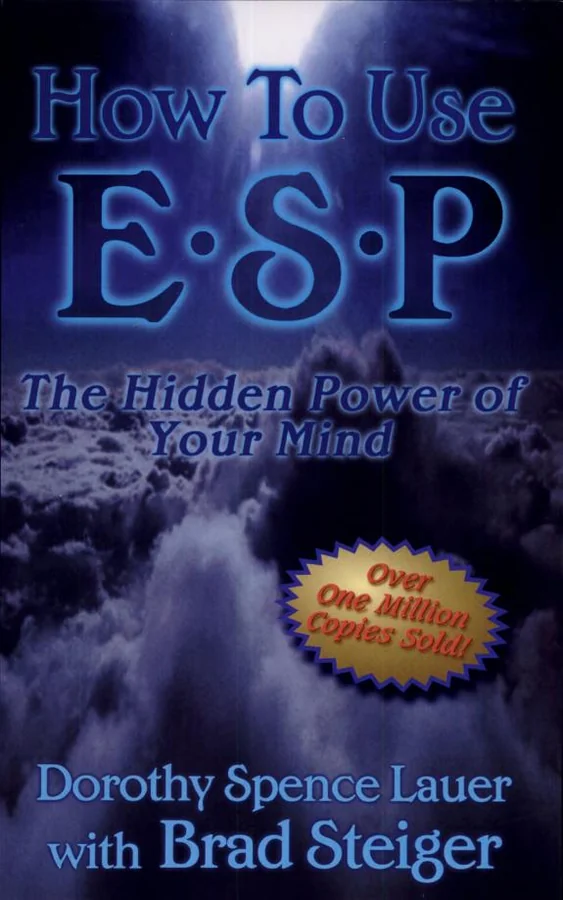
How to Use ESP
 80
80

How to Use ESP
Dorothy Spence Lauer and Brad. Steiger’s "How to Use ESP" tackles the often-elusive subject of psychic ability with a surprising degree of pragmatic instruction. Its primary strength lies in its directness; it doesn’t linger in abstract theory but instead offers exercises and methods clearly intended for application. The section detailing techniques for telepathic projection, for instance, provides a framework that, while requiring dedicated practice, feels less like magic and more like a trainable skill. However, the book’s limitation is its somewhat dated presentation of the subject matter. While the core principles remain relevant, the scientific framing feels less robust than contemporary parapsychological discourse, occasionally relying on assertions that lack deeper empirical grounding. The advice on "mental shielding" is a concrete concept, but could benefit from more nuanced exploration of psychological boundaries versus psychic ones. Despite this, the work offers a solid foundational approach for those seeking to engage with ESP development systematically.
📝 Description
80
Published in 1998, How to Use ESP offers a direct guide to developing psychic abilities.
Dorothy Spence Lauer and Brad. Steiger's How to Use ESP presents a practical approach to developing extrasensory perception. The book moves past theory to provide actionable techniques for enhancing psychic abilities. Readers are guided through exercises designed to sharpen intuition, improve telepathic communication, and understand precognitive phenomena. The authors frame ESP not as a rare gift, but as a human faculty that can be cultivated through practice and focused intent.
This work targets individuals actively seeking to explore and develop their psychic potential. It appeals to those who want tangible results and systematic development in esoteric subjects. Readers interested in applying psi phenomena to everyday life, such as improving decision-making or interpersonal connections, will find value. It is for the earnest student of the mind and its unexplored capabilities.
Published in 1998, How to Use ESP appeared during a time of sustained popular interest in parapsychology and New Age thought. The late 20th century saw numerous books on psychic abilities, often referencing earlier figures like J.B. Rhine. Lauer and Steiger's book distinguished itself as a direct instructional manual. It offered accessible, empirical approaches to the paranormal, contrasting with earlier theoretical works or collections of anecdotes.
💡 Why Read This Book?
• Learn specific, actionable exercises for developing telepathy and clairvoyance, moving beyond abstract notions of psychic ability, as presented in the book's practical technique sections. • Gain an understanding of ESP as a trainable faculty, not just an innate gift, supported by the book's emphasis on consistent practice and mental discipline from the 1998 publication era. • Discover methods for interpreting subtle psychic impressions and developing intuition, offering a structured approach to recognizing and utilizing precognitive signals.
⭐ Reader Reviews
Honest opinions from readers who have explored this book.
❓ Frequently Asked Questions
What is the primary focus of 'How to Use ESP' by Lauer and Steiger?
The book's primary focus is on providing practical, step-by-step methods for developing and utilizing extrasensory perception (ESP). It guides readers through exercises designed to enhance psychic abilities like telepathy and clairvoyance, treating them as trainable human faculties.
When was 'How to Use ESP' first published?
The book 'How to Use ESP' was first published in 1998. This places it within the late 20th-century wave of popular interest in parapsychology and personal development of psychic abilities.
Who are the authors of 'How to Use ESP'?
The authors are Dorothy Spence Lauer and Brad. Steiger. Brad Steiger was a prolific writer in the fields of parapsychology and the paranormal, known for numerous books on UFOs, ghosts, and psychic phenomena.
Does the book offer exercises for specific psychic abilities?
Yes, the book is structured around offering practical exercises. It covers techniques for developing telepathy, clairvoyance, and precognition, aiming to make the development of these abilities accessible through focused practice.
Is 'How to Use ESP' suitable for beginners in psychic development?
Yes, the book is particularly suited for beginners or those looking for a systematic approach. It avoids overly complex theory and focuses on actionable steps and exercises, making it a good starting point for practical ESP training.
What is the historical context of 'How to Use ESP'?
Published in 1998, the book emerged during a period of sustained popular interest in the paranormal. It offered a more direct, instructional approach compared to earlier, more theoretical works on psychic phenomena from figures like J.B. Rhine.
🔮 Key Themes & Symbolism
ESP as a Trainable Faculty
The central thesis of 'How to Use ESP' posits that extrasensory perception is not an exclusive gift but a latent human capacity that can be cultivated through dedicated practice. The book meticulously outlines methods and exercises aimed at systematically enhancing intuitive, telepathic, and precognitive abilities. It encourages readers to approach psychic development with discipline, akin to learning any other skill, emphasizing consistent effort and focused intent as the primary drivers of progress. This perspective explains ESP, making it accessible to a broader audience seeking tangible results rather than relying on innate talent.
Practical Application and Interpretation
Beyond mere theory, 'How to Use ESP' prioritizes the practical application of psychic abilities in daily life. The work offers concrete techniques for exercises such as telepathic communication, clairvoyant perception, and psychometry. A significant focus is placed on the interpretation of the subtle impressions and intuitive insights received during these practices. The authors guide readers on how to discern meaningful psychic signals from random mental noise, fostering a more discerning and effective engagement with one's own psi phenomena. This emphasis ensures that the development of ESP is geared towards practical utility.
Mental Discipline and Focus
Central to the methodology presented in 'How to Use ESP' is the importance of mental discipline and focused concentration. The book details exercises designed to strengthen the mind's ability to direct energy, maintain focus during psychic work, and shield against unwanted external psychic influences. This aspect highlights the authors' view of ESP development as requiring rigorous mental training. By cultivating a disciplined mind, readers are better equipped to engage in clear reception, accurate transmission, and effective interpretation of psychic information, forming the bedrock of reliable ESP practice.
Understanding Psychic Phenomena
The book aims to provide a framework for understanding the nature of psychic phenomena. It explores concepts related to energy, consciousness, and the interconnectedness of minds, offering explanations for how ESP might operate. Rather than presenting mystical pronouncements, it seeks to explain these abilities through accessible, albeit esoteric, principles. This allows readers to build a conceptual model that supports their practical training, fostering a deeper comprehension of the processes involved in extrasensory perception and its potential manifestations.
💬 Memorable Quotes
Direct passages from the work, attributed to the author.
“ESP is not a gift for the few, but a latent capacity for all.”
— This statement captures the book's core philosophy: that psychic abilities are not inherent to a select group but are potential aspects of human consciousness waiting to be awakened through training and practice.
“Consistent practice is the key to unlocking psychic potential.”
— This highlights the book's emphasis on discipline and repetition. It suggests that regular engagement with specific exercises, rather than sporadic effort, is crucial for developing and strengthening extrasensory perception.
“Learn to interpret the subtle language of your intuition.”
— This points to the importance the book places on discernment. It's not enough to receive impressions; one must also develop the skill to understand their meaning and validity, distinguishing psychic signals from everyday thoughts.
“Telepathy requires a clear sender and a receptive receiver.”
— This simple assertion frames telepathy as a communicative process with distinct roles and requirements. It implies that both the ability to project thoughts and the ability to receive them must be cultivated.
“Mental shielding protects your psychic energy from unwanted intrusion.”
— This concept addresses the need for energetic hygiene in psychic work. It suggests that developing the ability to create mental barriers is essential for maintaining focus and personal energetic integrity.
🌙 Esoteric Significance
Tradition
While not strictly adhering to a single esoteric lineage, "How to Use ESP" draws heavily from the broader Western Esoteric tradition, particularly its modern manifestations in parapsychology and New Thought. It shares common ground with Hermeticism's emphasis on mental powers and the idea that "as above, so below" applies to inner faculties. The practical, almost scientific approach to developing innate abilities also echoes Theosophical ideals of human potential and spiritual evolution, though it bypasses the more complex metaphysical systems often associated with those traditions.
Symbolism
The book often utilizes the concept of 'energy' as a symbolic medium for psychic connection, representing an unseen force that binds consciousness. 'Focus' itself becomes a symbol of directed will, crucial for manifesting psychic abilities. The act of 'shielding' can be seen as a symbolic representation of maintaining personal energetic boundaries, essential for working through the psychic landscape without being overwhelmed by external influences or the projections of others.
Modern Relevance
The practical, exercise-driven approach of "How to Use ESP" remains relevant for contemporary practitioners of psychic development and meditation. Modern mindfulness and energy-healing modalities often incorporate similar principles of focused attention and energetic awareness. Thinkers and practitioners in fields like intuition coaching, remote viewing, and even certain branches of consciousness studies can find foundational techniques within this work that align with their current practices, demonstrating its enduring utility for those seeking to explore their inner potential.
👥 Who Should Read This Book
• Aspiring psychics and sensitives seeking structured, actionable techniques for developing telepathy, clairvoyance, and precognition, moving beyond theoretical understanding. • Individuals interested in the practical application of psychic abilities in everyday life, such as enhancing intuition for decision-making or improving interpersonal connection. • Students of parapsychology and esoteric studies looking for a foundational text that treats ESP as a trainable skill, offering clear exercises from the late 20th-century development.
📜 Historical Context
Published in 1998, "How to Use ESP" emerged from a fertile period for popular esoteric literature, a time when the internet was beginning to democratize access to information on fringe topics. Brad. Steiger, a seasoned author in the paranormal field, brought his extensive experience to this work, collaborating with Dorothy Spence Lauer to create a more instructional manual. This era saw a continued public fascination with psychic phenomena, building on the legacy of parapsychologists like J.B. Rhine and spiritual movements that gained traction in the latter half of the 20th century. The book arrived at a time when New Age philosophies were widely discussed, but it distinguished itself by offering a direct, skill-based approach to ESP development, contrasting with more philosophical or purely anecdotal accounts prevalent in the field. Its practical focus aimed to equip readers with tools, reflecting a growing desire for tangible methods within esoteric studies.
📔 Journal Prompts
The concept of 'mental shielding' and its application in daily interactions.
Interpreting subtle impressions: recalling a specific psychic impression and its outcome.
Assessing progress in telepathic exercises since beginning the book's methods.
The role of focused intent in manifesting precognitive awareness.
Reflecting on the idea of ESP as a trainable faculty, as presented in the 1998 publication.
🗂️ Glossary
ESP
Stands for Extrasensory Perception. It refers to the ability to acquire information not through the recognized senses but through means not yet explained by science, such as telepathy, clairvoyance, and precognition.
Telepathy
The direct communication of thoughts, feelings, or images from one mind to another without the use of the physical senses. It is a core subject explored through practical exercises in the book.
Clairvoyance
The ability to perceive objects, people, or events beyond the range of ordinary sight, often described as 'clear seeing.' The book offers methods for developing this faculty.
Precognition
The ability to foresee future events or gain knowledge of future occurrences. This is presented as a psychic faculty that can be cultivated through specific mental exercises.
Psychic Energy
A conceptual term referring to a subtle energy or force associated with consciousness and mental activity, believed to be the medium through which psychic phenomena operate.
Mental Shielding
A technique described in the book to protect one's psychic energy and mental space from unwanted influences or intrusions, crucial for focused psychic work.
Intuition
The capacity to understand or know something instinctively, without conscious reasoning. The book aims to enhance and clarify intuitive perception.
This book appears in 1 collection
🔮 Readers Also Liked
Browse all →







From the “Extrasensory Perception” Collection
View all →








More Free Occult Philosophy Books
View all →