Beginnings
 61
61

Beginnings



Celeste Moreau, Divination & Symbolism Reviewer — Nigel Pennick's 'Beginnings' is a masterful distillation of core esoteric principles, offering a rare clarity on the foundational elements of divination and occult thought. Pennick's erudition shines as he navigates complex themes with accessible prose, making this a vital resource for both neophytes and seasoned practitioners. The book excels in its ability to connect ancient European customs with universal spiritual currents, revealing the underlying symbolism that permeates our existence. Its strength lies in its foundational approach, providing a robust framework for understanding the deeper workings of the mind and spirit. 'Beginnings' is an indispensable guide for anyone seeking to embark on a genuine path of esoteric discovery, fostering a deeper connection to the hidden wisdom of the world.
📝 Description
61
Nigel Pennick's 'Beginnings' examines the ancient origins of Western esoteric thought and practice.
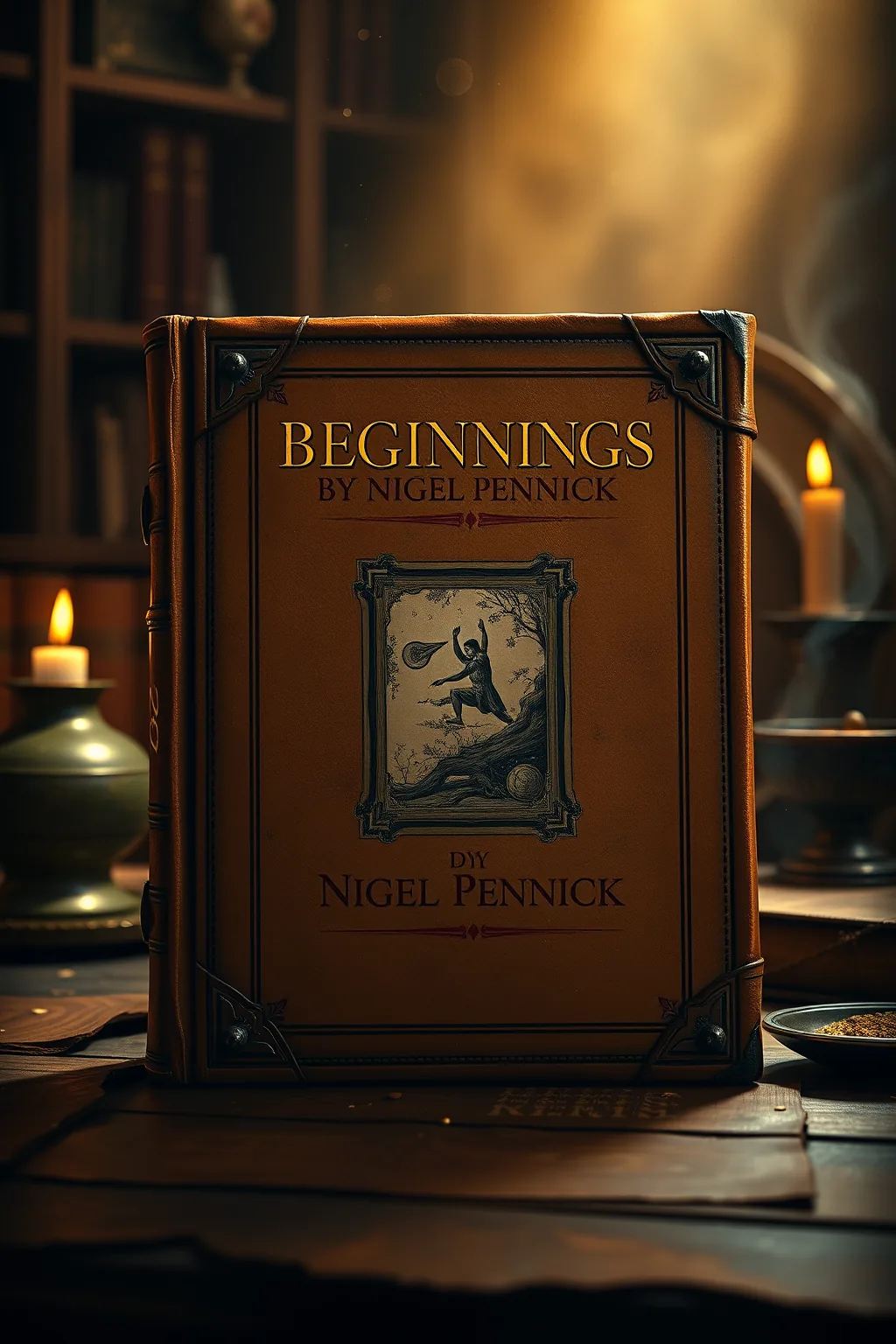
Published by Nigel Pennick, 'Beginnings' examines the foundational principles behind many spiritual and occult beliefs. The book connects these principles to the interplay of body, mind, and spirit. It also looks at forgotten European customs and social practices that retain a sense of primal understanding.
Pennick's work addresses those seeking deeper knowledge, whether scholars or practitioners. It aims to foster an awakening of intuitive abilities and encourage contemplation of existence. The text serves as a link to the occult traditions of Europe and offers a philosophical basis for contemporary spiritual thought.
This book fits within the tradition of Western esotericism, a broad field that includes Hermeticism, Gnosticism, Kabbalah, and various magical and alchemical systems. Pennick's focus on origins and symbolic language aligns with scholarly approaches to understanding these traditions. It seeks to uncover underlying patterns in belief systems that have influenced European culture and spirituality for centuries.
💡 Why Read This Book?
Embark on a transformative journey with 'Beginnings' by Nigel Pennick. This book offers a foundational understanding of divination and esoteric symbolism, essential for unlocking hidden knowledge. Ideal for seekers of spiritual truth, academic scholars of occultism, and practitioners looking to deepen their intuitive practice. Discover ancient European wisdom and its connection to the body, mind, and spirit.
⭐ Reader Reviews
Honest opinions from readers who have explored this book.
❓ Frequently Asked Questions
What core concepts does 'Beginnings' explore?
'Beginnings' delves into the foundational principles of divination, occultism, and the interconnectedness of the body, mind, and spirit. It explores ancient European customs and their underlying symbolic language, offering a holistic view of esoteric traditions.
Who is the intended audience for this book?
This book is ideal for individuals interested in esoteric knowledge, including spiritual seekers, students of occult history, practitioners of divination, and those curious about the metaphysical aspects of European culture and quasi-religious beliefs.
How does 'Beginnings' relate to the New Age movement?
'Beginnings' provides the philosophical and historical underpinnings that resonate with New Age thought. It explores themes of personal transformation, spiritual awakening, and the search for deeper meaning, which are central to the New Age ethos.
What makes Nigel Pennick's approach unique?
Pennick's unique strength lies in his ability to synthesize complex esoteric concepts with historical and cultural context, particularly from a European perspective. He bridges academic rigor with intuitive understanding, making arcane knowledge accessible.
Can this book be used as a practical guide for divination?
While 'Beginnings' focuses on the foundational principles and symbolism, its insights provide a robust framework for understanding and practicing various forms of divination more effectively. It enriches the practitioner's theoretical and intuitive base.
🔮 Key Themes & Symbolism
The Foundation of Esoteric Knowledge
'Beginnings' lays bare the fundamental principles that form the bedrock of esoteric traditions. It meticulously unpacks the symbolic language and archetypal patterns that have shaped human understanding of the universe and our place within it. Pennick guides the reader through the essential concepts of occultism, exploring how these ancient systems offer pathways to self-discovery and a deeper connection to the unseen forces that govern existence. This theme emphasizes the importance of understanding origins and core tenets before looking at more complex practices, providing a vital intellectual and spiritual toolkit for the dedicated seeker.
European Occult Traditions and Social Customs
This theme explores the body of European occultism, tying together historical societal practices, quasi-religious beliefs, and the evolution of mystical thought across the continent. Pennick illuminates how everyday customs and folklore often concealed profound esoteric wisdom, passed down through generations. The book examines the subtle yet persistent influence of these traditions on European identity and social life, offering a unique perspective on how the hidden currents of magic and spirituality have shaped the continent's cultural landscape and its enduring mystical heritage.
The Interconnectedness of Body, Mind, and Spirit
'Beginnings' champions a holistic worldview, emphasizing the intrinsic link between the physical, mental, and spiritual aspects of human existence. Pennick illustrates how practices of divination and occult exploration are not merely intellectual pursuits but deeply embodied experiences. This theme highlights the importance of aligning these three facets for true spiritual growth and understanding. By exploring ancient wisdom, the book suggests that a balanced and integrated self is key to unlocking higher consciousness and reading through the complexities of life with greater insight and spiritual awareness.
💬 Memorable Quotes
Direct passages from the work, attributed to the author.
“Roots run deeper than the visible world.”
— This highlights the profound influence of unseen forces and foundational principles that shape reality, urging a contemplation of origins and hidden connections.
“Every symbol is a doorway.”
— This emphasizes the communicative power of symbols in esoteric traditions, suggesting that each one holds potential for revelation and deeper understanding.
“The body remembers what the mind forgets.”
— This points to the embodied nature of wisdom and memory, suggesting that physical experience and intuition hold ancient knowledge often overlooked by rational thought.
“Beginnings are not endings, but thresholds.”
— This philosophical statement frames the concept of 'beginnings' not as finality, but as the commencement of new journeys and stages of spiritual or personal development.
💡 Key Ideas
Editorial paraphrase of the work's core concepts — not direct quotes.
The veil is thin for those who know where to look.
This quote speaks to the accessibility of hidden knowledge. It suggests that the esoteric truths are not entirely concealed but require a specific perspective or understanding to perceive them.
🌙 Esoteric Significance
Tradition
Pennick's 'Beginnings' draws deeply from Western esoteric traditions, particularly European folklore, hermeticism, and ancient pagan beliefs. It serves as a foundational text that bridges the gap between academic study of occultism and practical, intuitive understanding. The work emphasizes the universal archetypes and symbolic languages that underpin various mystical paths, offering a coherent framework for those new to the subject or seeking to consolidate their knowledge. It positions itself as a gateway to a broader understanding of the esoteric lineage, encouraging a holistic approach to spiritual inquiry.
Symbolism
The book meticulously dissects the foundational symbolism inherent in divination and occult practices. It explores how recurring motifs, archetypes, and glyphs serve as conduits for hidden knowledge, connecting the microcosm of the individual to the macrocosm of the universe. Pennick reveals the layers of meaning embedded within common symbols, illustrating their power to unlock intuition and facilitate spiritual insight. This approach underscores the idea that the universe communicates through a rich symbolic language, and understanding this language is key to reading through the esoteric landscape.
Modern Relevance
In an age often characterized by rapid technological advancement and superficial connections, 'Beginnings' offers a vital antidote by grounding readers in timeless principles of self-awareness and spiritual depth. Its exploration of the body-mind-spirit connection is particularly relevant for modern wellness and mindfulness practices. Furthermore, its focus on ancient European wisdom provides a rich counterpoint to globalization, encouraging a re-evaluation of cultural heritage and the enduring relevance of symbolic understanding in navigating contemporary challenges and fostering personal growth.
👥 Who Should Read This Book
This important work is essential for anyone beginning an esoteric journey. For the **beginner**, 'Beginnings' provides a clear, foundational understanding of occult principles and divination, explaining complex concepts. **Scholars** will appreciate Pennick's meticulous research and his ability to contextualize esoteric lore within European history and culture. **Spiritual seekers** will find a roadmap to deeper self-understanding and connection to universal energies. **Practitioners** of Tarot, astrology, or other divination methods will gain invaluable insights into the symbolic language and philosophical underpinnings that enrich their craft, fostering a more profound and effective practice.
📜 Historical Context
Published within the broader resurgence of interest in the occult and esoteric studies during the late 20th century, 'Beginnings' by Nigel Pennick emerged as a significant contribution to the field. This era saw a growing dissatisfaction with purely materialistic worldviews and a renewed exploration of ancient wisdom traditions, mysticism, and alternative spiritualities. Pennick’s work aligns with a scholarly yet accessible approach, drawing heavily on European folklore, symbolism, and historical occult practices. It resonated with a readership seeking to reconnect with older, deeper currents of knowledge, offering a structured understanding of foundational concepts that had often been fragmented or obscured. The book’s emphasis on the interconnectedness of mind, body, and spirit also reflects the burgeoning New Age movement, providing a historical and philosophical anchor for contemporary spiritual seekers.
📔 Journal Prompts
Reflect on a personal 'beginning' that significantly shaped your path. What symbols or signs were present?
Consider a common object or natural phenomenon. What hidden esoteric meanings or connections can you perceive?
How does the concept of the 'body remembering' resonate with your own experiences or intuitive knowledge?
Explore a European tradition or custom you are familiar with. What potential esoteric or symbolic significance might it hold?
If every symbol is a doorway, what 'doorway' are you most drawn to explore further in your spiritual practice?
🗂️ Glossary
Divination
The practice of seeking knowledge of the future or the unknown by supernatural means. It involves interpreting signs, symbols, or patterns to gain insight and guidance.
Occultism
The study of hidden or secret knowledge, often concerning supernatural, mystical, or magical forces and phenomena. It encompasses a wide range of beliefs and practices aimed at understanding the unseen aspects of reality.
Esoteric
Intended for or likely to be understood by only a small number of people with a specialized knowledge or interest. It pertains to inner or hidden meanings, often revealed through intuition or mystical experience.
Archetype
A recurring symbol, character, or pattern of behavior that is universally understood across cultures. In esoteric thought, archetypes often represent fundamental cosmic or psychological forces.
Quasi-religious
Having a semblance of religion but not being a recognized or established religion. It often refers to belief systems or practices that share characteristics with religious traditions without adhering to formal dogma.
This book appears in 4 collections
🔮 Readers Also Liked
Browse all →






More by Nigel Pennick
All books →




From the “Occultism” Collection
View all →









More Free Divination & Tarot Books
View all →