The Homeric Hymn to Demeter

 81
81

The Homeric Hymn to Demeter
Helene P. Foley's edition of The Homeric Hymn to Demeter offers a rigorous scholarly approach to a text that bridges myth, ritual, and poetry. Foley's analysis of the hymn’s structure and its connection to the Eleusinian Mysteries is particularly illuminating, moving beyond simple narrative to explore its performative and theological weight. The strength of this edition lies in its detailed philological commentary and its engagement with feminist literary criticism, providing fresh perspectives on Demeter's agency and grief. A limitation, however, is that the dense scholarly apparatus may present a barrier for readers new to classical studies or esoteric traditions. Foley's interpretation of the hymn as a crucial articulation of a mother-goddess cult, predating some Olympian hierarchies, is a potent insight that reconfigures understandings of ancient Greek divinity. This edition stands as a significant scholarly contribution for dedicated classicists and mythographers.
📝 Description
81
Helene P. Foley's 1994 edition examines the Homeric Hymn to Demeter.
The Homeric Hymn to Demeter recounts the myth of Persephone's abduction, Demeter's grief, and the subsequent pact brokered by Zeus. Attributed to oral performance traditions, this ancient Greek religious poem connects directly to agricultural cycles and initiation rites. Foley's edition provides a scholarly analysis of the hymn's literary, religious, and cultural significance within the context of Greek belief systems.
This work is for classical literature and religion scholars, students of comparative mythology, and anyone interested in ancient Greek beliefs. It appeals to readers seeking the narrative's ritualistic implications and its role in the Eleusinian Mysteries. Those interested in feminist interpretations of ancient texts will also find substantial material. The hymn's themes of loss, descent, and rebirth are tied to agrarian cults and rites, particularly the Eleusinian Mysteries.
The hymn is central to understanding the Demeter and Persephone myth, which is entwined with the seasons and agricultural fertility. Its themes include maternal love, divine power, grief, and the underworld. The text is a vital source for studying ancient Greek religious practice, especially the Eleusinian Mysteries, believed to be.
The Homeric Hymn to Demeter holds a significant place within the study of ancient Greek mystery religions. Its narrative, particularly the descent of Persephone and Demeter's reaction, is deeply connected to the Eleusinian Mysteries, one of the most important initiation rites of the ancient world. These mysteries promised initiates a better afterlife and were central to Greek religious life for centuries. The hymn's themes of death, rebirth, and divine power resonate with initiatory practices that sought to understand and influence cosmic cycles and personal salvation.
💡 Why Read This Book?
• Gain a nuanced understanding of the Demeter and Persephone myth, exploring its roots in agrarian cycles and the specific ritualistic context of the Eleusinian Mysteries, as detailed in Foley's analysis. • Discover the symbolic importance of the pomegranate and the concept of 'descent' within ancient Greek esotericism, as explained through the hymn's narrative of Persephone's journey. • Appreciate the literary artistry and potential theological implications of the hymn, understanding how its composition in the mid-7th century BCE shaped later religious thought and practice.
⭐ Reader Reviews
Honest opinions from readers who have explored this book.
❓ Frequently Asked Questions
What is the historical period of The Homeric Hymn to Demeter?
The hymn is generally dated to the mid-7th century BCE, placing it in the Archaic period of ancient Greece, a time of significant development in epic and lyric poetry.
What are the Eleusinian Mysteries mentioned in relation to this hymn?
The Eleusinian Mysteries were ancient initiation rites held at Eleusis, Greece. The Hymn to Demeter is believed to be intrinsically linked to these rites, possibly forming part of their ritual performance or theological underpinning.
Who is Helene P. Foley and why is her edition significant?
Helene P. Foley is a respected scholar of classical literature. Her 1994 edition is significant for its detailed scholarly commentary, feminist critical approach, and exploration of the hymn's religious and cultural contexts.
What core myth does The Homeric Hymn to Demeter recount?
It recounts the abduction of Persephone by Hades, Demeter's subsequent grief and search for her daughter, and the eventual agreement for Persephone to spend part of the year in the underworld.
How does the hymn relate to seasonal cycles?
The myth of Demeter and Persephone is directly associated with the agricultural cycle. Persephone's time in the underworld explains winter, while her return signifies spring and the renewal of life.
Is this text considered esoteric?
Yes, the hymn is considered esoteric due to its deep connection with the secret rites of the Eleusinian Mysteries, which involved initiation and promised specific spiritual insights or afterlife benefits.
🔮 Key Themes & Symbolism
Maternal Grief and Divine Power
The hymn vividly portrays Demeter's overwhelming grief following Persephone's abduction, a sorrow so profound it halts the fertility of the earth. This illustrates the immense power attributed to the goddess of grain and agriculture, capable of disrupting cosmic order. Foley's analysis highlights how this divine anguish serves not only as narrative engine but as a theological statement on the primal bond between mother and daughter, and the consequences of disrupting natural cycles.
The Underworld and Initiation
Persephone's descent into Hades and her eventual return form the narrative core, symbolizing death and rebirth. This theme is intrinsically linked to the Eleusinian Mysteries, suggesting that the myth was ritually enacted or deeply contemplated by initiates. The hymn offers clues into ancient Greek concepts of the afterlife, the power of chthonic deities, and the transformative potential of undergoing secret rites that mirrored Persephone's journey.
Agrarian Cycles and Ritual
The myth directly explains the changing seasons: Demeter's sorrow causes winter, while her joy at Persephone's return brings spring. This connection underscores the hymn's function within a society heavily reliant on agriculture. Foley's work examines how the hymn likely served ritualistic purposes, reinforcing the link between divine will, human practices, and the earth's bounty, ensuring the continuation of life.
Feminist Readings of Divinity
Helene P. Foley's scholarship brings a feminist lens to the hymn, emphasizing Demeter's agency and the significance of female divine power within the ancient Greek pantheon. The narrative centers on a mother's desperate search and her assertion of authority, challenging patriarchal interpretations and highlighting the enduring power of goddesses associated with life, death, and regeneration.
💬 Memorable Quotes
Direct passages from the work, attributed to the author.
“The whole race of men, by the design of Zeus, perished.”
— This refers to the divine agreement brokered by Zeus, where Demeter's grief leads to a famine that threatens humanity, illustrating the gods' power over mortal existence.
“Demeter, the one with the beautiful hair, was eager to have her daughter back.”
— This captures the essence of Demeter's maternal drive and her relentless pursuit of Persephone, a core emotional and thematic element of the hymn.
“She (Persephone) ate honey-sweet fruit from the pomegranate.”
— This act binds Persephone to the underworld, symbolizing her irreversible connection to Hades and establishing the cyclical nature of her presence there.
“The goddess longed for her child.”
— A simple yet profound statement conveying the depth of Demeter's sorrow and the driving force behind her actions throughout the hymn.
💡 Key Ideas
Editorial paraphrase of the work's core concepts — not direct quotes.
Her son's voice (Hades') was heard from the depths of the earth.
This line signifies the moment of Persephone's abduction, emphasizing the chthonic nature of the event and the powerful, hidden forces at play in the underworld.
🌙 Esoteric Significance
Tradition
The hymn is a cornerstone text for understanding ancient Greek mystery traditions, particularly the Eleusinian Mysteries. While not strictly Hermetic or Gnostic, it shares with these later traditions an emphasis on hidden knowledge, transformative initiations, and a promise of a more favorable afterlife. Its focus on the goddess Demeter, a powerful chthonic deity, aligns with earth-based, cyclical, and regenerative spiritualities that run parallel to, and sometimes influence, broader Hellenistic esoteric currents.
Symbolism
The central symbols include the pomegranate, representing the binding nature of the underworld and the cyclical nature of life and death; the descent into darkness, symbolizing initiation and confrontation with mortality; and Demeter's grief-stricken barren earth, signifying the disruption of natural order and the profound connection between the divine and the material world. These symbols evoke themes of loss, transformation, and the ultimate restoration of fertility and life.
Modern Relevance
Contemporary practitioners of Goddess spirituality, earth-based religions, and those interested in comparative mythology draw heavily on the Demeter myth as depicted in the hymn. It informs modern understandings of the Great Mother archetype, the symbolism of descent and ascent for personal growth, and the sacredness of the agricultural cycles. Scholars and spiritual seekers alike continue to explore its themes for insights into ancient beliefs about life, death, and the divine feminine.
👥 Who Should Read This Book
• Students of Comparative Mythology: Those seeking to understand the archetypal patterns of abduction, descent, and return within global myths will find this hymn a crucial Greek example. • Practitioners of Esoteric Traditions: Individuals exploring ancient mystery cults, earth-based spiritualities, or Goddess traditions will gain insight into foundational narratives and symbolism. • Classical Literature Enthusiasts: Readers interested in ancient Greek poetry beyond the epic poems will appreciate the hymn's unique narrative voice and religious depth.
📜 Historical Context
The Homeric Hymn to Demeter emerged from the vibrant cultural milieu of Archaic Greece, likely around the mid-7th century BCE. This era saw the consolidation of epic poetic traditions, with figures like Homer and Hesiod setting a high standard. The hymn's composition reflects a period where religious understanding was deeply intertwined with myth and ritual practice, particularly the burgeoning mysteries. Unlike the more Olympian-centric narratives gaining prominence, the Hymn to Demeter foregrounds the potent forces of the chthonic deities and the profound power of the mother-goddess figure. Its connection to the Eleusinian Mysteries, a set of secret initiation rites, made it a text of profound esoteric significance, distinct from public cultic practices. The hymn's survival through manuscript traditions testifies to its enduring importance for later generations of scholars and initiates, who viewed it as a key to understanding fundamental aspects of Greek cosmology and salvation.
📔 Journal Prompts
Demeter's overwhelming grief and its effect on the earth.
Persephone's dual existence between the worlds of the living and the dead.
The role of Zeus in brokering the pact between Demeter and Hades.
The symbolic meaning of the pomegranate in the context of the hymn.
Reflections on the promise of the Eleusinian Mysteries as suggested by the hymn's narrative.
🗂️ Glossary
Homeric Hymns
A collection of ancient Greek religious poems, attributed to the tradition of Homer, celebrating various gods and goddesses. They were likely performed at festivals and rituals.
Demeter
The Greek goddess of agriculture, grain, harvest, and fertility. Mother of Persephone.
Persephone
Daughter of Demeter, queen of the Underworld, wife of Hades. Her myth explains the seasons.
Hades
The god of the Underworld and ruler of the dead in Greek mythology.
Eleusinian Mysteries
Secret ancient Greek initiation rites held annually in honor of Demeter and Persephone at Eleusis.
Chthonic
Relating to the Underworld or the earth; deities associated with the earth, fertility, and the dead.
Archaic Period
A period in ancient Greek history roughly from the 8th to the 6th century BCE, characterized by early developments in art, philosophy, and political structures.
🔮 Readers Also Liked
Browse all →









More by Helene P. Foley
All books →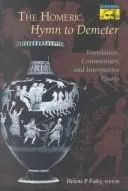
More Free Occult Philosophy Books
View all →