No Rules
 84
84

No Rules
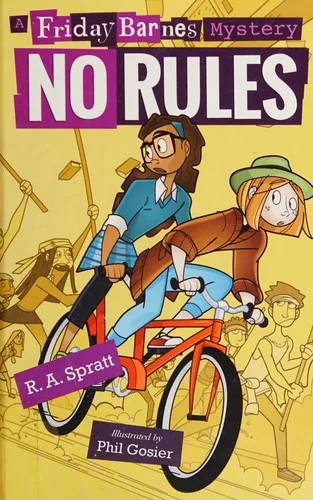
R. A. Spratt's No Rules, published in 2016, offers a refreshing departure from the often dogmatic pronouncements found in esoteric literature. Its strength lies in its deliberate ambiguity, which acts not as a weakness but as an invitation for personal interpretation and discovery. The author skillfully avoids prescriptive language, allowing the reader to engage with concepts on their own terms. However, this very lack of definitive structure can, at times, leave the reader adrift, yearning for a stronger anchor point amidst the philosophical currents. A passage that particularly lingers is the exploration of "unbound potential," a concept that Spratt presents with a disarming simplicity, yet it opens vast avenues for contemplation. The work's ultimate verdict is that of a valuable, if challenging, companion for the independent seeker.
📝 Description
84
R. A. Spratt's No Rules, published in 2016, questions fixed paradigms in esoteric thought.
No Rules, by R. A. Spratt, was first published in 2016. The book does not offer a step-by-step guide but instead examines ideas that do not fit neatly into existing categories. Spratt's work challenges common assumptions within its subject matter, encouraging readers to think differently about established norms. It is written for those already familiar with esoteric ideas who seek perspectives that diverge from the usual.
The text focuses on breaking down established ways of thinking about esoteric principles. It suggests that rigid systems may not be necessary for understanding these concepts. The author proposes that a more flexible approach can lead to greater understanding than strict adherence to doctrine. The book advocates for individuals to create their own understanding of these ideas, valuing personal experience over theoretical knowledge.
Published in the early 2010s, No Rules appeared during a period of increasing engagement with esoteric studies, often linked with philosophy and psychology. This era saw the growth of online communities and broader access to diverse texts. Spratt's book contributed to ongoing discussions about the nature of esoteric knowledge and its application beyond strict traditions, fitting into a milieu that encouraged varied interpretations.
💡 Why Read This Book?
• Gain an appreciation for the concept of "unbound potential" as presented in Chapter 3, offering a fresh perspective on personal growth beyond structured limitations. • Understand how R. A. Spratt critiques rigid esoteric doctrines, learning to question established norms in your own spiritual or philosophical pursuits. • Experience a text that encourages active interpretation, fostering a more engaged and personal relationship with complex ideas, rather than passive reception.
⭐ Reader Reviews
Honest opinions from readers who have explored this book.
❓ Frequently Asked Questions
What is the primary focus of R. A. Spratt's "No Rules"?
The book challenges conventional boundaries in esoteric thought, focusing on deconstructing established paradigms and questioning the necessity of rigid frameworks for understanding esoteric principles.
When was "No Rules" by R. A. Spratt first published?
"No Rules" by R. A. Spratt was first published in 2016, placing it within the contemporary landscape of esoteric literature.
Is "No Rules" suitable for beginners in esoteric studies?
While it offers unique perspectives, the book is best suited for readers with a foundational understanding of esoteric thought who are seeking unconventional viewpoints.
Does "No Rules" offer practical exercises or guidance?
No, the book operates more as an exploration of ideas and concepts rather than a prescriptive guide. Its value lies in provoking thought and encouraging personal interpretation.
What distinguishes "No Rules" from other esoteric texts published around 2016?
Its strength lies in its deliberate ambiguity and avoidance of dogmatic pronouncements, encouraging readers to engage with concepts personally rather than accepting them as fixed truths.
What is the author's approach to esoteric principles in "No Rules"?
R. A. Spratt questions the inherent necessity of strict doctrines, suggesting that a fluid, adaptable approach and experiential understanding yield deeper insights than theoretical adherence.
🔮 Key Themes & Symbolism
Deconstruction of Doctrine
The work critically examines the role of established doctrines within esoteric traditions. Spratt posits that rigid adherence can become a barrier to genuine understanding, advocating for a more fluid engagement with spiritual and philosophical concepts. This theme encourages readers to question the necessity of dogma and to seek personal meaning outside of prescribed systems, a perspective that gained traction in the early 2010s.
Unbound Potential
A central concept explored is the idea of "unbound potential," suggesting that human capacity and spiritual growth are not limited by pre-defined structures or expectations. This theme encourages readers to recognize and cultivate latent abilities and insights that lie beyond conventional understanding, fostering a sense of agency and exploration in their personal development.
Fluidity of Knowledge
Spratt emphasizes the dynamic and ever-evolving nature of esoteric knowledge. Rather than presenting it as a static body of facts, the book treats it as a living entity that shifts and transforms with individual perception and experience. This perspective challenges the reader to embrace uncertainty and to find wisdom in the process of ongoing inquiry.
Personal Synthesis
The text champions the individual's role in synthesizing disparate ideas and experiences into a coherent personal philosophy. It moves away from the idea of a single, authoritative interpretation, empowering the reader to construct their own understanding based on their unique journey and insights gained from exploring various esoteric currents.
💬 Memorable Quotes
Direct passages from the work, attributed to the author.
“The path is not found by following maps, but by charting the territory.”
— This highlights the book's emphasis on personal discovery over adherence to pre-established systems. It suggests that true understanding comes from direct experience and exploration rather than relying on existing frameworks.
“When the container dissolves, the contents are revealed in their true form.”
— This points to the deconstruction of rigid structures, whether mental, spiritual, or conceptual. It implies that limitations often obscure a deeper, more authentic reality or understanding.
“The silence between notes holds as much music as the notes themselves.”
— This metaphor suggests the importance of the unsaid, the implicit, and the spaces within knowledge. It encourages an appreciation for nuance and the subtle aspects of understanding that are often overlooked.
“To seek order is to impose limits on chaos; sometimes, chaos is the most fertile ground.”
— This challenges the inherent value placed on order, suggesting that embracing a degree of disorder or unpredictability can be a catalyst for growth and revelation in esoteric exploration.
“Understanding arrives not as a destination, but as a continuous unfolding.”
— This concept underscores the dynamic nature of knowledge and personal development. It frames understanding as an ongoing process rather than a fixed state to be achieved, promoting continuous learning.
🌙 Esoteric Significance
Tradition
No Rules engages with a broad, contemporary approach to esotericism, drawing implicitly from existentialist philosophy and certain strands of Gnosticism that emphasize personal gnosis over institutionalized dogma. It departs from more rigidly defined traditions like Hermeticism or Kabbalah by prioritizing fluidity and individual interpretation over adherence to established symbolic systems or ritualistic practices.
Symbolism
While not heavily reliant on traditional symbols, the book implicitly uses the concept of a "dissolving container" as a motif. This symbolizes the breakdown of restrictive mental or spiritual frameworks, allowing for a more direct and unmediated experience of reality. Another motif is the "uncharted territory," representing the unknown and the potential for discovery that lies beyond conventional knowledge and safe boundaries.
Modern Relevance
Contemporary practitioners of non-denominational spirituality, seekers interested in philosophical approaches to mysticism, and those involved in self-directed spiritual exploration often draw upon the spirit of works like No Rules. Thinkers and groups that emphasize personal sovereignty in spiritual development, or who explore the intersections of consciousness studies and philosophy, find resonance with its anti-dogmatic stance.
👥 Who Should Read This Book
• Independent spiritual seekers who find traditional doctrines too restrictive, looking for philosophical underpinnings to support their personal journey. • Students of comparative mysticism and philosophy interested in how contemporary authors challenge established esoteric frameworks and dogma. • Readers who appreciate literature that provokes critical thinking and encourages a personal, experiential approach to complex ideas rather than providing answers.
📜 Historical Context
Published in 2016, R. A. Spratt's No Rules emerged during a period of significant digital expansion for esoteric discourse. The early 2010s saw a proliferation of online forums, blogs, and independent publishing platforms that allowed for a wider dissemination of unconventional ideas, bypassing traditional gatekeepers. This era was characterized by a growing interest in post-modern philosophical approaches that questioned grand narratives and absolute truths, influencing how esoteric concepts were explored. Spratt's work can be seen as a product of this environment, contributing to a trend that favored personal interpretation and the deconstruction of established hierarchies. This contrasted with the more codified systems prevalent in earlier esoteric movements like Theosophy or the Hermetic Order of the Golden Dawn, which emphasized lineage and strict adherence to specific teachings. The reception of such independent works often came through peer networks and online communities rather than formal academic or critical reviews.
📔 Journal Prompts
The territory beyond the map: What aspects of your understanding require charting rather than following?
Reflect on the "dissolving container" concept: What structures in your life or thinking are no longer serving you?
Consider the "silence between notes": Where can you find deeper meaning in the unsaid or the implicit?
How does the idea of "unbound potential" challenge your current self-perception?
Explore the fertile ground of chaos: In what area of your life might embracing less order lead to growth?
🗂️ Glossary
Unbound Potential
A core concept suggesting that an individual's capacity for growth, understanding, and spiritual development is not limited by predefined structures or expectations.
Dissolving Container
A metaphorical motif representing the breakdown of restrictive mental, spiritual, or conceptual frameworks that obscure a deeper or more authentic experience.
Charting the Territory
An approach to learning and understanding that emphasizes direct experience, personal exploration, and discovery over adherence to established maps or doctrines.
Fertile Ground of Chaos
The idea that disorder, unpredictability, or the lack of strict order can serve as a catalyst for growth, creativity, and revelation.
Continuous Unfolding
A perspective on understanding and development that views it as an ongoing, dynamic process rather than a fixed state or endpoint.
Personal Synthesis
The process by which an individual integrates various ideas, experiences, and knowledge into a coherent and unique personal philosophy or worldview.
Esoteric Boundaries
Refers to the conventional limits, doctrines, or structures within esoteric thought that this book seeks to question or transcend.
🔮 Readers Also Liked
Browse all →








More by R. A. Spratt
All books →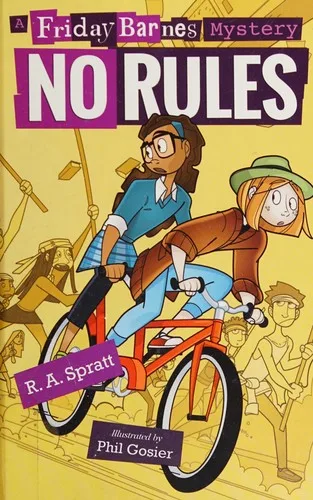
More Free Occult Philosophy Books
View all →