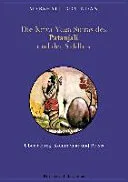
Die Kriya Yoga Sutras des Patanjali und der Siddhas
 83
83

Die Kriya Yoga Sutras des Patanjali und der Siddhas
Marshall Govindan's exploration of the Kriya Yoga Sutras, integrating Patanjali with the Siddha tradition, offers a welcome departure from purely academic or purely devotional interpretations of yoga. The strength of this work lies in its detailed exposition of Kriya Yoga as a systematic, energetic practice, grounded in the lineages of Agastya and Tirumular. Govindan's meticulous approach to explaining the interplay between Patanjali's philosophy and the Siddhas' practical techniques provides a robust framework for serious practitioners. A limitation, however, is the dense philosophical and technical language, which may present a steep learning curve for those new to these specific yogic streams. The section detailing the concept of *samyama* through the lens of Kriya Yoga practices is particularly illuminating, demonstrating how abstract philosophical principles can be embodied through specific yogic actions. It is an essential, albeit challenging, resource for those seeking the deepest currents of yogic science.
📝 Description
83
Marshall Govindan synthesizes Patanjali's Yoga Sutras with Siddha teachings in this 2017 volume.
This book examines the connection between Patanjali's Yoga Sutras and the teachings of the South Indian Siddhas, as presented by Marshall Govindan. It moves beyond a simple exposition of Patanjali's text to show how the Siddhas adapted and applied its principles. The work details the Kriya Yoga system, explaining its philosophical basis and energetic methods for practitioners. The focus is on the experiential aspects of yoga, including the cultivation of consciousness and the path to liberation through specific practices.
The intended audience is serious students of yoga, including advanced practitioners and scholars of comparative religion. Those interested in the historical development of yoga, particularly outside mainstream narratives, will find value. While some familiarity with yoga concepts is helpful, the book provides clear explanations for its specialized material, making it suitable for dedicated learners.
This work situates Kriya Yoga within a lineage that bridges classical Indian philosophy and later South Indian esoteric practices. It connects Patanjali's likely 400 CE compilation of yoga aphorisms with the more visceral, breath-focused methods attributed to Siddhas like Agastya and Tirumular, whose writings emerged between the 5th and 11th centuries CE. The book thus links the abstract Raja Yoga of Patanjali with the concrete energy cultivation central to Siddha traditions.
💡 Why Read This Book?
• Learn the practical application of Patanjali's Yoga Sutras as understood through the energetic practices of the South Indian Siddhas, focusing on techniques like *kriya* and *samyama* as detailed in the text. • Understand the historical lineage of Kriya Yoga, tracing its roots from Patanjali's classical yoga (circa 400 CE) to the Siddha masters like Agastya and Tirumular (5th-11th centuries CE). • Gain insight into the precise yogic methods for influencing the subtle body's *nadis* and *chakras*, moving beyond theoretical understanding to concrete energetic cultivation.
⭐ Reader Reviews
Honest opinions from readers who have explored this book.
❓ Frequently Asked Questions
What is the primary difference between Patanjali's Yoga Sutras and the Siddha Kriya Yoga presented in this book?
While Patanjali's Yoga Sutras provide the philosophical framework for Raja Yoga, this book emphasizes the Siddha tradition's focus on energetic practices, or 'kriya,' which operationalize Patanjali's concepts for direct experience and liberation.
Who were the key Siddha figures referenced in relation to Kriya Yoga?
The book frequently references the teachings attributed to Siddha masters such as Agastya and Tirumular, whose works, like the Tirumandiram, represent a significant stream of South Indian yogic transmission.
What is the approximate historical period for the compilation of Patanjali's Yoga Sutras?
The compilation of Patanjali's Yoga Sutras is generally dated to around 400 CE, establishing the foundational philosophical text for classical yoga.
Does this book offer practical exercises or is it purely theoretical?
The book aims to bridge theory and practice, detailing the Kriya Yoga system which includes specific techniques for breath control, meditation, and concentration designed for energetic and conscious development.
What does the term 'Siddha' refer to in the context of this book?
In this context, 'Siddha' refers to accomplished yogis and mystics, particularly from South India, who developed advanced yogic techniques and attained spiritual realization, often emphasizing the mastery of the subtle body.
Is this book suitable for beginners in yoga?
While it explains specialized content, the book is best suited for dedicated practitioners and scholars familiar with basic yogic concepts, due to its in-depth exploration of Patanjali and Siddha traditions.
🔮 Key Themes & Symbolism
Kriya Yoga Synthesis
This work elucidates Kriya Yoga as a synthesis of Patanjali's philosophical insights and the Siddhas' practical, energetic methods. It positions Kriya Yoga not as a separate school, but as an advanced application of yogic principles for conscious evolution. The text emphasizes that Kriya Yoga translates abstract concepts like *yama* and *niyama* into specific actions (*kriya*) designed to purify the body and mind, thereby facilitating deeper states of meditation and samadhi, as outlined in the Yoga Sutras.
The Siddha Lineage
The book places significant importance on the lineage of the Siddhas, particularly figures like Agastya and Tirumular, whose contributions are often less emphasized in mainstream yoga discourse. It highlights their focus on the subtle body, breath control (*pranayama*), and internal alchemy as direct pathways to liberation. This perspective offers a counterpoint to purely intellectual or ethical approaches to yoga, presenting a system deeply rooted in experiential, vitalistic practices.
Samyama as Integrated Practice
A central theme is the practical application of *samyama* (the combined practice of *dharana*, *dhyana*, and *samadhi*) as taught by Patanjali. Govindan interprets this through the Siddha Kriya Yoga framework, detailing how specific techniques of breath manipulation, mantra, and visualization are employed to achieve the profound concentration and absorption described in the Yoga Sutras, leading to direct knowledge and yogic powers.
Consciousness and Energetics
The book posits that true yogic attainment involves a profound transformation of consciousness, facilitated by the energetic mechanisms of the subtle body. It explores how practices within Kriya Yoga, such as awakening the *kundalini* and directing energy through the *nadis*, are instrumental in achieving the states of liberation (*kaivalya*) described by Patanjali, offering a scientific and experiential approach to spiritual development.
💬 Memorable Quotes
Direct passages from the work, attributed to the author.
“The Kriya Yoga system is a method for realizing the teachings of Patanjali.”
— This statement underscores the book's core thesis: that the Siddha tradition's practical techniques are not a departure from, but an advanced realization and application of, the philosophical principles laid out by Patanjali in his Yoga Sutras.
“Samyama is the combined practice of concentration, meditation, and absorption.”
— This defines Patanjali's key concept of *samyama*. The book elaborates on how specific Kriya Yoga techniques are employed to achieve this integrated state, moving beyond mere intellectual understanding to direct experiential mastery.
“The Siddhas emphasized the vital force (prana) and its manipulation through breath.”
— This highlights a fundamental difference in emphasis between classical yoga and the Siddha tradition, focusing on the energetic basis of consciousness and liberation through precise pranic control.
“Agastya and Tirumular are foundational figures in the transmission of Kriya Yoga.”
— This attributes the lineage of Kriya Yoga to specific historical Siddha masters, grounding the practice in a tangible line of transmission and scholarly tradition.
“Yoga leads to the purification of the nadis and the awakening of chakras.”
— This describes the subtle energetic anatomy central to Kriya Yoga, explaining how yogic practices directly impact the body's energetic pathways and centers for spiritual transformation.
🌙 Esoteric Significance
Tradition
This work firmly belongs to the Tantric and Siddha traditions of South India, which emphasize the transformation of the body into a vehicle for spiritual realization. It extends Patanjali's Raja Yoga by integrating the Siddhas' focus on breath control (*pranayama*), internal alchemy, and the manipulation of subtle energies (*prana*) through specific practices (*kriya*) to achieve states of consciousness described in the Yoga Sutras.
Symbolism
Key symbols include the *chakras* and *nadis*, representing the energetic centers and channels within the subtle body. The *kundalini* serpent, dormant at the base of the spine, symbolizes the latent spiritual energy that Kriya Yoga aims to awaken and direct upwards. The concept of *samyama* itself symbolizes the unified state of consciousness achieved through integrated concentration, meditation, and absorption.
Modern Relevance
Contemporary practitioners of Kriya Yoga, particularly those within lineages tracing back to figures like Paramahansa Yogananda and beyond to Babaji, draw directly from this synthesis. It informs modern approaches to meditation and pranayama that seek tangible energetic and psychological shifts, influencing teachers and students interested in the scientific and alchemical dimensions of yogic practice.
👥 Who Should Read This Book
• Advanced yoga practitioners seeking to deepen their understanding of yogic philosophy and its practical, energetic application beyond asana. • Scholars of comparative religion and Indian esoteric traditions interested in the historical and textual connections between Patanjali and the Siddhas. • Dedicated students of Kriya Yoga looking for a comprehensive resource that details the system's theoretical and practical components, rooted in specific lineages.
📜 Historical Context
The early 21st century saw a resurgence of interest in the practical, experiential aspects of yoga, moving beyond purely physical Hatha Yoga. Marshall Govindan's "Die Kriya Yoga Sutras des Patanjali und der Siddhas," first published in 2015, emerged within this milieu. It sought to bridge the gap between the philosophical depth of Patanjali's Yoga Sutras, believed to have been compiled around 400 CE, and the more esoteric, energetically focused teachings of the South Indian Siddhas, whose key figures like Agastya and Tirumular were active between the 5th and 11th centuries CE. This period was characterized by a growing academic and popular engagement with Indian spiritual traditions, often contrasting with the more Westernized interpretations of yoga prevalent at the time. The work directly engaged with the lineage of Kriya Yoga as transmitted through figures like Babaji, a contemporary of the Ramakrishna Mission's founder, Ramakrishna Paramahamsa, thus situating itself within a lineage that claimed direct connection to ancient yogic masters.
📔 Journal Prompts
The role of *kriya* in actualizing Patanjali's ethical principles.
Personal experience with directing *prana* through specific yogic actions.
The integration of *dharana*, *dhyana*, and *samadhi* in your current practice.
Reflections on the energetic pathways (*nadis*) of the subtle body.
The symbolic meaning of *kundalini* awakening in your spiritual path.
🗂️ Glossary
Kriya Yoga
A system of yoga that emphasizes specific, practical techniques (*kriya*) for spiritual development, often integrating Patanjali's philosophy with the energetic practices of the Siddhas.
Siddha
An accomplished yogi or mystic, particularly from South India, known for attaining spiritual realization and mastery over the subtle body and its energies.
Patanjali
The sage traditionally credited with compiling the Yoga Sutras, the foundational text of classical Yoga philosophy, likely around 400 CE.
Agastya
An ancient and revered Siddha, considered a progenitor of Tamil culture and literature, whose teachings are central to certain yogic lineages.
Tirumular
A 7th-century Siddha whose important work, the Tirumandiram, is a foundational text in South Indian Shaivism and yoga, detailing many esoteric practices.
Samyama
The combined practice of *dharana* (concentration), *dhyana* (meditation), and *samadhi* (absorption) as described by Patanjali, leading to direct knowledge.
Nadis
Subtle energetic channels within the body through which *prana* (life force) flows, essential in yogic and Tantric practices.