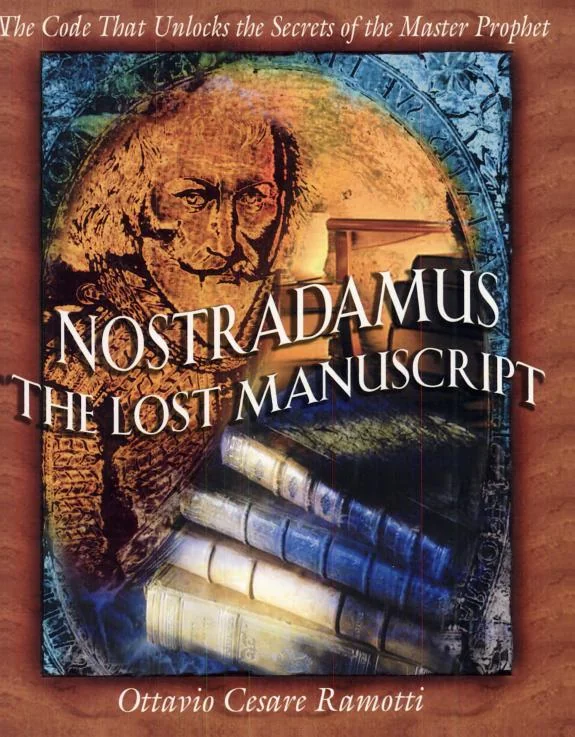
Nostradamus: The Lost Manuscript
 76
76

Nostradamus: The Lost Manuscript
The unearthing of what is presented as an unpublished manuscript by Nostradamus is, on its face, an event of considerable interest for anyone invested in the history of prophecy and esoteric thought. Ottavio Cesare Ramotti's 2002 publication, *Nostradamus: The Lost Manuscript*, offers a direct encounter with this material, purportedly discovered by Italian National Library members in 1994. The strength of this work lies in its potential to provide an unvarnished look at Nostradamus's methods and predictions, bypassing centuries of interpretation layered upon the more famous quatrains. However, the critical challenge remains the definitive authentication of such a document; while presented as discovered in archives, the manuscript's precise journey and the rigorousness of its vetting process warrant careful scrutiny by the reader. A specific passage detailing celestial alignments for agricultural forecasting, if present and verifiable, would be a significant point of analysis, offering insight into the practical application of his visions beyond grand pronouncements. Ultimately, *Nostradamus: The Lost Manuscript* is an intriguing artifact, but its value is contingent on the reader's acceptance of its provenance and their own critical engagement with the presented material.
📝 Description
76
A 1994 archive discovery yielded writings attributed to Nostradamus, published in 2002.
Ottavio Cesare Ramotti's 2002 publication, "Nostradamus: The Lost Manuscript," presents a collection of texts believed to be from Michel de Nostredame. These writings were found in 1994 within the Italian National Library's archives. This manuscript is presented as a direct look into the seer's thoughts, distinct from his widely known *Propheties*. Ramotti's work aims to bring forward prognostications that may be more personal or less edited than those previously available.
The book is geared towards scholars of esotericism, historians of prophecy, and dedicated students of Nostradamus. It offers primary source material for those interested in moving beyond the standard quatrains. The volume also appeals to individuals interested in the discovery and verification processes for occult texts found in modern archives. A working knowledge of Renaissance mysticism and prophetic traditions is beneficial for a full appreciation of the manuscript's background and potential significance.
This manuscript emerges from the tradition of Renaissance prophecy, a period marked by widespread interest in astrology and divine revelation. Unlike the initial dissemination of Nostradamus's *Propheties* in 1555, this finding is a modern archival event. Its authentication employs contemporary historical methods, contrasting with the less formalized transmission of texts in the 16th century. The work engages with figures who sought to understand and predict future events through occult or divinely inspired means, placing it within a long line of esoteric inquiry.
💡 Why Read This Book?
• Learn about the specific archival discovery of a purported Nostradamus manuscript in 1994 at the Italian National Library, offering a unique historical event. • Gain insight into potential prognostications that may differ from the widely known quatrains, providing a new angle on Nostradamus's prophetic scope. • Engage with primary source material, allowing for direct analysis of Nostradamus's language and symbolic framework as presented in this rediscovered work.
⭐ Reader Reviews
Honest opinions from readers who have explored this book.
❓ Frequently Asked Questions
When and where was the Nostradamus manuscript reportedly found?
The manuscript is reported to have been discovered in 1994 within the archives of the Italian National Library. This finding was later published by Ottavio Cesare Ramotti in 2002.
What makes this manuscript different from Nostradamus's published prophecies?
This 'lost manuscript' is presented as unpublished material, potentially offering a more direct or less curated view of Nostradamus's visions compared to the widely circulated *Propheties*.
Who is Ottavio Cesare Ramotti?
Ottavio Cesare Ramotti is the individual credited with the first publication of the 'lost manuscript' in April 2002, bringing this newly discovered material to a wider audience.
What kind of content might be found in this lost manuscript?
The manuscript is expected to explore themes of celestial influence, divine inspiration, and future predictions, potentially including prognostications that differ from his more famous quatrains.
Is the authenticity of the manuscript widely accepted?
The authenticity is presented as a key feature of the discovery, stemming from its find in library archives. However, as with any historical document, critical scholarly examination is essential.
What historical period does this discovery relate to?
The manuscript itself is attributed to Nostradamus, who lived in the 16th century (1503-1566). Its discovery in 1994 and publication in 2002 place it within modern historical and archival contexts.
🔮 Key Themes & Symbolism
Archival Revelation
The central theme revolves around the discovery of a previously unknown manuscript attributed to Nostradamus within the Italian National Library's archives in 1994. This event itself is a significant narrative thread, highlighting the potential for hidden historical and esoteric knowledge to resurface. The act of finding and authenticating such a document, as presented by Ottavio Cesare Ramotti, underscores the importance of archival research in uncovering lost prophetic traditions and provides a concrete anchor for exploring Nostradamus's complete visionary output.
Unpublished Prophetic Content
Beyond the famous quatrains, this manuscript is purported to contain new and unpublished predictions. This theme invites readers to consider variations in Nostradamus's foresight, potentially revealing different facets of his prognosticatory abilities or focusing on subjects not extensively covered in his earlier works. The exploration of these new verses allows for a deeper understanding of his symbolic language and the scope of his alleged visions, moving beyond established interpretations.
Authenticity and Interpretation
The very nature of a 'lost manuscript' brings the theme of authenticity to the forefront. Readers are prompted to consider the challenges of verifying such a find and the critical analysis required to interpret its contents responsibly. This theme engages with the historical methods of textual scholarship and the esoteric tradition's reliance on both original sources and their subsequent interpretations, questioning how this newly presented material fits within the established canon of Nostradamus studies.
Celestial and Terrestrial Influences
As with much of Nostradamus's known work, this manuscript is expected to study the interconnectedness of celestial phenomena and earthly events. The theme explores how astrological configurations, planetary movements, and cosmic alignments are interpreted as influences shaping human history, political shifts, and natural occurrences. This focus connects the manuscript to broader traditions of astrological divination and Renaissance natural philosophy, where the heavens were seen as a direct mirror of terrestrial affairs.
💬 Memorable Quotes
Direct passages from the work, attributed to the author.
“The manuscript, unearthed from the Italian National Library archives in 1994, offers previously unseen verses by the prophet.”
— This statement emphasizes the primary significance of the work: the revelation of new, unpublished material attributed to Nostradamus. It highlights the specific location and year of discovery, grounding the claim in a tangible event.
“Ottavio Cesare Ramotti first published this collection in April 2002, bringing the lost writings to light.”
— This points to the crucial role of the editor and publisher in disseminating the manuscript. It provides a specific date for the work's public introduction, marking a key moment in its reception history.
“The discovered texts are believed to present a different perspective or scope compared to the widely circulated *Propheties*.”
— This interpretation suggests that the newly found manuscript is not merely a repetition of known prophecies but offers novel insights or covers different thematic ground, inviting comparative study.
“Members of the Italian National Library discovered the unpublished manuscript buried within their extensive archives.”
— This highlights the provenance of the document, suggesting it was hidden or lost within a respected institutional collection. The phrase 'buried within' evokes a sense of hidden knowledge waiting to be unearthed.
💡 Key Ideas
Editorial paraphrase of the work's core concepts — not direct quotes.
The work explores the prophet's unique method of interpreting future events through symbolic language and celestial observation.
This paraphrase focuses on the content and methodology attributed to Nostradamus within the manuscript. It points to core elements of his prophetic practice: symbolism and astrology.
🌙 Esoteric Significance
Tradition
This work is situated within the Western esoteric tradition, specifically concerning Renaissance-era prophecy and astrological divination. It connects to a lineage that views celestial movements as divinely ordained indicators of earthly destinies. While Nostradamus's work is often broadly categorized, this manuscript, if authentic, could offer nuances specific to his personal visionary methods, potentially aligning with or diverging from established Hermetic or Kabbalistic interpretations of cosmic influence and divine inspiration.
Symbolism
The manuscript likely engages with symbolic language characteristic of prophetic texts, drawing from astrological iconography, alchemical metaphors, and biblical allusions. Symbols such as celestial bodies (stars, planets, comets) would represent cosmic forces influencing human affairs, while animal or elemental imagery might signify specific nations, events, or psychological states. The interpretation of these symbols is key to unlocking the prognostications, reflecting a tradition where the physical world is a manifestation of deeper, unseen spiritual or causal realities.
Modern Relevance
Contemporary thinkers and practitioners in fields ranging from comparative religion to ufology and conspiracy theory often engage with Nostradamus's prophecies. The discovery of a 'lost manuscript' feeds into this ongoing fascination, providing new material for analysis and interpretation. Modern esotericists might draw upon its contents to explore themes of cyclical history, predictive patterns, or the nature of consciousness and foresight, seeing it as a potential key to understanding ongoing global events through a historical prophetic lens.
👥 Who Should Read This Book
• Scholars of Renaissance esotericism and prophecy will find value in analyzing the purported original content and its historical context. • Dedicated students of Nostradamus seeking to expand their understanding beyond the commonly cited quatrains will appreciate the potential for new insights. • Researchers in archival studies and the history of occult texts can examine the discovery narrative and the process of authentication.
📜 Historical Context
The publication of *Nostradamus: The Lost Manuscript* in 2002 by Ottavio Cesare Ramotti occurs centuries after Michel de Nostredame's original *Propheties* first appeared in 1555. The Renaissance era in which Nostradamus wrote was a fertile ground for astrological inquiry and prophetic literature, influenced by Hermeticism and a general fascination with divine revelation. Competing schools of thought included more strictly theological interpretations of prophecy and emerging scientific rationalism. The discovery of this manuscript in 1994, however, is a modern event situated within a contemporary academic landscape that approaches esoteric texts with both critical skepticism and renewed interest in historical occultism. Unlike the initial reception of Nostradamus's work, which saw rapid dissemination and royal patronage, the impact of this 'lost manuscript' depends heavily on scholarly authentication and its reception within the field of Nostradamus studies and esoteric history.
📔 Journal Prompts
The 1994 discovery of the lost manuscript within the Italian National Library archives.
Nostradamus's interpretation of celestial influences as presented in the manuscript.
The potential divergence of this manuscript's prophecies from the known *Propheties*.
The symbolic language used within the newly revealed verses.
The process of authenticating such a rediscovered historical document.
🗂️ Glossary
Manuscript
A document written by hand, especially an ancient or literary one. In this context, it refers to the newly discovered, unpublished writings attributed to Nostradamus.
Propheties
The collective term for the published collections of quatrains by Nostradamus, first issued in 1555. This refers to the main body of his known prophetic works.
Archives
A collection of historical documents or records providing information about places, people, or events. The Italian National Library's archives are where the manuscript was reportedly found.
Quatrain
A stanza of four lines, especially one having a rhyme scheme in which the first and third lines, and the second and fourth lines rhyme. Nostradamus famously wrote his prophecies in this format.
Esotericism
Beliefs, studies, and practices that are outside the mainstream and intended for or understood by only a small number of people with specialized knowledge or initiation.
Prognostication
The action of prophesying or of foretelling future events. This relates to the core activity attributed to Nostradamus and contained within the manuscript.
Authentication
The process of establishing the truth, accuracy, or validity of something. Crucial for verifying the origin and content of the lost manuscript.
This book appears in 1 collection
🔮 Readers Also Liked
Browse all →









From the “Nostradamus” Collection
View all →






More Free Occult Philosophy Books
View all →