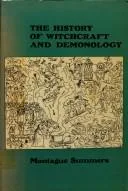
The History of Witchcraft and Demonology
 79
79

The History of Witchcraft and Demonology
Montague Summers' "The History of Witchcraft and Demonology" is an exhaustive catalog, less a critical analysis and more a detailed chronicle of historical beliefs and accusations. Summers, a scholar with an evident affinity for his subject matter, presents a dense compilation of historical accounts, legal records, and theological treatises. The strength lies in its sheer breadth; it documents the pervasiveness of witchcraft accusations and demonological theories across Europe, particularly during the medieval and early modern periods. A notable passage details the intricate legal procedures and confessions extracted during the witch trials, illustrating the societal anxieties of the time. However, the work occasionally suffers from its author's own biases, presenting a perspective that, while deeply informed, can sometimes lack critical distance. The extensive cataloging, while informative, can also feel overwhelming, lacking a consistent argumentative thread to guide the reader through its vast scope. Nevertheless, for its encyclopedic coverage of historical demonology and witchcraft lore, it remains a significant reference.
📝 Description
79
Montague Summers' 1926 study examines witchcraft and demonology with extensive archival research.
Montague Summers' "The History of Witchcraft and Demonology" provides a detailed look at occult beliefs and practices across history. The book covers various forms of magic, sorcery, and how demonic influence was understood over time. Summers used significant archival research and original documents to build his account of supernatural fears and occult activities.
This work is for those seriously studying Western esotericism, historical occultism, and comparative religion. It offers scholarly details on witchcraft, demonology, and related magical traditions. Readers interested in the intellectual and social history of supernatural beliefs, especially in Europe, will find a wealth of information.
Published in the early 20th century, Summers' book appeared when occult subjects saw renewed academic and public interest. It engaged with scholarly approaches that aimed to categorize and interpret these practices, sometimes with skepticism, sometimes with approval. Summers himself was a figure deeply involved in Catholic theology and occult studies.
Summers' work emerged during a period of significant engagement with occultism in the early 20th century, following the influence of organizations like the Hermetic Order of the Golden Dawn. It fits within a tradition of scholarship that sought to document and analyze esoteric practices, often drawing from historical theological and legal sources. Summers, with his background in Catholic theology and occult studies, approached the subject from a unique position, contributing to a complex academic discourse on witchcraft and demonology.
💡 Why Read This Book?
• Gain a granular understanding of historical demonological doctrines, including specific concepts like maleficium and the infernal pact, as detailed in the book's examination of medieval and Renaissance texts. • Explore firsthand accounts and legal records from notorious witch trials, such as those documented in the chapters on the Malleus Maleficarum, offering direct insight into the persecution era. • Grasp the theological framework surrounding Satanism and demonic possession as understood by scholars like Summers, providing context for the era's spiritual anxieties and beliefs.
⭐ Reader Reviews
Honest opinions from readers who have explored this book.
❓ Frequently Asked Questions
What historical periods does Montague Summers' book cover regarding witchcraft?
The book extensively covers the medieval period and the early modern era, from roughly the 14th to the 17th centuries, detailing the height of witch trials and demonological treatises in Europe.
Does the book discuss specific historical figures involved in witchcraft or demonology?
Yes, Summers references numerous historical figures, including theologians, inquisitors, and alleged witches, often drawing from trial records and contemporary accounts to illustrate his points.
What is the primary focus of 'The History of Witchcraft and Demonology'?
Its primary focus is on the historical beliefs, practices, and societal perceptions surrounding witchcraft and demonology, particularly within the Christian European context.
Is Montague Summers' work considered objective or biased?
Summers was a scholar deeply immersed in his subject, often from a Catholic perspective. While meticulously researched, his work can reflect his personal views and the prevailing academic interpretations of his time.
What is 'maleficium' as discussed in the book?
Maleficium refers to harmful magic or witchcraft intended to cause damage or injury to people, animals, or property, a concept central to many historical accusations of witchcraft.
Where can I find more information on the historical witch trials mentioned by Summers?
Summers' book itself serves as a primary source for information on witch trials, referencing specific cases and legal documents from the period.
🔮 Key Themes & Symbolism
The Role of the Devil
Summers meticulously details the theological concept of Satan's influence as central to demonology. The work examines the perceived pacts between witches and demons, the rituals associated with devil worship, and the infernal hierarchy described in historical grimoires and theological tracts. It underscores how the figure of the Devil became the linchpin for understanding and prosecuting perceived witchcraft in medieval and early modern Europe.
Witchcraft Accusations and Trials
A significant portion of the book is dedicated to the historical phenomenon of witch trials across Europe. Summers chronicles the legal procedures, the nature of evidence accepted (often confessions extracted under duress), and the societal factors contributing to widespread accusations. He highlights the shift from localized accusations to larger, organized persecutions, particularly during the 16th and 17th centuries.
Forms of Magic and Sorcery
The work categorizes and describes various magical practices, including necromancy, divination, curses (maleficium), and charms. Summers differentiates between popular folk magic and more elaborate ceremonial or diabolical magic, exploring their perceived efficacy and the moral judgments attached to them by contemporary authorities and the populace.
Theological and Scholarly Debates
Summers situates the study of witchcraft within broader theological and philosophical debates of his time and earlier eras. He discusses key texts like the Malleus Maleficarum and contrasts different scholarly approaches to understanding the phenomenon, from purely demonic influence to psychological or social explanations, though his own leanings are evident.
💬 Memorable Quotes
Direct passages from the work, attributed to the author.
“The Devil is the author of all sin and all wickedness.”
— This statement expresses the foundational belief within historical demonology that all malevolent forces and actions ultimately trace back to Satan, making him the central antagonist in the narrative of witchcraft.
“Witchcraft is the most detestable of all crimes.”
— This reflects the extreme condemnation and fear associated with witchcraft during the periods studied, highlighting its perception not merely as a crime, but as an offense against divine order and societal stability.
“The witch-cult was a blasphemous parody of the Holy Mass.”
— This interpretation frames the alleged Sabbat gatherings as a perversion of Christian ritual, emphasizing the deeply heretical and sacrilegious nature attributed to witchcraft by its persecutors.
“Confessions were often wrung from the accused by torture.”
— This acknowledges a critical aspect of historical witch trials: the reliance on coerced confessions, highlighting the flawed and often brutal justice system employed against those accused of witchcraft.
“Demonology is the science of demons.”
— This defines demonology as a systematic study of demonic beings, their nature, powers, and influence, as understood within theological and occult traditions explored in the book.
🌙 Esoteric Significance
Tradition
Summers' work sits at the intersection of Catholic theology, historical scholarship, and the broader Western esoteric tradition that flourished in the late 19th and early 20th centuries. While not strictly aligned with any single esoteric lineage like Hermeticism or Kabbalah, it draws heavily on the theological framework of Catholicism to interpret demonic phenomena and witchcraft. It serves as a bridge, providing historical context and detailed accounts of occult beliefs that later esoteric practitioners and scholars would reference.
Symbolism
The book frequently references the symbolism associated with demonic entities and witchcraft rituals. The pentagram, often inverted, symbolizes the inversion of divine order and the pact with Satan. The Black Mass itself is presented as a profane imitation of Christian sacraments, using distorted symbols to evoke demonic power. The pact with the Devil, often sealed with blood, is a potent symbol of ultimate damnation and allegiance to evil.
Modern Relevance
Contemporary practitioners of modern witchcraft, Satanism, and occult studies often consult Summers' work for its detailed historical accounts and documentation of historical beliefs. Scholars in comparative religion and folklore continue to engage with his research on witch trials and demonology. His work provides a foundational, albeit sometimes biased, historical reference point for understanding the evolution of Western magical and diabolical traditions.
👥 Who Should Read This Book
• Students of Western Esotericism: Those seeking a comprehensive historical overview of witchcraft, demonology, and related magical practices within a European context will find extensive detail. • Historical researchers: Individuals studying the history of religion, folklore, and social history, particularly the periods of intense witch persecution, will benefit from the book's documentation. • Occult practitioners: Practitioners interested in the historical roots and theological underpinnings of demonic lore and witchcraft traditions will find valuable background information.
📜 Historical Context
Montague Summers' "The History of Witchcraft and Demonology" was first published in 1926, a period when occult studies were gaining academic traction, influenced by figures like Aleister Crowley and organizations such as the Theosophical Society. The early 20th century saw a scholarly re-examination of historical phenomena, including folklore, magic, and religious deviations. Summers’ work emerged within this milieu, offering a detailed, albeit often sympathetic, account of historical witchcraft beliefs. It engaged with a tradition of demonological literature that had been established centuries earlier, particularly with texts like the Malleus Maleficarum (1487). While Summers' scholarship is encyclopedic, its reception was complicated by his deep immersion in Catholic theology and his evident fascination with the occult, sometimes leading to a lack of critical distance compared to more secular historical analyses that would emerge later. His work was cited by scholars but also viewed with skepticism due to his personal affiliations and interpretive framework.
📔 Journal Prompts
The concept of maleficium and its historical perception.
Montague Summers' interpretation of the witch's pact with the Devil.
The historical role of theological texts in shaping views on witchcraft.
Reflecting on the evidence presented for the Sabbat rituals.
The legal ramifications of witchcraft accusations in early modern Europe.
🗂️ Glossary
Maleficium
Latin for 'wrongdoing' or 'mischief,' specifically referring to harmful magic or witchcraft intended to cause damage, illness, or misfortune.
Demonology
The study of demons or beliefs about demons, encompassing their nature, hierarchies, powers, and influence, particularly within theological and occult traditions.
Sabbat
In historical witchcraft lore, a nocturnal assembly of witches, often said to be presided over by the Devil, involving ritualistic practices and demonic communion.
Necromancy
A form of divination or magic involving communication with the dead, often through the use of corpses or spirits, believed to yield forbidden knowledge.
Malleus Maleficarum
Latin for 'Hammer of Witches,' a notorious treatise on witchcraft published in 1487, widely used by inquisitors and judges during the witch hunts.
Inquisitor
An official, typically a member of a religious order, appointed to investigate and combat heresy, including witchcraft, within the Christian Church.
The Devil's Mark
A supposed physical mark on the body of a witch, said to be insensitive to pain and left by the Devil as a sign of their pact.