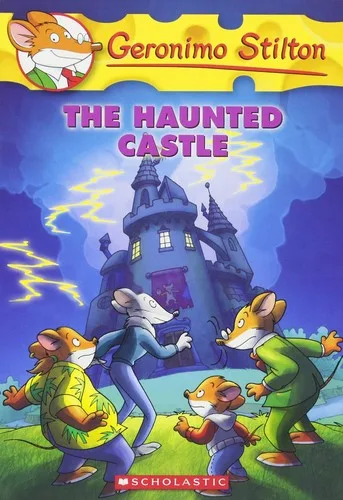
The Haunted Castle
 80
80

The Haunted Castle
Elisabetta Dami’s *The Haunted Castle* offers a departure from the typical ghost story, focusing instead on the atmospheric weight of history within a specific locale. The strength of the book lies in its subtle evocation of unease, presenting the castle not as a stage for spectral actors but as a repository of emotional residue. Dami effectively uses descriptions of the physical space to suggest a presence, a method that avoids cheap scares in favor of a more pervasive sense of disquiet. A notable limitation, however, is the sometimes-slow pacing; the narrative’s deliberate build-up can occasionally feel like it’s treading water. The passage describing the dust motes dancing in a single shaft of moonlight, implying the passage of countless years and unseen observers, exemplifies the book's atmospheric power. It is a work that prioritizes mood over overt plot mechanics. The Haunted Castle succeeds as a study in environmental psychology and spectral suggestion.
📝 Description
80
Elisabetta Dami's 2008 novel, The Haunted Castle, examines how places retain echoes of past events.
The Haunted Castle, published in 2008, is a work that engages with themes of spectral presence and historical echoes, often found in classic Gothic literature. It constructs a narrative framework for understanding the psychological and environmental factors contributing to a sense of lingering unrest. The text avoids sensationalism, relying instead on atmosphere and implication to convey its subject matter.
This book is suited for readers interested in the intersection of architecture, history, and psychological phenomena. Those who appreciate contemplative explorations of place and memory, rather than overt supernatural accounts, will find value here. It is also for individuals curious about how environments can seemingly retain or reflect past events, offering a thoughtful perspective on the nature of hauntings.
Published in 2008, The Haunted Castle emerged during a period of significant interest in folklore and historical preservation. Its approach to haunted locations can be seen as a literary echo of earlier Gothic novels that used castles and ruins to explore themes of decay, hidden secrets, and the past's influence on the present. The work is influenced by the literary tradition established by authors like Horace Walpole in *The Castle of Otranto* and Ann Radcliffe.
💡 Why Read This Book?
• Gain an understanding of 'architectural memory,' learning how the physical structure and historical layers of a place like a castle can be interpreted as holding echoes of past events, as explored in the castle's descriptions. • Discover the concept of 'imprint,' a core idea suggesting that strong emotional experiences can leave a psychic residue on a location, influencing its atmosphere and perception. • Experience a nuanced portrayal of spectral phenomena, moving beyond conventional ghost tropes to appreciate how atmosphere and historical context contribute to a sense of haunting, particularly through the castle's detailed setting.
⭐ Reader Reviews
Honest opinions from readers who have explored this book.
❓ Frequently Asked Questions
What is the primary focus of Elisabetta Dami's 'The Haunted Castle'?
The book primarily focuses on the atmosphere and historical echoes within a castle, exploring how past events and the building's structure contribute to a sense of lingering presence, rather than overt supernatural occurrences.
When was 'The Haunted Castle' first published?
'The Haunted Castle' was first published in 2008, positioning it within contemporary literature that explores historical settings and psychological themes.
Does the book feature traditional ghost encounters?
No, the book leans more towards atmospheric suggestion and psychological unease. It implies spectral presence through environmental and historical context rather than depicting direct encounters with ghosts.
What is the concept of 'architectural memory' as presented in the book?
Architectural memory suggests that a building's design, history, and physical state can be seen as holding or reflecting the memories and events associated with it, influencing its perceived character.
Is 'The Haunted Castle' a horror novel?
While it evokes a sense of unease, it is not typically classified as a horror novel. It functions more as a literary exploration of place, memory, and subtle atmospheric dread.
What does the term 'imprint' refer to in the context of the book?
The 'imprint' refers to the idea that significant emotional or historical moments can leave a discernible trace or residue on a location, subtly affecting its atmosphere and how it is perceived.
🔮 Key Themes & Symbolism
Architectural Memory
The work posits that buildings, particularly those with long histories like castles, absorb and retain elements of the events and emotions that transpired within their walls. This 'architectural memory' is not a literal recording but a pervasive atmosphere that can influence perception. The book details how the physical state of the castle—its crumbling stones, shadowed corridors, and aged materials—serves as a conduit for these historical impressions, suggesting that the structure itself is a silent witness to its past inhabitants and occurrences.
The Imprint of Emotion
Central to the book is the concept of 'imprint,' the notion that intense human emotions—joy, sorrow, fear, or obsession—can leave a psychic residue on a physical space. The Haunted Castle explores how these imprints manifest not as apparitions but as subtle shifts in atmosphere, inexplicable sensations, or a persistent feeling of being observed. The narrative suggests that these imprints are particularly strong in places that have witnessed significant historical events or prolonged human habitation, making the castle a focal point for such residual energies.
Place and Psychological Resonance
This theme examines the symbiotic relationship between a location and the human psyche. The book illustrates how the imposing architecture and historical narrative of the castle can trigger specific psychological responses in observers, blurring the lines between external environment and internal experience. It suggests that our perception of a place as 'haunted' is often a projection of our own fears and historical consciousness onto the physical space, amplified by the building’s inherent character and storied past.
The Castle as a Palimpsest
The castle in the narrative functions as a palimpsest, a surface bearing layers of history and experience, with newer events written over older ones but never entirely erasing them. The book implies that beneath the present state of the structure lie remnants of all its previous uses and inhabitants. This layering creates a complex, multi-dimensional atmosphere where the past is perpetually present, accessible through sensory and intuitive means, contributing to the book’s pervasive sense of historical weight.
💬 Memorable Quotes
Direct passages from the work, attributed to the author.
“The stones seemed to hold their breath, heavy with the weight of centuries.”
— This phrase captures the book's central theme of architectural memory, suggesting that inanimate structures can possess a palpable presence, saturated with the history and emotions of their past.
“Sunlight struggled through the grime-laden panes, clear dust motes like spectral dancers.”
— This imagery evokes the passage of time and the lingering presence of unseen entities or past moments, where even light and dust particles seem imbued with a ghostly quality.
“A chill not of the air settled in the long gallery.”
— This points to the concept of 'imprint,' a non-physical coldness that suggests an emotional or psychic residue left by past events or inhabitants, independent of meteorological conditions.
“Each shadow held a story, whispered only to the silence.”
— This highlights the idea that the castle's architecture itself acts as a repository of narratives, with its physical features like shadows hinting at untold histories and unseen presences.
“The very silence seemed to listen.”
— This personification of silence suggests an active, aware presence within the castle, reflecting the profound sense of being observed that permeates the narrative.
🌙 Esoteric Significance
Tradition
While not explicitly tied to a single esoteric lineage, *The Haunted Castle* draws heavily on concepts that resonate with animistic and psychogeographical traditions. It carries the belief that environments can hold sentient or residual energies, a concept found in various folk traditions and later explored in Western esotericism through ideas of elemental spirits or nature spirits. The work departs from strict ritualistic or doctrinal frameworks, instead focusing on the intuitive, experiential aspect of sensing a place's history.
Symbolism
The castle itself is a potent symbol, representing the multi-layered psyche and the embodiment of history. Its crumbling walls can symbolize the decay of memory or the fragility of the present against the weight of the past. Shadows within the castle represent the unknown, the repressed, or the unseen presences that linger, while dust motes illuminated by stray light symbolize fleeting moments of past lives or ephemeral energies made momentarily visible.
Modern Relevance
In contemporary esoteric thought, *The Haunted Castle* speaks to modern psychogeography, which studies the effects of a geographical environment on the mind and emotions. Thinkers and practitioners in urban exploration and subtle energy work find resonance in its depiction of how places can influence consciousness. The book's exploration of 'architectural memory' is relevant to contemporary discussions in spiritual ecology and the idea that the natural and built environment possesses a form of consciousness or memory.
👥 Who Should Read This Book
• Students of psychogeography interested in how environments shape perception and consciousness, offering detailed observations of a castle's influence. • Readers of literary Gothic and historical fiction seeking nuanced explorations of atmosphere and the past’s resonance in place. • Individuals curious about the concept of 'architectural memory' and the subtle ways locations might retain elements of their history.
📜 Historical Context
Published in 2008, *The Haunted Castle* emerged within a broader cultural landscape that continued to be fascinated by Gothic literature and the exploration of historical sites. The early 21st century saw a resurgence of interest in paranormal investigation, fueled by reality television and online communities, yet Dami’s work positions itself against the sensationalist tendencies of these trends. It aligns more with the literary tradition of authors like Ann Radcliffe, whose novels, such as *The Mysteries of Udolpho* (1794), used atmospheric settings and psychological suspense to explore the sublime and the terrifying. While not directly engaging with academic discourse, the book’s focus on architectural memory and emotional imprints can be seen as a literary echo of growing academic interest in the phenomenology of place and the concept of the 'haunted space' in architectural theory and cultural studies.
📔 Journal Prompts
The castle's silence, and what it seems to contain.
Elements of past lives within the stone architecture.
The feeling of being observed in the long gallery.
How the dust motes illuminated by light reflect time's passage.
The chill not of the air in the shadowed corridors.
🗂️ Glossary
Architectural Memory
The concept that a building's structure, materials, and history can retain or evoke elements of past events, emotions, and inhabitants, influencing its atmosphere and how it is perceived.
Imprint
A residual energetic or psychic trace left on a location by significant emotional experiences or historical events, contributing to its perceived atmosphere or 'haunted' quality.
Psychogeography
The study of the specific effects of a geographical environment on the emotions and behavior of individuals. It explores how places can influence our state of mind.
Palimpsest
A manuscript or surface on which old writing has been erased to make room for new, but traces of the old remain. In this context, a place layered with multiple histories.
Sublime
A quality of greatness, whether physical, moral, intellectual, metaphysical, aesthetic, spiritual, or artistic. Often associated with awe, vastness, and a sense of overwhelming power.
Residual Energy
A term suggesting lingering psychic or emotional energy within a location, believed to be left behind by past events or strong emotions, often manifesting as atmosphere.
Gothic Literature
A genre of fiction characterized by elements of horror, death, and gloom, as well as romantic elements, such as nature, which is often dark and mysterious. Castles and ruins are common settings.
🔮 Readers Also Liked
Browse all →







More by Elisabetta Dami
All books →





More Free Occult Philosophy Books
View all →