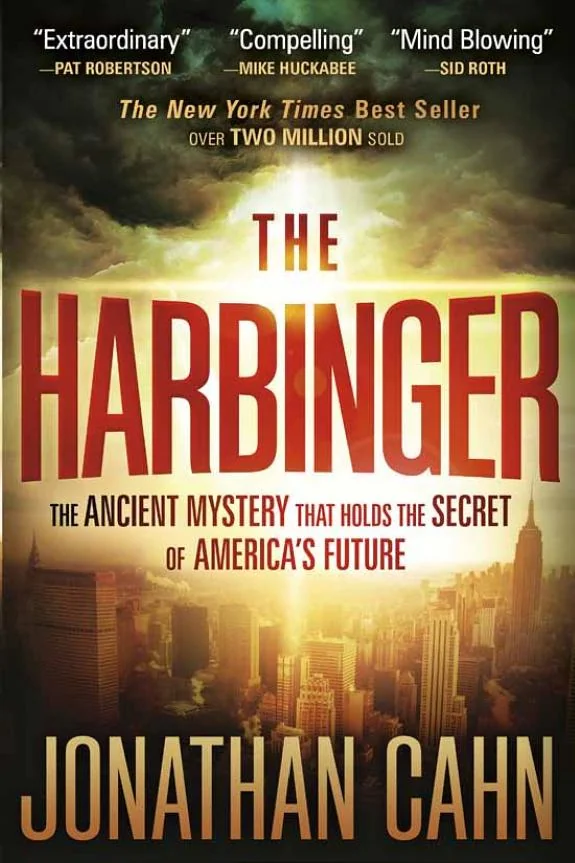
The harbinger
 82
82

The harbinger
Jonathan Cahn's "The Harbinger" attempts to forge a compelling link between ancient biblical prophecy and the trajectory of the United States, presenting a narrative that reads like a modern allegory. The core strength lies in its ambitious synthesis of historical events and scriptural interpretation, particularly its focus on the "nine harbingers." The way Cahn frames these supposed parallels, using a fictionalized guide through significant American sites, creates an accessible, albeit speculative, framework for his message. However, the book's primary limitation is the highly selective and often strained nature of these connections. For instance, the interpretation of the Liberty Bell's crack as a harbinger of national fracture, while striking, relies on a degree of interpretive liberty that may not satisfy rigorous historical or theological analysis. The work's effectiveness hinges on the reader's pre-existing belief in the direct, literal application of ancient covenantal curses to contemporary America. Ultimately, "The Harbinger" functions less as a historical document and more as a potent piece of theological storytelling designed to provoke reflection on national destiny.
📝 Description
82
Jonathan Cahn's 2011 book links ancient Israelite judgment patterns to modern America.
Published in 2011, "The Harbinger" uses a fictional narrative to connect American history with biblical prophecies of national judgment. A modern individual encounters a mysterious figure who reveals nine specific "harbingers" – events, symbols, and actions – that Cahn argues mirror ancient Israelite covenantal judgments.
The book aims to show a divine pattern in national events, particularly for readers interested in theological interpretations of current affairs. Its story format makes complex theological ideas accessible, appealing to those who seek spiritual explanations for societal trends or who are familiar with Cahn's prior theological work. The narrative is structured to guide the reader through a process of discovery regarding these alleged prophetic parallels.
This work draws on a tradition of biblical interpretation that seeks divine patterns in historical events, a practice present in American thought since its colonial beginnings. It aligns with dispensationalist views of prophecy, which often interpret contemporary events as fulfilling specific biblical predictions concerning national destinies. The book's approach, while framed as historical and prophetic, taps into a desire for understanding perceived spiritual underpinnings of national life, connecting current events to ancient texts.
💡 Why Read This Book?
• You will learn how "The Harbinger" frames specific American landmarks, like the Liberty Bell, as symbolic echoes of ancient biblical pronouncements, offering a unique lens on national history. • You will experience a narrative structure that introduces the concept of "nine harbingers," allegedly mirroring prophetic patterns from the fall of Israel, designed to prompt contemplation on societal direction. • You will encounter Jonathan Cahn's interpretation of America's relationship with biblical covenantal law, potentially altering your perspective on the spiritual underpinnings of national events since 2011.
⭐ Reader Reviews
Honest opinions from readers who have explored this book.
❓ Frequently Asked Questions
What is the central premise of Jonathan Cahn's 'The Harbinger'?
The book's central premise is that America is undergoing a pattern of judgment mirroring that of ancient Israel, as foretold in biblical prophecies. Cahn identifies nine "harbingers" or signs that he argues demonstrate this parallel.
When was 'The Harbinger' originally published?
Jonathan Cahn's 'The Harbinger' was first published in 2011. It quickly rose to bestseller lists, particularly within religious and inspirational fiction categories.
Who is the mysterious figure in 'The Harbinger'?
The mysterious figure is often referred to as 'the teacher' or 'the harbinger.' He serves as a guide to the protagonist, revealing the alleged prophetic connections between ancient Israel and modern America.
What are some of the 'nine harbingers' mentioned in the book?
Some of the 'nine harbingers' discussed include the Liberty Bell, the "Gazebo" on Federal Hill in Baltimore, and the pronouncements made on the steps of Federal Hall in New York City, all interpreted through a prophetic lens.
What is the intended impact of 'The Harbinger' on its readers?
The book is intended to awaken readers to what Cahn perceives as spiritual warnings embedded in American history and current events, encouraging repentance and a re-examination of the nation's covenantal relationship with God.
Is 'The Harbinger' based on factual historical accounts or allegorical interpretation?
While it references real historical sites and events, 'The Harbinger' is primarily an allegorical and interpretive work. Cahn uses these elements to construct a narrative that supports his theological thesis about prophetic patterns.
🔮 Key Themes & Symbolism
The Nine Harbingers
Central to the book is the concept of the "nine harbingers," a series of events, symbols, and pronouncements that the narrative argues directly parallel ancient prophecies concerning judgment upon nations. These are not presented as mere coincidences but as deliberate signs mirroring the fall of ancient Israel. The book meticulously details each harbinger, from specific landmarks like the Liberty Bell to significant speeches and actions, combining them into a cohesive, albeit controversial, argument for a divinely ordained pattern at play in American history since its founding. The sequence and nature of these harbingers are presented as a clear warning system.
Covenantal Judgment
The work posits that the United States, like ancient Israel, has entered into a covenantal relationship with God. Consequently, the book argues, the nation is subject to the blessings and curses outlined in biblical covenantal law. When the nation transgresses, particularly through actions perceived as turning away from foundational principles, it invites judgment. "The Harbinger" interprets various historical and contemporary events through this framework, suggesting that the "harbingers" are manifestations of this divine judgment being enacted upon the nation for its perceived spiritual decline.
The Role of the 'Teacher'
A central element in the narrative is the mysterious figure known only as 'the teacher.' This enigmatic guide serves as the conduit through which the protagonist, and by extension the reader, learns about the nine harbingers and their significance. The teacher's persona and pronouncements are central to unfolding the book's core message, acting as an interpreter of historical events through a prophetic lens. His presence adds an element of mystique and urgency, framing the revelations as divinely inspired and critically important for understanding America's spiritual trajectory.
America's Foundational Destiny
The book explores the idea that America's founding was imbued with a specific divine purpose and a set of principles intended to align it with biblical ideals. However, "The Harbinger" contends that the nation has deviated significantly from this original vision. The narrative suggests that this deviation has led to a spiritual crisis, making the nation vulnerable to the judgments foretold by the harbingers. It implies a potential for restoration but stresses the immediate need for national repentance and a return to perceived godly foundations.
💬 Memorable Quotes
Direct passages from the work, attributed to the author.
“The first harbinger, the sh إصداره (Ash-Shaddai) of the Lord, a name of God of judgment.”
— This refers to the inscription on Independence Hall, which the book interprets as a divine warning and a precursor to subsequent judgments. It highlights the narrative's focus on specific, symbolic inscriptions and names as carriers of prophetic meaning.
“America, the land of the free, the home of the brave... is also the land of the judge.”
— This statement captures the book's dualistic view of America's spiritual standing – acknowledging its ideals while asserting its potential for divine judgment. It serves as a stark reminder of the consequences for national actions within the author's interpretive framework.
“The mystery of the harbinger is the mystery of judgment.”
— This direct assertion defines the core thematic concern of the book. It frames the entire narrative as an unfolding revelation about the nature and imminence of divine judgment upon the nation.
“The third harbinger is the ground, the foundation, the bedrock of the nation.”
— This refers to specific locations and their symbolic meaning, particularly Federal Hall in New York City, where early pronouncements were made. It emphasizes the book's use of geography and historical sites as literal signposts of prophetic fulfillment.
“The nine harbingers are a wake-up call.”
— This simple yet potent statement conveys the intended purpose of the book's complex narrative. It suggests that the revelations are not merely academic but are urgent messages designed to prompt immediate reflection and action.
🌙 Esoteric Significance
Tradition
While not strictly belonging to a formalized esoteric tradition like Hermeticism or Kabbalah, "The Harbinger" draws heavily on a Judeo-Christian prophetic hermeneutic. Its approach to finding patterns and divine messages within secular history echoes Gnostic or apocalyptic interpretations that seek hidden meanings in worldly events. The work engages with biblical prophecy in a manner that suggests a coded, allegorical reality underlying historical occurrences, a characteristic found in many esoteric systems that view the material world as a reflection of spiritual truths.
Symbolism
The book is rich in symbolic interpretation, focusing on specific American landmarks and historical moments as carriers of deeper meaning. The Liberty Bell, for instance, is imbued with symbolic weight, its crack interpreted as a premonition of national fracture. Similarly, the architecture of Washington D.C. and specific public pronouncements are presented as carrying prophetic significance, mirroring symbols found in ancient Israelite history. These symbols are not merely decorative but are argued to be direct communications or warnings from the divine.
Modern Relevance
In contemporary discourse, "The Harbinger" continues to be relevant for those interested in the intersection of faith, politics, and eschatology. Its narrative style and interpretive framework have influenced discussions within certain Christian communities regarding national destiny and divine judgment. Thinkers and groups focused on end-times prophecy or seeking to understand current events through a theological lens often reference Cahn's work. Its popularity indicates a sustained interest in finding divine patterns and warnings within the unfolding narrative of modern history.
👥 Who Should Read This Book
• Readers interested in theological interpretations of American history and current events, particularly those who appreciate narrative-driven explorations of prophecy. • Individuals seeking to understand a specific framework for connecting biblical principles to national-level occurrences, offering a unique perspective beyond standard historical accounts. • Those who enjoy allegorical storytelling that uses historical sites and events to convey spiritual or moral messages, particularly concerning themes of judgment and repentance.
📜 Historical Context
Published in 2011, "The Harbinger" emerged during a period of intense cultural and political discourse in the United States, marked by events such as the September 11th attacks and the subsequent economic recession. The book tapped into a pre-existing vein of American thought that interprets national events through a biblical lens, a tradition traceable to figures like Jonathan Edwards and Cotton Mather. It gained considerable traction within evangelical circles, quickly becoming a bestseller and sparking widespread discussion. While it resonated with many seeking theological explanations for societal trends, the work also faced criticism from various quarters. Some scholars and commentators pointed to what they described as anachronistic interpretations and a selective use of historical data to fit a predetermined theological narrative. Its reception highlights a broader ongoing debate about the role of prophecy and divine intervention in understanding national history, positioning it as a significant, albeit controversial, contribution to contemporary religious literature.
📔 Journal Prompts
The concept of the 'nine harbingers' and their alleged parallels to ancient Israel.
America's foundational principles as interpreted through the lens of covenantal law.
The symbolic meaning of specific landmarks mentioned, such as the Liberty Bell.
The role and message of the mysterious 'teacher' figure in revealing divine patterns.
The potential for national judgment as presented through the book's narrative arc.
🗂️ Glossary
Harbinger
In "The Harbinger," a harbinger refers to a sign, event, or symbol that is believed to foreshadow or announce a significant future event, particularly divine judgment. The book identifies nine such harbingers in American history.
Covenantal Judgment
This refers to the biblical concept that nations, like individuals, can enter into a covenant with God. If the covenant is broken through disobedience, divine judgment may follow, as described in scripture. The book applies this to the United States.
The Teacher
A mysterious, unnamed figure in the narrative who guides the protagonist through the revelation of the "nine harbingers." He acts as an interpreter of historical events through a prophetic biblical lens.
Ash-Shaddai
A name for God, often translated as 'God Almighty' or 'God of the Mountains.' In the book, it is linked to the inscription on Independence Hall and interpreted as a divine warning.
The Mystery of the Harbinger
The central theme of the book, suggesting that America's current trajectory is not random but follows a pattern of judgment foretold in ancient biblical prophecies, revealed through specific signs.
Federal Hall
A historical building in New York City where George Washington was inaugurated. In the book, it is presented as the site of significant pronouncements that constitute one of the "harbingers."
Nine Harbingers
A sequence of specific events, symbols, and actions identified by the author that allegedly mirror prophecies concerning the judgment and fall of ancient Israel, applied to the United States.
🔮 Readers Also Liked
Browse all →









More by Jonathan Cahn
All books →

More Free Occult Philosophy Books
View all →