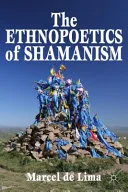
The Ethnopoetics of Shamanism
 84
84

The Ethnopoetics of Shamanism
M. Santos and Marcel de Lima's *The Ethnopoetics of Shamanism* offers a sharp critique of the Western gaze upon indigenous spiritual practices. The authors meticulously chart the trajectory from early, often objectifying, ethnographic accounts to the late 20th-century valorization of shamanism as a potent symbol of 'primal' wisdom. A notable strength lies in its deconstruction of how concepts like 'magic' and 'rationality' were used to frame and often marginalize shamanic worldviews. The discussion surrounding the symbolic appropriation of shamanism, particularly in the context of primitivism, provides a crucial lens for understanding contemporary engagements with indigenous traditions. However, the dense academic prose, while precise, can occasionally obscure the more accessible threads of the argument, making it a challenging read for those not already steeped in post-structuralist theory. The analysis of how shamanism became a proxy for Western anxieties about modernity is particularly compelling, demonstrating the constructed nature of ethnographic subjects. It serves as a vital corrective to romanticized notions, urging a more critical engagement with the historical and cultural forces shaping our understanding.
📝 Description
84
M. Santos and Marcel de Lima's 2017 book examines Western interpretations of shamanism from the late 20th century onward.
This book traces the evolution of Western perspectives on shamanic traditions. It analyzes how shamanism moved from being a subject of ethnographic curiosity to a focus of significant intellectual discussion. The work details the shift from simple observation to a more critical examination of the linguistic and cultural frameworks used by Western scholars and practitioners to understand and represent shamanism.
Focusing on the late 20th and early 21st centuries, the book addresses a period of considerable change in how indigenous spiritualities are viewed and incorporated into Western thought. It is relevant for scholars in comparative religion, anthropology, and literary studies, as well as those interested in the history of Western esoteric thought. Readers seeking a critical understanding of cultural concept construction, particularly concerning indigenous spiritualities, will find this work valuable. Those studying myth, ritual, and consciousness psychology will also find analytical frameworks and historical context here.
The study of shamanism, particularly as popularized by figures like Mircea Eliade, became a significant thread within Western esoteric traditions during the 20th century. This book engages with that history, scrutinizing how Western frameworks shaped the understanding and appropriation of indigenous practices. It positions itself within a critical academic discourse that re-evaluates earlier, often colonial or romanticized, interpretations of non-Western spiritual systems, placing the academic study of shamanism within a broader history of Western engagement with the occult and alternative spiritualities.
💡 Why Read This Book?
• Gain a critical perspective on how Western scholarship and artistic movements have historically framed shamanism, moving beyond simplistic notions of 'primitive' spirituality as explored in the late 19th century. • Understand the concept of ethnopoetics and its application to analyzing the linguistic and symbolic dimensions of shamanic traditions, as detailed in the book's examination of Western discourse. • Grasp the intellectual currents, such as primitivism and debates on magic versus rationality, that influenced the academic and cultural reception of shamanism, providing context for its first publication in 2014.
⭐ Reader Reviews
Honest opinions from readers who have explored this book.
❓ Frequently Asked Questions
What is ethnopoetics in the context of shamanism studies?
Ethnopoetics, as applied in this work, refers to the study of the poetic and narrative structures within oral traditions, particularly shamanic ones. It examines how these forms convey meaning and shape cultural understanding, moving beyond simple ethnographic description to analyze the aesthetic and symbolic dimensions.
How did Western portrayals of shamanism change over time?
Initially viewed through a lens of colonial observation and later evolutionary psychology, Western portrayals shifted significantly by the late 20th century. They began to incorporate symbolic interpretations, engaging with shamanism in discourses of primitivism, magic, and alternative rationality, as detailed from the late 19th century onwards.
What is the significance of 'primitivism' in relation to shamanism?
Primitivism, as discussed in the book, is an artistic and intellectual movement that draws inspiration from perceived 'primitive' cultures. In relation to shamanism, it often involved idealizing these practices as representing a more authentic, spiritual, or direct connection to nature, a trend analyzed from the late 19th century.
Who was Mircea Eliade and what was his role?
Mircea Eliade was a historian of religions whose 1951 work, *Shamanism: Archaic Techniques of Ecstasy*, significantly shaped academic and popular understanding. While influential, his work has also been critiqued for its essentializing tendencies and Western-centric interpretations, a context the book engages with.
When was 'The Ethnopoetics of Shamanism' first published?
The book *The Ethnopoetics of Shamanism* by M. Santos and Marcel de Lima was first published on August 13, 2014. This publication date places it within contemporary academic discussions on the anthropology of religion and esoteric studies.
What does the book mean by 'symbolic import' of shamanism?
The 'symbolic import' refers to how shamanic practices became imbued with meaning beyond their original cultural context. In Western thought, they acquired significance within debates about rationality, magic, and the perceived loss of authentic spirituality in modern society, a phenomenon analyzed from the late 19th century.
🔮 Key Themes & Symbolism
Shifting Western Perceptions
This theme traces the dramatic alteration in how Western cultures have viewed shamanism, particularly from the late 19th century onwards. Initially relegated to ethnographic footnotes or dismissed as superstition, shamanism gradually gained 'symbolic import'. It became a locus for Western anxieties and desires, representing perceived authenticity, primal wisdom, and alternative modes of consciousness. The work scrutinizes how intellectual movements like primitivism and the ongoing debates between magic and rationality shaped these evolving perceptions, moving beyond mere observation to symbolic appropriation.
Ethnopoetics as Analytical Tool
The book foregrounds ethnopoetics as a critical methodology for understanding shamanic traditions. This approach emphasizes the linguistic, narrative, and performative dimensions of shamanic practices, recognizing them not just as rituals but as complex cultural expressions with inherent aesthetic and symbolic qualities. By analyzing the 'poetics' of these traditions, the work seeks to uncover how meaning is constructed and conveyed, challenging Western frameworks that often reduce shamanism to its perceived psychological or magical functions, and highlighting how these interpretations began to take hold since the late 19th century.
Discourses of Magic and Rationality
A central tension explored is the Western dichotomy of magic versus rationality and its impact on understanding shamanism. Shamanic practices were often positioned on the 'magic' side, seen as irrational or pre-modern phenomena. This theme examines how this binary served to both exoticize and pathologize shamanism, while simultaneously making it attractive within certain Western esoteric and counter-cultural movements. The book deconstructs how these discourses, prevalent since the late 19th century, influenced academic study and popular imagination, revealing the cultural biases embedded in such categorizations.
The Symbolic Appropriation of Shamanism
This theme focuses on how shamanism, detached from its original indigenous contexts, became a powerful symbol within Western intellectual and artistic spheres. Particularly through the lens of primitivism, shamanic motifs and concepts were adopted to critique Western modernity, express spiritual longing, or explore altered states of consciousness. The work analyzes the implications of this symbolic appropriation, questioning the ethics and epistemology of using indigenous traditions as metaphors for Western concerns, a trend that solidified from the late 19th century onwards.
💬 Memorable Quotes
Direct passages from the work, attributed to the author.
“Western portrayals of shamanism have changed radically toward an ethnopoetics of shamanism.”
— This statement captures the book's core argument: the shift from simple description to a more nuanced, linguistically and symbolically aware analysis of how shamanism is understood and represented in the West.
“shamanic practices had long been indirectly registered by Westerners, it is only since the late nineteenth century that they have taken on symbolic import.”
— This highlights the historical turning point where shamanism transitioned from an object of ethnographic curiosity to a concept carrying significant meaning within Western intellectual and cultural debates.
“they have taken on symbolic import within discourses of primitivism and debates over magic and rationality.”
— This points to the specific intellectual currents—primitivism, and the magic-rationality binary—that became key frameworks for Western engagement with shamanism from the late 19th century onward.
“The ethnopoetics of shamanism involves understanding the poetic qualities of their oral traditions.”
— This interpretation underscores the book's focus on the linguistic and aesthetic dimensions of shamanic practices, suggesting that their 'poetic' nature is crucial to their cultural meaning and transmission.
💡 Key Ideas
Editorial paraphrase of the work's core concepts — not direct quotes.
Western engagement moved from registration to symbolic interpretation.
This concise paraphrase emphasizes the evolution of Western perspectives, from mere noting of shamanic practices to imbuing them with complex symbolic meanings relevant to Western concerns.
🌙 Esoteric Significance
Tradition
While not aligning strictly with a single esoteric lineage like Hermeticism or Kabbalah, *The Ethnopoetics of Shamanism* engages with the broader esoteric interest in non-Western spiritualities that surged in the late 19th and 20th centuries. It critically examines how shamanism was incorporated into Western esoteric frameworks, often as a perceived source of authentic, pre-rational power and knowledge, standing apart from more formalized magical systems.
Symbolism
The book implicitly analyzes symbols associated with shamanism as interpreted through Western lenses. These might include the 'axis mundi' (world tree) connecting realms, the figure of the shaman as mediator, or the journey into spirit worlds. These symbols, when adopted into Western esoteric thought, often represent a yearning for cosmic connection, psychological integration, or direct experience of the sacred, divorced from their original cultural specificity.
Modern Relevance
Contemporary neo-shamanic movements, practitioners of consciousness exploration, and certain strands of ecopsychology and deep ecology draw heavily on the conceptual frameworks and historical interpretations of shamanism that this book critiques. Thinkers and practitioners interested in the cultural politics of spirituality and the ethics of cross-cultural appropriation find this work essential for understanding the roots of modern engagement with shamanic traditions.
👥 Who Should Read This Book
• Anthropologists and religious studies scholars seeking to deconstruct Western biases in the study of indigenous religions. • Practitioners of Western esoteric traditions interested in the historical reception and symbolic appropriation of shamanic concepts within their own fields. • Literary critics and cultural theorists analyzing the role of 'the primitive' and non-Western spiritualities in modern Western art and thought since the late 19th century.
📜 Historical Context
The late 19th and early 20th centuries marked a key era for the Western study and representation of shamanism. Fueled by colonial expansion and the nascent discipline of anthropology, Western observers began to document indigenous practices, often through a lens of evolutionary theory or exoticism. Shamanism, in particular, became a focal point, perceived as a relic of primal human experience. Mircea Eliade’s *Shamanism: Archaic Techniques of Ecstasy* (1951) profoundly shaped this field, though his work has since been critically examined for its essentializing tendencies and Western biases. Simultaneously, competing schools of thought, including psychoanalysis and later structuralism, offered alternative frameworks for understanding altered states and ritual. The discourse around primitivism, prevalent in art and literature, also contributed to shamanism’s symbolic elevation. By the time of this book's first publication in 2014, the academic landscape had shifted considerably, with scholars like Graham Harvey advocating for more empirically grounded and less romanticized approaches, directly engaging with the critiques of earlier scholarship.
📔 Journal Prompts
The symbolic import of shamanism within Western primitivism.
Contrasting ethnographic registration with ethnopoetic analysis.
The role of magic and rationality debates in framing shamanic practices.
How Western desires influenced the symbolic appropriation of shamanism.
The evolution of shamanism studies from direct observation to critical interpretation.
🗂️ Glossary
Ethnopoetics
The study of the poetic qualities of oral traditions, focusing on how linguistic and narrative structures convey cultural meaning and shape understanding, particularly in non-literate societies.
Shamanism
A range of indigenous spiritual practices characterized by a practitioner's supposed ability to interact with a spirit world and mediate between the human and spirit realms.
Primitivism
An artistic and intellectual movement that draws inspiration from perceived 'primitive' cultures, often idealizing them as more authentic or spiritual than modern Western societies.
Symbolic Import
The significance and meaning attributed to a practice or concept beyond its literal or functional context, often within broader cultural or intellectual discourses.
Magic vs. Rationality
A historical Western dichotomy that often categorized non-Western or traditional beliefs and practices as 'magical' and therefore irrational, contrasting them with supposedly objective, scientific 'rationality'.
Ethnographic Registration
The process of documenting and describing cultural practices through direct observation and fieldwork, often characteristic of early anthropological studies.
Western Gaze
Refers to the perspective and interpretive frameworks originating from Western cultures when observing and analyzing non-Western peoples, cultures, and phenomena.