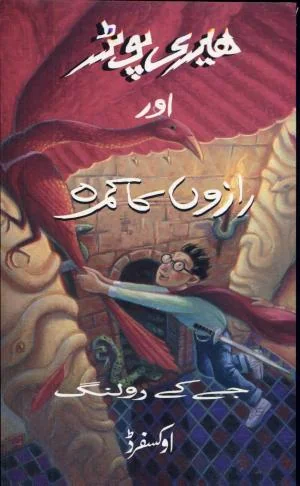
هيرى پوٹر اور رازوں کا کمره :
 74
74

هيرى پوٹر اور رازوں کا کمره :
The Urdu translation of *Harry Potter and the Chamber of Secrets* by Darakhshanda Asghar Khokhar, appearing in 2004, presents a curious case study for fans and literary analysts alike. Khokhar's rendering of Rowling's prose attempts to capture the youthful energy and the escalating dread that defines Harry's second year at Hogwarts. The challenge of translating the intricate world-building and specific magical terminology of the original is significant. While the translation generally succeeds in conveying the plot, some of the nuanced wordplay and cultural specificities of the English original might be lost in translation, a common hurdle for any literary adaptation across languages. A particular point of interest is how terms like "Muggle" and the names of spells are adapted. The book's strength lies in its accessibility to a new audience, yet its limitation is the inherent difficulty of perfectly replicating Rowling's unique linguistic inventiveness. This edition serves as a vital conduit, bridging cultures through a shared magical narrative.
📝 Description
74
Darakhshanda Asghar Khokhar's 2004 Urdu translation of Harry Potter and the Chamber of Secrets arrived during the series' global peak.
This is the second installment in J. K. Rowling's wizarding saga, rendered into Urdu by Darakhshanda Asghar Khokhar and published in 2004. The book follows Harry's return to Hogwarts for his second year, where he and other students born to non-magical parents face a mysterious threat. The narrative centers on the legend of the Chamber of Secrets, a hidden room within the school, and its connection to Salazar Slytherin.
The translation aims to bring the magical world of Hogwarts to Urdu-speaking readers. It appeals to existing fans who wish to experience the story in a new linguistic context, as well as to new readers who prefer to engage with literature in Urdu. The book's publication in 2004 coincided with the significant international acclaim Rowling's work had already achieved.
While not an esoteric text itself, *Harry Potter and the Chamber of Secrets* engages with themes common in occult fiction, such as hidden knowledge, ancient lineages, and the struggle between good and evil. The legend of Salazar Slytherin and the secrets of the Chamber tap into archetypal ideas of forbidden power and inherited destinies. The narrative's focus on magical schools and the inherent 'otherness' of magical ability can resonate with traditions that explore secret societies and the acquisition of esoteric skills.
💡 Why Read This Book?
• Gain insight into the translation process of globally recognized literature by examining Darakhshanda Asghar Khokhar's 2004 Urdu version of *Harry Potter and the Chamber of Secrets*. • Experience the narrative's exploration of prejudice and courage, particularly through the subplot involving Ginny Weasley and the Chamber of Secrets, in a new linguistic and cultural context. • Understand the challenges and triumphs of disseminating popular fiction across diverse linguistic landscapes, appreciating how the 1998 original's themes are reinterpreted in the 2004 translation.
⭐ Reader Reviews
Honest opinions from readers who have explored this book.
❓ Frequently Asked Questions
When was the original English version of Harry Potter and the Chamber of Secrets published?
The original English edition of *Harry Potter and the Chamber of Secrets* by J. K. Rowling was first published in 1998, preceding the Urdu translation by Darakhshanda Asghar Khokhar in 2004.
Who is the translator of this Urdu edition?
The Urdu translation of *Harry Potter and the Chamber of Secrets* was done by Darakhshanda Asghar Khokhar.
What is the main plot point of Harry Potter and the Chamber of Secrets?
The second book in the series, *Harry Potter and the Chamber of Secrets*, follows Harry's second year at Hogwarts where students are being mysteriously petrified, leading to the uncovering of a legendary hidden chamber and a dangerous secret.
Is this book suitable for young readers?
Yes, like the original, the Urdu translation is intended for young readers, though it deals with themes of fear and dark magic that might be more suitable for pre-teens and older.
What does 'Muggle' mean in the Harry Potter universe?
In the Harry Potter universe, a 'Muggle' is a person who is born into a non-magical family and has no magical abilities themselves. The concept is central to the world's social structure.
What is the significance of Salazar Slytherin in the book?
Salazar Slytherin is one of the four founders of Hogwarts and a powerful wizard who believed only pure-blood wizards should be taught magic. He is associated with the Chamber of Secrets and a dark legacy.
🔮 Key Themes & Symbolism
Hidden Chambers and Ancestral Legacies
The narrative hinges on the discovery of the titular Chamber of Secrets, a hidden place within Hogwarts built by Salazar Slytherin. This chamber represents a dark, suppressed aspect of the school's history, tied to Slytherin's pure-blood ideology. Its existence and the secrets it holds reflect how past prejudices and unresolved conflicts can continue to influence the present, requiring protagonists to confront these legacies. The concept echoes Gnostic ideas of hidden knowledge and the unveiling of concealed truths.
Prejudice and Purity of Blood
A core theme is the pervasive prejudice against Muggle-born witches and wizards, championed by Slytherin's descendants and the ideology behind the Chamber. This mirrors real-world discriminatory practices and the dangers of exclusionary belief systems. The book scrutinizes the notion of magical 'purity' and argues for equality and acceptance, highlighting how fear and ignorance fuel hatred. This speaks to historical movements that fought against racial and social segregation.
The Nature of Evil and Possession
The antagonist responsible for the attacks within the Chamber is revealed to be a memory and a magical artifact, Tom Riddle's diary, which possesses Ginny Weasley. This explores the insidious nature of evil, which can corrupt and manipulate through subtle means, rather than always manifesting as overt aggression. The concept of possession and the battle for control over one's will touch upon themes found in various spiritual and psychological traditions dealing with external influences.
Courage in the Face of Fear
Harry and his friends consistently face situations that evoke significant fear, from confronting a giant spider to entering the perilous Chamber of Secrets. Their willingness to act despite this fear, particularly Harry's determination to protect his friends and uncover the truth, underscores the importance of bravery. This theme emphasizes that courage is not the absence of fear, but the resolve to act in its presence, a common virtue in heroic narratives across cultures.
💬 Memorable Quotes
Direct passages from the work, attributed to the author.
“The Chamber of Secrets has been opened. Enemies of the heir, beware.”
— This cryptic message, scrawled on a Hogwarts wall in what appears to be blood, initiates the central mystery of the book. It signals a resurgence of ancient animosity tied to Salazar Slytherin and sets a tone of menace and impending danger for the school community.
“It is not our abilities that show what we truly are. It is our choices.”
— This profound statement, often attributed to Dumbledore, emphasizes the ethical framework of the wizarding world. It suggests that character is defined not by innate talent or magical prowess, but by the moral decisions individuals make, especially in challenging circumstances.
“Fear of a name only increases fear of the thing itself.”
— This observation highlights the psychological power of names and the tendency to avoid confronting difficult truths or entities. By refusing to name the feared entity, people inadvertently amplify its power and mystique, preventing understanding and resolution.
💡 Key Ideas
Editorial paraphrase of the work's core concepts — not direct quotes.
Honestly, am I going to have to repeat my fourth year?
This line, likely spoken by a character facing a dire situation or repetition, captures a sense of exasperation and the relatable dread of academic failure or a return to challenging circumstances, injecting a touch of humor amidst tension.
It matters not what someone is born, but what they grow to be.
This quote directly confronts the prejudice based on magical lineage. It champions the idea that an individual's actions, choices, and development define them, rather than their birth status, advocating for meritocracy and acceptance over inherited privilege.
🌙 Esoteric Significance
Tradition
While not overtly occult, the Harry Potter series, including *Chamber of Secrets*, draws from Western esoteric traditions by exploring themes of hidden knowledge, ancient powers, and the duality of good and evil. The concept of a secret chamber within a seemingly benign institution and the manipulation of a younger generation by a dark past can be loosely aligned with Gnostic narratives of hidden realms and the struggle against corrupting forces. The emphasis on lineage and inherent magical ability also touches upon concepts found in certain Hermetic or alchemical ideas about hidden potentials and inherited essences.
Symbolism
The Chamber of Secrets itself functions as a potent symbol of the repressed unconscious or the hidden, darker aspects of an institution's history. Salazar Slytherin represents the archetype of the purist, the one who seeks to maintain a perceived ideal through exclusion. The Basilisk, a creature of immense power and deadly gaze, symbolizes primal fear and the destructive potential of unchecked hatred. The diary of Tom Riddle represents the allure of dark knowledge and the manipulation of the past to control the present.
Modern Relevance
Contemporary discussions around identity politics, the dangers of ideological purity, and the resurgence of historical grievances find echoes in *Chamber of Secrets*. Modern esoteric thinkers and practitioners might analyze the book's structure for archetypal patterns of initiation and confrontation with shadow aspects, both personal and collective. The narrative's enduring appeal suggests a collective unconscious resonance with themes of uncovering hidden truths and confronting inherited societal flaws.
👥 Who Should Read This Book
• Young adult readers interested in fantasy literature who are seeking to engage with popular stories in the Urdu language, appreciating the nuances of translation. • Students of comparative literature and translation studies who wish to analyze how complex narratives and cultural elements are adapted across linguistic divides. • Fans of the Harry Potter series looking to experience the familiar narrative of *Chamber of Secrets* through a different cultural lens, exploring the work of translator Darakhshanda Asghar Khokhar.
📜 Historical Context
The original *Harry Potter and the Chamber of Secrets*, released in 1998, emerged during a period of burgeoning global interest in fantasy literature for young adults. J. K. Rowling's narrative was already capturing imaginations, building on the success of *Philosopher's Stone*. The book's themes of prejudice, hidden dangers within institutions, and the struggle against dark legacies found fertile ground in a post-Cold War era that was grappling with various forms of societal division. By 2004, when the Urdu translation by Darakhshanda Asghar Khokhar appeared, the Harry Potter series had become a cultural juggernaut, influencing children's publishing and sparking debates about the moral and literary merit of fantasy. While Rowling faced no significant censorship challenges for this particular book in major Western markets, its themes of ancient evil and institutional secrets certainly invited critical analysis, contrasting with the lighter, more whimsical tone of some children's literature of the time.
📔 Journal Prompts
The legend of Salazar Slytherin and the Chamber of Secrets.
Ginny Weasley's possession by Tom Riddle's diary.
The concept of 'Mudblood' and its implications.
Harry's choice to confront the Basilisk.
The role of friendship in overcoming fear.
🗂️ Glossary
Muggle
A person who is born into a non-magical family and has no magical abilities. The term is used in contrast to witches and wizards within the Harry Potter universe.
Chamber of Secrets
A hidden chamber within Hogwarts, built by Salazar Slytherin, which contains a monster and a secret that could threaten the school. Its existence is a central mystery in the book.
Basilisk
A giant serpent capable of killing with its stare, kept by Salazar Slytherin in the Chamber of Secrets. It is a creature of immense power and danger.
Tom Riddle
The true identity of the antagonist behind the events of the book, revealed to be a younger version of Lord Voldemort. His diary plays a central role in the plot.
Pure-blood
A wizard or witch who comes from a family with no Muggle ancestry. This concept is central to the discriminatory ideology of Salazar Slytherin.
Parseltongue
A rare magical ability allowing the speaker to communicate with snakes. Harry possesses this ability, which is linked to Salazar Slytherin.
Petrification
The magical process of turning living beings into stone. This is the primary method used by the monster in the Chamber of Secrets.
🔮 Readers Also Liked
Browse all →








More Free Occult Philosophy Books
View all →