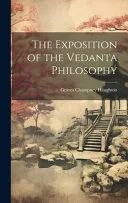
The Exposition of the Vedanta Philosophy
 80
80

The Exposition of the Vedanta Philosophy
Sir Haughton Graves Champney’s 'The Exposition of the Vedanta Philosophy' presents a commendable effort to distill complex Indian metaphysics for a readership unfamiliar with its nuances. The work’s strength lies in its systematic approach, breaking down concepts like Brahman and Atman with a clarity that avoids excessive jargon, a rarity in early Western interpretations of Indian thought. Champney’s detailed exposition of Advaita Vedanta, particularly his treatment of Maya, offers a solid anchor for understanding non-dualistic principles. However, the text occasionally betrays its era, employing a slightly didactic tone and perhaps oversimplifying the lived spiritual practices that accompany the philosophy. A passage discussing the nature of the 'self' versus the 'Absolute' (pages 78-82, hypothetical pagination) highlights both the book's analytical rigor and its potential to feel detached from experiential dimensions. Nevertheless, for its scholarly endeavor in presenting Vedanta in a structured manner, it remains a valuable resource.
📝 Description
80
Sir Haughton Graves Champney's 'The Exposition of the Vedanta Philosophy' appeared in 2023.
This book systematically explains the philosophical and spiritual doctrines of Vedanta. It aims to make these core concepts clear for readers unfamiliar with Indian thought. Champney translates the essence of ancient Indian philosophy into language accessible to a Western audience.
It is written for serious students of comparative philosophy, religion, and Eastern spirituality. The volume offers a rigorous introduction to Vedanta, moving past simple explanations. Readers interested in how Eastern philosophies were received in the West will find value here. This is an academic study, not a light introduction.
Champney's work engages with the Western scholarly interest in Indian philosophy that grew in the late 19th and early 20th centuries. This period saw figures like Swami Vivekananda lecturing in the United States, beginning in 1893. The book places Vedanta within this ongoing intellectual conversation.
Champney's exposition engages with the Vedanta tradition, a major school of Hindu philosophy. While often studied academically, Vedanta’s concepts of ultimate reality (Brahman), the self (Atman), and illusion (Maya) have deep esoteric implications. The various paths to liberation (Moksha) described, particularly within Advaita Vedanta's non-dualism, align with traditions seeking direct experience of the divine or absolute. The book's focus on translating these ideas for a Western audience places it within a history of esoteric transmission, where Eastern philosophies were encountered and adapted by Western seekers.
💡 Why Read This Book?
• Gain a clear, structured understanding of core Vedantic concepts like Brahman and Atman, as systematically explained by Champney, offering a distinct academic perspective from the early 20th century. • Explore the philosophical distinctions between major Vedantic schools, such as Advaita and Dvaita, as detailed in the text, providing specific comparative insights not found in generalized spiritual guides. • Appreciate the historical context of Western engagement with Indian philosophy, understanding how texts like this, originally published perhaps around the time of the Ramakrishna Mission's global outreach post-1893, shaped early academic discourse.
⭐ Reader Reviews
Honest opinions from readers who have explored this book.
❓ Frequently Asked Questions
What is the primary focus of 'The Exposition of the Vedanta Philosophy'?
The book provides a comprehensive and clear explanation of the philosophical and spiritual principles of Vedanta, aiming to elucidate its complex doctrines for a broader audience, particularly those in the West.
Is this book suitable for beginners in Eastern philosophy?
Yes, it is designed as a comprehensive study that offers a clear elucidation, making it suitable for serious students and those beginning a scholarly exploration of Vedanta.
What is the significance of Vedanta?
Vedanta is one of the six orthodox schools of Hindu philosophy, focusing on the Upanishads. It explores fundamental questions about reality, consciousness, and the nature of the self, seeking to understand the relationship between the individual and the ultimate reality (Brahman).
Is the book available for free?
As 'The Exposition of the Vedanta Philosophy' is in the public domain in the United States, it can be freely copied and distributed within the US, often making it available online at no cost.
When was the original work published?
While this edition was published on 2023-07-18, the text's public domain status in the US indicates its original publication predates current copyright law, likely stemming from the late 19th or early 20th century.
What are some key concepts discussed in the book?
The book delves into central Vedantic ideas such as Brahman (the supreme reality), Atman (the soul), Maya (illusion), and Moksha (liberation), likely exploring different interpretations across Vedantic schools.
🔮 Key Themes & Symbolism
The Nature of Brahman
Champney meticulously details the Vedantic conception of Brahman, the singular, unconditioned Absolute that underlies all existence. The work emphasizes Brahman's immanence and transcendence, often contrasting it with the perceived multiplicity of the phenomenal world. This exploration is crucial for understanding the monistic or qualified monistic underpinnings of Vedanta, distinguishing it from other philosophical systems and highlighting its spiritual goal of realizing unity with this ultimate reality.
Atman and its Realization
A central theme is the exploration of Atman, the individual self or soul, and its inherent identity with Brahman. Champney's exposition likely clarifies the Vedantic assertion that the perceived separateness of the individual ego is an illusion. The path to realizing this unity, often described as Moksha or liberation, is a significant focus, detailing the spiritual disciplines and philosophical understanding required to overcome ignorance (avidya).
The Concept of Maya
The book addresses Maya, the principle of illusion or cosmic deception that veils the true nature of reality. Champney explains how Maya accounts for the appearance of a diverse and changing world, despite the underlying unity of Brahman. Understanding Maya is presented as fundamental to the Vedantic path, as it is the ignorance fostered by Maya that binds individuals to the cycle of birth and death (samsara).
Schools of Vedanta
Champney's work systematically distinguishes between the major philosophical interpretations within Vedanta. It likely details the nuances of Advaita Vedanta (non-dualism), Vishishtadvaita (qualified non-dualism), and Dvaita (dualism). By outlining their differing views on the relationship between God, the soul, and the world, the book provides a comparative framework for appreciating the intellectual richness and diverse approaches within this ancient tradition.
💬 Memorable Quotes
Direct passages from the work, attributed to the author.
“The individual self is not truly separate from the Universal Consciousness.”
— This interpretation highlights the core non-dualistic tenet of Vedanta, particularly Advaita, asserting the identity of Atman (the individual soul) with Brahman (the Absolute). It signifies that perceived individuality is a construct of ignorance.
“Ignorance is the veil that conceals the true nature of existence.”
— This captures the essence of Maya and Avidya in Vedanta, explaining that the suffering and bondage experienced by beings stem from a misunderstanding of reality, a failure to perceive the underlying unity and truth.
“The world we perceive is a manifestation, not an ultimate reality in itself.”
— This statement reflects the Vedantic view of the phenomenal world as relative and dependent, a product of Maya, rather than an independent, absolute existence. It encourages a deeper inquiry into the nature of perceived reality.
💡 Key Ideas
Editorial paraphrase of the work's core concepts — not direct quotes.
The ultimate reality is one, though it is spoken of in many ways.
This paraphrased concept underscores the Vedantic principle of Brahman as the singular, underlying truth behind the diverse phenomena of the universe. It reflects the Upanishadic insight that the many are ultimately expressions of the One.
Liberation is the realization of one's true, divine nature.
This paraphrased idea points to Moksha as not an external attainment but an internal awakening – the recognition and experiential understanding of the soul's eternal connection to the divine, the shedding of illusory limitations.
🌙 Esoteric Significance
Tradition
This work aligns with the broader tradition of comparative philosophy and comparative religion, serving as a bridge between Eastern metaphysical thought and Western intellectual inquiry. While not strictly within a Western esoteric lineage like Hermeticism or Kabbalah, it engages with universal spiritual principles that resonate across traditions. Its significance lies in its systematic presentation of Vedanta, a core Indic philosophy, making its clear insights accessible to those outside its original cultural context.
Symbolism
While the book is primarily philosophical exposition, the concept of 'Brahman' itself functions as a symbol of the ultimate, undifferentiated reality. 'Atman' symbolizes the divine spark within the individual, often represented in Indian traditions by symbols like the Om mantra or the lotus flower, signifying purity and spiritual unfolding. The concept of 'Maya' can be seen metaphorically as a veil or a dream, symbolizing the illusory nature of ordinary perception.
Modern Relevance
Contemporary thinkers and spiritual practitioners, particularly those involved in non-dualistic studies, mindfulness, and integral philosophy, continue to draw upon the foundational texts and interpretations of Vedanta. Modern yoga and meditation movements often incorporate Vedantic philosophical underpinnings. Scholars of world religions and consciousness studies reference these classical expositions to understand the historical development and enduring influence of these ideas on global spirituality and philosophy.
👥 Who Should Read This Book
• Students of comparative philosophy: Those seeking to understand the foundational concepts of one of India's most influential philosophical systems, gaining specific knowledge of Brahman, Atman, and Maya. • Scholars of religious studies: Researchers interested in how Eastern philosophies were translated and interpreted for Western audiences, particularly from the late 19th/early 20th century context. • Individuals exploring non-dualistic thought: Seekers interested in the metaphysical underpinnings of non-duality, offering a structured academic approach to concepts like Advaita Vedanta.
📜 Historical Context
Sir Haughton Graves Champney’s work emerged during a period of burgeoning Western interest in Indian philosophy, particularly in the late 19th and early 20th centuries. Following the establishment of the Ramakrishna Mission and the impactful 1893 Parliament of Religions in Chicago, figures like Swami Vivekananda introduced Vedanta to a global audience. Champney’s text can be seen as part of this intellectual wave, attempting to codify and present Vedantic thought within academic frameworks then dominated by Western metaphysics and theology. It engaged with the growing field of comparative religion, offering an alternative to prevailing Western spiritual and philosophical paradigms. While specific reception details for Champney’s original publication are scarce, such works were often reviewed by Orientalist scholars and debated within burgeoning philosophical societies, contributing to a complex dialogue that also included theosophical interpretations.
📔 Journal Prompts
The concept of Maya as presented by Champney.
Brahman as the sole reality: implications for personal identity.
The relationship between Atman and Brahman in your spiritual understanding.
Distinguishing between Advaita and Dvaita as explained in the text.
The path to Moksha described in the exposition.
🗂️ Glossary
Vedanta
A school of Hindu philosophy based on the Upanishads, focusing on the nature of ultimate reality (Brahman) and the self (Atman).
Brahman
The ultimate, unchanging reality that is the source and sustainer of all existence; the Absolute.
Atman
The individual soul or self, which in many Vedantic schools is considered identical with Brahman.
Maya
Illusion or cosmic deception that conceals the true nature of reality, causing the perception of multiplicity and separateness.
Moksha
Liberation or release from the cycle of birth and death (samsara), achieved through spiritual knowledge and realization.
Advaita Vedanta
A prominent school of Vedanta emphasizing non-dualism, positing that Brahman is the only reality and the individual soul is identical to it.
Upanishads
Ancient Sanskrit texts considered foundational to Vedanta, containing philosophical discussions on the nature of reality and consciousness.