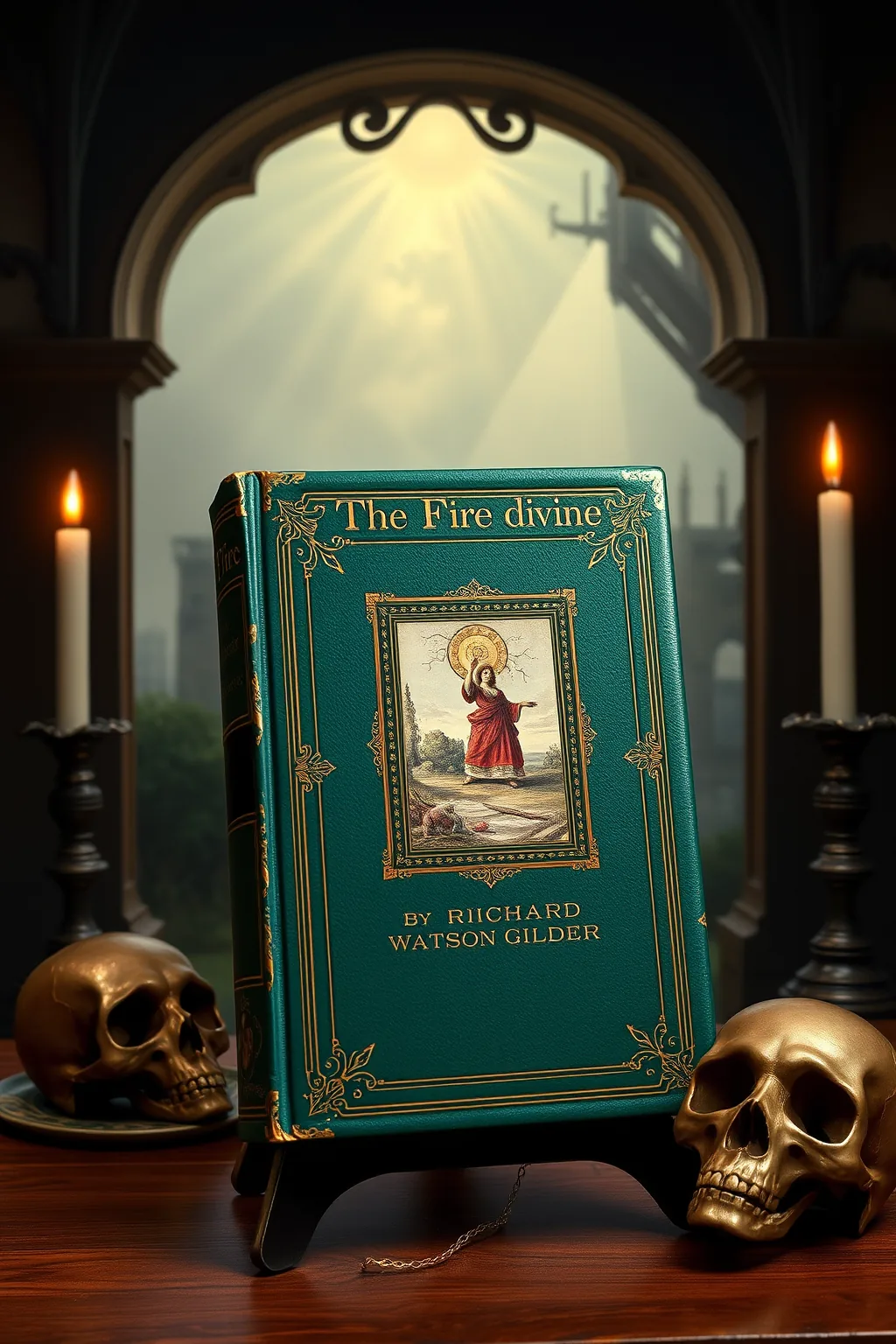
The fire divine
 62
62

The fire divine



Silas Hawthorne (Hermetic Studies Editor) — Richard Watson Gilder's 'The Fire Divine' is a rare gem, offering spiritual insights that resonate deeply with hermetic principles. While rooted in Presbyterian tradition, its exploration of divine immanence and the transformative power of faith transcends sectarian boundaries. Gilder masterfully employs evocative language to illuminate the subtle energies and inner light accessible to the dedicated seeker. This collection is particularly valuable for its nuanced approach to spiritual growth, emphasizing personal revelation over rigid doctrine. It will undoubtedly appeal to scholars of religious history, but more importantly, to souls actively engaged in the pursuit of esoteric wisdom and direct communion with the Divine.
📝 Description
62
Richard Watson Gilder's 1897 collection, 'The Fire Divine,' directly addresses the spiritual experience of God's presence.
Richard Watson Gilder's 'The Fire Divine' presents a collection of verse focused on the direct experience of the divine. Published in 1897, the work moves beyond conventional religious discourse to consider the immanence of spiritual illumination. Gilder uses symbolism to suggest ways individuals can access hidden knowledge and connect with their deepest intuitions. The poems invite readers into a contemplative space where faith transforms into personal experience.
The book examines the philosophical ideas surrounding divine presence in both the human heart and the wider universe. It encourages a perception of the extraordinary within everyday life. For individuals seeking understanding beyond strict religious doctrine, 'The Fire Divine' aims to illuminate unseen forces that influence reality.
Published in the late 19th century, 'The Fire Divine' emerged during a period of renewed interest in spiritualism and inner experience, distinct from the more institutionalized religious movements. It aligns with a broader esoteric current that sought direct, personal connection with the divine, often through introspection and symbolic interpretation. Gilder's work participates in this tradition by emphasizing felt experience over dogma, suggesting that spiritual truth is accessible through an internal flame that animates all existence.
💡 Why Read This Book?
Uncover the hidden spiritual fire within and around you. 'The Fire Divine' offers a profound exploration of divine presence, guiding seekers towards a more intimate and luminous faith. Ideal for those disillusioned with dogma, yearning for experiential knowledge, and seeking to understand the symbolic language of the soul. Discover timeless wisdom for personal transformation and spiritual illumination.
⭐ Reader Reviews
Honest opinions from readers who have explored this book.
❓ Frequently Asked Questions
What is the central theme of 'The Fire Divine'?
The central theme is the pervasive and transformative presence of the Divine Fire within all creation and within the human soul, emphasizing spiritual illumination and direct experience of the sacred.
Is this book suitable for non-Presbyterians?
Absolutely. While rooted in a Presbyterian context, the book's exploration of universal spiritual truths, divine immanence, and the search for inner light speaks to seekers of all backgrounds and traditions.
Does the book contain practical exercises for spiritual growth?
While not a manual of specific exercises, the book's contemplative nature and rich symbolism serve as a powerful catalyst for inner reflection and spiritual deepening, implicitly guiding the reader's practice.
What kind of symbolism is explored in the book?
The book delves into symbolic representations of divine light, spiritual ardour, inner transformation, and the interconnectedness of the human and the divine, often drawing parallels with natural phenomena.
Is 'The Fire Divine' considered an esoteric text?
Yes, in its profound exploration of inner spiritual states, hidden divine energies, and symbolic interpretation, it transcends conventional religious discourse and resonates with esoteric inquiry.
🔮 Key Themes & Symbolism
The Divine Immanence
This theme explores the profound concept that the Divine is not a distant entity but is intrinsically present within every aspect of existence, from the grandest cosmic sweep to the most intimate human experience. Gilder's prose illuminates how this omnipresent 'Fire' can be perceived and felt through heightened spiritual awareness and introspective practice, revealing the sacred woven into the fabric of reality.
Spiritual Illumination and Transformation
Central to 'The Fire Divine' is the notion of spiritual illumination as a transformative process, akin to the alchemical refinement of base metals into gold. The 'Fire' represents this purifying and clear force that burns away impurities of the ego and ignorance, leading to profound personal growth, clarity, and a deeper understanding of one's true spiritual nature and purpose.
Symbolism of the Inner Flame
Gilder masterfully employs the metaphor of fire as a symbol for divine love, spiritual passion, the animating life force, and the direct experience of the divine. This inner flame is not merely a passive belief but an active, dynamic energy that, when kindled, guides, warms, and empowers the individual on their spiritual journey, connecting them to a higher truth.
💬 Memorable Quotes
Direct passages from the work, attributed to the author.
“Where faith is a burning ember, works are the flames.”
— This emphasizes the active, dynamic nature of true faith, suggesting that genuine belief naturally manifests in outward actions that are passionate and transformative.
“The divine fire within makes the common extraordinary.”
— This highlights the transformative power of divine presence, revealing how spiritual awareness can imbue everyday experiences with profound meaning and sacredness.
“Love is the breath of the divine fire.”
— This poetic assertion equates divine love with the very essence and animating force of the spiritual fire, suggesting love as the core expression of the sacred.
💡 Key Ideas
Editorial paraphrase of the work's core concepts — not direct quotes.
The soul is a lamp, and God is the light.
This quote beautifully expresses the idea of the soul's inherent capacity to receive and reflect divine illumination, positioning the human spirit as a vessel prepared for sacred revelation.
Seek not without, but within, for the eternal flame.
A direct call to introspection, this quote directs the seeker's attention inward, asserting that the ultimate spiritual truth and divine connection reside within the self.
🌙 Esoteric Significance
Tradition
While originating from a Presbyterian context, 'The Fire Divine' deeply appeals to the Hermetic and Gnostic traditions through its emphasis on divine immanence, inner illumination, and the symbolic language of spiritual transformation. It reflects the Gnostic pursuit of hidden knowledge (gnosis) and the Hermetic principle of 'as above, so below,' suggesting a profound connection between the macrocosm and the microcosm, accessible through inner awareness.
Symbolism
The central symbol is the 'divine fire,' representing divine presence, spiritual passion, purification, and the animating life force. Other key symbols include light (illumination, truth), the soul as a vessel, and the transformation of the self, mirroring alchemical processes. These symbols serve as conduits to deeper metaphysical truths, inviting readers to decode their inner significance for personal spiritual insight.
Modern Relevance
In an age often characterized by secularism and disconnection, 'The Fire Divine' offers a potent reminder of the enduring power of spiritual experience and inner exploration. Its themes of finding the sacred within, the transformative potential of love and faith, and the universal nature of the divine speak directly to contemporary seekers grappling with existential questions and the search for meaning. The book provides timeless wisdom for cultivating inner peace and a profound sense of connection.
👥 Who Should Read This Book
This collection is a luminous guide for the spiritual seeker yearning for a deeper, more personal connection with the divine, transcending denominational boundaries. Scholars of religious history and comparative mysticism will find valuable insights into 19th-century American spiritual thought. Practitioners of contemplative prayer and meditation will appreciate the striking prose and focus on inner experience. Beginners beginning their spiritual journey will find a gentle yet profound introduction to the concept of divine immanence, while seasoned practitioners may rediscover forgotten truths and be inspired to deepen their inner fire.
📜 Historical Context
Published in the late 19th century, a period marked by both fervent religious engagement and burgeoning philosophical inquiry in America, Richard Watson Gilder's 'The Fire Divine' emerges from a rich intellectual and spiritual landscape. This era witnessed a growing interest in the personal, experiential aspects of faith, moving beyond strict theological dogma towards a more mystical understanding of the divine. Gilder, a prominent figure in American letters and religious thought, navigated this transition, offering reflections that resonated with those seeking a deeper, more intimate connection with God. The book reflects the era's engagement with transcendentalism and its emphasis on the inherent divinity within humanity and nature, while maintaining ties to his Presbyterian roots. It speaks to a time when literature was a significant vehicle for spiritual exploration and moral guidance.
📔 Journal Prompts
Reflect on moments when you have felt the 'divine fire' within you. What were the circumstances, and how did it transform your experience?
How does the metaphor of a lamp and light apply to your own spiritual journey? What nourishes your inner light?
Consider a common, everyday experience. How might the concept of the 'divine fire' imbue it with extraordinary significance?
If faith is a burning ember and works are the flames, what 'flames' are you currently expressing in your life?
Explore the idea of seeking 'within' rather than 'without.' What are you hoping to discover in your inner landscape?
🗂️ Glossary
Immanence
The philosophical or theological concept that the divine is present within the material world and within creation, rather than being entirely transcendent or separate from it.
Gnosis
In esoteric traditions, particularly Gnosticism, a form of spiritual knowledge or insight that leads to salvation or liberation, often attained through personal experience and revelation.
Transcendentalism
A philosophical and literary movement emphasizing intuition, individualism, and the inherent goodness of both nature and humanity, believing that the divine is present in all things.
Homiletics
The art and science of preaching; the study of effective public speaking for religious discourse, often focusing on the structure and delivery of sermons.
Hermeticism
A spiritual, philosophical, and esoteric tradition based primarily upon writings attributed to Hermes Trismegistus, emphasizing divine wisdom, alchemy, astrology, and the interconnectedness of the universe.
This book appears in 3 collections
🔮 Readers Also Liked
Browse all →









From the “Tarot” Collection
View all →







More Free Divination & Tarot Books
View all →