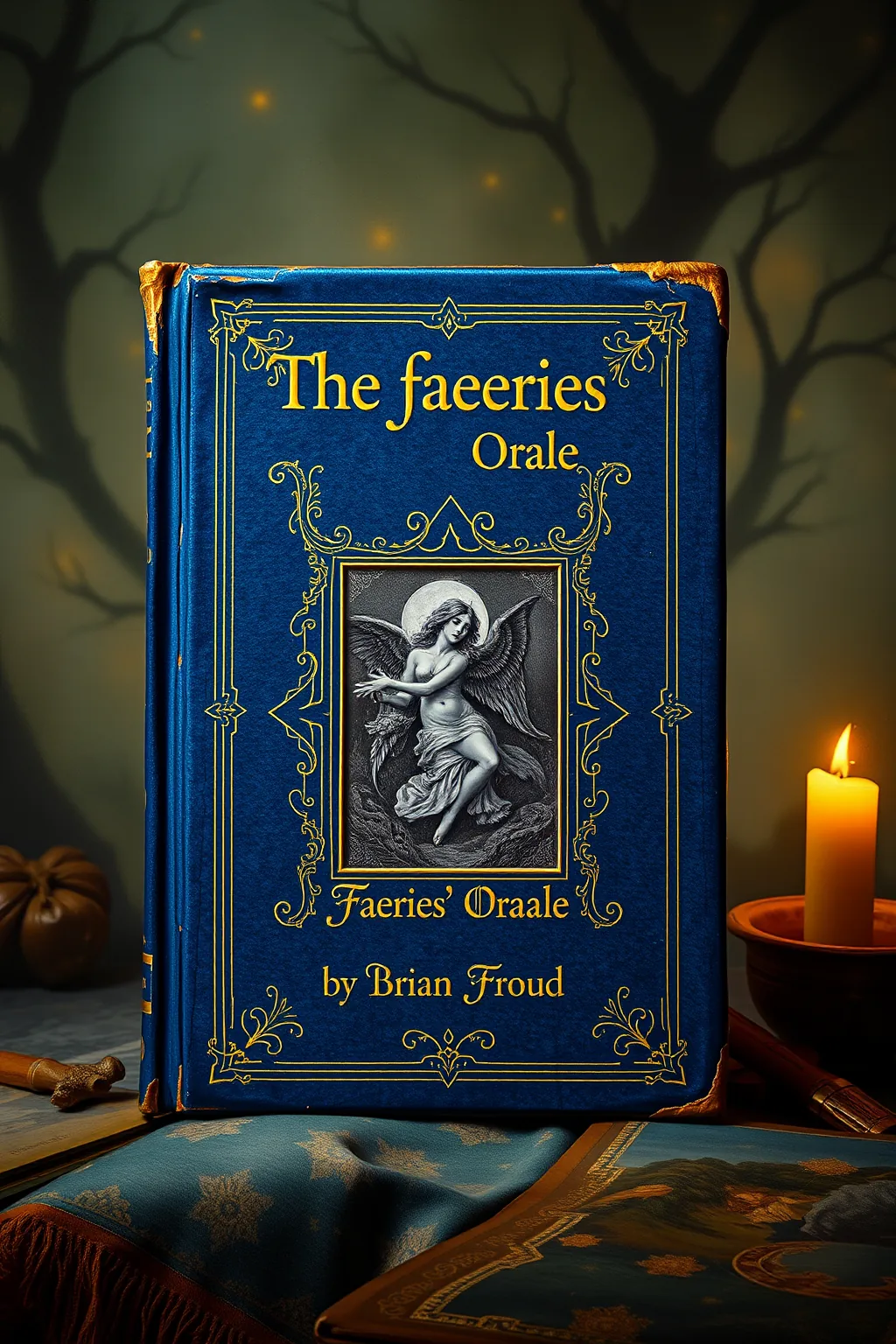
The faeries' oracle
 81
81

The faeries' oracle
Brian Froud and Jessica Macbeth's The Faeries' Oracle offers a visually arresting and conceptually dense system for engaging with faerie archetypes. Froud's artwork, which has defined a generation's image of the fae, is the undeniable strength here, presenting creatures and scenes with an earthy, potent magic. The accompanying text, while informative, occasionally feels secondary to the arresting imagery. A particular strength lies in the detailed explanations of the 'Seasonal Courts,' offering a structured yet imaginative cosmology. However, the oracle's reliance on Froud's singular artistic vision, while compelling, might limit its appeal to those who resonate with his specific aesthetic. The interpretations, though rich, sometimes lean towards the prescriptive rather than the broadly evocative. The Faeries' Oracle provides a unique, art-driven method for faerie communion, best suited for visual learners and devotees of Froud's distinctive fae.
📝 Description
81
Brian Froud and Jessica Macbeth published The Faeries' Oracle in 2000, presenting faerie archetypes as a divinatory system.
This book functions as a divinatory tool and a visual guide to the fae, as interpreted by its creators. It is organized around a deck of cards, each featuring a unique faerie archetype or concept, accompanied by detailed artwork and descriptive text. The work is intended for individuals drawn to the visual and symbolic aspects of faerie mythology, appealing to those interested in practical magic, divination, and art for spiritual insights. Readers looking for an alternative to academic folklore analyses, who appreciate richly illustrated and evocative material, will find its content engaging. It is especially suited for artists, dream workers, and practitioners of nature-based spiritual paths.
The oracle's structure centers on specific faerie types and their associated energies, rendered in Froud's distinctive artistic style. Each card represents a principle or a phase within a magical or psychological cycle, not just a creature. The book guides users to interpret these symbols for personal insight, connecting the perceived 'otherworld' of faeries with the user's inner life and external circumstances. It emphasizes the symbolic language of fae beings for self-discovery.
Published at the turn of the millennium, The Faeries' Oracle appeared during a resurgence of interest in paganism and esoteric spirituality. Brian Froud, known for his faerie art since the 1970s, collaborated with Jessica Macbeth to create a system for understanding faerie beings. This work aligns with a trend of making complex esoteric ideas accessible through art and intuitive methods, differing from purely academic folklore studies.
💡 Why Read This Book?
• Gain access to Brian Froud's singular faerie vision, presented through original artwork that defines a modern fae aesthetic, offering visual inspiration not found in purely textual folklore studies. • Learn to use a divinatory system centered on the 'Seasonal Courts' (like the Summer Court and Winter Court) for personalized insights into nature's cycles and personal energies. • Explore concepts like the 'Green Man' and other fae beings, understanding them not just as mythical figures but as symbolic representations of vital, untamed natural forces.
⭐ Reader Reviews
Honest opinions from readers who have explored this book.
❓ Frequently Asked Questions
What is the primary purpose of The Faeries' Oracle?
The Faeries' Oracle serves as both a divinatory tool and a visual guide to the faerie realms as envisioned by Brian Froud and Jessica Macbeth. It uses illustrated cards to represent faerie archetypes and concepts, facilitating personal insight and connection with nature's energies.
When was The Faeries' Oracle first published?
The Faeries' Oracle was first published in the year 2000, marking a significant entry into the popular esoteric and faerie-themed literature of the early 21st century.
Who are the creators of The Faeries' Oracle?
The book is the creation of renowned faerie artist Brian Froud and author Jessica Macbeth. Froud is celebrated for his influential visual interpretations of faeries, while Macbeth contributes textual depth and conceptual framework.
What are the 'Seasonal Courts' mentioned in the oracle?
The 'Seasonal Courts' are a central organizing principle within The Faeries' Oracle. They represent different facets of the fae world tied to the changing seasons, such as the Summer Court and Winter Court, each with distinct characteristics and energies.
Is this book suitable for beginners in faerie studies?
Yes, for those interested in the artistic and symbolic aspects of faerie lore, the book is accessible. Its visual nature and clear, if imaginative, explanations make it a good entry point for appreciating Froud's unique fae cosmology.
What distinguishes this oracle from traditional folklore collections?
Unlike academic folklore collections, The Faeries' Oracle is primarily an artistic and divinatory system. It presents a subjective, visual interpretation of faeries, focusing on archetypal energies and intuitive guidance rather than historical documentation.
🔮 Key Themes & Symbolism
Faerie Archetypes and Iconography
The book meticulously details a pantheon of faerie beings, each rendered with Brian Froud's signature blend of earthy realism and otherworldly charm. These are not mere whimsical sprites but potent archetypes reflecting natural forces and psychological states. From the regal figures of the Seasonal Courts to the more elemental beings, the iconography serves as a visual language for the unseen. The detailed artwork guides the reader to perceive the fae not as external entities but as integral expressions of the living world, providing a rich source for contemplation and imaginative engagement.
Divination and Intuitive Guidance
Functioning as an oracle, the work provides a structured method for seeking insight through symbolic interpretation. The cards, and their accompanying textual explanations, are designed to be used for personal reflection and guidance. The emphasis is on intuitive connection, encouraging users to engage with the imagery and text to uncover personal meanings. This approach positions faerie lore as a living system capable of offering wisdom relevant to contemporary life, moving beyond simple storytelling to practical application of esoteric principles.
The Seasonal Courts Cosmology
A core conceptual framework presented is the division of the fae world into 'Seasonal Courts' – often including Spring, Summer, Autumn, and Winter. This system imbues the fae with the cyclical energies of nature, linking their characteristics and influences to the ebb and flow of the year. This cosmological structure offers a lens through which to understand change, growth, decay, and renewal, both in the external environment and within the human psyche. It grounds the esoteric concepts in the tangible rhythms of the natural world.
Nature as a Spiritual Source
The Faeries' Oracle consistently reinforces the idea that the natural world is imbued with spirit and intelligence. The fae are presented as manifestations of this inherent vitality. The book encourages a reverence for nature, seeing it as a source of magic, wisdom, and connection. This perspective aligns with animistic traditions, viewing all of life as sacred and interconnected. It serves as a call to observe and engage with the environment with a deeper sense of wonder and respect, recognizing the subtle energies at play.
💬 Memorable Quotes
Direct passages from the work, attributed to the author.
“The Green Man is not just a symbol of spring, but of the eternal, untamed power of the wild.”
— This interpretation highlights the Green Man's significance beyond seasonal renewal, framing him as a representation of primal, enduring natural forces that resist domestication or control.
“Each faerie has a story, a purpose, and a connection to the unseen currents of the world.”
— This suggests that the beings depicted are not random creations but possess inherent meaning and function within a larger, mystical framework, inviting deeper contemplation of their roles.
“The Summer Court embodies vibrancy, passion, and the full bloom of life's energy.”
— This phrase expresses the essence of the Summer Court's archetypal energy, associating it with peak vitality, intense emotions, and the flourishing aspects of existence.
“Understanding the Winter Court requires embracing stillness, introspection, and the wisdom of dormancy.”
— This offers a perspective on the Winter Court, suggesting that its power lies not in overt activity but in quietude, inner reflection, and the generative potential found in periods of rest.
“The oracle's images are keys to unlocking perceptions of the hidden world.”
— This statement frames the book's artwork as more than mere illustration; it acts as a practical tool for accessing or perceiving a spiritual or magical dimension that is typically concealed.
🌙 Esoteric Significance
Tradition
The Faeries' Oracle draws heavily from animistic and nature-based spiritual traditions, aligning with modern paganism and earth-centered spirituality rather than specific historical esoteric lineages like Hermeticism or Kabbalah. It interprets faerie lore through a lens that sees inherent spirit and consciousness within the natural world, a concept found in various indigenous mythologies and later reinterpreted by figures like the folklorist W.B. Yeats in his writings on the Sidhe. It departs from purely academic folklore by framing these beings as accessible for divination and personal spiritual connection.
Symbolism
Key symbols include the 'Green Man,' representing the untamed, regenerative force of nature and the cycle of life and death. The 'Seasonal Courts' (e.g., Summer Court, Winter Court) symbolize the archetypal energies associated with different times of the year, reflecting themes of growth, decay, abundance, and introspection. Froud's depictions of various fae creatures also serve as potent symbols for natural elements, psychological states, and hidden aspects of the human experience.
Modern Relevance
Contemporary practitioners of Neo-Paganism, Wicca, and other nature-based spiritual paths often engage with Froud's iconography as a visual language for their beliefs. Artists and writers in the fantasy genre continue to be influenced by his aesthetic. The book's approach to faerie as archetypal forces relevant to personal growth and divination speaks to modern psychological and spiritual exploration, making it a touchstone for those seeking to reconnect with the 'wild' or the 'otherworld' in contemporary life.
👥 Who Should Read This Book
• Aspiring diviners and practitioners of nature-based spirituality seeking a visually rich and intuitive oracle system. • Artists and illustrators interested in Brian Froud's iconic faerie artwork and its symbolic representations of natural and mystical themes. • Readers of folklore and mythology who appreciate imaginative interpretations that connect ancient tales to contemporary personal and spiritual exploration.
📜 Historical Context
Published in 2000, The Faeries' Oracle emerged within a flourishing field of New Age spirituality and a resurgence of interest in folkloric traditions, particularly those concerning nature spirits. Brian Froud, already a prominent figure in faerie art since the 1970s with works like 'Faeries' (1978) co-authored with Alan Lee, brought a distinct visual language to this resurgence. This period saw a proliferation of books that sought to bridge the gap between academic folklore and personal spiritual practice, often through divinatory systems and artistic interpretations. While earlier scholarship, such as that by Katharine Briggs, focused on cataloging and analyzing faerie tales, Froud and Macbeth's work prioritized an experiential and symbolic engagement. The book's approach, blending art, mythology, and divination, positioned it within a contemporary spiritual milieu that valued intuitive understanding and personal connection to the 'otherworld,' distinguishing it from purely historical or anthropological studies.
📔 Journal Prompts
The Winter Court's stillness and the Summer Court's vibrancy: how do these energies manifest in your current life?
Reflect on the symbolism of the Green Man as presented in the oracle.
Consider the 'unseen currents of the world' as suggested by the faerie's purpose.
What message does the archetype of the Trickster fae offer for your current situation?
How can the faerie's connection to nature inform your own relationship with the environment?
🗂️ Glossary
Seasonal Courts
A conceptual framework dividing the fae world into distinct groups associated with the four seasons, each embodying specific archetypal energies and characteristics tied to the natural cycles.
Green Man
An ancient symbol of vegetation, rebirth, and the untamed spirit of nature, often depicted as a face or head formed from leaves and vines.
Oracle
A system, object, or person through which divine or mystical guidance is sought, typically involving interpretation of symbols or signs.
Archetype
A universal, inherited pattern of thought or imagery derived from the collective unconscious, often represented by specific characters or symbols.
Fae
A term encompassing a wide range of supernatural beings from folklore, often associated with nature, magic, and the 'otherworld'.
Divination
The practice of seeking knowledge of the future or the unknown by supernatural means, often through the interpretation of omens or symbols.
Iconography
The visual images and symbols used in a work of art or the study or interpretation of these.
🔮 Readers Also Liked
Browse all →









More Free Divination & Tarot Books
View all →