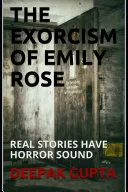
The Exorcism Of Emily Rose: Real Stories Have Horror Sound
 73
73

The Exorcism Of Emily Rose: Real Stories Have Horror Sound
Gupta's "The Exorcism Of Emily Rose" offers a stark, unvarnished look at cases of alleged demonic possession, eschewing the typical genre tropes for a more analytical approach. The strength lies in its attempt to bridge the gap between anecdotal accounts and a structured inquiry, particularly in its consideration of the psychological toll on individuals and families. However, the book occasionally struggles to maintain this balance, sometimes leaning into the more sensational aspects without offering sufficient critical distance. A passage detailing the reported physical manifestations during an alleged possession event, while vivid, could have benefited from more explicit discussion of psychological dissociation. Despite this, the work provides a valuable, albeit unsettling, perspective on phenomena that challenge conventional understanding.
📝 Description
73
Deepak Gupta's 2023 book examines demonic possession beyond sensationalism.
Deepak Gupta's "The Exorcism Of Emily Rose: Real Stories Have Horror Sound" examines demonic possession and spiritual warfare. The book moves past sensationalism to consider the psychological and theological aspects of extreme spiritual distress. Gupta analyzes documented cases, attempting to understand these phenomena by acknowledging both tangible and intangible elements of human experience.
The work aims to clarify events often relegated to folklore or disbelief. It is for readers interested in the intersection of faith, psychology, and the paranormal. Those who approach supernatural claims with a critical yet open mind, seeking to understand historical and cultural narratives surrounding exorcism, will find this book valuable. Students of comparative religion, parapsychology, and those intrigued by darker aspects of human consciousness will find material for contemplation.
The study of demonic possession has a long history across cultures, predating Christianity. Western traditions codified exorcism rites by the 17th century, notably in the Roman Catholic Church's *Rituale Romanum*. Gupta's work engages with this lineage, comparing modern understanding and documented cases to older frameworks. It addresses the ongoing dialogue between scientific skepticism and reports of phenomena that defy conventional explanation, placing the book within broader discussions of unexplained spiritual and psychological events.
💡 Why Read This Book?
• Gain a nuanced understanding of the historical and theological frameworks surrounding exorcism rites, as detailed in the analysis of the *Rituale Romanum*. • Explore the psychological dimensions of spiritual distress and possession phenomena, moving beyond simplistic good-versus-evil narratives. • Contemplate the interplay between belief, perceived reality, and the efficacy of faith-based interventions, as discussed through case studies.
⭐ Reader Reviews
Honest opinions from readers who have explored this book.
❓ Frequently Asked Questions
What is the primary focus of "The Exorcism Of Emily Rose: Real Stories Have Horror Sound"?
The book primarily examines documented cases of demonic possession and spiritual warfare, analyzing both the psychological and theological aspects of these extreme spiritual experiences, rather than solely focusing on sensationalism.
Does the book offer a specific religious perspective on exorcism?
While it engages with historical religious rites, particularly the Catholic tradition, the book aims for a broader analysis that considers psychological and cultural factors alongside spiritual ones, allowing for a more comprehensive view.
Are the "real stories" in the title based on actual reported events?
Yes, the "real stories" refer to documented cases and personal accounts that the author analyzes to explore the phenomena of demonic possession and its associated phenomena.
Who would benefit most from reading this book?
Readers interested in comparative religion, parapsychology, the history of spiritual practices, and the psychological aspects of extreme belief states would find this book particularly insightful.
Does the author provide a definitive explanation for possession?
The work explores various facets and interpretations of possession, acknowledging the complexity and often elusive nature of the phenomenon, rather than offering a single, definitive explanation.
What is the significance of the subtitle "Real Stories Have Horror Sound"?
The subtitle suggests that the unsettling and often terrifying nature of actual possession accounts is central to the book's exploration, implying that the reality of these experiences carries a profound, perhaps disturbing, auditory or sensory quality.
🔮 Key Themes & Symbolism
Spiritual Warfare Narratives
The book dissects narratives of spiritual warfare, framing extreme possession cases as battlegrounds between opposing forces. It examines the language and imagery used to describe these conflicts, often drawing parallels to ancient Gnostic dualisms or later Christian demonology. The work considers how individuals perceive themselves as agents or victims within these cosmic struggles, and how the concept of 'horror sound' might relate to the perceived auditory manifestations of malevolent presence or divine intervention.
The Psychology of Possession
A significant theme is the psychological interpretation of possession. Gupta explores how extreme psychological distress, trauma, or dissociative states can manifest in ways that are culturally interpreted as demonic influence. The book investigates the subjective experience of the possessed, the role of suggestibility, and the therapeutic potential of exorcism rituals, even when viewed through a purely psychological lens. This includes examining the collective hysteria that can surround such events.
Ritual and Belief Efficacy
The efficacy of exorcism rituals, both historically and in contemporary cases, is a central theme. The work scrutinizes the components of these rites, such as prayers, blessings, and the invocation of divine names, exploring their symbolic power and potential impact on the psyche. It questions whether the perceived success of an exorcism stems from supernatural intervention or the profound psychological effect of ritualistic action and unwavering belief within a specific religious context.
The Nature of Malevolent Entities
Gupta probes the concept of malevolent entities, moving beyond simple folklore to consider their potential nature and influence. This includes examining historical theological debates on the existence and hierarchy of demons, as well as modern parapsychological theories about psychic energies or collective unconscious phenomena. The book reflects on how fear and the unknown contribute to the perception of entities that induce profound horror.
💬 Memorable Quotes
Direct passages from the work, attributed to the author.
“The sound of true terror is not a scream, but a silence that screams.”
— This interpretation suggests that profound horror is not necessarily loud or obvious, but can be an oppressive, deafening quietude that implies a deep, internal dread or the absence of solace.
“When the veil thins, the whispers become audible.”
— This concept implies that during moments of heightened spiritual or psychological sensitivity, the boundaries between the mundane and the supernatural, or the conscious and the subconscious, become permeable, allowing for perceived communication from unseen realms.
“Faith is the shield, but doubt is the crack.”
— This highlights the idea that spiritual protection is contingent upon the strength of one's belief; any wavering or uncertainty can create an opening for negative influences or perceived attacks.
“The echo of possession lingers long after the voice is silenced.”
— This suggests that the traumatic effects of an alleged possession experience can have lasting psychological and spiritual repercussions, even after the immediate event has concluded and the person appears to have recovered.
“We seek demons in the shadows, but often find them in ourselves.”
— This contemplative statement points to the internal nature of perceived evil, suggesting that many of the struggles attributed to external demonic forces might, in fact, originate from internal psychological conflicts or flaws.
🌙 Esoteric Significance
Tradition
While not strictly adhering to a single esoteric lineage, Gupta's work touches upon themes prevalent in Gnostic and Western Esoteric traditions concerning the nature of adversarial forces and the struggle for spiritual liberation. It engages with the concept of entities that seek to impede spiritual progress, a common motif in various occult systems. The analysis of rituals and belief echoes practices found within Hermeticism and Kabbalism, which often involve structured methods for engaging with subtle energies and spiritual hierarchies.
Symbolism
The 'horror sound' itself can be interpreted as a symbol for the dissonance and terror associated with spiritual disruption or the perceived intrusion of chaotic forces. The act of exorcism, across various traditions, symbolizes purification and the re-establishment of divine order. The concept of a 'thinning veil' symbolizes a liminal state where the boundaries between material and spiritual realities become permeable, allowing for the perceived interaction between human consciousness and non-physical entities.
Modern Relevance
Modern practitioners of various occult paths, particularly those focused on spiritual warfare, demonology, or psychological projection, might find Gupta's analytical approach to possession cases relevant. Thinkers exploring the intersection of consciousness studies, parapsychology, and religion continue to draw on historical accounts of possession to understand the limits of empirical science and the enduring power of belief in shaping perceived reality. The book's exploration of the psychological underpinnings also speaks to contemporary therapeutic approaches that acknowledge the spiritual dimension of mental health.
👥 Who Should Read This Book
• Students of comparative religion and demonology seeking to understand historical and contemporary accounts of possession beyond sensationalized media portrayals. • Parapsychology researchers and enthusiasts interested in exploring phenomena that challenge conventional scientific paradigms. • Individuals interested in the psychological aspects of extreme belief, trauma, and altered states of consciousness within a spiritual context.
📜 Historical Context
The study of demonic possession and exorcism has a long, complex history, deeply intertwined with religious doctrine and societal anxieties. While formal rites like the *Rituale Romanum* were codified by the Catholic Church, particularly in the 17th century, the belief in and confrontation with malevolent spiritual forces predates this significantly, appearing in ancient Mesopotamian, Egyptian, and Greco-Roman cultures. Deepak Gupta's work emerges in an era where scientific rationalism often clashes with persistent reports of phenomena defying empirical explanation. Contemporary discussions are influenced by figures like psychiatrist Carl Jung, whose theories on the collective unconscious offered alternative frameworks for understanding intense psychological states. Unlike purely theological treatises, Gupta's approach implicitly engages with the broader cultural and psychological discourse surrounding extreme spiritual experiences, acknowledging a lineage that includes historical witch trials and the more recent resurgence of interest in the paranormal.
📔 Journal Prompts
The perceived 'horror sound' of possession: what does this auditory phenomenon represent metaphorically?
Reflect on the concept of the 'thinning veil' and its potential implications for personal spiritual awareness.
Analyze the relationship between ritualistic action and psychological outcomes in alleged exorcism cases.
Consider the internal vs. external sources of perceived malevolence as presented in the text.
Explore the idea of faith as a shield and doubt as a crack in the context of spiritual resilience.
🗂️ Glossary
Demonic Possession
A condition believed to involve the invasion and control of a person's body and mind by a malevolent spiritual entity or demon.
Spiritual Warfare
The concept of conflict between spiritual forces, often interpreted as a struggle between good and evil, or divine and demonic influences, affecting individuals and the world.
Rituale Romanum
The official book of rites in the Roman Catholic Church, containing the rite of exorcism and other sacramental ceremonies.
Malevolent Entities
Spiritual beings or forces believed to be inherently evil or harmful, often associated with causing suffering or obstructing spiritual progress.
Psychological Dissociation
A mental process where a person disconnects from their thoughts, feelings, memories, or sense of identity, sometimes manifesting as altered states of consciousness.
Liminal State
A transitional or in-between state, often characterized by ambiguity and a breakdown of ordinary distinctions, where boundaries (like between reality and hallucination) may seem to blur.
Efficacy
The ability to produce a desired or intended result; in this context, referring to the effectiveness of exorcism rituals or spiritual practices.