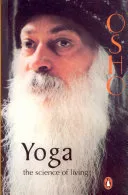
Yoga : The Science Of Living
 79
79

Yoga : The Science Of Living
Osho's "Yoga: The Science of Living" offers a perspective that challenges the common Western reduction of yoga to a mere physical discipline. He argues compellingly that yoga's true power lies in its capacity to cultivate profound awareness, leading to a sustained state of joy and equilibrium. The strength of the book is its comprehensive scope, treating the asanas as only one small part of a much larger system for life transformation. However, Osho's characteristic discursive style, while engaging, can sometimes meander, making it challenging to pinpoint specific, actionable techniques without prior familiarity with his broader teachings. A passage discussing the 'witnessing' consciousness, where one observes internal states without identification, stands out as a particularly potent distillation of his philosophy, illustrating the potential for radical self-understanding.
📝 Description
79
Osho presents yoga in 2002 not as exercise, but as a science for living.
Osho's "Yoga: The Science of Living" redefines yoga beyond physical postures, presenting it as a method for heightened awareness and continuous happiness. He distinguishes this comprehensive science from the common view of yoga as a fitness regimen, highlighting its transformative potential for personal and spiritual growth. The book argues that asanas are a small part of a larger system aimed at evolution. This work is for those seeking inner transformation and a life of greater awareness and sustained well-being, integrating mental, emotional, and spiritual aspects into daily existence. It is suited for readers interested in the philosophical depth and practical applications of yoga, moving past its typical physical interpretation towards holistic living.
Published in 2002, Osho's "Yoga: The Science of Living" emerged during a time of increased Western interest in Eastern spirituality. His interpretation, often distinct from traditional schools, emphasized individual experience and psychological insight over dogma. This approach challenged conventional yoga teachings prevalent then, drawing from a synthesis of yoga principles and modern psychology. The work connects with traditions that view yoga as a path to inner transformation and self-realization, diverging from purely physical practices.
💡 Why Read This Book?
• Gain a scientific framework for yoga beyond physical postures, understanding its potential for heightened awareness as detailed in Osho's 2002 publication. • Learn to cultivate a state of constant happiness and fulfillment by integrating Osho's holistic approach to life, emphasizing mental and spiritual dimensions. • Explore the concept of 'witnessing' as a core yogic practice for inner freedom, a central tenet discussed throughout the work.
⭐ Reader Reviews
Honest opinions from readers who have explored this book.
❓ Frequently Asked Questions
When was Osho's "Yoga: The Science of Living" first published?
Osho's "Yoga: The Science of Living" was first published in 2002, making it a relatively late addition to his extensive body of work.
Does Osho's book focus only on yoga poses?
No, Osho explicitly states that yogic postures are only a small part of the 'entire recipe for living' that yoga represents in his view.
What is Osho's definition of yoga in this book?
Osho defines yoga as a scientific methodology that heightens awareness, enabling a constant state of happiness, harmony, and fulfillment.
Is "Yoga: The Science of Living" suitable for beginners to yoga?
The book is suitable for those new to yoga's philosophical and psychological aspects, though it moves beyond basic asana instruction.
What is the primary goal of yoga according to Osho in this work?
The primary goal, according to Osho, is to achieve a heightened state of awareness that leads to living in continuous happiness, harmony, and fulfillment.
Does the book discuss meditation?
Yes, Osho's perspective on yoga inherently includes practices that heighten awareness, often encompassing meditative techniques as central to his 'science of living'.
🔮 Key Themes & Symbolism
Awareness as a Scientific Tool
Osho posits yoga as a scientific methodology, not just a spiritual pursuit. The core of this science is the cultivation of heightened awareness. This isn't passive observation but an active, discerning consciousness that can be trained through various yogic techniques. By developing this faculty, individuals can begin to understand the mechanics of their own minds and emotions, leading to a more conscious and less reactive existence. The book explores how this scientific approach to awareness is the key to unlocking sustained happiness and inner harmony.
Holistic Living Beyond Postures
This work critically examines the common perception of yoga as solely a system of physical postures (asanas). Osho argues that while asanas have a role, they represent an infinitesimally small part of a much larger, integrated system for living. The true essence of yoga, in his view, lies in its capacity to transform the entirety of one's life—mental, emotional, and spiritual. The book guides readers toward understanding yoga as a complete recipe for existence, aiming for fulfillment that transcends physical well-being.
The Science of Inner Balance
Achieving inner balance is presented as the fundamental outcome of practicing yoga as Osho describes it. This balance isn't about suppressing emotions or thoughts but about understanding their nature and learning to live with them without being overwhelmed. The 'science of living' involves developing the capacity to remain centered amidst life's fluctuations. This equilibrium is the foundation upon which lasting happiness and a profound sense of harmony are built, making yoga a practical path to a stable and joyful life.
Transforming Life Through Yogic Principles
The book serves as a guide to life transformation through the application of yogic principles as interpreted by Osho. It moves beyond theoretical discussions to suggest practical ways in which yoga can fundamentally alter an individual's experience of reality. By shifting one's perspective and cultivating a deeper connection with oneself, the work suggests, life's challenges can be met with grace and equanimity. This transformative potential is central to Osho's message, urging readers to embrace yoga as a path to profound personal evolution.
💬 Memorable Quotes
Direct passages from the work, attributed to the author.
“Yoga is not a belief system, but a scientific methodology.”
— This statement highlights Osho's core thesis: yoga's efficacy lies in its demonstrable techniques for altering consciousness, rather than in adherence to dogma or faith.
“Yogic postures are but an infinitely small part of an entire recipe for living.”
— This emphasizes that the physical aspects of yoga are secondary to its broader application as a comprehensive guide for holistic existence and personal growth.
“Yoga heightens awareness and makes it possible to live in a constant state of happiness.”
— This captures the ultimate promise of Osho's yoga: not temporary pleasure, but a stable, science-backed state of well-being achievable through cultivated consciousness.
“The goal is not to escape life, but to live it more fully and consciously.”
— This interpretation underscores Osho's pragmatic approach, advocating for engagement with life's realities, enhanced by the clarity and depth that yoga provides.
“True yoga leads to fulfillment, harmony, and profound understanding.”
— This succinctly outlines the desired outcomes of Osho's integrated yoga practice, focusing on a complete state of being rather than isolated benefits.
🌙 Esoteric Significance
Tradition
Osho's work draws heavily from the Indic traditions of Yoga and Vedanta but reinterprets them through a lens informed by modern psychology and existential philosophy. While not strictly adhering to a single esoteric lineage like Hermeticism or Kabbalah, his emphasis on consciousness, self-realization, and transcending the ego aligns with perennialist philosophies that view different esoteric traditions as expressions of a common spiritual truth.
Symbolism
While Osho's work often prioritizes direct experience over symbolic interpretation, the concept of 'witnessing' or 'awareness' itself functions as a central motif. This state of detached observation is symbolic of the true Self, distinct from the fluctuating personality. Another implicit symbol is the 'energy' or 'life force' that yoga aims to channel and balance, representing the vital principle underlying existence, which can be consciously directed for transformation.
Modern Relevance
Osho's reinterpretation of yoga as a science of awareness speaks to contemporary mindfulness movements and secularized approaches to meditation. Thinkers and practitioners interested in consciousness studies, transpersonal psychology, and non-dual philosophies often engage with his ideas. His emphasis on integrating spiritual practice with everyday life continues to influence modern wellness and self-help paradigms seeking practical tools for psychological well-being.
👥 Who Should Read This Book
• Seekers of holistic well-being: Individuals interested in integrating mind, body, and spirit, moving beyond superficial fitness routines to a deeper understanding of life. • Students of consciousness: Those exploring the nature of awareness, meditation, and psychological transformation from a scientific or experiential perspective. • Disciples of Osho: Existing followers or those curious about Osho's unique interpretations of Eastern philosophies, particularly his scientific and psychological approach to yoga.
📜 Historical Context
Osho's "Yoga: The Science of Living," published in 2002, arrived during a period where Eastern spiritual practices were widely integrated into Western wellness culture. While figures like Swami Vivekananda had introduced yoga and Vedanta to the West in the late 19th century, and Paramahansa Yogananda popularized Kriya Yoga in the mid-20th century, Osho's approach offered a radical departure. His teachings, which gained significant momentum from the 1970s onward, often clashed with orthodox interpretations of spiritual traditions. He challenged established religious and philosophical norms, emphasizing personal experience and psychological insight over dogma. This distinctive methodology positioned him apart from more traditional yoga lineages and drew both fervent followers and considerable controversy, particularly concerning his critiques of societal conventions and established spiritual authority.
📔 Journal Prompts
The 'science of living' as presented by Osho: how does it differ from a belief system?
Reflect on the concept of 'witnessing' in relation to your daily experiences.
Consider the role of yogic postures within Osho's broader 'recipe for living'.
How can heightened awareness, as proposed by Osho, contribute to a constant state of happiness?
Analyze the balance between physical practice and inner transformation in your current approach to yoga.
🗂️ Glossary
Awareness
In Osho's context, a heightened state of consciousness characterized by clear perception and non-judgmental observation of internal and external phenomena.
Science of Living
Osho's term for yoga, emphasizing its systematic, methodological approach to cultivating well-being, happiness, and spiritual growth through practical techniques.
Yogic Postures (Asanas)
Physical exercises within yoga, which Osho views as only one small component of a much larger system for life transformation.
Happiness
A state of being that Osho suggests can be achieved and maintained through the practice of yoga, stemming from inner balance and heightened awareness.
Harmony
A state of inner equilibrium and alignment with oneself and the universe, facilitated by the conscious cultivation of awareness through yoga.
Fulfillment
The ultimate aim of Osho's 'science of living,' representing a deep sense of contentment and purpose derived from a transformed state of being.
Witnessing
The practice of observing one's thoughts, emotions, and actions without identification or judgment, a key technique for achieving self-realization.