The enneagram and kabbalah

 63
63

The enneagram and kabbalah

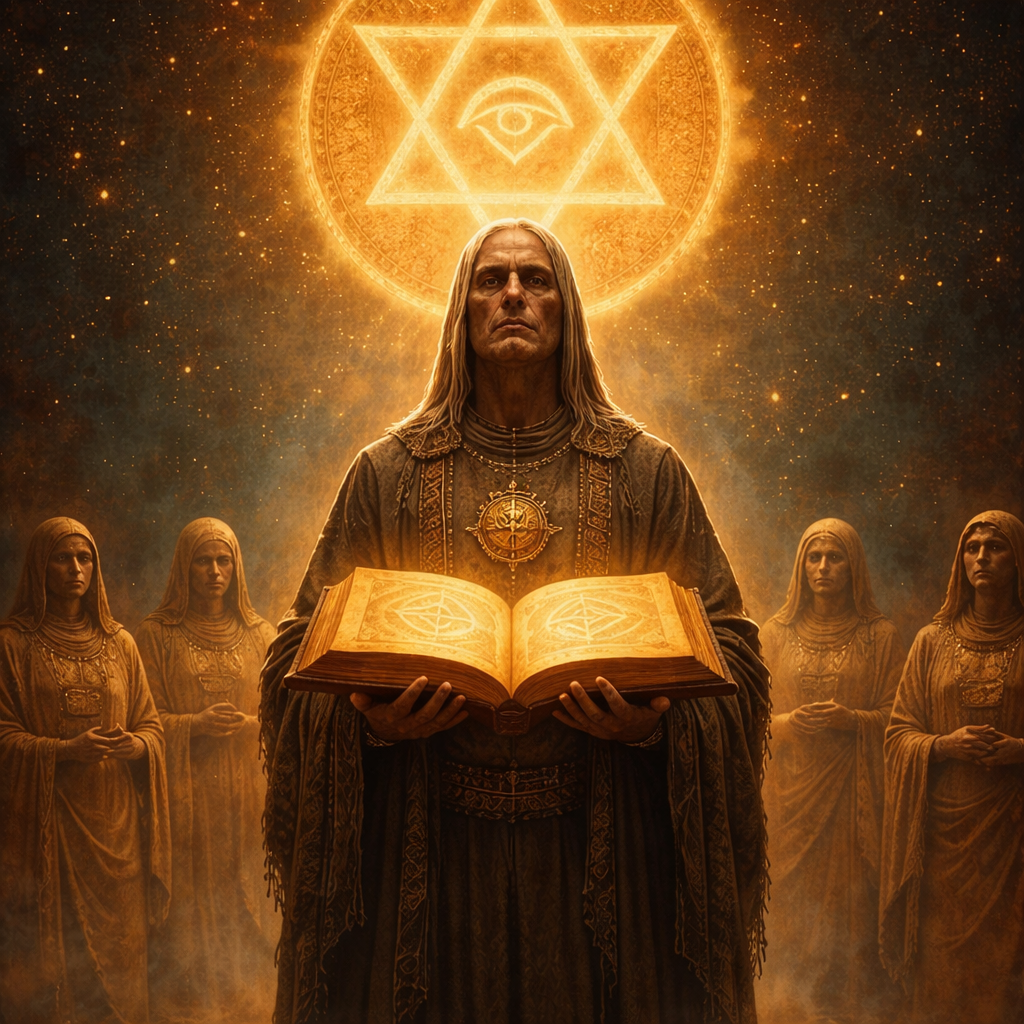

Alaric Kestrel, in his authoritative Metaphysical Studies Review, hails 'The Enneagram and Kabbalah' as a "revelatory synthesis of profound spiritual systems." Addison's adept weaving of Kabbalistic principles with Enneagram typologies offers a unique and potent framework for self-discovery. The book excels in its clear exposition of complex doctrines, making them accessible without sacrificing their esoteric depth. It is an indispensable resource for serious students of mysticism, psychology, and comparative religion, promising to deepen one's understanding of both the divine emanations and the human condition.
📝 Description
63
Howard A. Addison's 1995 book connects the Kabbalistic Tree of Life with the Enneagram personality system.
This work examines the relationship between the Kabbalah's Sefirot and the nine personality types of the Enneagram. Howard A. Addison details correspondences between these two systems, suggesting they offer a framework for understanding human consciousness and spiritual development. The book analyzes how the structure of the Tree of Life and the Enneagram’s dynamic patterns reflect deeper symbolic meanings.
Addison presents this as more than a simple comparison. He proposes an integration of these ideas to foster spiritual insight. The text aims to reveal a divine blueprint within the human psyche, drawing on mystical traditions and symbolism. It guides readers toward self-perception and self-actualization through the lens of these esoteric frameworks.
This book operates within the esoteric tradition that seeks to find universal patterns across diverse spiritual and psychological systems. It draws on Kabbalistic mysticism, specifically the Tree of Life, a central diagram in Jewish mysticism representing divine emanations and creation. It then maps these concepts onto the Enneagram, a system of personality typology with roots in Sufism and later developed by figures like G.I. Gurdjieff and Oscar Ichazo. Addison's work bridges these distinct traditions, suggesting a unified understanding of the human condition and its spiritual potential.
💡 Why Read This Book?
This book offers a rare and potent synthesis for seekers of higher consciousness and esoteric knowledge. It provides a profound framework for understanding the divine architecture of the soul through the interconnected wisdom of Kabbalah and the Enneagram. Ideal for those yearning to integrate spiritual principles with personal growth, and to uncover the sacred patterns that shape their inner world.
⭐ Reader Reviews
Honest opinions from readers who have explored this book.
❓ Frequently Asked Questions
What is the primary connection between the Enneagram and Kabbalah presented in this book?
The book posits that the nine points of the Enneagram correspond to the ten Sefirot on the Kabbalistic Tree of Life, representing distinct energetic pathways and archetypal expressions of the Divine within the human psyche.
Who is the intended audience for 'The Enneagram and Kabbalah'?
This book is designed for individuals interested in esoteric traditions, comparative mysticism, Kabbalah, Jewish mysticism, and psychological self-exploration. It caters to both seasoned practitioners and curious newcomers.
Does the book offer practical applications for self-improvement?
Yes, by understanding the interplay between the Enneagram types and the Sefirot, readers can gain deeper insights into their own patterns of behavior, motivations, and spiritual potential for growth and self-actualization.
What is the historical context of this work?
The book draws upon ancient Kabbalistic teachings, particularly the Lurianic Kabbalah, and integrates them with the modern system of the Enneagram, bridging millennia of spiritual inquiry.
What are the Sefirot?
In Kabbalah, the Sefirot are the ten divine emanations or attributes through which God manifests and interacts with the created universe. They form the structure of the Tree of Life.
🔮 Key Themes & Symbolism
The Divine Blueprint of Personality
This theme explores the profound concept that human personality, as defined by the Enneagram, is not arbitrary but reflects a divine architecture. Addison elucidates how each Enneagram type can be understood as a unique manifestation or distortion of the sacred energies embodied in the Kabbalistic Sefirot. This perspective offers a deeply spiritual lens through which to view our inherent patterns, suggesting that understanding these archetypes is a pathway to recognizing our original, unblemished divine essence. It invites a re-framing of psychological tendencies as sacred expressions seeking integration.
Sacred Geometry of the Soul
Addison unveils the intricate symbolic language shared between the Kabbalistic Tree of Life and the Enneagram. This theme examines the geometric and energetic correspondences that map the journey of the soul from its divine source to its earthly manifestation. By understanding these interconnected patterns, readers are guided to perceive the underlying order of existence and the sacred design within their own being. The book reveals how these systems are not separate but form a unified map of spiritual ascent and descent, offering clear insights into the cosmic order.
Pathways to Self-Actualization and Wholeness
This theme focuses on the practical and spiritual applications of integrating Enneagram and Kabbalistic wisdom for personal transformation. Addison demonstrates how recognizing one's Enneagram type within the context of the Sefirot can illuminate the specific spiritual challenges and opportunities for growth. The book provides a roadmap for healing psychological wounds, transcending limiting patterns, and ultimately moving towards a state of greater self-awareness, spiritual integration, and conscious evolution. It presents a potent method for achieving wholeness by aligning the human with the divine.
💬 Memorable Quotes
Direct passages from the work, attributed to the author.
“To know the self is to know the divine.”
— This classic esoteric maxim is amplified by the book's framework, implying that exploring our inner landscape through the Enneagram reveals the divine presence within.
“The Tree of Life is a map of the soul's journey.”
— This highlights the Kabbalistic concept as a guide to spiritual development and self-discovery, a journey the Enneagram helps us navigate.
“Within each type lies the echo of the Infinite.”
— This suggests that even in our most mundane human patterns, there is a spark of the divine, a connection to the boundless source.
“Understanding the pattern unlocks the potential.”
— This emphasizes the practical aspect of the book, where grasping the symbolic connections leads to tangible personal growth and transformation.
💡 Key Ideas
Editorial paraphrase of the work's core concepts — not direct quotes.
The Enneagram is the shadow of the Sefirot.
This quote suggests that our personality types, while distinct, are reflections or perhaps even distortions of the pure divine emanations, offering a profound starting point for self-understanding.
🌙 Esoteric Significance
Tradition
This work is deeply rooted in the esoteric tradition of Kabbalah, particularly its focus on the Sefirot as divine emanations and pathways of consciousness. It also draws from the psychological and spiritual insights associated with the Enneagram system, which describes nine fundamental patterns of human behavior and motivation. The esoteric significance lies in its attempt to create a bridge between these two powerful traditions, revealing their synergistic potential for understanding the human psyche and its connection to the divine.
Symbolism
The core symbolism revolves around the Kabbalistic Tree of Life and the Enneagram diagram. The Tree of Life, with its ten Sefirot, represents the structure of reality and the divine pathways. The Enneagram, a nine-pointed geometric figure, maps out the core motivations and fixations of human personality. Addison explores the symbolic correspondences between these two systems, suggesting that the Enneagram types can be understood as specific energetic expressions or even divine blueprints derived from the Sefirot, offering a rich lexicon of symbols for self-exploration.
Modern Relevance
In an age increasingly focused on self-discovery and personal growth, the integration of Kabbalistic wisdom and Enneagram psychology offers profound modern relevance. It provides a sophisticated yet accessible framework for understanding the complexities of the human psyche, addressing issues of identity, motivation, and spiritual development. The book's insights into self-actualization and self-perception resonate with contemporary desires for authenticity and wholeness, offering ancient wisdom that is directly applicable to the challenges and aspirations of modern life.
👥 Who Should Read This Book
This clear text is highly recommended for a diverse audience. **Beginners** in spiritual studies will find a clear introduction to both Kabbalah and the Enneagram, presented in a way that highlights their interconnectedness. **Scholars** of comparative religion and mysticism will appreciate the depth of research and the novel synthesis of two distinct traditions. **Seekers** of deeper self-understanding and spiritual insight will discover a potent roadmap for personal transformation and the exploration of their inner landscape. **Practitioners** of Kabbalah or Enneagram psychology will find new dimensions and applications for their existing knowledge, fostering a more integrated approach to their practice.
📜 Historical Context
Howard A. Addison's 'The Enneagram and Kabbalah' emerges from a body of esoteric thought, bridging the ancient mysticism of Jewish Kabbalah with the relatively modern psychological framework of the Enneagram. Kabbalah, with its roots stretching back to ancient Israel, flourished in medieval Spain and later became a significant force in mystical circles with the development of Lurianic Kabbalah in the 16th century. The Enneagram, while having older potential roots, gained widespread recognition in the 20th century through the work of G.I. Gurdjieff and later Oscar Ichazo and Claudio Naranjo. Addison's work situates itself within the late 20th and early 21st-century trend of interweaving Eastern and Western spiritual traditions, seeking universal truths in diverse systems. This era saw a burgeoning interest in psychology and its potential to inform spiritual practice, making this book a timely contribution to the field of comparative mysticism and self-awareness.
📔 Journal Prompts
Reflect on how your primary Enneagram type might relate to a specific Sefirah. What energies do you feel are most dominant or challenging in your life?
Consider the concept of 'divine emanations.' How do you perceive these energies manifesting in your daily experiences and relationships?
What patterns of self-perception identified by your Enneagram type do you wish to transform? How might Kabbalistic principles offer a new perspective on these patterns?
Explore the idea of your personality as a 'sacred geometry.' What does this metaphor reveal about your potential for growth and integration?
How can understanding the interconnectedness of the Enneagram and Kabbalah help you move closer to self-actualization and spiritual wholeness?
🗂️ Glossary
Sefirot
The ten divine emanations or attributes through which the Infinite expresses itself and interacts with the created universe, forming the structure of the Kabbalistic Tree of Life.
Enneagram
A system describing nine fundamental personality types, each characterized by distinct motivations, fears, and patterns of behavior, used for self-awareness and spiritual growth.
Tree of Life
A central symbolic diagram in Kabbalah, depicting the process of creation and the pathways of divine energy, comprising ten Sefirot and twenty-two paths.
Self-Actualization
The realization or fulfillment of one's talents and potentialities, often seen as a key goal in psychological and spiritual development.
Self-Perception
The way in which an individual views and understands themselves, influenced by internal beliefs, external experiences, and psychological frameworks.
This book appears in 1 collection
🔮 Readers Also Liked
Browse all →







More by Howard A. Addison
All books →
From the “Kabbalah” Collection
View all →









More Free Kabbalah & Jewish Mysticism Books
View all →