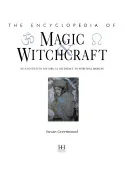
The Encyclopedia of Magic Witchcraft
 84
84

The Encyclopedia of Magic Witchcraft
Susan Greenwood’s Encyclopedia of Magic and Witchcraft offers a robust, academically grounded exploration that sidesteps the usual sensationalism. Its strength lies in its anthropological approach, treating magical practices not as fringe curiosities but as integral aspects of human social and belief systems. The detailed examination of specific rituals, such as those surrounding healing or divination, grounds the work in observable human behavior and belief. However, the sheer breadth of the subject, while ambitious, can occasionally lead to a sense of fragmentation, with some topics receiving less depth than others. A particularly insightful section discusses the social construction of 'witchcraft' across different historical periods, highlighting how accusations and practices were shaped by societal anxieties. This is not a quick primer but a serious reference for those wishing to understand the deep roots and diverse expressions of magic.
📝 Description
84
Susan Greenwood's 2004 Encyclopedia of Magic and Witchcraft surveys magical beliefs across cultures and time.
Published in 2004, Susan Greenwood's Encyclopedia of Magic and Witchcraft offers a detailed survey of magical beliefs and practices across various cultures and historical periods. The book moves past simple definitions to examine the complex ways magic has been understood and used by individuals and societies. Greenwood analyzes the theoretical foundations of magical systems, their ritualistic expressions, and their roles within social and psychological contexts. Her scholarly method draws on anthropology, history, and sociology to create a thorough account of the subject.
This encyclopedia is intended for serious students of the occult, comparative religion, and anthropology. It appeals to those seeking a deep, academic grasp of magical traditions, rather than a surface-level overview. Researchers, academics, and practitioners interested in the historical development and cross-cultural appearances of magic will find this volume useful. It is especially suited for readers who want to place specific magical practices within wider historical and societal frames.
Greenwood's work appeared during a time of growing academic interest in witchcraft and magic, following significant studies in the field. While the early 2000s saw many popular and academic books on the occult, this encyclopedia stood out for its rigorous anthropological viewpoint. It engaged with current discussions on the social construction of witchcraft and the phenomenology of magical experiences, providing a counterbalance to more romantic or purely theoretical approaches to the topic.
Greenwood's encyclopedia situates itself within a scholarly tradition that examines magic and witchcraft through anthropological and sociological lenses. It engages with academic discourse rather than promoting specific magical practices. The work acknowledges a renewed academic and popular interest in these subjects during the early 2000s, differentiating itself by its analytical approach to the social construction of belief and the lived experience of magic. It is a work of academic inquiry that contextualizes esoteric traditions within broader humanistic studies.
💡 Why Read This Book?
• Gain a nuanced understanding of the anthropological definition of 'magic', moving beyond common misconceptions. Learn how Greenwood analyzes practices like divination and sorcery through a cultural lens, as presented in her 2004 work. • Explore the historical persecution of witches from a sociological perspective, understanding the societal anxieties that fueled such events, a key focus in the book’s historical sections. • Discover the cross-cultural commonalities and differences in magical rituals, appreciating how diverse societies have employed similar symbolic actions for different ends, as detailed in the encyclopedia's comparative studies.
⭐ Reader Reviews
Honest opinions from readers who have explored this book.
❓ Frequently Asked Questions
What is the primary focus of Susan Greenwood's Encyclopedia of Magic and Witchcraft?
The book's primary focus is a scholarly, anthropological survey of magical beliefs and practices across various cultures and historical periods. It aims to understand magic as a social and psychological phenomenon, rather than a collection of supernatural events.
When was The Encyclopedia of Magic and Witchcraft first published?
The Encyclopedia of Magic and Witchcraft was first published in 2004, positioning it within a wave of renewed academic interest in the study of witchcraft and occult traditions.
Does the book discuss modern witchcraft movements?
Yes, while it covers historical periods extensively, the work also touches upon the re-emergence of pagan and witchcraft traditions, contextualizing them within broader historical and social trends.
Is this book suitable for beginners interested in magic?
It is more suited for serious students and researchers due to its academic and anthropological approach. Beginners seeking a more introductory or practical guide might find it dense, though it offers a solid foundation.
What academic disciplines does Greenwood draw upon?
Greenwood primarily draws on anthropology, sociology, and history. She analyzes magical practices through the lens of cultural meaning, social function, and historical context.
How does this encyclopedia differ from other books on witchcraft?
Its distinction lies in its rigorous, non-sensationalist, and comparative anthropological methodology. It treats magic as a valid subject of social and cultural study, emphasizing belief systems and social practices over supernatural claims.
🔮 Key Themes & Symbolism
The Social Construction of Magic
Greenwood critically examines how the concept of 'magic' itself is defined and perceived differently across cultures and historical epochs. The work explores how 'magic' has been distinguished from 'religion' and 'science,' often reflecting power dynamics and societal anxieties. It analyzes how accusations of witchcraft, for instance, were not merely about perceived supernatural acts but were deeply embedded in social, political, and gendered contexts, particularly evident in the historical witch trials discussed.
Ritual and Belief Systems
A significant theme is the analysis of ritual practices associated with magic and witchcraft. This includes detailed examinations of divination, healing, sorcery, and protective rites. Greenwood emphasizes the performative aspects of these rituals and their role in creating meaning, fostering community, and providing individuals with a sense of agency in a complex world. The book highlights how shared belief systems underpin the efficacy and social function of these practices.
Cross-Cultural Perspectives
The encyclopedia's strength lies in its broad, comparative approach. Greenwood synthesizes ethnographic and historical data from diverse global traditions, demonstrating both commonalities and unique variations in magical worldviews. This allows for an understanding of magic not as a monolithic entity but as a fluid and adaptable aspect of human culture, shaped by local ecologies, cosmologies, and social structures. The 2004 publication date places it within a context of globalization influencing comparative studies.
Gender and Witchcraft
The book addresses the intersection of gender and witchcraft, particularly concerning historical European witch hunts. It explores how female practitioners were often marginalized and persecuted, and how societal perceptions of women influenced the narrative and reality of witchcraft. Greenwood also touches upon the contemporary resurgence of goddess-centered spiritualities and their relationship to historical notions of female power.
💬 Memorable Quotes
Direct passages from the work, attributed to the author.
“Magic is often a way of understanding and interacting with the unseen forces that shape human lives.”
— This interpretation captures Greenwood's view that magic isn't necessarily about supernatural manipulation, but about a worldview that acknowledges and attempts to influence subtle energies or spiritual dimensions influencing daily existence and destiny.
“The definition of magic is fluid, depending heavily on cultural context and who holds the power to label.”
— This highlights Greenwood's critical stance on defining 'magic,' suggesting that what one society deems magical, another might classify as science or religion, often influenced by dominant social and political structures.
“Historical witchcraft accusations reveal more about societal fears than about actual magical practices.”
— This interpretation reflects Greenwood's anthropological and sociological analysis, arguing that the persecution of witches was a manifestation of broader societal anxieties, power struggles, and the scapegoating of marginalized groups.
💡 Key Ideas
Editorial paraphrase of the work's core concepts — not direct quotes.
Rituals, whether magical or religious, often serve to structure experience and reinforce social bonds.
This paraphrase emphasizes the functional role of ritual within society, as explored by Greenwood. It suggests that the shared performance of rituals, regardless of their specific label, helps create order and community cohesion.
Understanding magical traditions requires looking at their lived reality and symbolic meaning within their own cultural framework.
This paraphrase underscores Greenwood's methodological commitment to an emic perspective – understanding beliefs and practices from the viewpoint of the people who hold them, valuing their internal logic and symbolic significance.
🌙 Esoteric Significance
Tradition
While not strictly adhering to a single esoteric lineage like Hermeticism or Kabbalah, Greenwood's work engages with the broader field of Western Esotericism and comparative religion. It analyzes magical phenomena that have historically been categorized within these traditions, but through an anthropological lens. The significance lies in its attempt to contextualize these practices within universal human behavior, rather than solely within specific occult doctrines. It bridges academic anthropology with the study of esoteric beliefs.
Symbolism
The encyclopedia explores numerous symbols and motifs, often embedded within rituals. For example, the use of specific herbs in healing spells or the symbolic meaning of animal familiars in historical witchcraft narratives. Greenwood also analyzes the symbolism of altered states of consciousness, such as trance or visionary experiences, as pathways to perceived magical knowledge or power, interpreting them as culturally mediated phenomena.
Modern Relevance
Contemporary scholars of religion and culture, particularly those examining the anthropology of belief, continue to draw on Greenwood's work. Her approach to understanding magic as a social and cultural practice remains relevant for analyzing modern spiritual movements, including neo-paganism and contemporary witchcraft, as well as for understanding the persistence of folk magic and healing practices globally. Her work informs discussions on belief, ritual, and the construction of the sacred.
👥 Who Should Read This Book
• Students of anthropology and sociology seeking to understand the cultural construction and social functions of magical belief systems across diverse societies. • Researchers of comparative religion interested in the intersections between magic, folk religion, and established religious traditions worldwide. • Academics and practitioners of Western Esotericism looking for a scholarly, non-dogmatic overview that contextualizes magical practices historically and anthropologically.
📜 Historical Context
Susan Greenwood's *The Encyclopedia of Magic and Witchcraft*, published in 2004, emerged during a period of significant academic engagement with the history and anthropology of magic. This era followed foundational works like Keith Thomas's *Religion and the Decline of Magic* (1971) and Carol F. Karlsen's *The Devil in the Shape of a Woman* (1987), which had already established rigorous scholarly approaches. Greenwood's work built upon this foundation by offering a broad, cross-cultural survey with a distinct anthropological focus. It navigated a scholarly landscape that also included evolving neo-pagan studies and critical examinations of Western esotericism. While not directly engaging in public debates or facing censorship, the book's scholarly rigor positioned it against more popular, less critical accounts of witchcraft that proliferated in the late 20th and early 21st centuries, offering a grounded, evidence-based perspective.
📔 Journal Prompts
The concept of the 'social construction of magic' and its implications for contemporary beliefs.
Analysis of a specific ritual practice discussed in the book: its form, function, and cultural meaning.
Reflection on how gender influenced historical perceptions and accusations of witchcraft.
The relationship between altered states of consciousness and perceived magical efficacy.
Comparing cross-cultural examples of divination or healing practices presented in the encyclopedia.
🗂️ Glossary
Sorcery
Often distinguished from 'magic' in academic discourse, sorcery typically refers to magical practices intended to cause harm or for personal gain, often involving spells, incantations, or the manipulation of spiritual forces.
Divination
The practice of seeking knowledge about the future or the unknown by supernatural means, employing methods such as scrying, astrology, tarot, or oracles.
Anthropology of Magic
A subfield of anthropology that studies magic, witchcraft, and related phenomena as cultural systems, examining their social functions, belief structures, and symbolic meanings within specific societies.
Altered States of Consciousness (ASC)
Any mental state significantly different from a normal waking state, often achieved through meditation, trance, psychoactive substances, or ritual, and frequently associated with visionary or spiritual experiences.
Witch Hunts
Historical periods and localized events characterized by the widespread persecution and execution of individuals accused of practicing witchcraft, particularly prevalent in Europe and colonial America.
Folk Magic
Magical practices and beliefs that are part of the informal, traditional culture of a community, often distinct from formalized religious or esoteric systems.
Emic Perspective
An anthropological approach that seeks to understand a culture or belief system from the insider's point of view, focusing on the native's explanations and interpretations.
This book appears in 1 collection
🔮 Readers Also Liked
Browse all →







From the “High Magic” Collection
View all →






More Free Magic & Ritual Books
View all →