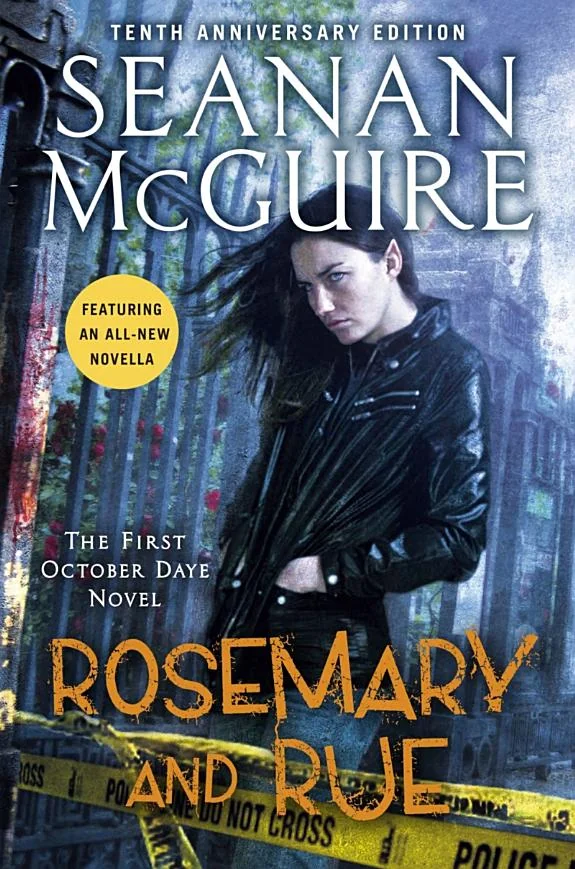
Rosemary and Rue
 72
72

Rosemary and Rue
Seanan McGuire’s Rosemary and Rue is a potent introduction to a world where the glamour of Faerie casts long, often deadly, shadows. The novel excels in its depiction of Toby Daye, a protagonist whose weariness with her immortal existence is palpable. Her retreat to a human life and subsequent forced re-engagement with fae politics feels earned, not contrived. The murder mystery at its heart, involving the countess, serves as an effective engine for Toby’s reluctant return to power. However, the sheer density of fae nobility and the intricate, sometimes Byzantine, political machinations can occasionally feel overwhelming, demanding close attention from the reader. A particular strength lies in the portrayal of the Coven, a group of powerful fae who offer Toby a complex, often morally ambiguous, support system. Despite the intricate plotting, McGuire ensures Toby's emotional journey remains the central focus. It's a solid, if occasionally dense, entry into fae-tinged urban fantasy.
📝 Description
72
Seanan McGuire's 2019 novel, Rosemary and Rue, begins with a plea for peace.
Rosemary and Rue introduces October "Toby" Daye, a half-fae changeling who has left the treacherous politics of Faerie behind. She seeks a quiet existence among mortals, a peace she believes she has earned. However, a plea from an old acquaintance, followed by a brutal murder, drags her back into the dangerous world she tried to escape. Toby must confront the consequences of her past and the expectations of her fae heritage. The story unfolds as she investigates the murder, uncovering secrets that threaten both the human and fae realms. Her investigation forces her to question her own identity and her place in a world that does not easily accept those caught between two realities.
The narrative follows Toby as she navigates the complex social structures of the fae courts, a place bound by ancient laws and fierce rivalries. Her reluctance to embrace her destined role creates friction, but her investigation demands she interact with figures she would rather avoid. The book examines the personal cost of duty and the search for belonging, even when that belonging is difficult to define.
Published in 2019, Rosemary and Rue engages with modern interpretations of fae folklore, a tradition with deep roots in European mythology. Seanan McGuire situates her work within contemporary urban fantasy, a genre that often reworks classic fairy tales and myths for adult audiences. Unlike earlier, more romanticized depictions of fae, this novel presents a darker, more politically charged fae society. It reflects a trend in reimagining folkloric beings not as benevolent sprites but as complex, often dangerous entities with their own agendas, mirroring older, more cautionary tales found in folklore.
💡 Why Read This Book?
• You will learn about the concept of the Coven, a powerful fae collective, and their unique brand of protection and obligation, offering a distinct perspective on fae society beyond the traditional courts. • You will experience Toby Daye's internal conflict between her desire for a quiet human life and the inescapable pull of her fae heritage, particularly in the wake of the Countess's murder. • You will gain insight into the complex, often brutal, politics of the Faerie courts, understanding how one’s lineage dictates one's place and responsibilities, as seen in Toby’s forced return to her former position.
⭐ Reader Reviews
Honest opinions from readers who have explored this book.
❓ Frequently Asked Questions
What is Toby Daye's heritage in Rosemary and Rue?
Toby Daye is half-fae, meaning she possesses both human and fae blood. This dual nature is central to her character, creating internal conflict and influencing how she is perceived and treated by both human and fae societies.
What event forces Toby to return to Faerie?
The murder of an important countess compels Toby to investigate. The countess's dying act binds Toby to her duties, pulling her back into the complex and dangerous world of fae politics she had tried to escape.
Who is Seanan McGuire and when was Rosemary and Rue published?
Seanan McGuire is the author of Rosemary and Rue, which was first published in 2019. She is known for her prolific work in urban fantasy and science fiction.
What is the primary setting for the beginning of Rosemary and Rue?
Initially, Toby Daye attempts to live a secluded life in the human world, specifically in the United States. However, the narrative quickly shifts back to the Fae realm and its associated locations.
What is the role of the Coven in the book?
The Coven is a powerful group of fae who offer Toby a form of protection and mentorship, albeit with their own hidden agendas and demands. They represent a significant faction within the fae political landscape.
Is Rosemary and Rue part of a series?
Yes, Rosemary and Rue is the first book in the Toby Daye series, introducing the protagonist and her world. Subsequent books continue her adventures and explore the fae realm further.
🔮 Key Themes & Symbolism
Dual Identity and Belonging
Toby Daye’s half-fae heritage is the a core part of her internal conflict. She yearns for the simplicity of human life, a stark contrast to the intricate, often violent, politics of the fae. The novel meticulously details her struggle to reconcile these two aspects of herself, highlighting the difficulty of finding a true home when one belongs fully to neither world. Her rejection by her fae family and her subsequent attempt at anonymity underscore this theme, showing how destiny and bloodlines often prove inescapable, even for those who try to outrun them.
The Burden of Power and Duty
Rosemary and Rue presents power not as a desirable asset but as a heavy obligation. Toby's innate abilities and her lineage mark her for a role she actively avoids. The murder of the countess acts as a catalyst, forcing her to accept the responsibilities tied to her position within the fae hierarchy. The narrative explores the personal cost of leadership and the moral compromises required when one is thrust into a position of authority, particularly within a society as unforgiving as the fae courts.
Fae Society and Its Rules
The book offers a detailed, often cynical, look at the structure and customs of the Faerie realm. It depicts a society governed by ancient laws, strict hierarchies, and intricate political maneuvering. The concept of the Coven, a group with its own distinct power and influence, adds another layer to this complex social landscape. McGuire uses these elements to illustrate how deeply ingrained traditions and power structures can trap individuals, even those who possess significant personal agency, like Toby.
The Nature of Murder and Justice
Within the fae world, justice is not always aligned with human concepts of fairness. The murder of the countess serves as the central mystery, but the investigation also exposes the darker undercurrents of fae society, where power plays and personal vendettas often dictate outcomes. Toby's role as an investigator forces her to confront these realities, questioning the true meaning of justice when applied to immortal beings with vastly different moral codes and motivations.
💬 Memorable Quotes
Direct passages from the work, attributed to the author.
““The fae are not what you think they are. They are darker, and more dangerous, and they have a better sense of humor.””
— This observation highlights the novel's departure from simplistic, benevolent portrayals of fae beings. It suggests a complex, morally ambiguous nature, where charm and beauty mask underlying threats and a capacity for cruelty, all delivered with a sardonic wit.
““When you are a king, you must sometimes make terrible choices.””
— This reflects the harsh realities of leadership within the fae courts. It implies that power comes with immense responsibility, often requiring individuals to make decisions that are ethically challenging or personally devastating for the perceived greater good.
““My life has been a series of desperate attempts to avoid the inevitable.””
— This sentiment echoes Toby's struggle against her fae destiny. It speaks to a feeling of being trapped by circumstance and lineage, where every effort to escape her true nature or responsibilities is ultimately futile, leading only to more complicated entanglements.
““The curse of the fae is that they remember everything and forgive nothing.””
— This highlights the long-standing grudges and unforgiving nature prevalent in fae society. It suggests that past actions have enduring consequences, and the immortal memory of the fae ensures that transgressions are rarely forgotten or easily absolved.
💡 Key Ideas
Editorial paraphrase of the work's core concepts — not direct quotes.
“I’ve been running for so long that I’ve forgotten what I’m running from.”
This quote captures Toby Daye's core dilemma. Her flight from her fae responsibilities and heritage has become a defining aspect of her existence, yet the act of running itself has become a burden, preventing her from truly moving forward or understanding her own motivations.
🌙 Esoteric Significance
Tradition
While not strictly adhering to a single esoteric lineage like Hermeticism or Gnosticism, Rosemary and Rue draws heavily on folklore and myth, which are foundational to many Western esoteric traditions. The depiction of fae courts, their hierarchies, and the inherent magic of the realm aligns with a broader interest in the 'Otherworld' present in Theosophy and certain branches of modern Paganism. The work explores concepts of innate power, destiny, and the consequences of violating natural or supernatural laws, themes often present in esoteric thought.
Symbolism
The novel frequently employs symbols associated with fae lore and nature. The **rose** itself, present in the title, often symbolizes love, beauty, and secrecy, but in darker contexts, it can represent blood and sacrifice. **Rue**, conversely, is traditionally associated with regret, sorrow, and healing—a potent combination for a protagonist attempting to escape her past. The **moon** and **forest** are recurring motifs, representing the hidden, the subconscious, and the untamed wildness of both nature and the fae.
Modern Relevance
Contemporary practitioners of witchcraft and neo-paganism often find value in McGuire's nuanced portrayal of fae beings, moving beyond simplistic archetypes. The exploration of liminality—Toby's position between the human and fae worlds—is a concept that speaks to modern discussions on identity and belonging. Furthermore, the book's engagement with themes of consequence, pacts, and the often-difficult nature of power continues to be relevant for those interested in the practical and philosophical aspects of magic and spiritual paths.
👥 Who Should Read This Book
• Readers interested in the intricate social structures and political maneuvering of fae courts, seeking a departure from simplistic fairy tales. • Individuals exploring themes of identity, belonging, and the conflict between personal desire and inherited destiny. • Fans of urban fantasy who appreciate complex world-building, morally ambiguous characters, and a strong mystery element woven into a supernatural narrative.
📜 Historical Context
Published in 2019, Rosemary and Rue arrived during a period of significant evolution for the urban fantasy genre. While authors like Jim Butcher and Patricia Briggs had already established strong precedents for blending the supernatural with contemporary settings, McGuire’s work distinguished itself by focusing on the intricate, often brutal, politics of fae society and a protagonist deeply weary of her own immortal nature. This approach diverged from more straightforward heroic narratives, drawing parallels with the darker, more complex fae explorations found in works by Holly Black, who was also actively publishing in the late 2010s. The novel engaged with themes of identity and belonging that resonated with contemporary discussions on social fragmentation and the search for community. While not directly engaged in a specific intellectual debate, the book contributed to a growing trend of nuanced character development and morally grey protagonists within speculative fiction, moving away from simpler good-versus-evil dichotomies.
📔 Journal Prompts
Toby's attempt to live anonymously in the human world contrasted with her fae duties.
The nature of the Coven and its members' motivations.
Reflect on the symbolic meaning of rosemary and rue within the narrative.
Analyze the consequences of Toby accepting the countess's dying charge.
Consider the definition of 'justice' within the fae courts versus human understanding.
🗂️ Glossary
Fae
A collective term for supernatural beings from folklore, often associated with magic, nature, and a separate realm. In this work, they possess complex societies, hierarchies, and distinct rules.
Half-fae
An individual possessing both human and fae blood. This dual heritage often leads to internal conflict and a sense of not fully belonging to either world, as seen with protagonist Toby Daye.
Coven
A powerful, often secretive, group of fae beings who wield significant influence. They may offer protection or assistance but often come with complex obligations and hidden agendas.
King of the Faerie
A title referring to a powerful ruler within the fae realm. The position comes with immense authority but also significant political challenges and responsibilities.
The Countess
A high-ranking female member of fae nobility. Her murder serves as the inciting incident that draws Toby Daye back into fae affairs.
The Sunken City
A specific location within the fae realm, often depicted as a place of power or mystery, potentially holding secrets or dangers.
The Shadowlands
A term that can refer to a darker, more dangerous, or less understood region within the fae world, often associated with perilous magic or beings.
This book appears in 1 collection
🔮 Readers Also Liked
Browse all →








From the “Fairies” Collection
View all →






More Free Occult Philosophy Books
View all →