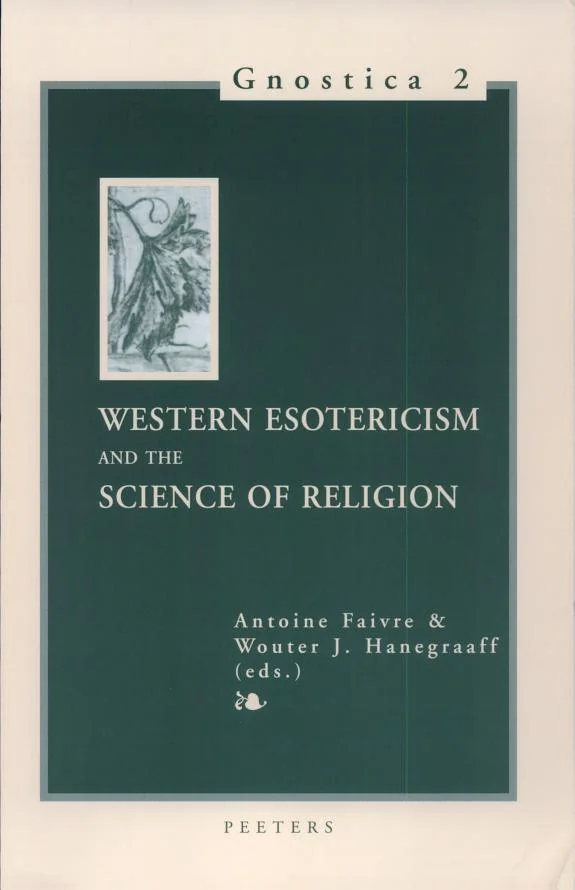
Western Esotericism and the Science of Religion
 83
83

Western Esotericism and the Science of Religion
The IAHR's 1995 congress collection, "Western Esotericism and the Science of Religion," offers a valuable, if somewhat dry, academic intervention. Its strength lies in its direct confrontation of a long-standing scholarly blind spot: the marginalization of esoteric traditions within religious studies. The specific focus on the Mexico City congress section provides a concrete anchor, demonstrating a concerted effort to integrate these fields. However, the collection's academic tone, while appropriate for its intended audience, can sometimes obscure the vibrant nature of the traditions it discusses. The paper by Antoine Faivre, though not directly quoted here, often serves as a foundational reference in this area, and the work here attempts to build upon that academic groundwork. A limitation is the density of scholarly discourse, which may deter readers unfamiliar with the specific theoretical debates within the history of religions. Nevertheless, for those engaged in rigorous academic inquiry into these subjects, it provides essential context and critical perspectives.
📝 Description
83
Papers from a 1995 congress challenged the academic neglect of Western esoteric traditions.
This volume collects academic papers presented at the 17th International Congress of the International Association for the History of Religions in Mexico City, 1995. The focus is the congress's "Western Esotericism and the Science of Religion" section, which aimed to correct a historical oversight in religious studies. The collection scrutinizes how phenomena like Gnosticism, Hermeticism, and ancient occult sciences, though long recognized, were inadequately integrated into mainstream religious scholarship. Scholars, researchers, and advanced students of religious studies, history of religions, and Western esotericism will find this work useful. It is especially suited for those interested in academic methodologies applied to esoteric traditions and the historical development of occult sciences. Individuals seeking to understand the scholarly discourse surrounding these subjects and the difficulties in their academic treatment will benefit from its analytical approach.
Published in 1998, this work emerged from a congress that marked a turning point for the formal academic recognition of Western esotericism. The inclusion of the specific section on "Western Esotericism and the Science of Religion" itself signaled a shift, addressing a gap noted by scholars who had long advocated for the serious study of esoteric currents. The collection wrestled with establishing a coherent academic framework for subjects previously relegated to fringe interest. The volume interrogates the definitions of "religion" and "science of religion" when applied to esoteric traditions. It examines how concepts like Gnosticism, Hermeticism, alchemy, and magic were historically studied or ignored by academia, and discusses methodologies for their analysis.
This book emerged from a specific academic moment in 1995 when the study of Western esotericism was beginning to solidify its place within religious studies. It reflects a broader scholarly effort to move esoteric traditions from the margins of historical inquiry into mainstream academic discourse. By convening and publishing papers on "Western Esotericism and the Science of Religion," the collection sought to establish analytical frameworks and methodologies for understanding traditions like Gnosticism and Hermeticism not merely as historical curiosities, but as legitimate subjects for rigorous academic examination. It addresses the challenges of defining and applying conventional religious studies concepts to these often complex and unconventional spiritual paths.
💡 Why Read This Book?
• Gain an understanding of the academic methodologies developed to study esoteric traditions, a crucial aspect highlighted by the 1995 IAHR congress in Mexico City. • Explore how historical occult sciences like Gnosticism and Hermeticism were systematically excluded from mainstream religious studies and the arguments presented for their inclusion. • Grasp the intellectual currents of the late 20th century that spurred the formal academic recognition of Western esotericism as a distinct field of inquiry.
⭐ Reader Reviews
Honest opinions from readers who have explored this book.
❓ Frequently Asked Questions
When was the "Western Esotericism and the Science of Religion" section first presented?
The section was presented during the 17th International Congress of the International Association for the History of Religions (IAHR) held in Mexico City from August 5-12, 1995.
What historical esoteric traditions are discussed in this volume?
The volume addresses traditions such as Gnosticism and Hermeticism, as well as the occult sciences prevalent in antiquity, as part of its examination of academic neglect.
Who organized the congress where these papers were presented?
The congress was organized by the International Association for the History of Religions (IAHR).
What was the primary goal of the "Western Esotericism and the Science of Religion" section?
The section aimed to fill a long-standing hiatus in the academic study of religions by addressing the underrepresentation and academic neglect of Western esoteric phenomena.
What is the significance of the Mexico City location for this congress?
Mexico City hosted the 17th IAHR Congress in 1995, providing the specific venue where the innovative section on Western Esotericism and the Science of Religion was first introduced.
What does the book critique regarding the study of religions?
The book critiques the historical academic tendency to overlook or inadequately study phenomena associated with Western esotericism, such as Gnosticism and Hermeticism.
🔮 Key Themes & Symbolism
Academic Neglect of Esotericism
This collection confronts the persistent academic oversight of Western esoteric traditions, including Gnosticism and Hermeticism. It argues for the necessity of integrating these fields into the broader discipline of the science of religion, challenging historical biases that relegated them to fringe studies or dismissed them entirely. The papers from the 1995 IAHR congress highlight a critical juncture where scholars began to formalize methods for analyzing these subjects rigorously.
Methodologies for Esoteric Study
A central theme is the development and application of academic methodologies suitable for the study of esoteric belief systems and practices. The volume explores how concepts from Gnosticism, Hermeticism, and various occult sciences can be analyzed using the tools of religious studies. This involves moving beyond simple historical cataloging to understanding the internal logic and experiential dimensions of these traditions within a comparative framework.
Defining 'Religion' and 'Science'
The book engages with the definitional challenges inherent in applying the 'science of religion' to esoteric currents. It questions how established academic categories accommodate phenomena that often blur the lines between philosophy, magic, theology, and personal experience. The collection seeks to establish a more inclusive and accurate understanding of religious diversity, acknowledging the historical significance of these often-misunderstood traditions.
Historical Context of Esoteric Scholarship
The volume situates its concerns within the history of religious studies, noting the academic silence surrounding esoteric traditions for much of the 20th century. It highlights the efforts of scholars, particularly in the late 20th century, to rectify this imbalance. The papers implicitly or explicitly engage with the intellectual landscape that preceded and influenced this push for greater academic inclusion.
💬 Memorable Quotes
Direct passages from the work, attributed to the author.
“A long-standing hiatus in the academic study of religions.”
— This phrase expresses the core problem the volume addresses: the historical exclusion and inadequate scholarly attention given to Western esoteric phenomena within mainstream religious studies.
“Phenomena such as Gnosticism and Hermeticism in antiquity.”
— These examples pinpoint specific historical esoteric traditions that the collection argues have been historically underserved by academic research, demanding a more rigorous scholarly approach.
“Innovative section 'Western Esotericism and the Science of Religion'.”
— This highlights the novelty and specific focus of the academic initiative that generated the papers in this volume, signaling a deliberate attempt to bridge a perceived gap in scholarship.
“The occult sciences of that period.”
— This refers to practices and belief systems often dismissed as superstition, which the volume seeks to analyze within a serious academic framework, alongside more conventionally studied religious subjects.
“Papers read during the 17th International Congress of the International Association for the History of Religions (IAHR).”
— This provides a direct factual anchor, indicating the origin of the collected essays and their presentation at a significant international academic gathering in 1995.
🌙 Esoteric Significance
Tradition
This work functions within the burgeoning academic field of Western Esotericism studies, which gained traction in the late 20th century. It departs from traditional religious studies by focusing on traditions often excluded, such as Gnosticism and Hermeticism, and seeks to legitimize their study using established scholarly methods. It bridges the gap between historical analysis and the theoretical frameworks of the 'science of religion'.
Symbolism
While the volume is primarily theoretical and methodological, it frequently references key esoteric concepts that carry symbolic weight. Gnosticism, for instance, symbolizes a dualistic worldview and a quest for hidden knowledge, often involving complex cosmologies. Hermeticism, with its emphasis on correspondence ('as above, so below'), symbolizes the interconnectedness of the cosmos and the potential for human spiritual ascent through understanding universal laws.
Modern Relevance
Contemporary scholars of Western Esotericism, comparative religion, and intellectual history continue to build upon the foundational work presented here. Researchers exploring the academic methodologies for studying marginalized spiritual traditions, or those examining the historical development of occult sciences, find this volume essential for understanding the field's academic establishment in the late 1990s.
👥 Who Should Read This Book
• Academic researchers in religious studies and history of religions seeking to broaden their understanding of scholarly approaches to esoteric traditions. • Students of Gnosticism, Hermeticism, and antiquity's occult sciences looking for foundational texts on their academic study. • Scholars interested in the historiography of religious studies and the methodological challenges of incorporating esoteric currents into mainstream academic discourse.
📜 Historical Context
Published in 1998, this collection emerged from the intellectual ferment of the late 20th century, a period marked by increasing academic interest in previously marginalized areas of study. The 17th International Congress of the International Association for the History of Religions (IAHR) in Mexico City in 1995 provided the specific forum for this discourse. This era saw scholars like Antoine Faivre advocating for the serious academic treatment of Western esotericism, challenging the traditional historiography of religions that largely ignored movements such as Gnosticism and Hermeticism. The collection's very existence signaled a departure from earlier trends, where occult sciences were often dismissed or studied only superficially. While not directly engaging with a specific competing school of thought by name within its immediate presentation, the volume implicitly positions itself against a history of religious studies that favored Abrahamic faiths or purely sociological approaches, seeking to establish a more inclusive methodological paradigm.
📔 Journal Prompts
The academic neglect of Gnosticism and Hermeticism.
Establishing a 'science of religion' for esoteric traditions.
Defining the boundaries between occult sciences and mainstream religion.
The significance of the 1995 IAHR congress for esoteric studies.
Methodological challenges in analyzing esoteric belief systems.
🗂️ Glossary
Western Esotericism
A broad term encompassing various spiritual, philosophical, and magical traditions originating in or developed within Europe and its cultural sphere, often characterized by secret knowledge and initiation.
Science of Religion
An academic discipline focused on the comparative study of religious phenomena, seeking to understand their structures, functions, and historical development through systematic analysis.
Gnosticism
A diverse set of religious movements and ideas prominent in the early centuries CE, emphasizing salvation through secret knowledge (gnosis) and often featuring dualistic cosmologies.
Hermeticism
A philosophical and religious tradition based on writings attributed to Hermes Trismegistus, emphasizing cosmology, astrology, alchemy, and the pursuit of divine wisdom.
Occult Sciences
A category of knowledge and practices that were historically studied alongside or within esoteric traditions, often involving astrology, alchemy, magic, and divination.
IAHR
Abbreviation for the International Association for the History of Religions, a global academic organization dedicated to the scholarly study of religion.
Hiatus
A gap or interruption in continuity; in this context, referring to a lack of academic attention or study regarding specific religious phenomena.
This book appears in 1 collection
🔮 Readers Also Liked
Browse all →









From the “Western Esotericism” Collection
View all →







More Free Occult Philosophy Books
View all →