Secret spells & curious charms

 75
75

Secret spells & curious charms
Monika Beisner's "Secret Spells & Curious Charms" presents a fascinating, if somewhat dry, catalog of historical magical implements. The strength of the work lies in its detailed illustrations and extensive cross-referencing of various folk traditions, particularly its focus on the material culture of magic. For instance, the section detailing the construction and use of protective amulets offers a clear, step-by-step look at a specific practice. However, the volume occasionally suffers from a lack of interpretive depth; while it presents the 'what' of many spells and charms, the 'why'—the underlying psychological or sociological drivers—is often left for the reader to infer. Beisner's commitment to historical accuracy is evident, but a more robust engagement with theoretical frameworks could have elevated it further. It remains a valuable resource for those seeking a factual compendium of historical magical practices, but less so for those expecting a deep dive into the philosophy of magic.
📝 Description
75
Monika Beisner's 1985 book collects historical magical practices and folk beliefs.
Published in 1985, "Secret Spells & Curious Charms" by Monika Beisner is a compendium of historical magical practices and folk beliefs. Beisner meticulously researched rituals, incantations, and symbolic objects from various cultural traditions. The book focuses on the practical application of these elements, showing how people throughout history used them to influence events or understand the unseen. This volume is suitable for scholars of folklore, historians of religion, and practitioners of esoteric arts who are interested in the concrete expressions of magic. It appeals to those wanting to grasp the historical roots of magical thinking and its appearance in daily life. Readers interested in a scholarly yet accessible look at historical spellcraft and charm-making will find substantial material within its pages.
The mid-1980s saw a renewed interest in esoteric studies and a critical look at historical belief systems. Beisner's work fits into this period of growing academic and popular engagement with occult traditions. It joins scholarly efforts that began to systematically document and analyze folk magic and witchcraft, moving beyond sensationalized accounts. The book is part of a research lineage seeking to understand these practices as integral parts of historical societies.
Monika Beisner's research emerged during the mid-1980s, a time when academic and popular interest in esoteric studies was growing. This book contributes to a scholarly tradition that systematically documented and analyzed folk magic and witchcraft. It moves away from sensationalized narratives to understand these practices as integral components of historical societies. The work connects with a broader interest in the tangible aspects of magic and belief systems.
💡 Why Read This Book?
• Gain practical knowledge of historical amulet construction, as detailed in the specific chapter on protective charms, offering a tangible understanding of material magic. • Understand the principle of sympathetic magic through concrete examples of its application in 17th-century European folk practices, as presented in the text. • Learn about the historical significance of specific botanical ingredients used in spells, such as the detailed discussion of vervain's purported properties in ancient rituals.
⭐ Reader Reviews
Honest opinions from readers who have explored this book.
❓ Frequently Asked Questions
What historical periods does 'Secret Spells & Curious Charms' cover?
The book primarily draws from historical records spanning from medieval times through the 19th century, with particular emphasis on practices documented in Europe.
Are the spells and charms in this book presented as effective today?
Monika Beisner's work is a historical and folkloric study. It presents spells and charms as they were practiced historically, not as guaranteed effective methods for contemporary use.
What kind of illustrations can I expect in the book?
The book features numerous detailed illustrations, many based on historical manuscripts and artifacts, depicting symbols, tools, and the components used in various charms and spells.
Does the book discuss the ethics of using magic?
While it documents historical uses, the book focuses on the practices themselves rather than providing an ethical treatise on modern magical application.
Is 'Secret Spells & Curious Charms' suitable for absolute beginners in occult studies?
It is suitable for beginners interested in the historical context of magic, offering factual accounts rather than instructional guides for practice.
What is the difference between a spell and a charm as presented in this book?
The book differentiates spells often by their active invocation or ritualistic performance, while charms are typically objects or formulas believed to possess inherent protective or influencing power.
🔮 Key Themes & Symbolism
Material Culture of Magic
Beisner meticulously documents the physical objects central to historical magical practices. From the specific materials required for an amulet in 17th-century Germany to the precise inscriptions on protective seals, the work emphasizes that magic was not purely theoretical but deeply embedded in tangible items. These objects served as conduits for intention and belief, reflecting a worldview where the symbolic and the material were inextricably linked. The book illustrates how everyday items were imbued with extraordinary power through ritual and belief.
Sympathetic and Contagious Magic
The book explores fundamental principles like sympathetic magic, where resemblance or analogy forms the basis of influence (e.g., using a doll to affect a person). It also examines contagious magic, the belief that things once connected continue to influence each other at a distance (e.g., using hair or nail clippings). Beisner provides historical examples of these concepts in action, demonstrating how people historically sought to manipulate reality through perceived connections, illustrating a core logic of many pre-modern magical systems.
The Power of Incantation
Central to many historical magical practices was the spoken word. Beisner's collection includes numerous examples of incantations and verbal formulas used in spells and charms. These texts highlight the belief that specific words, uttered with the correct intent and pronunciation, held inherent power to compel spirits, influence events, or create protective barriers. The work showcases how language was viewed not merely as communication but as a force capable of enacting change in the world.
Folkloric Roots of Esotericism
This volume serves as a bridge between academic folklore studies and practical esoteric interests. It grounds esoteric concepts in documented historical practices found in common life, rather than solely in philosophical or theological texts. By presenting spells and charms used by ordinary people, Beisner illustrates the widespread nature of magical thinking across social strata and its integration into daily concerns, from health and love to protection and prosperity.
💬 Memorable Quotes
Direct passages from the work, attributed to the author.
“A charm for protection against nightmares often involved placing iron beneath the pillow.”
— This highlights the use of specific, readily available materials like iron, believed to possess protective qualities, against common anxieties like nightmares, demonstrating a practical application of folk belief.
“The inscribed circle was a common motif for containing or directing energies.”
— This points to the symbolic language of magic, where geometric forms like circles served a functional purpose in ritualistic design, acting as visual representations of control and focus.
“To ensure good fortune, specific herbs were burned during the new moon.”
— This illustrates the temporal aspect of magical practice, linking ritual actions (burning herbs) to celestial cycles (new moon) for amplified effect, a common feature in many historical traditions.
“A sympathetic link could be established using a lock of hair from the target individual.”
— This exemplifies the principle of contagious magic, where a physical link to a person is used to exert influence over them, a concept foundational to many historical spellcasting techniques.
“The precise wording of an incantation was considered paramount for its efficacy.”
— This emphasizes the belief in the performative power of language within magical contexts, where the accuracy and intent behind spoken words were seen as critical to achieving the desired outcome.
🌙 Esoteric Significance
Tradition
The work draws heavily from Western European folk magic traditions, which often intersect with Hermetic, alchemical, and pre-Christian animistic beliefs. It doesn't strictly adhere to a single lineage like Kabbalah or Theosophy but rather synthesizes documented practices from diverse regional customs. Its significance lies in presenting these often-oral or fragmented traditions in a structured, accessible format, making them available to modern practitioners and scholars interested in the grassroots of esoteric practice.
Symbolism
The book frequently references the symbolism of circles as protective boundaries or conduits of power, a motif found across numerous magical systems. It also details the symbolic significance of specific materials, such as iron’s reputed ability to ward off spirits or the lunar associations of certain herbs. Furthermore, the use of written sigils and amulets, often incorporating astrological or divine names, represents a complex symbolic language aimed at bridging the human and the divine or influencing natural forces.
Modern Relevance
Contemporary practitioners of folk witchcraft, hedge magic, and traditional witchcraft often reference works like Beisner's for historical grounding and inspiration. Modern occultists and comparative religion scholars utilize it to understand the historical evolution of magical concepts and practices. Its detailed cataloging of charms and spells provides a resource for those seeking to reconstruct or adapt historical magical techniques within contemporary spiritual frameworks, particularly in the resurgence of interest in pre-Christian European magical systems.
👥 Who Should Read This Book
• Historians of European folk culture and religious practices seeking primary source material on historical belief systems and their practical applications. • Students of comparative magic and witchcraft interested in understanding the diverse methods and materials used across different regions and time periods. • Contemporary practitioners of traditional or folk magic looking for historical context and inspiration for spellcraft, amulet making, and charm casting.
📜 Historical Context
Published in 1985, Monika Beisner's "Secret Spells & Curious Charms" emerged during a period of significant academic and popular resurgence of interest in witchcraft, folklore, and esoteric traditions. The late 20th century saw scholars like Carlo Ginzburg, with his work on the Benandanti, challenging simplistic views of witchcraft and magic. Beisner's book contributed to this trend by meticulously documenting the tangible aspects of folk magic. It appeared in an era where comparative mythology and religious studies were increasingly open to analyzing non-mainstream belief systems. While not engaging directly with contemporaries like Doreen Valiente or Gerald Gardner in terms of modern witchcraft practice, Beisner's scholarly approach to historical spellcraft provided a factual counterpoint to more speculative occult literature, grounding discussions in empirical historical evidence and offering a detailed look at practices prevalent before the Enlightenment's rationalist surge.
📔 Journal Prompts
The specific properties attributed to iron in warding off spirits.
The construction of a protective circle based on 17th-century European diagrams.
The use of sympathetic links, such as hair or personal effigies.
The role of specific herbs, like vervain, in historical incantations.
The difference between spells requiring active performance and passive charms.
🗂️ Glossary
Sympathetic Magic
A form of magic based on the principle that like produces like, or that a cause affects its most direct effect. It involves using objects or actions that resemble the desired outcome or target.
Contagious Magic
A type of magic based on the belief that certain objects or substances that have been in contact with a person or object can retain a connection, allowing for influence at a distance.
Incantation
A series of words said in a ritual or magical context, believed to have the power to produce a magical effect. It is the spoken component of many spells.
Amulet
An object, typically worn or carried, believed to possess magical properties, usually for protection against evil, harm, or misfortune.
Charm
A spoken spell or an object believed to have magical properties, often used to bring good luck or protection. It can refer to both the verbal formula and the object itself.
Sigil
A symbol or emblem designed for a specific magical purpose, often created through a ritual process and believed to carry a particular intention or power.
Vervain
A plant historically associated with magical and medicinal properties across various cultures, often used in protective spells and rituals.
🔮 Readers Also Liked
Browse all →








More by Monika Beisner
All books →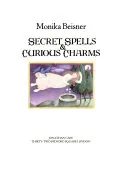

More Free Occult Philosophy Books
View all →