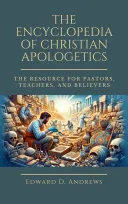
THE ENCYCLOPEDIA OF CHRISTIAN APOLOGETICS
 78
78

THE ENCYCLOPEDIA OF CHRISTIAN APOLOGETICS
Edward D. Anddrews' Encyclopedia of Christian Apologetics presents itself as a formidable reference work, aiming for comprehensive coverage. Its alphabetical organization is indeed a practical strength, allowing for swift retrieval of information on topics ranging from the Atonement to theodicy. The entry on the 'Problem of Evil,' for instance, effectively synthesizes various philosophical responses that have been debated since Augustine of Hippo. However, the work occasionally suffers from a certain dryness; while informative, the prose sometimes lacks the dynamic engagement that might draw in a less specialized reader. The treatment of historical objections, while thorough, could benefit from more explicit engagement with contemporary philosophical challenges that differ from those prevalent in earlier apologetic traditions. Despite this, the encyclopedia remains a valuable, if demanding, resource for serious students of Christian thought.
📝 Description
78
Edward D. Anddrews' 2024 encyclopedia offers a structured compendium of Christian apologetics.
This volume presents arguments and explanations for Christian tenets in an accessible, alphabetical format. It addresses theological inquiries and objections, enabling readers to quickly find information on specific topics, from core doctrines to complex philosophical issues. The encyclopedia is designed for individuals involved in theological discussions or those wanting to deepen their knowledge of Christian apologetics. This includes clergy, educators, seminary students, and laypeople seeking to articulate and defend their faith more precisely. Its comprehensive nature suits those encountering specific doubts or preparing for theological conversations.
Published in 2024, Anddrews' work appears during a time of renewed interest in classical apologetics, engaging with contemporary philosophical critiques and cultural shifts. It follows thinkers who have aimed to show the rationality of Christian belief, mirroring debates that have occurred for centuries. The encyclopedia systematically covers central concepts in Christian theology and its defense, including detailed examinations of God's nature, the historicity of Jesus Christ, the problem of evil, scripture's reliability, and the philosophical basis of Christian ethics.
While presented as a standard reference, the encyclopedia's focus on defending Christian tenets against philosophical and cultural critiques can be seen as engaging with a long tradition of esoteric thought. Many esoteric traditions seek deeper, often allegorical or symbolic, meanings within religious texts and doctrines. Apologetics, in its quest to establish the truth and coherence of faith through reason and argument, can intersect with these deeper inquiries by demonstrating the rational structure that esoteric interpretations often assume underlies religious claims. This work, by systematically addressing objections and providing reasoned defenses, implicitly validates the intellectual framework upon which such deeper explorations are built.
💡 Why Read This Book?
• Gain clarity on the historical arguments for Christian belief, such as those presented in the section on the 'Resurrection of Jesus,' which details evidence debated since the early 20th century. • Develop specific rhetorical strategies for addressing common objections, understanding the structured refutations offered for arguments against the existence of God. • Enhance your theological vocabulary by engaging with precise definitions of terms like 'Apostolic Succession,' providing a foundation for deeper study in church history and doctrine.
⭐ Reader Reviews
Honest opinions from readers who have explored this book.
❓ Frequently Asked Questions
What is the primary purpose of The Encyclopedia of Christian Apologetics?
Its primary purpose is to provide a comprehensive, alphabetically organized resource for defending Christian beliefs. It offers detailed explanations and arguments to address theological questions and common objections, serving as a reference for pastors, students, and laypeople.
How is the book structured for ease of use?
The encyclopedia is structured alphabetically, similar to a traditional encyclopedia. This allows readers to quickly find specific topics, doctrines, or objections and access relevant explanations and arguments without needing to read through the entire volume.
Who authored The Encyclopedia of Christian Apologetics?
The book was authored by Edward D. Anddrews. It was first published in 2024, making it a contemporary contribution to the field of Christian apologetics.
What types of topics are covered in the encyclopedia?
It covers a wide range of topics including key theological issues, common objections to Christianity, core Christian doctrines, historical arguments, and philosophical challenges to faith.
Is this book suitable for beginners in apologetics?
Yes, its clear organization and in-depth explanations make it a valuable tool for beginners seeking to understand and articulate Christian defenses, as well as for more experienced apologists.
When was The Encyclopedia of Christian Apologetics first published?
The Encyclopedia of Christian Apologetics was first published on October 4, 2024, indicating its status as a recent work in the field.
🔮 Key Themes & Symbolism
Rational Defense of Faith
The core of this work lies in presenting Christian doctrine not merely as a matter of blind faith, but as intellectually defensible. It systematically addresses logical challenges and philosophical objections, drawing upon historical arguments and theological reasoning to construct a case for the coherence and truth of Christian claims. The book explores how reason can undergird and support belief, providing tools for those seeking to understand the intellectual foundations of Christianity.
Addressing Objections
A significant focus is placed on anticipating and responding to common criticisms leveled against Christianity. The encyclopedia studies specific objections, such as the problem of evil, historical criticisms of scripture, and arguments against the existence of God. Each entry aims to provide a clear, reasoned counter-argument, equipping readers with the knowledge to engage confidently with skepticism and doubt.
Foundational Christian Doctrines
Beyond defense, the work serves as an expository tool for understanding central Christian teachings. Concepts like the Trinity, the Incarnation, salvation, and the nature of the Church are explained in detail. The alphabetical arrangement allows for focused study on individual doctrines, providing context and theological depth for each element of Christian belief.
Historical and Philosophical Underpinnings
The encyclopedia situates Christian apologetics within its historical and philosophical context. It references key figures and movements that have shaped theological discourse, demonstrating how Christian thought has interacted with broader intellectual currents throughout history. This grounding provides perspective on the enduring nature of these debates and the development of apologetic arguments.
💬 Memorable Quotes
Direct passages from the work, attributed to the author.
“The alphabetical structure facilitates rapid access to specific apologetic arguments.”
— This highlights the practical, reference-tool nature of the encyclopedia. It suggests that the book is designed for efficient consultation rather than sequential reading, emphasizing its utility for quick lookups on particular theological points or objections.
“Understanding theodicy is crucial for addressing the 'problem of evil'.”
— This statement points to a key section where the book likely explores the theological and philosophical attempts to reconcile the existence of a benevolent God with the presence of suffering and evil in the world.
“Scriptural reliability remains a core part of Christian defense.”
— This indicates that a significant portion of the encyclopedia is dedicated to defending the integrity and trustworthiness of the Bible against various forms of historical and textual criticism.
“The resurrection of Jesus Christ is presented as a central historical event.”
— This suggests the book contains arguments and evidence related to the historicity of Jesus's resurrection, treating it as a central tenet requiring robust defense against skeptical interpretations.
“Engaging with philosophical objections requires precise theological definitions.”
— This implies that the encyclopedia emphasizes the importance of accurately defining Christian terms and concepts before addressing philosophical critiques, ensuring that arguments are based on a clear understanding of doctrine.
🌙 Esoteric Significance
Tradition
While ostensibly Christian, the encyclopedia's systematic, analytical approach to defending dogma can be seen through an esoteric lens as a form of 'hermeneutics of revelation.' It seeks to unpack and justify divine truth through rigorous intellectual discipline, a practice akin to the Kabbalistic tradition's emphasis on understanding the divine through structured analysis of sacred texts and concepts. The work's focus on discerning truth and defending it aligns with the esoteric pursuit of gnosis, albeit through a more orthodox theological framework.
Symbolism
The book itself, as a compendium, can symbolize the ordered structure of divine knowledge. The alphabetical arrangement mirrors the Kabbalistic concept of divine names and attributes being interconnected yet individually accessible. Concepts like the 'Logos' (Word) represent the divine ordering principle, and the defense of Christian tenets can be viewed as safeguarding the integrity of this divine language and its symbolic expressions within human understanding.
Modern Relevance
Contemporary thinkers exploring the intersection of faith and reason, particularly within academic theology and philosophy of religion, find this work a valuable reference. Its structured approach to common objections is relevant to online apologetics ministries and Christian podcasters seeking clear, concise arguments. Furthermore, individuals interested in comparative religion who wish to understand the internal logical framework of Christianity would find its comprehensive nature useful.
👥 Who Should Read This Book
['• Theological students and seminarians seeking a structured reference for foundational Christian arguments and defenses against common objections.', '• Clergy and church leaders needing clear, articulate responses to congregational questions and contemporary cultural challenges to faith.', '• Lay Christians interested in deepening their understanding of their faith and developing confidence in discussing its rational basis with others.']
📜 Historical Context
Edward D. Anddrews' Encyclopedia of Christian Apologetics, published in 2024, emerges in an era marked by a resurgence of interest in classical Christian apologetics, often in response to challenges posed by secular philosophy and contemporary skepticism. The work builds upon a long tradition, echoing the efforts of figures like G.K. Chesterton and C.S. Lewis, who sought to articulate Christian truths in accessible ways for a modern audience. It engages implicitly with the philosophical landscape shaped by thinkers from Thomas Aquinas to contemporary analytic philosophers of religion. While not directly a product of a specific historical movement like the Enlightenment's rationalism or the 19th century's rise of historical criticism, it reflects a contemporary desire to provide reasoned justifications for faith. Its publication follows decades where existentialism and postmodernism often questioned objective truth claims, suggesting a desire to reassert the intellectual coherence of Christianity.
📔 Journal Prompts
The defense of 'Apostolic Succession' as presented in the encyclopedia.
The role of 'Theodicy' in reconciling divine attributes with evil.
Arguments concerning the 'Reliability of Scripture' and their personal impact.
The concept of the 'Logos' within Christian apologetics.
Reflecting on the historical context of Christian apologetics as detailed in the work.
🗂️ Glossary
Apologetics
The branch of theology concerned with providing a rational basis for the doctrines of the Christian faith, defending it against objections and criticisms.
Theodicy
A branch of theology and philosophy that seeks to justify the goodness of God in the face of the existence of evil and suffering in the world.
Logos
In Christian theology, often referring to Jesus Christ as the divine Word or reason of God, through whom all things were created and are sustained.
Atonement
The doctrine concerning how humanity's reconciliation with God is achieved, typically through the sacrificial death of Jesus Christ.
Incarnation
The doctrine that Jesus Christ, the Son of God, assumed human form, becoming both fully divine and fully human.
Apostolic Succession
The belief that the authority of Jesus was passed down through his apostles to their successors, the bishops, in an unbroken line.
Resurrection of Jesus
The Christian belief that Jesus Christ was physically raised from the dead on the third day after his crucifixion, a central tenet of the faith.
![Cruels effets de la vengeance du Cardinal de Richelieu, ou Histoire des diables de Loudun, de la possession des religieuses ursulines, et de la condamnation et du suplice [sic] d'Urbain Grandier, curé de la même ville. 1716: Iss 53](/img/thumb/cruels-effets-de-la-vengeance-du-cardinal-de-richelieu-ou-histoire-des-diables-de-loudun-de-la-possession-des-religieuses-ursulines-et-de-la-condamnation-et-du-suplice-sic-d-urbain-grandier-cur-de-la-.webp)