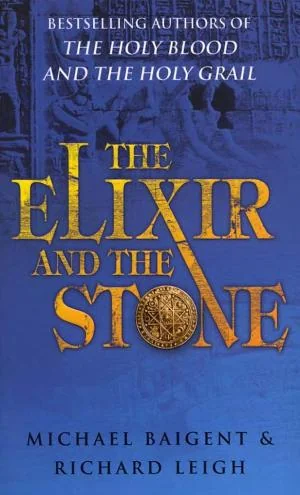
The Elixir and the Stone
 73
73

The Elixir and the Stone
Baigent and Leigh's "The Elixir and the Stone" attempts a sweeping revision of Western intellectual history, arguing for the persistent, subterranean influence of alchemical and Gnostic thought against the tide of Renaissance rationalism. The authors are most compelling when detailing the symbolic language of alchemy, particularly its transformation from literal metallurgy to a metaphor for spiritual renewal. A strength lies in their effort to connect these esoteric threads to tangible historical movements and texts. However, the book occasionally overreaches, presenting speculative connections as established fact without sufficient rigorous evidence, which may alienate more historically grounded readers. The discussion of the suppression of these ideas in the 20th century, while relevant, sometimes feels less developed than the earlier historical analysis. Ultimately, it's a work that provokes thought by offering an alternative lens on familiar history, though its assertions demand critical engagement. The examination of alchemical symbolism as a psycho-spiritual map offers a valuable, if contentious, perspective.
📝 Description
73
The Elixir and the Stone (2005) challenges Western rationalism's dominance since the Renaissance.
Baigent and Leigh propose that mystical and symbolic understanding have shaped Western history more than empirical reason. They investigate the suppression and persistence of these less visible traditions, arguing for an alternative historical trajectory. The book appeals to readers dissatisfied with materialistic explanations of history and consciousness. It delves into the intellectual foundations of Western esotericism, the history of secret societies, and differing views on religious development.
Scholars of comparative religion and intellectual history may find value in its approach, which moves beyond established academic paradigms. Published in 2005, the work appeared during a time of rising interest in esotericism and alternative histories. The authors engage with a tradition critiquing Renaissance humanism's focus on reason, a lineage that includes figures like Giordano Bruno. Their work contrasts with academic emphasis on verifiable historical data.
This work engages with a long-standing esoteric tradition that views Western civilization as influenced by hidden streams of knowledge, particularly Gnosticism and alchemy. It posits that these traditions, often marginalized by mainstream historical accounts, represent a profound, alternative current of thought. The book examines how concepts like the alchemical 'Great Work' functioned not just as material pursuits but as symbolic systems for spiritual and intellectual transformation. It situates itself against the dominant rationalist framework inherited from the Renaissance, suggesting that these esoteric currents have had a significant, often unacknowledged, impact on culture, philosophy, and societal development.
💡 Why Read This Book?
• Gain an understanding of alchemical symbolism beyond its literal interpretation, exploring its role as a framework for spiritual transformation, as detailed in their analysis of the 'Great Work.' • Discover an alternative historical narrative that challenges the dominance of rationalism since the Renaissance, by examining suppressed Gnostic and Hermetic currents. • See how esoteric ideas, particularly those related to alchemy and gnosis, may have subtly influenced art, architecture, and intellectual movements throughout Western history.
⭐ Reader Reviews
Honest opinions from readers who have explored this book.
❓ Frequently Asked Questions
What is the core argument of "The Elixir and the Stone"?
The book argues that a significant, hidden tradition of alchemical and Gnostic thought has deeply influenced Western civilization, often in opposition to the dominant rationalist perspective that emerged after the Renaissance.
Who are Michael Baigent and Richard Leigh?
Michael Baigent and Richard Leigh were co-authors known for their investigative approach to historical and religious mysteries, including their earlier work on the Holy Grail.
When was "The Elixir and the Stone" first published?
The book was first published in 2005, continuing the authors' exploration of esoteric historical narratives.
Does the book focus on literal alchemy or its symbolic meaning?
While acknowledging historical alchemical practices, the book primarily focuses on alchemy as a symbolic system representing spiritual, psychological, and intellectual transformation, often referred to as the 'Great Work'.
What historical period does the book primarily examine?
The book examines Western history from the Renaissance onward, highlighting the suppression of esoteric traditions and their subsequent influence beneath the surface of rationalist thought.
What is the 'Great Work' in the context of this book?
In "The Elixir and the Stone," the 'Great Work' (Magnum Opus) refers to the alchemical process, interpreted not just as material transmutation but as a symbolic path to spiritual enlightenment and self-realization.
🔮 Key Themes & Symbolism
Alchemy as Spiritual Metaphor
The work posits that alchemical symbolism, particularly the concept of the 'Great Work,' transcends mere material processes. It is presented as an elaborate metaphor for inner transformation, spiritual purification, and the attainment of higher consciousness. Baigent and Leigh explore how this symbolic framework provided a coded language for initiates, allowing esoteric ideas to persist and circulate even when overt Gnostic or Hermetic philosophies were suppressed by dominant religious and rationalist doctrines.
The Suppression of Esotericism
A central thesis is the active suppression of mystical and Gnostic traditions in the West, particularly following the Renaissance and the rise of scientific rationalism. The authors trace how these 'hidden' currents were driven underground, influencing secret societies, art, and philosophy from the shadows. This narrative challenges the linear progression of Western thought, suggesting a dualistic history where empirical reason coexists with, and often attempts to eradicate, symbolic and intuitive knowledge.
Alternative Western History
The book constructs an alternative historical account of Western civilization, one that prioritizes the influence of esoteric traditions over the commonly accepted narrative of rational and empirical progress. It suggests that figures and movements often marginalized or misunderstood in standard histories were, in fact, crucial conduits for maintaining a continuity of symbolic and mystical wisdom. This perspective re-frames key historical periods and intellectual shifts through an esoteric lens.
Gnosis and the Inner Life
The concept of Gnosis, or direct spiritual knowledge, is presented as a persistent counterpoint to established dogma and rationalist inquiry. Baigent and Leigh explore how Gnostic ideas, often characterized by their emphasis on inner awakening and the rejection of materialistic values, found expression and continuity through alchemical symbolism and other esoteric practices. This highlights a tradition focused on subjective experience and intuitive understanding of the divine.
💬 Memorable Quotes
Direct passages from the work, attributed to the author.
“Rationalism has reigned supreme in western culture since the Renaissance, and its terrible effects have been felt particularly in the 20th century.”
— This statement sets the stage for the book's central critique, framing the rise of empirical reason as a detrimental force that has overshadowed deeper, symbolic forms of understanding crucial to Western thought.
“In this study the authors construct an alternative history of religion and thought.”
— This highlights the methodological approach of the book, indicating a departure from conventional historical narratives to explore suppressed or overlooked intellectual lineages and spiritual traditions.
“The Elixir and the Stone offers a re-examination of the 'Great Work'.”
— This indicates the book's focus on alchemy, not as a primitive science, but as a sophisticated symbolic system for spiritual and psychological development, central to its alternative historical thesis.
💡 Key Ideas
Editorial paraphrase of the work's core concepts — not direct quotes.
The influence of Gnostic ideas persisted despite suppression.
This paraphrased concept points to the authors' argument that Gnosticism, and similar esoteric traditions, survived through coded language and secret societies, influencing Western culture in ways not acknowledged by mainstream history.
Symbolism provided a means to preserve esoteric knowledge.
This paraphrased concept suggests that the rich symbolic language of traditions like alchemy served as a vital vehicle for transmitting mystical insights across generations, particularly during periods of intellectual repression.
🌙 Esoteric Significance
Tradition
This work engages deeply with the Hermetic and Gnostic traditions, reinterpreting their historical influence through the lens of alchemy. It positions these esoteric lineages not as fringe curiosities but as fundamental, albeit often suppressed, forces shaping Western consciousness. The authors seek to demonstrate a continuity of symbolic and spiritual understanding that runs counter to the dominant rationalist narrative, tracing a lineage from ancient Gnosticism through medieval alchemy to its potential modern relevance.
Symbolism
The book extensively explores alchemical symbolism, particularly the 'Great Work' (Main work), interpreting it as a metaphor for spiritual purification and enlightenment rather than solely material transmutation. Another key symbol is the 'Elixir,' representing not just a potion but the attainment of higher knowledge or spiritual immortality. These symbols function as coded language, preserving esoteric teachings against external pressures and offering a framework for inner transformation.
Modern Relevance
The work's emphasis on the enduring power of symbolic and esoteric thought speaks to contemporary movements exploring consciousness, Jungian psychology, and the limitations of purely materialistic worldviews. Thinkers and practitioners interested in psycho-spiritual development, the history of secret societies, and alternative interpretations of religious history continue to draw upon Baigent and Leigh's re-framing of Western intellectual currents. It offers a counter-narrative for those seeking meaning beyond secular rationalism.
👥 Who Should Read This Book
• Students of Western Esotericism: Those seeking to understand the historical underpinnings and symbolic language of traditions like Hermeticism and Gnosticism, particularly as they intersect with alchemy. • Intellectual Historians: Researchers interested in challenging conventional narratives of Western thought and exploring the impact of suppressed or marginalized philosophical and religious currents. • Readers interested in Alternative Histories: Individuals who are drawn to re-examinations of historical events and intellectual movements, seeking to uncover hidden influences and symbolic meanings beyond empirical accounts.
📜 Historical Context
Published in 2005, "The Elixir and the Stone" emerged in an intellectual climate increasingly questioning the sufficiency of secular rationalism. Baigent and Leigh’s work can be seen as part of a broader resurgence of interest in esoteric traditions, Gnosticism, and alternative histories that gained traction in the late 20th and early 21st centuries. This period saw scholars and popular writers alike re-examining suppressed narratives. Their approach implicitly critiques the historical methodology of figures like the Enlightenment thinkers and early modern scientists who prioritized empirical evidence and reason, often dismissing or ignoring symbolic and mystical knowledge. The authors engage with a long-standing debate concerning the legacy of Renaissance humanism and its impact on Western thought, positioning themselves against a purely materialistic interpretation of history and religion. While not a direct engagement, their work echoes critiques found in thinkers who sought to integrate spiritual dimensions into intellectual history.
📔 Journal Prompts
Reflect on the 'Great Work' as a metaphor for personal development.
Consider the historical suppression of Gnostic ideas and its potential impact.
Analyze how alchemical symbolism might inform contemporary understanding of transformation.
Explore the tension between rationalism and symbolic knowledge in your own life.
What alternative historical narratives challenge your current understanding of Western thought?
🗂️ Glossary
The Great Work (Main work)
In alchemy, the complex process of transforming base metals into gold, interpreted here as a symbolic path to spiritual enlightenment, psychological integration, and the attainment of higher consciousness.
Gnosis
Direct, intuitive spiritual knowledge or insight, often contrasted with empirical or revealed religious knowledge. Gnosticism emphasizes personal enlightenment and the liberation of the spirit from material existence.
Hermeticism
A philosophical and religious tradition based on the purported teachings of Hermes Trismegistus. It emphasizes esoteric wisdom, divine knowledge, and the interconnectedness of the cosmos, often associated with alchemy and astrology.
Rationalism
A philosophical approach that emphasizes reason as the primary source of knowledge and justification. In this context, it refers to the dominant Western intellectual tradition that emerged from the Renaissance, prioritizing empirical evidence and logic.
Renaissance
A period in European history, typically dated from the 14th to the 17th century, marked by a revival of classical art, architecture, and literature, and a shift towards humanism and scientific inquiry.
Symbolism
The use of symbols to represent ideas and qualities. In this book, it refers to the rich allegorical language of traditions like alchemy, used to convey esoteric spiritual and psychological truths.
Elixir
In alchemy, a legendary substance believed to be capable of curing all diseases and prolonging life indefinitely. The book interprets it symbolically as representing ultimate knowledge or spiritual attainment.
This book appears in 1 collection
🔮 Readers Also Liked
Browse all →








From the “Occultism” Collection
View all →







![Serrano Miguel Adolf Hitler The Ultimate Avatar [ 2000]](/img/thumb/serrano-miguel-adolf-hitler-the-ultimate-avatar-2000.webp)
More Free Occult Philosophy Books
View all →