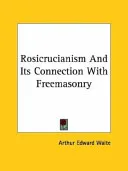
Rosicrucianism and Its Connection With Freemasonry
 77
77

Rosicrucianism and Its Connection With Freemasonry
Arthur Edward Waite's examination of Rosicrucianism and its Masonic affiliations is a dense, scholarly undertaking, characteristic of his meticulous approach to esoteric history. The strength of this work lies in its thoroughness; Waite presents a vast amount of material, drawing connections between disparate historical threads with academic rigor. However, this very thoroughness can become a limitation. The prose is often dense, demanding a reader already familiar with the historical and philosophical terrain. A particularly illuminating section, for instance, details the supposed influence of the *Fama Fraternitatis* on early Masonic initiatory structures, offering a concrete historical anchor. The book’s primary drawback is its accessibility; it is not an entry point for the casual inquirer but a deep dive for the dedicated specialist. Waite’s analysis, while robust, occasionally betrays his own particular interpretive biases, a common hazard in the study of such elusive subjects. It is a valuable, if challenging, scholarly resource.
📝 Description
77
Arthur Edward Waite's 1924 study details Rosicrucianism's historical and philosophical ties to Freemasonry.
Arthur Edward Waite, a prominent occult scholar, wrote this book in 1924 to examine the historical and philosophical links between Rosicrucianism and Freemasonry. He meticulously follows the development of these Western esoteric traditions. Waite's work is a scholarly analysis, intended as a historical resource for research rather than a guide for ritual practice. This edition preserves the original scholarly apparatus of an earlier printing.
This book is best suited for dedicated students and researchers of Western esotericism. It will appeal to those interested in the evolution of fraternal orders and mystical societies within Europe and North America. Individuals studying comparative religion, secret societies, or the intellectual history of the early 20th century will find it valuable. It is not designed for those seeking an introduction to these subjects or practical ritualistic instruction.
Published in the early 20th century, Waite's study emerged during a period of renewed scholarly interest in Western esoteric traditions. This era saw efforts to interpret and sometimes revive ancient mystical orders. While Freemasonry was an established institution, Rosicrucianism, often mythologized, was actively explored by various groups. Waite himself was a significant figure in this intellectual climate, often engaging with or critiquing his contemporaries.
💡 Why Read This Book?
• Learn about the documented historical intersections between Rosicrucian manifestos and early Masonic rituals, understanding how figures like Elias Ashmole may have encountered Rosicrucian ideas in the 17th century. • Grasp the symbolic language shared between these two traditions, such as the alchemical allegory of the Great Work, and its interpretation within Waite's historical framework. • Discover the intellectual climate of the late 19th and early 20th centuries that fueled the scholarly study of esoteric societies, as evidenced by Waite's own scholarly output from that era.
⭐ Reader Reviews
Honest opinions from readers who have explored this book.
❓ Frequently Asked Questions
What is the main argument presented by Arthur Edward Waite regarding Rosicrucianism and Freemasonry?
Waite argues for significant historical and philosophical connections between Rosicrucianism and Freemasonry, exploring how Rosicrucian ideals and symbolism may have influenced the development and structure of Masonic degrees and teachings.
Is this book a practical guide to Rosicrucian or Masonic practices?
No, this book is a scholarly historical analysis. It focuses on the intellectual and historical links between the traditions, not on providing instructions for ritual or practice.
Who was Arthur Edward Waite and why is his work important?
Arthur Edward Waite (1857-1942) was a prominent occult scholar and author. His work is important for its detailed research into Western esoteric traditions during the late 19th and early 20th centuries, contributing significantly to the academic study of subjects like Tarot, alchemy, and secret societies.
What does the book say about the 'Rosicrucian Manifestos'?
The book analyzes the *Fama Fraternitatis* and *Confessio Fraternitatis*, discussing their historical context and their potential influence on subsequent esoteric movements, including Freemasonry, particularly in 17th-century England.
What kind of 'imperfections' might be present in this facsimile edition?
As a facsimile reprint of an older work, imperfections may include minor marks, notations, marginalia, or slight flaws in the pages, inherent to the aging of the original document.
When was Arthur Edward Waite's original work on this topic first published?
While this specific edition was published in 2005, Arthur Edward Waite's original research and writings on Rosicrucianism and Freemasonry would have been produced in the late 19th or early 20th century.
🔮 Key Themes & Symbolism
Symbolic Language Cross-Pollination
The work meticulously details how symbolic lexicons, particularly those derived from alchemy and Hermetic philosophy, were shared and reinterpreted between Rosicrucian and Masonic traditions. Waite highlights specific symbols, such as the Rose and Cross or the principles of transmutation, and traces their evolution through different degrees and allegorical narratives. This cross-pollination is presented not as direct borrowing, but as a shared cultural and intellectual heritage that informed the symbolic language of both movements as they developed through the 17th and 18th centuries.
The Rosicrucian Manifestos' Influence
A significant focus is placed on the impact of the early 17th-century Rosicrucian manifestos, notably the *Fama Fraternitatis* and *Confessio Fraternitatis*. Waite investigates how these foundational texts, with their calls for spiritual reform and esoteric knowledge, may have seeded ideas and aspirations that later found expression within the burgeoning Freemasonry of the period, particularly in England. He examines the historical reception of these manifestos and their role in shaping the mystique of secret societies.
Esoteric Lineage and Historical Continuity
The book explores the concept of esoteric lineage, attempting to trace a perceived continuity of wisdom from ancient mystery traditions through medieval esotericists to the formation of Rosicrucianism and Freemasonry. Waite critically analyzes claims of direct descent and instead focuses on the transmission of ideas, symbols, and philosophical frameworks. This theme addresses how these movements sought to anchor themselves in an ancient past, lending authority and depth to their modern expressions of spiritual and philosophical inquiry.
💬 Memorable Quotes
Direct passages from the work, attributed to the author.
“The Rosicrucian movement may be regarded as an outcome of the Renaissance.”
— This statement frames Rosicrucianism not as an isolated mystical phenomenon, but as a product of the broader intellectual and cultural shifts occurring during the Renaissance, suggesting a connection to humanism, rediscovered classical texts, and alchemical investigations of the era.
“The symbolism of the Rose and Cross is central to both traditions.”
— This highlights a key area of overlap identified by Waite, indicating that the potent and multi-layered symbolism of the Rose and Cross, often associated with spiritual transformation and hidden knowledge, served as a common visual and conceptual language for Rosicrucian and Masonic initiates.
“Historical evidence for direct lineage is often scarce and requires careful interpretation.”
— This reflects Waite's scholarly caution, acknowledging that while connections exist, definitive proof of direct, unbroken transmission between ancient orders and later esoteric movements like Rosicrucianism and Freemasonry is difficult to establish and necessitates critical analysis.
“The quest for hidden knowledge and spiritual regeneration motivated many early adherents.”
— This captures a core motivation attributed by Waite to individuals involved in both Rosicrucianism and early Freemasonry. It points to a shared aspiration for inner transformation and the discovery of profound truths beyond conventional understanding.
💡 Key Ideas
Editorial paraphrase of the work's core concepts — not direct quotes.
Freemasonry, in its speculative form, may have drawn from earlier Rosicrucian concepts.
This paraphrased concept suggests that the philosophical and allegorical dimensions of Freemasonry, particularly as it evolved into a speculative rather than purely operative craft, likely incorporated or were influenced by the mystical and reformist ideas present in Rosicrucian literature.
🌙 Esoteric Significance
Tradition
This work is firmly rooted in the Western Esoteric Tradition, specifically engaging with Hermeticism, Christian mysticism, and ceremonial magic. Waite, a key figure in the late 19th/early 20th-century occult revival, sought to map the historical and philosophical connections between these streams. The book fits within this lineage by analyzing how ancient wisdom traditions were adapted and transmitted through organized, often secretive, societies like the Rosicrucians and Freemasons, aiming to understand their spiritual and intellectual evolution.
Symbolism
Key symbols explored include the Rose and Cross, representing spiritual perfection and the union of opposites, and alchemical motifs such as transmutation, symbolizing inner transformation. The work also looks at the symbolic significance of Masonic degrees and their potential allegorical interpretations, linking them to the Rosicrucian quest for hidden knowledge and spiritual enlightenment. These symbols are presented not merely as decorative elements but as vehicles for transmitting complex philosophical and spiritual teachings.
Modern Relevance
Waite's meticulous research continues to inform contemporary studies of Western esotericism, providing a foundational text for understanding the historical relationship between Freemasonry and Rosicrucianism. Modern scholars and practitioners interested in comparative occultism, the history of fraternal organizations, and the evolution of symbolic languages in mystical traditions often reference his work. Thinkers exploring the philosophical underpinnings of Western magical orders or the historical development of esoteric movements find his detailed analysis useful for contextualizing their own studies.
👥 Who Should Read This Book
• Students of Western Esotericism: Those seeking to understand the historical development and interconnections of major esoteric movements like Rosicrucianism and Freemasonry will find Waite's scholarly approach clear. • Masonic Researchers: Individuals interested in the philosophical and historical origins of Masonic symbolism and ritual, particularly its potential links to earlier esoteric traditions, will benefit from this detailed analysis. • Historians of Religion and Philosophy: Scholars examining the intellectual currents of the late Renaissance, the Reformation, and the subsequent esoteric revivals will find valuable context and primary source material analysis within this work.
📜 Historical Context
Arthur Edward Waite's analysis of Rosicrucianism and Freemasonry was penned during a fervent period of occult revival in the late 19th and early 20th centuries. This era, following the Enlightenment's rationalism, saw a resurgence of interest in mysticism, alchemy, and secret societies. Freemasonry, by then a widespread institution, was itself undergoing various interpretations and reformations, while Rosicrucianism, largely legendary after its 17th-century manifestos, was being actively pursued by groups like the Hermetic Order of the Golden Dawn, of which Waite was a prominent member. Waite's work engaged with contemporary scholars and esotericists, often in critical dialogue. For instance, his detailed historical research contrasted with the more speculative or ritualistic approaches of some contemporaries. The period saw extensive publication of occult literature, but also skepticism, making Waite's scholarly approach significant in attempting to ground esoteric history in verifiable research, even while navigating its inherent complexities.
📔 Journal Prompts
The symbolic overlap between the Rose and Cross motif and Masonic emblems.
The influence of the *Fama Fraternitatis* on 17th-century intellectual circles.
Arthur Edward Waite's critical perspective on occult lineages.
The concept of spiritual regeneration as presented in both traditions.
The historical reception of the Rosicrucian manifestos.
🗂️ Glossary
Rosicrucian Manifestos
A series of early 17th-century pamphlets, notably the *Fama Fraternitatis* (1614) and *Confessio Fraternitatis* (1615), which announced the existence of a secret, enlightened brotherhood dedicated to spiritual and scientific reform.
Hermeticism
A philosophical and religious tradition based on writings attributed to Hermes Trismegistus. It emphasizes divine wisdom, the interconnectedness of all things, and the pursuit of spiritual enlightenment through esoteric knowledge.
Alchemy
An ancient practice and philosophical tradition concerned with the transformation of matter, often interpreted allegorically as a process of spiritual purification and enlightenment for the practitioner.
Speculative Freemasonry
The form of Freemasonry that evolved from operative stonemasons' guilds into a philosophical and fraternal organization, focusing on moral and spiritual teachings rather than literal building.
Fama Fraternitatis
The first major Rosicrucian manifesto, published in Kassel in 1614, which proclaimed the existence of a secret society of enlightened individuals founded by Christian Rosencreutz.
Esoteric Lineage
A perceived chain of transmission of secret knowledge or spiritual authority from an ancient source through a succession of teachers or initiates to later generations.
Great Work (Major work)
In alchemy, the process of creating the Philosopher's Stone, often understood as an allegory for the spiritual transformation and perfection of the alchemist.