Dark Shamans
 73
73

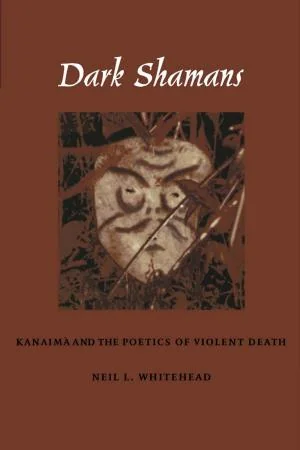
Dark Shamans
Whitehead’s *Dark Shamans* presents a challenging but vital ethnographic account of ritual violence among the Yanomami. The strength of the work lies in its meticulous ethnographic detail and its sophisticated theoretical framework, which refuses easy categorization of the violence it describes. Whitehead masterfully illustrates how ritualized aggression is not an aberrant behavior but a deeply embedded cultural expression, intricately linked to cosmology and social order. The book’s limitation, perhaps, is its dense academic prose, which may prove demanding for readers unfamiliar with anthropological theory. The section detailing the symbolic dimensions of shamanic warfare, particularly the manipulation of spiritual entities to justify physical conflict, is exceptionally compelling. It serves as a stark reminder that violence, even in its most extreme forms, is often imbued with meaning and purpose within its cultural matrix. This book is a rigorous academic study for those prepared for its depth.
📝 Description
73
Neil L. Whitehead's 2002 book examines ritual violence among the Yanomami.
Published in 2002, Neil L. Whitehead's *Dark Shamans* offers an intensive ethnographic study of ritual violence, concentrating on the Yanomami people of the Amazon. The book moves past simple descriptions to analyze the cultural logic that supports violent practices. Whitehead aims to reshape anthropological and historical views of warfare and aggression by examining their symbolic and social aspects. Through detailed fieldwork, he presents a complex understanding of these practices, challenging easy interpretations of savagery. This work emerged during a time of considerable debate in anthropology concerning the portrayal of indigenous violence and the ethics of ethnographic research. Whitehead's method sought a more culturally embedded analysis, differing from purely structural or functional explanations of conflict and ritual. He engaged with earlier studies, such as those by Napoleon Chagnon, which had already generated significant controversy regarding the Yanomami.
While not strictly a text of occult practices, *Dark Shamans* engages with the energetic and spiritual dimensions that shamans manipulate to legitimize and enact violence. It intersects with esoteric traditions by examining how belief systems and the perceived agency of spiritual forces are woven into the social fabric to sanction aggressive acts. The book looks at the cultural construction of power, not just in social structures, but in the manipulation of symbolic and spiritual resources to maintain order or instigate conflict within specific indigenous cosmologies.
💡 Why Read This Book?
• Understand the cultural logic of ritual violence: Gain insights into how practices often labeled 'savage' are, in fact, complex systems of meaning and social cohesion, as demonstrated through Whitehead's analysis of Yanomami ritual aggression. • Reframe anthropological approaches to conflict: Learn how *Dark Shamans* challenges traditional Western views of warfare by presenting violence as a culturally mediated phenomenon, not solely an instinctual act, as detailed in its reformulation of anthropological approaches. • Explore shamanism beyond the mystical: Discover how shamanic practices can be intrinsically linked to the enactment and legitimation of physical conflict, moving beyond purely spiritual interpretations as seen in the examination of shamanic warfare.
⭐ Reader Reviews
Honest opinions from readers who have explored this book.
❓ Frequently Asked Questions
What specific indigenous group does Neil L. Whitehead study in Dark Shamans?
Neil L. Whitehead focuses his ethnographic study in *Dark Shamans* on the Yanomami people, an indigenous group inhabiting the Amazon rainforest region.
What year was Neil L. Whitehead's Dark Shamans first published?
Neil L. Whitehead's *Dark Shamans* was first published in 2002, offering a contemporary ethnographic perspective on ritual violence.
How does Dark Shamans approach the topic of warfare?
*Dark Shamans* reformulates anthropological and historical approaches to warfare by examining ritual violence as a complex cultural expression deeply integrated into social and symbolic systems.
What is the primary theoretical contribution of Dark Shamans?
The book's primary contribution is its use of ethnographic examples of ritual violence to illuminate broader cultural expressions and challenge simplistic understandings of aggression and conflict.
Is Dark Shamans suitable for a general audience or academic specialists?
While accessible to a determined general reader, *Dark Shamans* is primarily aimed at academic specialists in anthropology, history, and religious studies due to its theoretical depth and ethnographic focus.
What is the core argument regarding violence in Dark Shamans?
The core argument is that ritual violence, as exemplified by the Yanomami, is not merely destructive but serves specific cultural functions, acting as a form of communication and social regulation.
🔮 Key Themes & Symbolism
Ritualized Aggression as Cultural Expression
Whitehead examines how ritualized aggression among the Yanomami is not a deviation from cultural norms but a potent form of cultural expression. He details how violence, enacted through specific rituals, serves communicative and social functions, reinforcing group identity and cosmological beliefs. The work argues against viewing such practices solely through a lens of pathology, instead positioning them as integral to the cultural fabric and a means of negotiating social realities. The 2002 publication date situates this analysis within ongoing scholarly debates about indigenous violence.
Shamanism and the Legitimation of Violence
A central theme is the role of shamanism in the context of ritual violence. The book explores how shamans act as intermediaries, invoking spiritual powers and cosmological narratives to legitimize and direct acts of aggression. This is not seen as a separation of the spiritual from the physical but as an integrated system where shamanic authority underpins and sanctions violent actions, shaping perceptions of enemies and the necessity of conflict. The work challenges simplistic dichotomies between peace and war, or the sacred and the profane.
Critique of Anthropological Approaches
*Dark Shamans* actively seeks to reformulate anthropological and historical approaches to warfare and violence. Whitehead critiques earlier paradigms that may have oversimplified the motivations behind or the meaning of indigenous conflict. By grounding his analysis in meticulous ethnography, he advocates for a more nuanced understanding that accounts for the specific cultural logic and symbolic systems driving violent practices. The book pushes for a re-evaluation of how violence is studied, emphasizing cultural context over universalizing theories.
The Social Construction of Savagery
The work implicitly deconstructs Western notions of 'savagery' by demonstrating the complex internal logic and social utility of practices often labeled as such. By presenting ritual violence not as an absence of culture but as a product of it, Whitehead challenges the binary opposition between 'civilized' and 'primitive.' This perspective encourages readers to question ethnocentric biases and to understand the 'other' on their own terms, recognizing the intricate systems that give meaning to actions considered extreme from an external viewpoint.
💬 Memorable Quotes
Direct passages from the work, attributed to the author.
“The book seeks to reformulate anthropological and historical approaches to warfare and violence.”
— This indicates Whitehead's ambition to move beyond existing scholarly frameworks, offering a new theoretical lens through which to understand human conflict and its cultural underpinnings.
“An ethnographic example of ritual violence is used as the primary analytical tool.”
— This points to the methodology of *Dark Shamans*, emphasizing the importance of detailed, on-the-ground fieldwork in understanding complex social phenomena like ritual violence.
“The study challenges simplistic notions of aggression by exploring its symbolic dimensions.”
— This interpretation emphasizes how Whitehead looks at the meaning-making processes associated with violence, suggesting that aggression is often deeply embedded in cultural symbolism and belief systems.
“The work connects shamanic practices to the enactment and justification of conflict.”
— This highlights a key finding: the intertwined relationship between spiritual leadership and the execution of violence, suggesting that shamanism plays an important role in legitimizing and directing aggressive actions within certain societies.
💡 Key Ideas
Editorial paraphrase of the work's core concepts — not direct quotes.
The work explores how ritual violence serves to illuminate cultural expression more widely.
This paraphrased concept highlights the book's central thesis: that extreme practices, when analyzed ethnographically, reveal deeper truths about a culture's values, beliefs, and social structures.
🌙 Esoteric Significance
Tradition
While not explicitly aligned with a single Western esoteric tradition like Hermeticism or Kabbalah, *Dark Shamans* intersects with esoteric studies through its exploration of altered states, shamanic cosmology, and the manipulation of perceived spiritual forces. It engages with themes often found in animistic and shamanic traditions, which form the bedrock of many esoteric beliefs concerning the spirit world and its influence on the material realm. The work provides an anthropological lens on phenomena that esoteric practitioners might explore through direct experience or textual study.
Symbolism
The book looks at the symbolism of spiritual warfare and the entities invoked by shamans to legitimize violence. Symbols related to shamanic flight, spirit allies, and the symbolic transformation of enemies are crucial. For instance, the 'dark shaman' archetype itself symbolizes the potent, often feared, capacity to harness spiritual power for aggressive ends, blurring the lines between the sacred and the destructive. The symbolism extends to the ritual objects and bodily adornments used during violent ceremonies, imbuing them with cosmological significance.
Modern Relevance
Contemporary scholars and practitioners interested in comparative shamanism, altered states of consciousness, and the anthropology of religion draw on Whitehead's work. Thinkers exploring the psychological and social functions of ritual, particularly those involving aggression or altered states, find his ethnographic data invaluable. Furthermore, individuals engaged in modern animistic or neo-shamanic practices might look to *Dark Shamans* for understanding the deep cultural roots and potential social implications of shamanic power, even when divorced from its original context.
👥 Who Should Read This Book
• Anthropologists and Sociologists: Researchers studying ritual violence, cultural expression, and indigenous Amazonian societies will find rigorous ethnographic data and theoretical frameworks. • Students of Religion and Mythology: Those interested in the intersection of belief systems, cosmology, and the practice of violence will gain a deeper understanding of how the sacred can be invoked in conflict. • Critical Theorists and Philosophers: Readers engaging with theories of power, social construction, and the critique of Western biases in understanding non-Western cultures will find ample material for analysis.
📜 Historical Context
Published in 2002, Neil L. Whitehead's *Dark Shamans* arrived amidst ongoing anthropological debates about the representation of indigenous violence, particularly concerning the Yanomami. It engaged with the legacy of fieldwork by figures like Napoleon Chagnon, whose work had already generated significant controversy. Whitehead's approach offered a counterpoint to interpretations that might have focused solely on ecological pressures or innate aggression, instead emphasizing the symbolic and ritualistic dimensions of conflict. The intellectual currents of the time included post-structuralist critiques of power and representation, which influenced Whitehead's focus on how violence is culturally constructed and legitimized. The book's reception was within academic circles, contributing to a more nuanced understanding of ritualized aggression in non-Western societies, challenging earlier, often ethnocentric, depictions of 'primitive warfare'.
📔 Journal Prompts
The concept of shamanic warfare and its cultural logic.
The Yanomami ritual violence as described by Whitehead.
Whitehead's reformulation of anthropological approaches to conflict.
The symbolic meaning of 'dark shaman' within its cultural context.
The relationship between cosmology and the enactment of aggression.
🗂️ Glossary
Shaman
An individual believed to have the ability to interact with the spirit world, often serving as a mediator between the human and spiritual realms for purposes such as healing, divination, or influencing events.
Ritual Violence
Aggressive acts that are performed within a structured, culturally defined ritual context, often carrying symbolic meaning and serving social or cosmological functions beyond simple physical harm.
Ethnography
The scientific description of the customs of individual peoples and cultures, based on immersive fieldwork and detailed observation.
Cosmology
The study of the origin, evolution, and eventual fate of the universe; in anthropology, it refers to a culture's understanding of the structure and order of the universe and humanity's place within it.
Yanomami
An indigenous ethnic group inhabiting the tropical rainforests of the Amazonian border between Venezuela and Brazil.
Symbolic Warfare
Conflict that is enacted or understood primarily through symbolic actions, rituals, and representations, often intertwined with or serving as a precursor to physical confrontation.
Cultural Expression
The ways in which a group of people communicate their identity, beliefs, values, and social structures through various forms of art, ritual, language, and behavior.
This book appears in 1 collection
🔮 Readers Also Liked
Browse all →









From the “Shamanism” Collection
View all →



More Free Occult Philosophy Books
View all →