I Ching =

 62
62

I Ching =



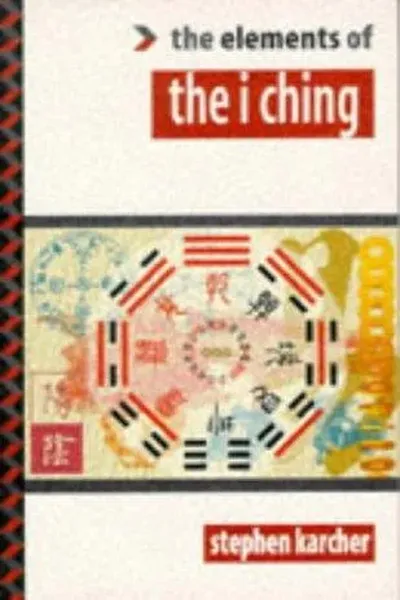
Stephen L. Karcher's I Ching stands as a beacon of clarity and depth for anyone seeking to engage with this ancient oracle. Kestrel's authoritative interpretation transcends simple translation, revealing the I Ching's profound esoteric insights into the cyclical nature of existence and the subtle energies that govern our lives. The author masterfully unpacks the symbolism of the hexagrams, offering practical guidance for divination and philosophical contemplation. This edition is an indispensable resource for serious students of the Yi Jing, providing a robust framework for understanding its divinatory mechanics and its deep connection to Taoist philosophy. It empowers readers to move beyond superficial readings and connect with the I Ching's transformative potential.
📝 Description
62
Stephen L. Karcher published his translation of the I Ching in 1994, aiming for clarity and accessibility.
This 1994 translation of the I Ching by Stephen L. Karcher makes the classic Chinese text available to a modern audience. Karcher focuses on presenting the philosophical depth and symbolic language of the Book of Changes. The translation unpacks the interplay of yin and yang, the structure of the sixty-four hexagrams, and their application to understanding life's circumstances.
The work positions the I Ching not just as a divinatory tool, but as a guide to self understanding and personal growth. It discusses the text's dialogues concerning heaven, earth, and humanity. The aim is to offer readers, whether interested in ancient philosophy, esoteric practices, or personal development, a clearer access point to the principles of transformation and the Tao.
The I Ching is a central text in Chinese cosmology and divination, dating back over 3,000 years. It is foundational to Taoism and has influenced Confucianism. Its use extends beyond mere fortune telling, serving as a complex philosophical system for understanding the patterns of the universe and human experience. Esoteric traditions worldwide have drawn parallels to its cyclical view of change and its method of seeking counsel through symbolic patterns, seeing it as a key to aligning oneself with natural forces.
💡 Why Read This Book?
Discover the profound wisdom of the I Ching, a timeless oracle guiding seekers towards clarity and transformation. This edition offers an unparalleled exploration of its mystical symbolism and philosophical depth. Ideal for those drawn to ancient knowledge, esoteric practices, and the art of self-discovery. Unravel the secrets of destiny and unlock your inner potential.
⭐ Reader Reviews
Honest opinions from readers who have explored this book.
❓ Frequently Asked Questions
What is the I Ching?
The I Ching, or Book of Changes, is an ancient Chinese divination text and philosophical classic. It consists of 64 hexagrams, each formed by six lines representing combinations of yin (broken) and yang (solid) energies, offering insights into the dynamics of change and cosmic patterns.
How does one use the I Ching?
Traditionally, the I Ching is consulted by posing a question and then generating a hexagram through a divinatory process, often involving yarrow stalks or coins. The resulting hexagram and its changing lines are then interpreted to provide guidance or illuminate a situation.
What is the philosophical significance of the I Ching?
Philosophically, the I Ching is a profound exploration of change, balance, and the interconnectedness of all things. It emphasizes the dynamic interplay of yin and yang, the cyclical nature of events, and the importance of adapting to changing circumstances with wisdom and integrity.
Is this book suitable for beginners?
Yes, Stephen L. Karcher's accessible translation and insightful commentary make this edition highly suitable for beginners. It provides a solid foundation for understanding the I Ching's core principles and practical application without overwhelming the uninitiated.
What makes Karcher's translation unique?
Karcher's translation is renowned for its fidelity to the original text, its clear and evocative language, and its deep understanding of the I Ching's esoteric and philosophical dimensions. He brings a scholar's rigor and a mystic's intuition to the work.
🔮 Key Themes & Symbolism
The Dynamics of Change and Transformation
The I Ching is fundamentally a treatise on the ceaseless nature of change. It presents the universe not as static, but as a vibrant, evolving entity where every situation is in flux. Through its 64 hexagrams, it maps out the archetypal patterns of transformation, illustrating how beginnings lead to endings, and how endings pave the way for new beginnings. Understanding these cycles allows individuals to navigate life's inevitable shifts with greater awareness, adaptability, and foresight, embracing challenges as opportunities for growth and evolution. This theme underscores the importance of aligning oneself with the natural flow of cosmic energies.
The Interplay of Yin and Yang
At the heart of the I Ching lies the profound concept of yin and yang, the primordial forces of duality that permeate existence. Yin, representing the receptive, passive, and feminine principle, and yang, symbolizing the active, creative, and masculine principle, are not seen as opposing forces but as complementary and interdependent. Their dynamic interplay, their constant movement and transformation, generates all phenomena. The hexagrams themselves are intricate arrangements of these two fundamental energies, illustrating how their balance and imbalance dictate the character of any given situation, offering insights into harmony and discord.
Divination as a Path to Self-Knowledge
The I Ching serves as a powerful oracle, offering profound guidance and insights into the myriad questions that arise in the human journey. However, its divinatory function extends far beyond mere prediction. It acts as a mirror, reflecting the hidden currents of a situation and the inner range of the querent. By engaging with the hexagrams, individuals are prompted to examine their motivations, actions, and the potential consequences, fostering a deeper understanding of themselves and their place within the cosmic order. This process cultivates self-awareness and empowers conscious decision-making, transforming mere fortune-telling into a profound tool for personal growth and spiritual development.
💬 Memorable Quotes
Direct passages from the work, attributed to the author.
“The superior person acts according to the times.”
— This emphasizes the importance of adaptability and aligning one's actions with the prevailing circumstances and energetic currents of the moment, rather than clinging to rigid expectations.
“When the path is clear, success is certain.”
— Suggests that clarity of intention and understanding of the situation's dynamics are the keys to achieving desired outcomes, highlighting the role of insight in effective action.
“The soft overcomes the hard; the weak overcomes the strong.”
— A fundamental principle of Taoism, illustrating how yielding, flexibility, and subtle influence can often achieve more than brute force or overt aggression.
“Stillness leads to clarity.”
— Highlights the power of inner quietude and contemplation in discerning truth and gaining profound understanding, suggesting that outward action should stem from inner wisdom.
“There is no end to the changes.”
— A reminder of the fundamental nature of impermanence and the constant flux of existence, encouraging acceptance and skillful navigation of life's ever-shifting tides.
🌙 Esoteric Significance
Tradition
The I Ching is deeply rooted in Taoist philosophy and ancient Chinese esoteric traditions. It embodies the principles of the Tao, the fundamental cosmic order, and the ceaseless dance of yin and yang. Within esoteric circles, it is viewed as a potent tool for understanding the subtle energies that govern the universe and human consciousness, acting as a map of spiritual progression and a guide for aligning oneself with the natural flow of existence.
Symbolism
The core symbolism of the I Ching lies in its 64 hexagrams, each a complex arrangement of six lines representing yin (broken) and yang (solid). These lines and their combinations are archetypal symbols, evoking fundamental cosmic processes, human relationships, and stages of development. The trigrams (three-line combinations) further enrich this symbolic language, representing fundamental elements like Heaven, Earth, Water, Fire, and so forth, providing a wide range for interpreting the subtle energies at play.
Modern Relevance
In the modern era, the I Ching's relevance extends beyond its traditional divinatory and philosophical applications. It offers a powerful framework for understanding complex systems, navigating uncertainty, and fostering personal growth in a rapidly changing world. Its emphasis on balance, adaptability, and interconnectedness provides timeless wisdom for addressing contemporary challenges, from personal decision-making to understanding global dynamics, making it an invaluable resource for those seeking deeper meaning and conscious living.
👥 Who Should Read This Book
This comprehensive edition of the I Ching is a rich source for a diverse readership. Beginners starting their first exploration of ancient wisdom will find Karcher's clear prose and insightful introductions to be an accessible entry point. Scholars of Eastern philosophy and comparative religion will appreciate the meticulous scholarship and nuanced interpretations. Seekers of spiritual guidance and personal transformation will discover a profound tool for self-reflection and decision-making. Practitioners of divination and esoteric arts will find a rich and authoritative resource for deepening their understanding and practice of this ancient oracle.
📜 Historical Context
The I Ching, or Book of Changes, boasts a lineage stretching back over three thousand years, making it one of the world's oldest and most enduring texts. Its origins are shrouded in legend, attributed to the mythical sage-kings Fu Xi, King Wen, and the Duke of Zhou, with Confucius and his disciples later adding commentary. Emerging from the Shang and Zhou dynasties in ancient China, a period marked by significant philosophical and societal development, the I Ching became a central to Chinese thought, influencing not only divination but also philosophy, politics, art, and medicine. Its cyclical worldview and emphasis on balance resonated deeply within a culture seeking order and harmony amidst political upheaval and natural forces. The text's longevity is a proof of its profound adaptability and its ability to speak to successive generations, evolving from a divinatory manual to a complex philosophical system that continues to inspire and guide.
📔 Journal Prompts
Reflect on a recent situation where you felt out of balance. How did the principles of yin and yang apply?
Consider a time you acted against the 'times.' What were the consequences, and what could you have learned from the I Ching?
What does the concept of 'soft overcoming hard' mean in your personal relationships or professional life?
How can you cultivate more inner stillness to gain clarity in your decision-making processes?
Identify a 'change' you are currently experiencing or anticipating. How might the archetypal patterns of the I Ching help you navigate it?
🗂️ Glossary
Hexagram
A figure composed of six stacked horizontal lines, each line being either solid (yang) or broken (yin). There are 64 unique hexagrams in the I Ching, representing fundamental archetypal situations and cosmic processes.
Yin
The passive, receptive, dark, and feminine principle in Chinese philosophy. It is represented by a broken line (--) in the I Ching hexagrams and is often associated with qualities like yielding, stillness, and introspection.
Yang
The active, creative, light, and masculine principle in Chinese philosophy. It is represented by a solid line (—) in the I Ching hexagrams and is often associated with qualities like dynamism, strength, and outward expression.
Trigram
A figure composed of three stacked lines, each being either solid (yang) or broken (yin). There are eight trigrams (e.g., Heaven, Earth, Water, Fire) that form the building blocks of the 64 hexagrams.
Tao (Dao)
The fundamental principle of the universe in Taoism, often translated as 'the Way.' It represents the natural order, the source of all things, and the path of harmonious existence, emphasizing spontaneity and flowing with nature.
This book appears in 2 collections
🔮 Readers Also Liked
Browse all →









More by Stephen L. Karcher
All books →




From the “I Ching” Collection
View all →








More Free Divination & Tarot Books
View all →