Vampires
 81
81

Vampires
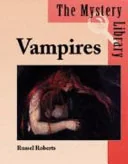
Russell Roberts' "Vampires" offers a commendable survey of its subject, moving beyond superficial pop culture tropes to engage with the deeper historical and psychological currents. The section on the vampire experience, in particular, provides a nuanced look at the creature's existential burden as depicted in lore. Roberts' strength lies in his methodical approach to tracing the evolution of the myth, grounding it in historical context rather than purely speculative fantasy. However, the book occasionally struggles to maintain a consistent esoteric focus, sometimes leaning too heavily on literary analysis that, while informative, dilutes the metaphysical examination. A notable passage discusses the 'vampire experience' as a metaphor for societal alienation, a concept that could have been further developed from an occult perspective. Ultimately, "Vampires" serves as a solid, if occasionally uneven, introduction to a complex folkloric figure.
📝 Description
81
Russell Roberts' 2001 book examines the vampire's mythos from folklore to modern media.
Published in 2001, Russell Roberts' "Vampires" examines the enduring mythos of the undead creature. The work traces the vampire's lineage from early folklore and demonology, showing how these narratives changed across centuries and cultures. Roberts considers the historical anxieties and societal shifts that might have fueled fascination with beings that feed on life force. He distinguishes between historical accounts of vampirism and later literary interpretations.
The book moves past simple historical recounting to consider the subjective experience of the vampire as presented in literature and alleged testimonies. Roberts looks at the psychological and existential aspects attributed to these figures, including themes of immortality, isolation, and predation. The vampire, he suggests, acts as a reflection of human desires and fears, touching on societal taboos and forbidden impulses. The author also analyzes the vampire's significant presence in popular culture, from Bram Stoker's "Dracula" to contemporary media. He discusses how the archetype has transformed, adapting to different genres and influencing modern entertainment.
This book sits within a tradition of studying supernatural figures and their cultural resonance. It engages with the historical and folkloric roots of vampirism, a figure that has appeared in various occult and esoteric traditions for centuries. Roberts' work connects these ancient beliefs to later literary and psychological interpretations, bridging the gap between historical superstition and modern fascination with the darker aspects of human nature and the unknown.
💡 Why Read This Book?
• Understand the historical trajectory of vampire beliefs, from pre-Christian demonology to its modern incarnations, as detailed in Roberts' exploration of vampire folklore across various centuries. • Gain insight into the psychological and existential dimensions of the vampire myth, examining how Roberts interprets the creature's purported experience of immortality and isolation. • Analyze the transformation of the vampire in popular culture, specifically noting how Roberts discusses Bram Stoker's "Dracula" (1897) and its impact on subsequent portrayals.
⭐ Reader Reviews
Honest opinions from readers who have explored this book.
❓ Frequently Asked Questions
What are the earliest origins of vampire myths discussed in Russell Roberts' book?
Roberts' "Vampires" traces origins to ancient folklore and demonology, exploring early beliefs about revenants and beings that preyed on the living, predating the 1897 "Dracula" by centuries.
How does the book explain the 'vampire experience'?
The book interprets the 'vampire experience' through literary and psychological lenses, examining themes of eternal life, isolation, and predatory existence as depicted in folklore and fiction.
Does Russell Roberts discuss vampires in contemporary media?
Yes, the work analyzes the significant presence of vampires in popular culture, detailing their evolution from classic gothic figures to modern archetypes in film and literature.
Can vampires be explained rationally according to the book?
Roberts explores potential rational explanations, including historical medical conditions and psychological phenomena, while also acknowledging the persistent metaphysical aspects of the vampire myth.
When was Russell Roberts' 'Vampires' first published?
Russell Roberts' "Vampires" was first published in 2001, providing a comprehensive overview of the subject at the turn of the millennium.
What is the significance of Bram Stoker's 'Dracula' in the book?
Bram Stoker's "Dracula," published in 1897, is presented as a pivotal work that codified many modern vampire tropes, significantly influencing the creature's portrayal in subsequent popular culture.
🔮 Key Themes & Symbolism
Folklore and Demonology
The work meticulously traces the vampire archetype from its roots in ancient demonology and early folklore, moving beyond sensationalism to examine the genuine historical anxieties that birthed such legends. It highlights how societies grappled with death, disease, and the unknown through these narratives, presenting the vampire not merely as a fictional monster but as a symbolic manifestation of collective fears about life's cessation and unnatural continuation.
The Vampire's Existential State
Roberts probes the internal world of the vampire, interpreting its legendary existence as a metaphor for profound isolation and the burden of immortality. This theme looks at the psychological ramifications of eternal life detached from humanity, exploring how the myth reflects a deep-seated human fascination with and dread of unending existence, and the potential spiritual void it entails.
Cultural Adaptation of the Myth
This theme examines the dynamic evolution of the vampire figure across different eras and media. It scrutinizes how the creature, from its folkloric origins to its modern popular culture depictions, has been reshaped to reflect societal values, fears, and desires. The analysis highlights the 1897 publication of Bram Stoker's "Dracula" as a critical juncture in this cultural adaptation.
Rational vs. Metaphysical Explanations
The book engages with the enduring question of vampirism's reality, weighing purported evidence and historical accounts against potential psychological and medical explanations. It explores the tension between the supernatural and the mundane, assessing whether the phenomenon can be fully clarified or if it retains an inherently esoteric dimension that eludes empirical understanding.
💬 Memorable Quotes
Direct passages from the work, attributed to the author.
“The vampire is often a projection of societal taboos.”
— This interpretation suggests that the figure of the vampire embodies repressed desires and fears within a culture, acting as a vessel for anxieties about sexuality, death, and the transgression of natural boundaries.
“Immortality, as depicted, carries a profound existential cost.”
— This concept highlights the idea that unending life, stripped of human connection and purpose, leads not to bliss but to a deep spiritual and emotional desolation for the vampiric entity.
“Folklore provided explanations for the inexplicable.”
— This observation underscores the historical function of myths and legends, including those of vampires, as a means for pre-modern societies to rationalize and cope with phenomena like death, disease, and the supernatural.
“Pop culture recontextualizes the monster.”
— This idea points to how modern media transforms the vampire, shifting its portrayal from a purely terrifying entity to figures that can be romanticized, complex, or even sympathetic, reflecting changing cultural sensibilities.
“The fear of the unnatural persists.”
— This interpretation suggests that despite rational advancements, a primal fear of beings that defy the natural order, like vampires, continues to resonate within the human psyche.
🌙 Esoteric Significance
Tradition
While "Vampires" by Russell Roberts is primarily a scholarly and cultural analysis, its exploration of the vampire myth touches upon themes resonant within esoteric traditions, particularly those concerned with life force, spiritual decay, and the nature of existence beyond death. It can be seen as a modern commentary on archetypes present in Gnostic traditions (the Archons, parasitic entities) and Hermeticism (the shadow self, the dangers of unbalanced forces). The work examines the vampire as a potent symbol of energetic vampirism, a concept explored in various occult circles.
Symbolism
The vampire itself serves as a potent symbol of unnatural life and the consumption of vital energy, a motif found in many esoteric systems. Its association with darkness, the night, and the underworld connects it to primal fears and the unconscious. The act of blood-drinking can be interpreted esoterically as the illicit siphoning of spiritual or psychic energy, a perversion of life-giving forces, reflecting a corruption of natural spiritual laws.
Modern Relevance
Contemporary occultists and practitioners of modern witchcraft often draw on the vampire archetype to explore themes of personal power, energetic boundaries, and the shadow self. The concept of 'psychic vampires' or individuals who drain others' energy, popularized in self-help and New Age literature, owes a conceptual debt to the folklore analyzed by Roberts. Furthermore, the vampire continues to be a powerful symbol in modern esoteric art and literature, representing rebellion, forbidden knowledge, and the confrontation with mortality.
👥 Who Should Read This Book
• Students of folklore and comparative mythology seeking a structured overview of the vampire's historical and cultural journey. • Readers interested in the psychological underpinnings of myth, who wish to understand how societal fears and desires manifest in legendary figures. • Enthusiasts of gothic literature and horror who want to explore the origins and evolution of the vampire archetype beyond its popular media representations.
📜 Historical Context
Published in 2001, Russell Roberts' "Vampires" emerged during a period of renewed popular fascination with the undead, fueled by a resurgence in gothic literature and film. The intellectual currents of the time were marked by post-structuralist deconstructions of myth and a continued interest in psychoanalytic interpretations of folklore. Roberts' work engages with this legacy, situating itself within the broader academic discourse that sought to understand vampiric lore. It implicitly responds to earlier analyses, such as those by Montague Summers in the mid-20th century, who treated vampire accounts with a degree of historical seriousness. While not directly engaging a specific contemporary scholar by name in its core discussion, the book contributes to a scholarly conversation that had seen authors like Rosemary Ellen Guiley exploring similar themes of supernatural beings and their historical roots.
📔 Journal Prompts
The historical anxieties that birthed vampire legends.
The existential burden of the vampire's immortality.
Modern interpretations of the vampire archetype.
The symbolic meaning of blood-drinking in folklore.
The tension between rational and supernatural explanations for vampirism.
🗂️ Glossary
Revenant
A corpse that is said to have returned from the dead to haunt or terrorize the living, a precursor figure to the modern vampire.
Folklore
The traditional beliefs, customs, and stories of a community, passed through the generations by word of mouth, including legends and myths.
Archetype
A recurring symbol, character type, or motif in literature and mythology, representing universal patterns of human nature and experience.
Demonology
The study of demons or beliefs about demons, often involving their nature, hierarchies, and purported influence on the world.
Existential
Relating to existence, particularly human existence, focusing on themes such as freedom, responsibility, and the meaning of life and death.
Gothic Literature
A genre of fiction characterized by elements of horror, death, and gloom, often set in ancient castles or decaying mansions, with a focus on atmosphere and suspense.
Metaphysical
Concerning the fundamental nature of reality, including the relationship between mind and matter, substance and attribute, and possibility and actuality; beyond the physical.
This book appears in 1 collection
🔮 Readers Also Liked
Browse all →







From the “Vampirism” Collection
View all →






More Free Occult Philosophy Books
View all →