The Elementals Collection
 83
83

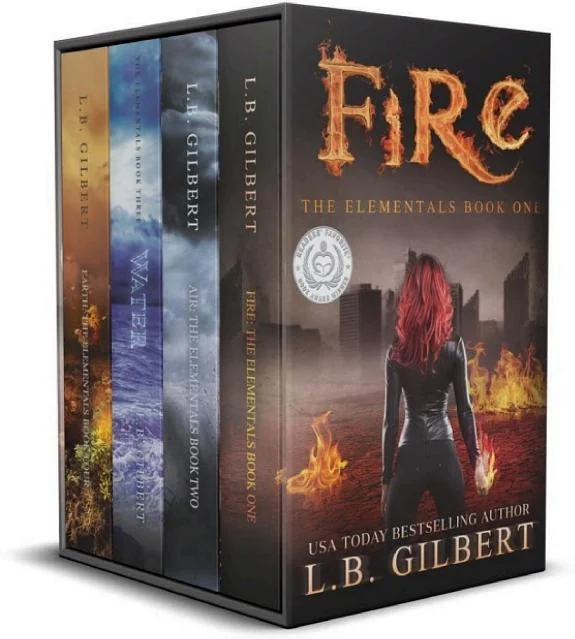
The Elementals Collection
L.B. Gilbert’s Elementals Collection takes a bold approach, reimagining the ancient four elements not as abstract principles but as drivers of gritty, character-focused narratives. The "Fire" installment, with its "hard-boiled detective" feel and "snarky humor," as noted by Liz Konkel, immediately signals that these are not dry academic treatises. Gilbert’s strength lies in imbuing elemental archetypes with palpable human flaws and desires, making characters like the protagonist of "Fire" feel both archetypal and utterly contemporary. However, the series’ ambition to weave these elemental themes into distinct genre narratives occasionally results in the symbolic aspects feeling secondary to plot mechanics, particularly in the "Air" novel where its intellectual detachment sometimes mirrors the narrative’s own pacing. The concept of elemental balance, central to the collection, is perhaps best explored in the implied connections between the books, suggesting a larger cosmic order being tested. The Elementals Collection succeeds by making ancient concepts feel immediate and relevant through compelling storytelling.
📝 Description
83
L.B. Gilbert's The Elementals Collection, published in 2020, retells classical elemental archetypes through interconnected novels.
This series of novels by L.B. Gilbert, first released in 2020, examines the four classical elements—Fire, Air, Water, and Earth—through distinct narratives. Gilbert uses these elemental archetypes not as the basis for occult study, but as driving forces for character and plot development within fictional stories. The collection appeals to readers who enjoy genre fiction that contains philosophical depth. Those drawn to speculative fiction, mystery, and adventure will find engaging narratives. It also speaks to individuals interested in modern interpretations of ancient elemental concepts within contemporary storytelling.
The series is structured around the personification and narrative use of the four classical elements. Each element carries symbolic weight, representing not only physical aspects but also specific personality types, motivations, and ways of interacting with the world. Fire is associated with passion and destruction, Air with intellect and detachment, Water with emotion and intuition, and Earth with physicality and stability. These elements are woven into the fabric of the stories, shaping the characters' journeys and the conflicts they face.
While a contemporary work, The Elementals Collection draws thematic inspiration from ancient Greek philosophy concerning the four elements, as articulated by figures like Empedocles. This concept was further developed through traditions such as Hermeticism and Renaissance alchemy, where elements served as symbolic frameworks for understanding the cosmos and human nature. Gilbert applies these historical symbolic systems to a modern narrative, recontextualizing age-old ideas about world order and human psychology for a new audience.
💡 Why Read This Book?
• Understand elemental archetypes as narrative engines, learning how L.B. Gilbert uses the traits of Fire, Air, Water, and Earth to shape distinct characters and conflicts, as seen in the "Fire" novel. • Gain insight into the modern application of classical philosophy, appreciating how concepts from thinkers like Empedocles are translated into a 21st-century fiction context. • Experience a unique blend of genre fiction and esoteric thought, where the 2020 publication date belies a deep engagement with ancient symbolic systems.
⭐ Reader Reviews
Honest opinions from readers who have explored this book.
❓ Frequently Asked Questions
What are the four elements covered in L.B. Gilbert's The Elementals Collection?
The collection focuses on the four classical elements: Fire, Air, Water, and Earth. Each element serves as a central theme and character archetype within its respective novel, first published starting in 2020.
What kind of reader would enjoy The Elementals Collection?
Readers who enjoy speculative fiction, mysteries with philosophical undertones, and adventure stories will find the collection appealing. It's suitable for those interested in how ancient concepts are reinterpreted in modern narratives.
Are these books on occultism or fiction inspired by occult themes?
The Elementals Collection is works of fiction that use elemental archetypes from ancient philosophy and esoteric traditions as narrative devices, rather than being direct guides to occult practices.
What awards has The Elementals Collection received?
Individual books within the series have received accolades, including Readers' Favorite Silver Medals and Rone Nominations for audiobooks, as highlighted in promotional material for the 2020 publication.
Does the series require reading in a specific order?
While each book focuses on a different element, they are designed to be experienced as a collection. Reading order might enhance thematic resonance, but each novel offers a self-contained story driven by its elemental focus.
Who is the author L.B. Gilbert?
L.B. Gilbert is the author of The Elementals Collection, a series of novels first published in 2020. The author is known for blending genre fiction with classical philosophical themes.
🔮 Key Themes & Symbolism
Elemental Archetypes in Narrative
The collection masterfully uses the classical elements—Fire, Air, Water, and Earth—as foundational archetypes for character and plot. Each element is not merely a backdrop but embodies distinct psychological and behavioral patterns. Fire drives passion and conflict, Air fuels intellect and detachment, Water embodies emotion and intuition, and Earth provides grounding and stability. This approach allows L.B. Gilbert to explore complex human dynamics through a well-established symbolic language, making the 2020 series feel both novel and deeply rooted in tradition.
Modern Reinterpretation of Ancient Philosophy
Gilbert’s work breathes new life into ancient philosophical concepts, particularly the theories of Empedocles regarding the four elements. The series transcends mere academic interest by embedding these ideas within engaging fictional narratives. It demonstrates how classical frameworks can still offer potent metaphors for understanding contemporary life, human relationships, and the forces that shape our world, moving beyond abstract theory into tangible storytelling.
The Interplay of Opposites
A core theme across The Elementals Collection is the inherent tension and potential harmony between opposing elemental forces. Fire clashes with Water, Air contends with Earth. These elemental conflicts mirror human struggles, highlighting the necessity of balance. The narrative structure implicitly explores how integration, rather than dominance, of these forces leads to resolution or growth, reflecting ancient alchemical principles within a modern context.
Symbolism in Genre Fiction
The series showcases how potent symbolism can elevate genre fiction beyond simple entertainment. The elemental motifs are not decorative but integral to the thematic and character development. By referencing concepts that have permeated esoteric thought for centuries, the books offer layers of meaning for those attuned to symbolic language, proving that profound ideas can be conveyed through accessible, well-crafted stories.
💬 Memorable Quotes
Direct passages from the work, attributed to the author.
“Fire is gritty, sharp, with an edgy quality and a snarky humor.”
— This description captures the visceral, noir-inspired tone of the 'Fire' novel, suggesting a departure from ethereal mysticism towards a more grounded, character-driven narrative style that uses elemental themes.
“Air is one of the best books I’ve read this year. It was 'un-put-downable'...”
— This endorsement highlights the compelling pacing and engaging nature of the 'Air' novel, indicating that L.B. Gilbert successfully translates the abstract concept of Air into a story that holds the reader's attention.
“The series explores the dynamic interplay and conflicts arising from these elemental forces.”
— This statement points to the central narrative engine of the collection: the interactions between characters embodying the distinct traits of Fire, Air, Water, and Earth, creating dramatic tension.
“Every book in this series is a Medal Winner!”
— This claim emphasizes the critical reception and quality of the individual novels within the collection, suggesting a consistent standard of excellence across the series first published in 2020.
“Water is cunningly...”
— This fragment suggests intricate plotting and a sophisticated narrative construction within the 'Water' novel, hinting at themes of depth, intuition, and perhaps deception related to the element.
🌙 Esoteric Significance
Tradition
The Elementals Collection draws primarily from the Western esoteric tradition, specifically the Neoplatonic and Hermetic lineage that views the four classical elements (Fire, Air, Water, Earth) as fundamental principles of reality. While not a grimoire or direct instructional text, it uses these elements as archetypal forces, mirroring their symbolic application in alchemy and Renaissance natural philosophy. The series departs from strict adherence by focusing on narrative and character development rather than ritual or cosmology, making esoteric concepts accessible through fiction.
Symbolism
Central symbols include the four elements themselves, each representing distinct qualities: Fire (passion, destruction, transformation), Air (intellect, communication, change), Water (emotion, intuition, healing), and Earth (stability, physicality, grounding). These are often personified or embodied by characters. The collection likely explores the interplay and balance between these forces, a key concept in alchemical symbolism where achieving equilibrium is crucial for transformation and wholification.
Modern Relevance
Contemporary practitioners of Jungian psychology, mythopoetic studies, and modern pagan traditions often draw upon elemental symbolism. Gilbert's work appeals to modern thinkers seeking to integrate ancient wisdom into contemporary life through accessible narratives. It provides a fictional lens through which to examine archetypal psychology and the perennial philosophical quest for understanding the fundamental constituents of existence and consciousness.
👥 Who Should Read This Book
• Readers interested in contemporary fiction that engages with classical philosophical concepts, particularly the four elements as understood since ancient Greece. • Aspiring writers and literary critics seeking examples of how esoteric symbolism can be integrated into compelling genre narratives. • Individuals exploring archetypal psychology or comparative mythology who appreciate fictional interpretations of fundamental symbolic systems.
📜 Historical Context
L.B. Gilbert’s Elementals Collection, published in 2020, emerges in a contemporary literary landscape where genre fiction frequently engages with philosophical and esoteric themes. Its conceptual framework, however, is deeply indebted to ancient Greek philosophy, particularly the elemental theories attributed to Empedocles (c. 494–434 BC). These ideas were further developed and integrated into Western esotericism through Hermeticism and Renaissance alchemy, influencing thinkers like Paracelsus. While not a direct product of these historical movements, the series functions as a modern narrative exploration of their symbolic power. It offers a contrast to more academic or purely practical esoteric texts, demonstrating the enduring narrative potential of elemental symbolism in a world often dominated by scientific materialism. The series implicitly engages with the historical tendency to use elements as a microcosm for understanding the macrocosm and the human condition.
📔 Journal Prompts
The elemental character archetypes: How does Fire's passion manifest differently from Water's intuition in your own life?
Reflect on the narrative balance achieved in the 'Air' novel; how does intellectual detachment serve the plot?
Consider the concept of elemental conflict; where have opposing forces created tension and growth in your experiences?
Analyze the symbolism of Earth as grounding; how does this manifest in the narrative structure of its associated novel?
The 'medals' awarded: What narrative elements contribute to a story's perceived quality and resonance?
🗂️ Glossary
Classical Elements
The ancient Greek concept of four fundamental substances (Fire, Air, Water, Earth) believed to constitute all matter and influence the natural world and human temperament.
Hermeticism
A philosophical and religious tradition based on writings attributed to Hermes Trismegistus, emphasizing divine wisdom, alchemy, astrology, and the interconnectedness of the cosmos.
Archetype
A recurring symbol, character type, or motif that is universally understood, often representing fundamental human experiences or concepts, such as the elemental figures.
Empedocles
Ancient Greek pre-Socratic philosopher credited with originating the theory of four classical elements (earth, air, fire, water) as the roots of all things.
Renaissance Alchemy
The practice and philosophy of alchemy during the Renaissance period, which sought to transmute base metals into gold and discover the elixir of life, often using elemental symbolism.
Genre Fiction
Works of fiction categorized by specific literary conventions and audience expectations, such as mystery, science fiction, or fantasy, often contrasted with literary fiction.
Symbolic Language
The use of symbols to represent ideas or qualities; in esoteric contexts, this often refers to a deeper, hidden meaning within natural phenomena or artistic representations.
This book appears in 1 collection
🔮 Readers Also Liked
Browse all →









From the “Elementals” Collection
View all →




More Free Occult Philosophy Books
View all →