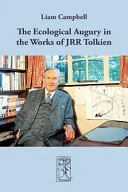
The Ecological Augury in the Works of JRR Tolkien
 74
74

The Ecological Augury in the Works of JRR Tolkien
Liam Campbell's exploration of Tolkien's ecological themes is a welcome, if sometimes narrowly focused, contribution. The book excels in its detailed analysis of specific passages, particularly Campbell's interpretation of the industrialization of Isengard as a potent metaphor for ecological destruction. He convincingly argues that Tolkien's invented world serves as a cautionary tale, a concept he traces back to the author's own observations of the changing English landscape. A limitation, however, is the occasional overemphasis on esoteric interpretations, which at times overshadows a more direct ecocritical reading. The comparison of the Ents' slow wrath to natural forces feels particularly resonant, offering a powerful image of nature's ultimate response to unchecked exploitation. Campbell's work provides a solid foundation for understanding Tolkien's ecological consciousness.
📝 Description
74
Liam Campbell's 2011 study connects J.R.R. Tolkien's Middle-earth to ecological warnings.
This 2011 study examines J.R.R. Tolkien's fiction, particularly *The Lord of the Rings*, through the lens of ecological augury. Campbell argues that Tolkien's narratives contain ecological insights that predate modern environmentalism, presenting nature's degradation and humanity's destructive relationship with the environment. The book draws parallels between the fictional world of Middle-earth and contemporary ecological crises.
The work is for readers interested in the intersection of literature, environmentalism, and esoteric thought. It appeals to Tolkien scholars, those concerned with ecocriticism, and readers seeking deeper, symbolic meanings in fantasy. Campbell situates Tolkien's writings within a tradition of nature-centric philosophies and critiques of industrialization, connecting Middle-earth's imaginative landscape to tangible ecological concerns of the early 21st century.
Campbell places Tolkien's ecological themes within a tradition of nature-centric philosophies and esoteric thought. This approach views mythology not merely as storytelling but as a vehicle for conveying urgent societal commentary, particularly concerning the planet's health. The study connects Tolkien's imaginative world to tangible ecological concerns, suggesting a deeper, symbolic layer to his work that resonates with ancient ideas about humanity's relationship with the natural world.
💡 Why Read This Book?
• Gain a deeper understanding of how Tolkien's legendarium, particularly *The Lord of the Rings*, functions as a complex ecological augury, offering prescient warnings about industrial impact on natural systems. • Explore the symbolic significance of nature in Tolkien's work, such as the Ents and Lothlórien, and connect these literary elements to real-world environmental concerns and the concept of nature's sacredness. • Understand the historical context of ecocriticism in the early 21st century through the analysis of a 2011 study that bridges literary fantasy with contemporary ecological crises.
⭐ Reader Reviews
Honest opinions from readers who have explored this book.
❓ Frequently Asked Questions
What is ecological augury in the context of Tolkien's work?
Ecological augury, as applied to Tolkien, refers to the prophetic or warning elements within his narratives concerning the environment. The book suggests Tolkien foresaw and symbolically represented the devastating impact of industrialization and human exploitation on natural ecosystems, much like ancient augurs interpreted omens.
How does J.R.R. Tolkien's personal life relate to his ecological themes?
Liam Campbell's study highlights Tolkien's deep affection for the natural world, particularly the English countryside, which he witnessed undergoing significant change due to industrial development. This personal connection informed his creation of Middle-earth's threatened landscapes and the reverence for nature shown by many of his characters.
What specific works by Tolkien are analyzed in this book?
The primary focus is J.R.R. Tolkien's *The Lord of the Rings*. However, the book may also draw upon elements from *The Hobbit* and *The Silmarillion* to further illustrate the author's evolving ecological perspectives and the consistent themes present in his legendarium.
Is this book suitable for someone new to Tolkien studies?
While the book offers a specialized perspective, readers with a foundational knowledge of Tolkien's major works will benefit most. It assumes familiarity with the characters and settings of Middle-earth, providing an advanced layer of interpretation rather than an introduction.
What is the historical period this book engages with regarding ecological thought?
Published in 2011, the book reflects the growing environmental consciousness of the early 21st century. It engages with ecocriticism that developed significantly in the late 20th century, applying its principles to Tolkien's writings, which were created much earlier.
Does the book offer solutions to modern environmental problems?
The book primarily serves as an analysis and interpretation, drawing parallels between Tolkien's fictional warnings and contemporary ecological challenges. While it implicitly encourages a more mindful relationship with nature, it does not offer prescriptive solutions but rather highlights the enduring relevance of Tolkien's ecological vision.
🔮 Key Themes & Symbolism
Industrial Blight and Nature's Suffering
This theme examines how Tolkien, through his depiction of industrial forces like Saruman's forging of weapons and the deforestation of Isengard and Fangorn, allegorically represents the destructive impact of unchecked industrialization on the natural world. The book interprets these events not merely as plot devices but as symbolic manifestations of ecological devastation, where the very earth and its ancient forests are presented as sentient beings that suffer and react to this exploitation. This speaks to modern anxieties about pollution, resource depletion, and habitat destruction, positioning Tolkien's narrative as a prescient ecological critique.
The Sacredness of the Wild
The work explores the concept of nature as sacred, a force to be revered rather than conquered. This is exemplified by the Ents, the ancient tree-shepherds, who embody the slow, enduring power and wisdom of the natural world. Similarly, the pristine, almost magical forests of Lothlórien are presented as places where nature's essence remains untainted by the encroaching industrial darkness. Campbell argues that Tolkien imbues these natural spaces and beings with a spiritual significance, suggesting a deep ecological ethic that values the intrinsic worth of all living things.
The Augur's Warning
Campbell frames Tolkien's legendarium as a form of ecological augury, a prophetic warning embedded within myth and fantasy. By drawing parallels between the environmental crises faced in Middle-earth—the pollution of rivers, the scarring of landscapes, the destruction of ancient trees—and the ecological challenges of the 21st century, the book suggests that Tolkien's stories served as a foresight into humanity's relationship with the planet. This perspective encourages readers to view fantasy literature not just as escapism but as a potent medium for societal critique and ecological consciousness.
Humanity's Complicity and Choice
A central theme is the exploration of human agency and responsibility within ecological systems. The book analyzes how characters' choices—whether to exploit or protect nature—have profound consequences for their world. It contrasts the destructive paths of figures like Saruman with the more harmonious approaches of characters like Aragorn, who respects the natural order. This ethical dimension highlights the book's relevance, urging readers to consider their own roles and decisions in the face of environmental degradation, mirroring the choices presented in Tolkien's narratives.
💬 Memorable Quotes
Direct passages from the work, attributed to the author.
“The winds of industrial change that gust across green hills and dales...”
— This evocative phrase expresses the book's central thesis: Tolkien's fiction reflects a profound awareness of the destructive forces of industrialization encroaching upon natural landscapes, mirroring contemporary environmental anxieties.
“Ecological devastation is visited upon the land.”
— This phrase serves as a stark summary of the consequences depicted in Tolkien's work. The book uses this concept to draw direct parallels between the fictional suffering of Middle-earth's environment and the real-world ecological crises of our time.
“This is the darkest hour of Middle-earth as presented in J.R.R. Tolkien's The Lord of the Rings...”
— This statement frames Tolkien's narrative as a crisis point, not just for its characters but for its natural world. The book interprets this 'darkest hour' as a moment of ecological peril, emphasizing the urgency of the themes explored.
“How curiously all of this resembles our reality...”
— This observation, central to the book's argument, directly links the fictional events in Tolkien's world to the tangible environmental challenges of the modern era, suggesting his work holds prophetic relevance.
💡 Key Ideas
Editorial paraphrase of the work's core concepts — not direct quotes.
Machines and callous hearts that dig deep into the ecosystems of Earth...
This passage highlights the book's interpretation of Tolkien's narrative as a critique of exploitative practices. It suggests that the 'machines' and 'callous hearts' represent a mindset that treats the Earth as a resource to be plundered, leading to ecological ruin.
🌙 Esoteric Significance
Tradition
This work does not strictly adhere to a single esoteric lineage but draws implicitly from nature-based spiritual traditions and animistic philosophies. It aligns with a modern esoteric current that finds spiritual depth and symbolic meaning in the natural world, viewing it as imbued with spirit and consciousness. This perspective often intersects with Hermetic principles of 'as above, so below,' applying them to the ecological sphere, where the health of the planet reflects a deeper spiritual imbalance.
Symbolism
Key symbols explored include the Ents, representing the ancient, slow-moving, and deeply rooted consciousness of the earth; the ancient forests like Lothlórien, symbolizing pristine, sacred natural spaces untouched by industrial corruption; and the encroaching darkness of Mordor and Isengard, symbolizing the spiritual and physical blight caused by unchecked materialism and industrial expansion.
Modern Relevance
The work's relevance is seen in contemporary ecospiritual movements, deep ecology, and eco-activist circles that seek to re-establish a connection with nature. Thinkers and practitioners who explore the spiritual dimensions of environmentalism, seeking to understand the planet's health as intrinsically linked to human consciousness, find resonance in Campbell's analysis of Tolkien's mythopoeia as a source of ecological wisdom.
👥 Who Should Read This Book
• Students of comparative mythology and literature: To understand how foundational myths can encode profound ecological warnings relevant to contemporary society. • Environmental activists and scholars: To discover unique literary interpretations that bolster arguments for nature preservation and critiques of industrial impact. • Esoteric practitioners and readers of speculative fiction: To explore the spiritual and symbolic dimensions of nature within fantasy literature and its connection to broader metaphysical ideas.
📜 Historical Context
Published in 2011, Liam Campbell's *The Ecological Augury in the Works of JRR Tolkien* arrived amidst a burgeoning global environmental consciousness, fueled by increasingly urgent scientific reports on climate change and biodiversity loss. The book tapped into the growing field of ecocriticism, which gained significant momentum in the late 20th century, analyzing literary texts through an environmental lens. Campbell's work positioned Tolkien's beloved fantasy narratives within this framework, arguing for their relevance beyond mere escapism. It engaged with contemporary scholars who were re-examining canonical works for ecological subtext. While Tolkien himself wrote much of his legendarium in the mid-20th century, Campbell's 2011 study offered a fresh perspective, interpreting his creations as prescient warnings in a world grappling with the tangible consequences of industrialization, a theme that had been explored by authors like Rachel Carson in *Silent Spring* (1962), though from a different disciplinary angle.
📔 Journal Prompts
The industrial blight of Isengard, as depicted in Tolkien's work, and its parallel to modern ecological damage.
The symbolic role of the Ents as guardians of the natural world and their slow awakening.
Tolkien's portrayal of Lothlórien as a sacred, untainted natural sanctuary.
The concept of ecological augury and its application to literary analysis.
Personal reflections on the 'darkest hour' of environmental degradation in Middle-earth versus our own world.
🗂️ Glossary
Ecological Augury
The practice of interpreting signs and omens within the natural world to predict future events or divine warnings, applied here to Tolkien's narratives as symbolic ecological prophecies.
Industrial Blight
A term used to describe the destructive and corrupting influence of industrialization on natural environments, as depicted in Tolkien's works through themes of deforestation, pollution, and the mechanization of nature.
Ents
Ancient, sentient tree-like beings in Tolkien's legendarium who act as shepherds of the forest, embodying the slow, enduring power and wisdom of nature.
Lothlórien
A mystical and ancient forest realm in Middle-earth, ruled by Galadriel and Celeborn, symbolizing a pristine, sacred, and magically protected natural environment.
Middle-earth
The fictional continent where the majority of Tolkien's legendarium, including 'The Lord of the Rings,' is set, serving as a landscape upon which ecological themes are explored.
Mythopoeia
The creation of a mythology; in Tolkien's case, the construction of a complex, internally consistent world with its own history, languages, and lore, used here to house ecological warnings.
Saruman
A wizard who falls from grace, becoming a symbol of corrupted wisdom and the destructive force of industrial ambition, responsible for the devastation of Fangorn Forest.
This book appears in 1 collection
🔮 Readers Also Liked
Browse all →








From the “Augury” Collection
View all →







More Free Occult Philosophy Books
View all →