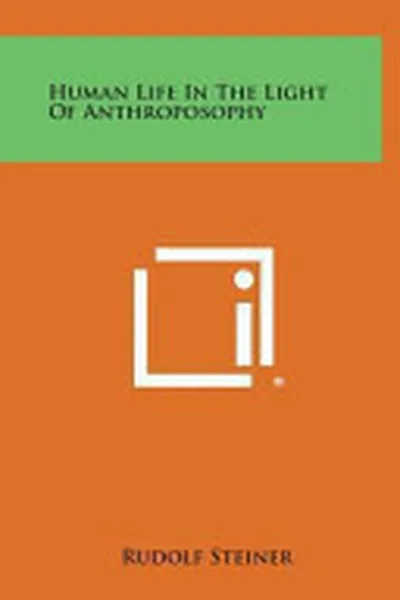
Human Life in the Light of Anthroposophy
 74
74

Human Life in the Light of Anthroposophy
Steiner's exploration of human life, viewed through the unique prism of Anthroposophy, offers a challenging yet rewarding perspective. The 1928 edition, presented here, retains the directness of his lecture style, eschewing modern academic prose for a more immediate, spiritual-scientific address. A particular strength lies in the detailed examination of the human being’s connection to cosmic processes, particularly the influence of stellar forces on earthly development, as discussed in lectures from that period. However, the density of Anthroposophical terminology can present a significant barrier to entry for newcomers, requiring diligent cross-referencing with Steiner's extensive corpus. The passages on the 'etheric body' and its role in life processes, while central to his thought, demand considerable interpretive effort. Ultimately, Human Life in the Light of Anthroposophy serves as a potent, albeit demanding, introduction to Steiner's comprehensive cosmology of human existence.
📝 Description
74
Rudolf Steiner delivered lectures in the 1920s that were compiled into Human Life in the Light of Anthroposophy.
Rudolf Steiner's Human Life in the Light of Anthroposophy examines human existence through his spiritual-scientific philosophy. Originally a series of lectures from the 1920s, this collection addresses fundamental questions about life, death, and the development of consciousness. Steiner aimed to provide an understanding of the human being that moves beyond purely materialist viewpoints.
This work is for those who seek a deeper comprehension of humanity, particularly students of Anthroposophy, individuals interested in esoteric Christianity, and thinkers who ponder the spiritual aspects of human growth, consciousness, and the wider cosmos. The lectures were given in Dornach, Switzerland, a time when Steiner was developing key Anthroposophical ideas. He often presented these concepts in opposition to the scientific and philosophical materialism prevalent in the early 20th century. Steiner's approach engaged with contemporary spiritual movements, proposing a method focused on direct spiritual perception.
This book emerges from Rudolf Steiner's Anthroposophy, a spiritual philosophy he developed in the early 20th century. It draws upon and expands ideas found in Theosophy and other Western esoteric traditions, but Steiner sought to establish a more scientifically grounded approach to spiritual knowledge. His work emphasizes the potential for human beings to develop their own capacities for spiritual perception, moving beyond mere belief to direct experience. The book's focus on reincarnation, karma, and the subtle bodies of the human being aligns with broader esoteric concepts of cyclical existence and spiritual evolution.
💡 Why Read This Book?
• Gain a distinct perspective on the human being's spiritual anatomy, learning about the interplay between physical, etheric, and astral bodies as presented in Steiner's lectures from the 1920s. • Understand the Anthroposophical view of karma and reincarnation, exploring how past lives and future destinies are intricately woven into the fabric of a single earthly existence. • Grasp Steiner's concept of 'spiritual science' as a method for perceiving higher worlds, offering a framework for investigating consciousness that moves beyond empirical observation alone.
⭐ Reader Reviews
Honest opinions from readers who have explored this book.
❓ Frequently Asked Questions
What is the primary focus of Rudolf Steiner's 'Human Life in the Light of Anthroposophy'?
The book focuses on understanding human existence, consciousness, and spiritual development through the framework of Anthroposophy, exploring concepts like reincarnation, karma, and the human being's connection to cosmic forces.
When were the lectures compiled in this book originally delivered?
The lectures that form the basis of 'Human Life in the Light of Anthroposophy' were primarily delivered in 1928.
Is this book suitable for beginners in Anthroposophy?
While it offers foundational concepts, the book uses specific Anthroposophical terminology and assumes some familiarity. Beginners might benefit from supplementary introductory texts on Steiner's work.
What is Anthroposophy?
Anthroposophy, founded by Rudolf Steiner, is a spiritual philosophy that seeks to understand the human being and the cosmos through a method of spiritual perception and inquiry.
What are some key concepts explored in relation to human life?
Key concepts include the threefold human being (body, soul, spirit), the etheric and astral bodies, the law of karma, reincarnation, and the human being's evolutionary path.
Where was Rudolf Steiner active during the period these lectures were given?
Rudolf Steiner was particularly active at the Goetheanum in Dornach, Switzerland, which served as a center for the Anthroposophical Society during the 1920s.
🔮 Key Themes & Symbolism
The Threefold Human Being
Steiner presents the human being not merely as a physical organism but as a complex entity comprising physical, etheric (life forces), and astral (consciousness, feeling) bodies. This tripartite structure is fundamental to understanding human experience, development, and the processes of life and death. The work explores how these different 'bodies' interact and evolve, influencing health, perception, and spiritual capacity throughout a human lifespan and across multiple incarnations.
Karma and Reincarnation
Central to the Anthroposophical worldview, the laws of karma and reincarnation are depicted as the organizing principles of human destiny. This book examines how actions and intentions in one life lay the groundwork for future experiences, shaping the individual's path of evolution. It moves beyond a fatalistic view, presenting karma as a dynamic force that individuals can consciously engage with and transform through spiritual understanding and ethical action.
Spiritual Science and Consciousness
The work advocates for 'spiritual science' as a valid means of investigating reality, distinct from materialism. Steiner outlines methods for developing higher faculties of perception to apprehend spiritual realities directly. This approach is presented as crucial for understanding the deeper nature of human consciousness, its origins, and its potential for evolution beyond the physical realm, particularly in light of cosmic influences.
Cosmic Influences on Human Life
Steiner posits a profound connection between human beings and the cosmos, detailing how celestial bodies and cosmic processes influence earthly life, human evolution, and individual destiny. This perspective reframes human existence as an integral part of a larger cosmic order, suggesting that understanding these relationships is key to comprehending human nature and purpose. The work elaborates on specific planetary and stellar influences on human development.
💬 Memorable Quotes
Direct passages from the work, attributed to the author.
“The human being is a spiritual being who uses a physical body as a vehicle.”
— This statement captures the Anthroposophical view that our essential nature transcends the physical form, positioning the body as a temporary instrument for spiritual experience and development on Earth.
“Karma is not a judgment, but a law of cause and effect operating in the spiritual realm.”
— This interpretation emphasizes the impersonal, naturalistic aspect of karma within Steiner's system, portraying it as a fundamental principle governing spiritual evolution rather than external retribution.
“Through spiritual perception, one can comprehend the true forces shaping human life.”
— This highlights the core tenet of Anthroposophy: that direct experience of spiritual realities, accessible through developed inner faculties, offers a more complete understanding than empirical science alone.
“Earthly life is a crucial schooling for the immortal spirit.”
— This frames human existence on Earth as a purposeful, educational phase within a much larger cycle of spiritual life, emphasizing the significance of earthly experiences for soul development.
“The etheric body carries the forces of life and growth.”
— This refers to a specific concept within Steiner's model of the human being, identifying the etheric body as the energetic substratum responsible for biological processes and vitality.
🌙 Esoteric Significance
Tradition
Anthroposophy, as presented by Steiner, draws heavily from Western esoteric traditions, particularly Hermeticism, Neoplatonism, and Gnosticism, while seeking to update them for the modern era. It departs from earlier forms by emphasizing empirical observation of the spiritual world through trained consciousness, rather than solely relying on ancient texts or mystical intuition. It can be seen as a modern synthesis aiming to bridge the gap between science and spirituality.
Symbolism
Key symbols include the 'etheric body,' representing the forces of life and growth, often depicted as a luminous, energetic field distinct from the physical. The 'astral body' symbolizes consciousness, feeling, and perception. The concept of 'karma' functions symbolically as the law of spiritual cause and effect, guiding the soul's journey through reincarnation, representing a cosmic moral order.
Modern Relevance
Contemporary thinkers and practitioners in fields such as Waldorf education, biodynamic agriculture, and anthroposophical medicine continue to draw directly from Steiner's extensive lectures. His ideas on consciousness, spiritual evolution, and the human being's relationship to nature and the cosmos remain influential in certain spiritual and philosophical circles seeking holistic perspectives.
👥 Who Should Read This Book
["• Students of Rudolf Steiner's work: Individuals already familiar with Anthroposophy will find this text a valuable resource for deepening their understanding of core concepts like karma and the human constitution.", '• Seekers of spiritual philosophy: Those interested in exploring spiritual perspectives on life, death, and human potential beyond conventional religious or scientific dogma.', '• Researchers of esoteric traditions: Scholars and practitioners interested in the development of modern esoteric thought and its unique approach to consciousness and cosmology.']
📜 Historical Context
The lectures compiled in 'Human Life in the Light of Anthroposophy' were delivered by Rudolf Steiner in 1928, a period when Anthroposophy was establishing itself as a distinct spiritual-scientific movement. Emerging from the Theosophical Society, Steiner founded the Anthroposophical Society in 1912 to pursue his unique path. During the late 1920s, Steiner was intensely engaged in articulating the foundational principles of Anthroposophy, often presenting them through public lectures and at the Goetheanum in Dornach, Switzerland. His work offered a spiritual counterpoint to the prevailing materialism and scientific positivism of the era. Contemporary thinkers like Albert Einstein were revolutionizing physics, while philosophical discourse grappled with existential questions, yet Steiner focused on a path of inner development and spiritual perception, often engaging critically with purely materialistic worldviews without directly citing academic rivals.
📔 Journal Prompts
The etheric body's role in vitality and growth.
Reincarnation as a framework for understanding life patterns.
The relationship between human consciousness and cosmic forces.
Perceiving the spiritual within the physical world.
The law of karma as an ethical and developmental principle.
🗂️ Glossary
Anthroposophy
A spiritual philosophy founded by Rudolf Steiner, aiming to explore the spiritual dimensions of existence through methods of spiritual perception and scientific inquiry.
Etheric Body
In Anthroposophy, the 'life body' or subtle energetic form that organizes biological processes, growth, and vitality in living organisms, distinct from the physical body.
Astral Body
The vehicle of consciousness, feeling, and sensation in Anthroposophical thought, responsible for subjective experience and the capacity for awareness.
Karma
The spiritual law of cause and effect, governing the consequences of actions and intentions across multiple lifetimes, shaping the trajectory of the soul's evolution.
Reincarnation
The concept that the soul or consciousness undergoes successive earthly lives, with each life influenced by past actions (karma) and serving as a stage for spiritual development.
Spiritual Science
Steiner's term for a rigorous, observational approach to the spiritual world, analogous to natural science but employing higher faculties of perception.
Goetheanum
The center for the Anthroposophical Society, located in Dornach, Switzerland, designed by Rudolf Steiner, serving as a hub for lectures, artistic activities, and research.