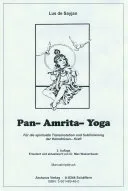
Pan-Amrita-Yoga
 80
80

Pan-Amrita-Yoga
Lus de Sayjan's 'Pan-Amrita-Yoga' offers a candid, if somewhat dated, perspective on the integration of sexual energy with spiritual practice. The work's strength lies in its directness, avoiding the obfuscation common in many esoteric texts concerning sexuality. Sayjan, writing from Santiago de Chile, presents a system that, while rooted in a specific era, touches upon universal principles of energy manipulation. However, the prose can occasionally feel dense, and the historical context of 1966 German occultism doesn't always translate smoothly into contemporary understanding. A particularly striking element is the detailed mapping of energetic flows during coitus, presented as a path to transcendence. While some passages might strike modern readers as overtly prescriptive, the underlying intent – to elevate sexual experience to a sacred, transformative act – remains compelling. It's a text that demands a mature reader willing to engage with its specific, and sometimes challenging, framework.
📝 Description
80
Published in German in 1966, Pan-Amrita-Yoga by Lus de Sayjan details a path integrating sexual energy with spiritual development.
Pan-Amrita-Yoga, originally published as 'Magie des Sexus - Pan - Amrita - Yoga' in 1966, is not a typical self-help book. Instead, it offers a detailed exposition of a specific esoteric path that connects sexual energy with spiritual growth. The author, writing under the pseudonym Lus de Sayjan and attributed to Luise Pollerspoeck, worked from Santiago de Chile when this text was conceived.
This work is for serious practitioners of esoteric arts, especially those interested in Tantric traditions and how Western occultism engages with sexuality. It requires readers to have a basic understanding of occult principles and an openness to potentially unconventional material. The book aims to help individuals understand the energetic and spiritual dimensions of sexual union beyond common interpretations.
The book appeared in 1966, a time of changing sexual attitudes and growing Western interest in Eastern philosophies and occultism. While German occultism had existing foundations, Lus de Sayjan's work presented a more direct approach to sexual magic. Its pseudonym suggests an awareness of the sensitivities surrounding such topics at the time. This text stands apart from more academic or philosophical treatments of sexuality from that era.
Pan-Amrita-Yoga emerged within a period of renewed interest in occultism and Eastern spirituality in the West. It specifically addresses sexual magic, a current within Western esotericism that seeks to harness sexual energy for spiritual purposes. The text connects this with Tantric ideas of 'Amrita,' often translated as divine nectar, suggesting that potent sexual energies can lead to enlightenment when directed properly. The work distinguishes itself by its direct approach to ritualizing sexual acts for transformative ends, differing from more theoretical or philosophical explorations of sexuality common at the time.
💡 Why Read This Book?
• Learn a specific method for ritualizing sexual union, transforming it into a sacred act, as detailed in the text's exploration of 'Amrita' energies. • Understand the esoteric framework connecting sexual vitality to spiritual attainment, a core tenet of Lus de Sayjan's unique approach outlined in the book. • Gain insight into a particular strand of post-war esoteric thought from 1966, exploring how sexuality was integrated into spiritual paths outside mainstream Western traditions.
⭐ Reader Reviews
Honest opinions from readers who have explored this book.
❓ Frequently Asked Questions
When was Pan-Amrita-Yoga first published and under what circumstances?
Pan-Amrita-Yoga was first published in German in 1966 under the pseudonym Lus de Sayjan. The author's real name is believed to be Luise Pollerspoeck, and she was living in Santiago de Chile when she wrote the book.
What does 'Pan-Amrita-Yoga' mean in the context of the book?
The title suggests a universal ('Pan') approach to a yoga practice focused on 'Amrita,' which is interpreted as a divine nectar or potent spiritual energy derived from sexual union.
Is this book suitable for beginners in esoteric studies?
The book is best suited for practitioners with some existing knowledge of esoteric concepts. It delves into specific, advanced practices related to sexual magic and energy work.
What is the primary focus of the 'Magie des Sexus' aspect of the book?
The 'Magie des Sexus' (Magic of Sex) component focuses on harnessing and directing the potent energies generated during sexual activity for spiritual transformation and occult purposes.
Where did the author Lus de Sayjan live when writing Pan-Amrita-Yoga?
According to the foreword, Lus de Sayjan was living in Santiago de Chile during the time she authored 'Magie des Sexus - Pan - Amrita - Yoga'.
What kind of esoteric tradition does Pan-Amrita-Yoga align with?
It aligns with esoteric traditions that explore the spiritual potential of sexuality, often drawing parallels with tantric practices and Western occult approaches to energy manipulation.
🔮 Key Themes & Symbolism
Sexual Energy as Spiritual Force
The work posits that sexual energy is not merely biological but a profound spiritual force capable of facilitating enlightenment. It details how the act of coitus, when approached with specific intent and ritual, can become a powerful vehicle for accessing higher states of consciousness. This challenges conventional views that often separate the sacred from the carnal, proposing instead a holistic integration.
The Concept of Amrita
Central to the book is the concept of 'Amrita,' interpreted as a divine nectar or elixir of immortality. Lus de Sayjan links the generation and sublimation of sexual energies to the creation and consumption of this 'nectar.' This process, central to the 'Pan-Amrita-Yoga,' aims to transcend the limitations of the physical body and achieve a form of spiritual permanence.
Ritualized Sexuality
Pan-Amrita-Yoga advocates for the ritualization of sexual union. This involves specific preparations, mental focus, and energetic management during intercourse to elevate the act beyond mere physical pleasure. The goal is to consciously direct the potent energies released, transforming a common human experience into a potent magical and spiritual operation.
Universal Energy Dynamics
The 'Pan' in Pan-Amrita-Yoga signifies a universal or all-encompassing perspective. The book explores how the principles of sexual energy and its transformation apply broadly, not just to individual practice but potentially to cosmic dynamics. It suggests an underlying energetic framework connecting all existence, with sexual union as a microcosm of universal creative forces.
💬 Memorable Quotes
Direct passages from the work, attributed to the author.
“The union of male and female is the crucible of divine creation.”
— This statement highlights the core belief that sexual intercourse is not simply a biological act but a sacred process mirroring cosmic creation, capable of producing spiritual transformation.
“Amrita is the dew of immortality, condensed from the breath of divine love.”
— This metaphorical interpretation defines 'Amrita' as a spiritual essence linked to immortal life, produced through the sublimation of sexual energy, framing it as a divine byproduct.
“Direct the flow of creative energy upwards, towards the crown of consciousness.”
— This instruction emphasizes the practice of channeling sexual arousal and energy away from purely physical release and towards spiritual centers, a key technique in the book.
“Every embrace can be a sacrament, every climax a revelation.”
— This powerful phrasing suggests that through conscious intent and practice, ordinary sexual encounters can be elevated to the level of sacred rituals and profound spiritual experiences.
💡 Key Ideas
Editorial paraphrase of the work's core concepts — not direct quotes.
The body is the temple, and its highest function is the gateway to the divine.
This quote frames the physical body, particularly its sexual functions, not as a source of sin or shame, but as a sacred vessel and a tool for achieving spiritual connection.
🌙 Esoteric Significance
Tradition
Pan-Amrita-Yoga fits within the broader spectrum of Western esoteric traditions that explore the psycho-spiritual dimensions of sexuality, often drawing parallels with Eastern Tantric practices. It can be seen as a specific manifestation of the 'magick of sex' lineage, attempting to codify and present a path for harnessing sexual energy for spiritual evolution, distinct from purely religious or clinical approaches.
Symbolism
The core symbolism revolves around 'Amrita,' representing divine nectar, spiritual immortality, and the refined essence of sexual energy. The 'Pan' aspect signifies universality, suggesting that these principles are applicable to all existence. The act of sexual union itself becomes a powerful symbol of cosmic creation and the potential for transcendence when approached with esoteric understanding.
Modern Relevance
Contemporary practitioners interested in the integration of sexuality and spirituality, particularly those exploring tantric methodologies or Western magical systems that incorporate sexual practices, find value in Pan-Amrita-Yoga. Thinkers and groups focused on embodied spirituality and the energetic potential of human relationships may look to this work for historical context and unique theoretical frameworks.
👥 Who Should Read This Book
• Advanced practitioners of Western esotericism seeking to deepen their understanding of sexual magic and energy work. • Students of comparative religion and occult history interested in mid-20th-century explorations of sexuality and spirituality. • Individuals exploring tantric philosophy and its potential intersections with Western magical systems who can approach the subject with maturity and discernment.
📜 Historical Context
Published in 1966, 'Magie des Sexus - Pan - Amrita - Yoga' emerged during a period of intense cultural flux in the West, marked by the sexual revolution and a widespread interest in Eastern religions and occultism. While figures like Aleister Crowley had previously explored sexual magic within Western esotericism, Lus de Sayjan's work offered a distinct perspective, possibly influenced by her residence in Santiago de Chile. The era saw a growing demand for spiritual alternatives to established religions, and books exploring the mystical dimensions of sexuality found a receptive audience. The very act of publishing under a pseudonym, as noted in the foreword, indicates the sensitive nature of the subject matter, which often faced societal taboos and intellectual skepticism. This book contributed to a broader discourse on integrating the physical and spiritual, standing as a evidence of the diverse approaches within esoteric thought during the mid-20th century.
📔 Journal Prompts
The concept of Amrita as condensed spiritual essence.
Ritualizing the embrace: transforming coitus into a sacrament.
Directing creative energy: upward flow towards consciousness.
The body as a temple for divine connection.
Evaluating the universality of sexual energy dynamics.
🗂️ Glossary
Amrita
In Pan-Amrita-Yoga, 'Amrita' refers to a divine nectar or elixir of immortality, believed to be generated and condensed from sexual energy when properly harnessed and sublimated.
Pan
Signifying 'all' or 'universal,' 'Pan' in the title suggests that the yoga practice described is all-encompassing, applying to the totality of existence and energy.
Yoga
In this context, 'Yoga' refers not strictly to the physical postures of Hatha Yoga, but to a disciplined path or union, specifically the union of sexual energy with spiritual realization.
Sexual Magic
The practice of using sexual arousal, energy, and the act of intercourse as a means to achieve magical or spiritual results, such as altered states of consciousness or esoteric transformation.
Sublimation
The process of transforming sexual energy from its purely physical expression into higher, spiritual, or creative energies, a key technique discussed in the book.
Crucible
Metaphorically used to describe the sexual union as a place where energies are intensely combined and transformed, leading to the creation of something new or refined.
Sacrament
Referring to a sacred rite or ritual, suggesting that sexual acts, when performed with specific intent, can attain a holy or divine significance.