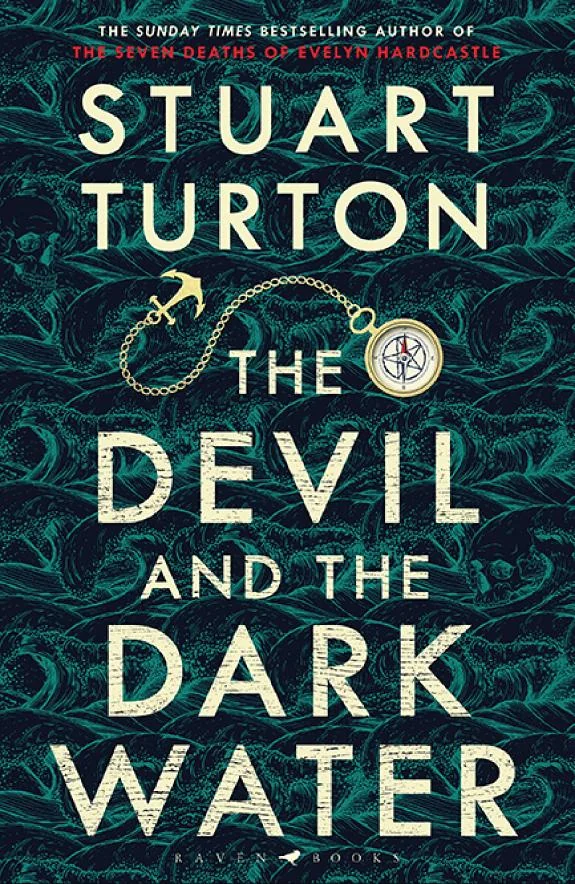
The Devil and the Dark Water
 82
82

The Devil and the Dark Water
Stuart Turton’s "The Devil and the Dark Water" plunges readers into the suffocating confines of a 1634 Dutch galleon, the *Leo Rex*, where an impossible murder ignites a desperate investigation. The novel’s central strength lies in its sheer audacity of plotting; Turton constructs a labyrinth of clues, misdirection, and escalating dread that feels both classic and strikingly original. Samuel Pipps, the detective confined to his cabin, orchestrates the inquiry with an intellect as sharp as any cutlass, a compelling character despite his physical limitations. However, the sheer density of the plot, while impressive, occasionally threatens to overwhelm. The multitude of characters and shifting perspectives, while essential to the mystery, can at times feel like a deliberate obfuscation rather than organic development. A particularly striking passage involves the discovery of the victim’s body, a scene that immediately establishes the novel’s commitment to audacious, almost theatrical, horror. Despite minor pacing issues, the resolution is satisfyingly intricate. It’s a richly imagined, if occasionally overstuffed, historical puzzle.
📝 Description
82
Stuart Turton’s 2020 novel, "The Devil and the Dark Water," begins on a Dutch East India Company ship in 1634.
Aboard the galleon *de Sijm* in 1634, bound for Amsterdam, an impossible murder occurs. Detective Samuel Pipps, his bodyguard Thomas Bedlam, and his wife Sara must uncover the killer among the passengers. As the voyage progresses, terrifying events suggest a force beyond human agency is at work.
Turton constructs a complex mystery with numerous false leads and misdirections. The plot requires careful attention from the reader, weaving together historical detail with a growing sense of dread. This novel will appeal to those who enjoy intricate puzzles and atmospheric historical settings.
Its historical backdrop is the Dutch Golden Age, a time of prosperity and expansion for the Netherlands. This period saw vast maritime trade, with the Dutch East India Company playing a significant role. The intellectual atmosphere was shifting, but belief in the supernatural persisted alongside scientific inquiry.
The book taps into the historical tension between emerging scientific thought and persistent folk beliefs in the supernatural during the 17th century. It presents a world where apparent rational investigation must contend with events that defy logical explanation, hinting at demonic or occult forces at play. This reflects a broader esoteric tradition that acknowledges the limitations of purely materialist understanding and allows for the influence of unseen powers.
💡 Why Read This Book?
• Understand the mechanics of a locked-room mystery transposed to the high seas, learning how Turton employs the claustrophobic setting of the *Leo Rex* in 1634 to heighten suspense. • Explore the tension between rational investigation and supernatural fear, examining how characters like Thomas Bedlam grapple with both human depravity and perceived demonic influence. • Appreciate the intricate character dynamics and unreliable narration that Turton uses to construct his ambitious plot, similar to his debut, "The 7½ Deaths of Evelyn Hardcastle."
⭐ Reader Reviews
Honest opinions from readers who have explored this book.
❓ Frequently Asked Questions
What is the historical setting of "The Devil and the Dark Water"?
The novel is set in 1634 aboard a Dutch East India Company galleon sailing from the Dutch East Indies to Amsterdam during the Dutch Golden Age.
Who are the main characters in the book?
The central figures are Samuel Pipps, a famous detective under arrest; his loyal bodyguard, Thomas Bedlam; and Bedlam's wife, Sara.
What kind of mystery does "The Devil and the Dark Water" present?
It is an impossible murder mystery set on a ship, featuring escalating supernatural-seeming events and a complex web of suspects and clues.
Is "The Devil and the Dark Water" based on a true story?
While inspired by historical events and the era of the Dutch East India Company, the plot and characters are fictional creations by Stuart Turton.
What are the key themes explored in the novel?
The book delves into themes of perception versus reality, the nature of evil, human fallibility, and the conflict between reason and superstition.
How does "The Devil and the Dark Water" compare to Turton's first novel?
Both novels share ambitious, intricate plotting and a focus on complex mysteries. "The Devil and the Dark Water" shifts the setting to a historical maritime environment.
🔮 Key Themes & Symbolism
Perception vs. Reality
The narrative constantly challenges the reader's understanding of events, mirroring the unreliable perceptions of the characters aboard the *Leo Rex*. What appears supernatural might have a rational explanation, and vice versa. This theme is central to the mystery, forcing characters to question their senses and the motives of those around them. The confined, isolated environment of the ship exacerbates this, making objective truth elusive and subjective experience paramount.
The Nature of Evil
Turton probes whether true evil resides in a mythical demon or in the hearts of men. The escalating horrors on the galleon—from murder to perceived demonic possession—serve as a backdrop for exploring human cruelty, paranoia, and the capacity for both great good and profound evil. The presence of Samuel Pipps, a man of intellect and reason, contrasts sharply with the superstitious fears gripping the ship's inhabitants.
Reason vs. Superstition
Set in 1634, the novel reflects the historical tension between burgeoning scientific thought and deeply ingrained folk beliefs. The characters oscillate between seeking logical explanations for the terrifying events and succumbing to the belief that a demon stalks the ship. This conflict is personified in the characters' reactions and drives much of the dramatic tension, particularly as the voyage progresses towards Amsterdam.
Social Hierarchy and Isolation
The galleon *Leo Rex* functions as a microcosm of 17th-century society, with strict class divisions and power dynamics. The isolation imposed by the sea amplifies these tensions, making escape impossible and suspicion rampant. The limited space forces interactions and conflicts that fuel the mystery, highlighting how social structures and personal relationships contribute to the unfolding crisis.
💬 Memorable Quotes
Direct passages from the work, attributed to the author.
“Every man on this ship is either a murderer or a madman.”
— This statement, or a sentiment very close to it, captures the extreme paranoia and suspicion that grips the characters. The impossibility of the crime forces such desperate conclusions, highlighting the psychological pressure cooker of the galleon.
“The greatest trick the devil ever pulled was convincing the world he didn't exist.”
— This famous quote from *The Usual Suspects* reflects the central question of the book: is the perceived demonic presence real, or is it a human construct masking a more mundane, albeit heinous, crime?
“We are all prisoners of our own perceptions.”
— This interpretation speaks to the theme of unreliable narration and subjective experience. The characters' limited viewpoints and biases prevent them from seeing the full truth, crucial for solving the mystery.
💡 Key Ideas
Editorial paraphrase of the work's core concepts — not direct quotes.
The world is a dangerous place, and it is getting more dangerous by the day.
This line captures the pervasive sense of dread and insecurity that permeates the novel. It reflects both the literal dangers of 17th-century seafaring and the underlying anxieties about hidden threats, be they human or supernatural, that drive the plot.
There are more things in heaven and earth, Horatio, Than are dreamt of in your philosophy.
While not a direct quote from the book's characters, this Hamlet line (often paraphrased in discussions of the uncanny) reflects the novel's core conflict between rational deduction and the inexplicable phenomena encountered on the ship.
🌙 Esoteric Significance
Tradition
While not explicitly aligned with a single esoteric tradition, "The Devil and the Dark Water" draws heavily on Gnostic themes of hidden knowledge, illusion, and the struggle against oppressive forces (akin to the Demiurge or Archons). The perceived demonic presence can be interpreted through a lens of shadow work or confronting the 'inner demon,' a concept explored in various psychological and esoteric practices. The narrative’s emphasis on unraveling a seemingly impossible mystery through intellect also echoes Hermetic principles of correspondence and understanding hidden laws.
Symbolism
The ship itself, the *Leo Rex*, functions as a symbol of the human psyche, a contained world where internal conflicts and hidden darknesses manifest. The storm symbolizes external chaos and the internal turmoil experienced by the characters. The figure of the demon, whether real or imagined, represents the primal fears and hidden malevolence that characters must confront, both externally and within themselves, to find resolution.
Modern Relevance
Contemporary interest in psychological thrillers, gothic literature, and historical mysteries with a speculative edge makes this work highly relevant. Thinkers and practitioners exploring shadow work, Jungian archetypes, and the nature of consciousness find resonance in the novel’s exploration of perceived reality versus hidden truths. It speaks to modern anxieties about societal breakdown and the search for meaning amidst chaos, echoing themes found in contemporary speculative fiction and philosophical inquiry.
👥 Who Should Read This Book
• Readers fascinated by historical maritime settings and the intricacies of 17th-century Dutch life, seeking an immersive narrative grounded in the era of the Dutch East India Company. • Aficionados of complex, multi-layered mystery plots who enjoy deciphering intricate puzzles and unreliable narration, similar to Turton's "The 7½ Deaths of Evelyn Hardcastle." • Those interested in the interplay between rationality and superstition, exploring how characters grapple with seemingly inexplicable events against a backdrop of historical belief systems.
📜 Historical Context
The year 1634 places "The Devil and the Dark Water" squarely in the Dutch Golden Age, a period of unprecedented economic prosperity, scientific discovery, and colonial expansion for the Netherlands. The Dutch East India Company (VOC), a powerful entity central to the novel's plot, epitomized this era of global trade and maritime dominance. Intellectual currents of the time were a fascinating mix: while the scientific revolution was gaining momentum with figures like Galileo Galilei and Johannes Kepler, popular belief in witchcraft, demons, and the supernatural remained deeply entrenched. This duality is reflected in the narrative’s tension between rational investigation and the palpable fear of demonic forces. The book received significant critical acclaim upon its release in 2020, being named a Book of the Year by major publications like The Guardian and the Financial Times, indicating its success in capturing contemporary interest in historical intrigue with a gothic twist.
📔 Journal Prompts
Samuel Pipps’s confinement and deductive reasoning from afar.
The symbolic weight of the storm surrounding the *Leo Rex*.
Thomas Bedlam's internal conflict between loyalty and fear.
The contrasting perspectives on the 'demon' aboard the ship.
Sara Bedlam's role as observer and agent within the mystery.
🗂️ Glossary
Dutch East India Company (VOC)
A 17th-century chartered company established for the spice trade, symbolizing Dutch global power and maritime enterprise during the novel's setting.
Galleon
A large, multi-decked sailing ship used primarily by European states from the 16th to 18th centuries, known for its role in exploration and warfare.
The Golden Age (Dutch)
A period in Dutch history, roughly the 17th century, marked by significant economic prosperity, scientific advancement, and artistic achievement.
Impossible Murder
A subgenre of detective fiction where a crime, typically murder, is committed under circumstances that appear to make it impossible to have been carried out.
Superstition
Excessively credulous belief in and reverence for the supernatural; beliefs or practices resulting from ignorance, fear of the unknown, or trust in magic or chance.
Red Herring
A piece of information or a clue that is or is intended to be misleading or distracting from the real issue.
Logbook
A record of a ship's voyage, containing details of course, speed, weather, and significant events, often crucial in maritime mysteries.
This book appears in 1 collection
🔮 Readers Also Liked
Browse all →









From the “Demonology” Collection
View all →








More Free Occult Philosophy Books
View all →