The dark tower
 80
80

The dark tower
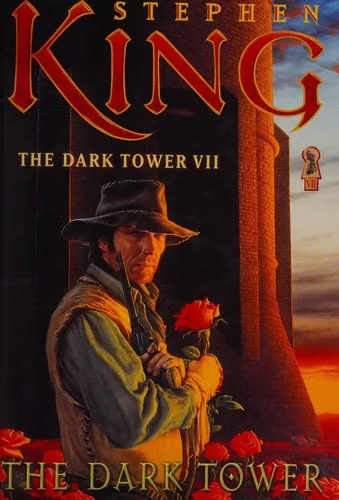
Stephen King's "The Dark Tower" series, particularly the revised 2017 edition of the first book, presents a monumental undertaking that defies easy categorization. King masterfully builds a world that feels both alien and eerily familiar, drawing from Western tropes, Arthurian legend, and his own unique brand of existential dread. Roland Deschain is a compelling protagonist, a man driven by a singular, all-consuming purpose that borders on obsession. The introduction of Eddie Dean and Susannah Dean in the second volume, "The Drawing of the Three," injects vital character dynamics and shifts the narrative from a solitary quest to a complex fellowship. However, the series' ambition sometimes outpaces its execution, with certain plotlines becoming convoluted and the pacing faltering in later installments. The introduction of meta-fictional elements, while intriguing, can also feel jarring. Despite these occasional stumbles, the series remains a singular achievement in modern fantasy, offering a unique exploration of destiny and sacrifice. It is a sprawling, often brilliant, but ultimately flawed epic.
📝 Description
80
Stephen King began the epic quest of Roland Deschain in 1982.
Stephen King's "The Dark Tower" is a seven-book series that spans from 1982 to 2004, with a final installment in 2012. It follows Roland Deschain, the last gunslinger, as he pursues his adversary, Walter O'Dim, through a fractured world called Mid-World. This setting blends magic, science, and myth, echoing our own reality. The series appeals to readers who enjoy expansive narratives that cross genre lines, including Western, fantasy, science fiction, and horror. It is particularly suited for those interested in archetypal quests, the nature of destiny, and the conflict between good and evil. Readers will find extensive world-building and character development as Roland gathers companions.
The publication history of "The Dark Tower" reflects a period of increasing genre flexibility in literature. King, already known for horror, expanded his narrative scope. The series faced publication challenges due to King's other commitments and evolving plotlines, with notable gaps between books. This unconventional structure and its blend of genres distinguished it from his more typical horror novels.
The Dark Tower series draws on concepts present in Western esotericism, particularly Jungian archetypes and the idea of a central axis mundi. Roland's quest for the Tower, which anchors all realities, mirrors the alchemical pursuit of the Philosopher's Stone or the Hermetic concept of "as above, so below." The narrative's exploration of reincarnation, parallel worlds, and the constant struggle against chaos suggests a worldview informed by cyclical cosmologies and Gnostic ideas of a fractured creation. The journey itself can be seen as a spiritual or psychological pilgrimage toward self-knowledge and cosmic balance.
💡 Why Read This Book?
• You will explore the concept of ka, a form of destiny or fate, as Roland Deschain grapples with its inexorable pull throughout his quest for the Dark Tower, a central metaphysical construct in the series. • You will experience the unique blend of Western archetypes and high fantasy, exemplified by Roland's gunslinging prowess set against the backdrop of a decaying, magical Mid-World, a setting King meticulously crafted. • You will encounter the meta-narrative elements King weaves in, particularly in later books like "The Dark Tower V: Wolves of the Calla," where the author himself becomes a character, blurring the lines between fiction and reality.
⭐ Reader Reviews
Honest opinions from readers who have explored this book.
❓ Frequently Asked Questions
When was the first book of The Dark Tower series published?
The first book in Stephen King's "The Dark Tower" series, "The Gunslinger," was originally published in 1982. A revised edition, incorporating changes King wished to make, was released in 2017.
Who is the main protagonist in The Dark Tower series?
The main protagonist is Roland Deschain, the last of the Gunslingers from a world called Mid-World. He is on an epic quest to reach the titular Dark Tower.
What is the significance of the Dark Tower itself?
The Dark Tower is a central, mystical structure that anchors all of reality and existence. Roland's pursuit of it is tied to the fate of all worlds.
Are there supernatural elements in The Dark Tower series?
Yes, the series is rich with supernatural and metaphysical elements, including magic, alternate realities, demons, and beings with psychic abilities, all woven into a complex cosmology.
Does The Dark Tower series connect to other Stephen King books?
Yes, "The Dark Tower" series acts as a nexus for many of Stephen King's other works, with characters, places, and concepts from his other novels appearing within its narrative.
What genre does The Dark Tower series best fit into?
It's famously difficult to categorize, blending elements of Western, fantasy, science fiction, horror, and metaphysical literature into a unique epic saga.
🔮 Key Themes & Symbolism
The Quest for the Tower
The central narrative of "The Dark Tower" is Roland Deschain's relentless pursuit of the titular structure. This quest transcends a mere physical journey; it is a metaphysical pilgrimage tied to the preservation of all existence. The Tower is depicted as the nexus of reality, the linchpin holding together the various beams that support the multiverse. Roland's singular focus, bordering on obsession, raises questions about the nature of destiny, sacrifice, and the potential cost of achieving one's ultimate goal, even if that goal is cosmically significant.
Ka and Determinism
The concept of 'ka' is fundamental to the series, representing a form of destiny, fate, or spiritual imperative. It suggests that certain events and connections are preordained, guiding characters along predetermined paths. Roland's life is dictated by his ka, pushing him toward the Tower. The narrative explores the tension between this deterministic force and the characters' free will. Do they merely fulfill their ka, or can they alter its course? This theme is explored through Roland's relationships and the sacrifices he must make, questioning the burden of a predetermined path.
The Cycle of Rebirth
A recurring motif in "The Dark Tower" is the cyclical nature of time and existence, often manifested through Roland's repeated quests. The series suggests that the end of one cycle can lead to the beginning of another, with characters potentially reincarnating or finding themselves in similar circumstances across different timelines. This reinforces the theme of ka and adds a layer of existential weight to Roland's journey. The concept implies that true resolution might not be about reaching a final destination but about learning from the journey itself, repeating it until a different outcome is achieved.
The Blurring of Realities
King masterfully blends multiple genres and realities throughout the series. Mid-World, with its post-apocalyptic, decaying landscape, coexists with elements reminiscent of the American West, Arthurian legends, and even modern-day New York. The concept of the "todash" space, a void between worlds, and the introduction of characters from our own reality, like Jake Chambers and Eddie Dean, emphasize the interconnectedness of different dimensions. This narrative technique challenges conventional storytelling and invites readers to consider the fluidity of reality and the impact of one world upon another.
💬 Memorable Quotes
Direct passages from the work, attributed to the author.
“The Man in Black fled across the desert, and the gunslinger followed.”
— This iconic opening line immediately establishes the core conflict and the relentless nature of Roland's pursuit. It sets a tone of epic scope and singular purpose, hinting at a vast, desolate world and a chase that defines the protagonist's existence.
“There are other worlds than these.”
— This phrase, often uttered by Roland or his companions, underscores the series' central theme of multiple realities and interconnected universes. It signifies the vastness of the multiverse and the potential for travel and influence between different dimensions.
“Come, let us go to the land of the dead. We will be with our people there.”
— This statement reflects the profound sense of loss and the search for belonging that permeates the series. For Roland, the 'land of the dead' is a metaphor for reaching his ultimate goal or finding solace, a place where he can be reunited with those he has lost or fulfill his destiny.
“The world has moved on, and has forgotten. That is why it is broken.”
— This interpretation speaks to the decay of Mid-World and the loss of its magical underpinnings. It suggests that a deliberate forgetting of essential truths or connections leads to the unraveling of reality, highlighting the importance of memory and understanding.
💡 Key Ideas
Editorial paraphrase of the work's core concepts — not direct quotes.
You can wait as long as you want. I'm not going anywhere.
This line, often delivered with quiet determination, embodies the resilience and unwavering commitment of Roland Deschain. It speaks to his enduring nature and his refusal to abandon his quest, no matter the obstacles or the passage of time.
🌙 Esoteric Significance
Tradition
While "The Dark Tower" does not strictly adhere to any single esoteric lineage, it draws heavily from archetypal Western esoteric traditions, including Gnosticism, Hermeticism, and Jungian psychology. The concept of the Tower as a central axis mundi, a cosmic pillar connecting planes of existence, echoes Hermetic principles of correspondence and the macrocosm/microcosm relationship. Roland's quest for wholeness and his struggle against forces of entropy and ignorance align with Gnostic narratives of the soul's journey towards reunification with the divine. The series also engages with Jungian ideas of the collective unconscious and the archetypal hero's journey.
Symbolism
The titular Dark Tower is the paramount symbol, representing ultimate truth, divine order, and the anchoring principle of all existence. The Beams that support it symbolize the fundamental forces or laws that maintain cosmic stability. Roland's Ka-tet, his chosen fellowship, represents the importance of community and interdependence in the face of overwhelming cosmic forces. The Man in Black, Walter O'Dim, embodies chaos, deception, and the destructive potential of unchecked ambition, serving as a dark mirror to Roland's quest for order.
Modern Relevance
Contemporary thinkers and practitioners in fields ranging from comparative mythology to transpersonal psychology frequently cite "The Dark Tower" as a modern myth that captures the fragmented nature of contemporary consciousness. Its exploration of destiny versus free will, the search for meaning in a decaying world, and the power of narrative itself continues to resonate. The series' meta-fictional elements and its bold genre-bending have inspired artists and writers grappling with postmodern themes and the nature of reality in an increasingly complex digital age.
👥 Who Should Read This Book
• Fans of epic fantasy and science fiction seeking a departure from traditional tropes will appreciate the series' combination of Western, horror, and metaphysical elements. • Students of comparative mythology and archetypal psychology can engage with the series' deep exploration of the hero's journey, destiny (ka), and the symbolism of the central Tower. • Readers interested in meta-narrative and authorial intrusion will find "The Dark Tower" particularly compelling, as Stephen King himself becomes a character, challenging the boundaries of storytelling.
📜 Historical Context
Stephen King's "The Dark Tower" series, initiated with "The Gunslinger" in 1982, emerged during a period of significant literary experimentation, particularly in the blurring of genre lines. While King was already a dominant force in horror, this ambitious project explored Western, fantasy, and science fiction, a departure that initially met with mixed reception and publication challenges. The series' publication was famously protracted, spanning decades and requiring King to revisit and revise earlier installments, notably the first book in 2003 and its revised edition in 2017. This protracted development meant the series evolved alongside King's own literary output and the broader cultural landscape. Unlike many contemporary fantasy epics that adhered to established Tolkien-esque models, "The Dark Tower" introduced a raw, meta-fictional complexity and a post-apocalyptic sensibility that felt distinctly modern. Its influence can be seen in later works that similarly embrace genre hybridity and explore archetypal quests through a contemporary, often darker, lens, such as Neil Gaiman's "Sandman" series, which shares thematic and conceptual overlaps.
📔 Journal Prompts
Roland's unwavering pursuit of the Dark Tower.
The complex nature of 'ka' in guiding character actions.
Jake Chambers's journey between worlds and his connection to Roland.
The symbolism of the Beams that support the Dark Tower.
The concept of the 'todash' space and its implications for reality.
🗂️ Glossary
Ka
A central concept in the series, akin to destiny, fate, or a spiritual imperative. It dictates the path and purpose of individuals and events, suggesting a predetermined cosmic order that characters must either follow or struggle against.
Ka-tet
A group of individuals whose fates are intertwined by 'ka,' forming a fellowship or family unit. Roland's ka-tet is crucial to his quest, providing support, companionship, and diverse skills necessary for survival and success.
Mid-World
The primary setting for the series, a post-apocalyptic, decaying world that exists parallel to our own. It is a realm where magic, advanced technology (often broken), and Western-style frontier elements coexist.
The Dark Tower
A mystical structure that serves as the nexus of all reality, anchoring the multiverse. It is the ultimate goal of Roland Deschain's quest, representing order, truth, and the preservation of existence.
Gunslinger
An order of warriors from Mid-World trained in the use of advanced firearms ('guns') and possessing a code of honor. Roland Deschain is the last of the Gunslingers.
Man in Black
A recurring antagonist, also known as Walter O'Dim, who represents chaos, manipulation, and dark magic. He is Roland's primary nemesis and a significant force opposing the stability of the Tower.
Todash
A term referring to the void or space between worlds, a dangerous transitional dimension that characters must sometimes traverse. It highlights the fractured and interconnected nature of realities in the series.
🔮 Readers Also Liked
Browse all →









More by Stephen King
All books →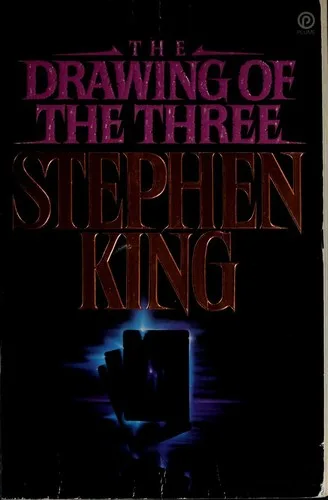

More Free Occult Philosophy Books
View all →