Courage
 73
73

Courage
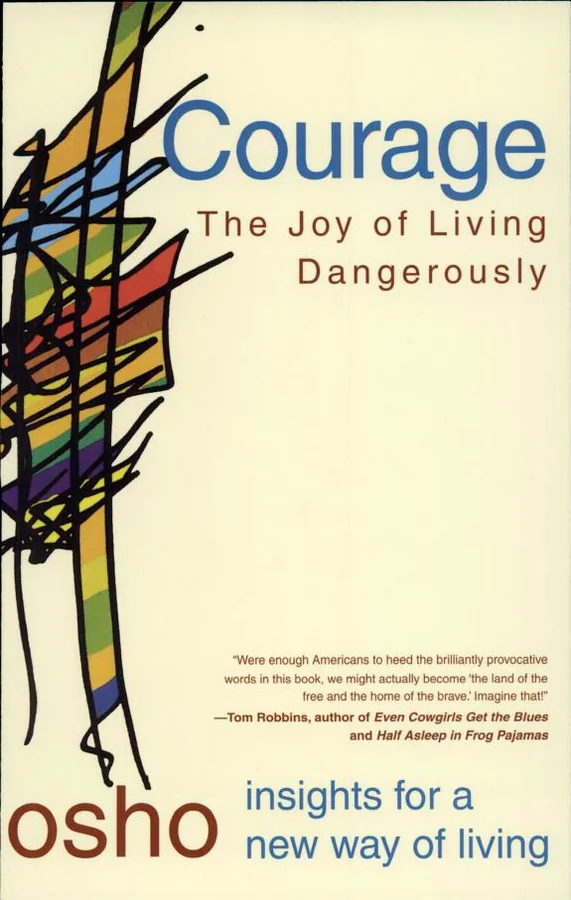
Osho’s "Courage" reframes bravery from a stoic absence of dread to an active confrontation with it. The book’s core argument, that courage is found *within* the presence of fear, not by its eradication, is compelling. Osho dissects the roots of fear, tracing it to our attachment to the familiar and our resistance to change. He posits that uncertainty, often perceived as a threat, is actually an invitation to a richer, more engaged life. A particularly insightful section discusses how societal conditioning creates many of our phobias, leading us to avoid experiences rather than understand them. While Osho's characteristic discursive style can sometimes feel repetitive, his central message about embracing fear as a catalyst for growth is powerfully delivered.
"Courage" offers a potent lens through which to view life's inevitable challenges.
📝 Description
73
Osho's 1999 book Courage argues that true bravery is not the absence of fear, but facing it consciously.
Published in 1999, Osho's "Courage" redefines bravery as a conscious engagement with fear, rather than its absence. He suggests fear is an unavoidable part of life, particularly when confronting the unknown. The book addresses individuals experiencing anxiety, stagnation, or apprehension about change.
Osho encourages readers to understand the origins of their fear, often rooted in conditioning and societal pressures. He proposes that embracing uncertainty can lead to personal growth. This work is suitable for those interested in existential psychology and Eastern philosophy, offering a perspective that challenges common assumptions about fear and courage.
Discourses given by Osho in the late 20th century, "Courage" reflects a period of growing Western interest in Eastern spirituality. Osho, an Indian mystic, drew from traditions that emphasize inner transformation and direct experience over dogma. His approach often integrated elements of meditation and psychological insight, aligning with a broader movement that sought alternative perspectives on consciousness and human potential beyond Western materialist frameworks.
💡 Why Read This Book?
• Understand fear as a guide, not an enemy, by exploring Osho's concept of "the presence of fear" as the true measure of courage, a perspective distinct from stoic suppression. • Learn to embrace uncertainty and change by viewing them as opportunities for celebration, as Osho suggests when challenging the human tendency to cling to the known. • Uncover the origins of personal fears by examining Osho's discourse on societal conditioning and psychological roots, enabling a deeper self-awareness beyond superficial avoidance.
⭐ Reader Reviews
Honest opinions from readers who have explored this book.
❓ Frequently Asked Questions
When was Osho's book 'Courage' first published?
Osho's "Courage" was first published on November 20, 1999. This edition compiled discourses given by Osho over several years, making his insights on bravery accessible to a wider audience.
What is Osho's definition of courage in this book?
Osho defines courage not as the absence of fear, but as the total presence of fear coupled with the will to face it. It's an active engagement with what frightens us, rather than an attempt to eliminate fear.
Where do Osho's teachings on courage originate?
Osho's teachings, including those on courage, stem from his unique synthesis of Eastern mysticism and Western psychology, delivered through numerous discourses throughout the latter half of the 20th century.
How does Osho suggest understanding the origins of fear?
Osho suggests that fears often originate from our conditioning, societal expectations, and our resistance to change. The book provides a framework for exploring these origins to understand them better.
Is 'Courage' by Osho suitable for beginners in spiritual literature?
Yes, "Courage" is accessible to beginners. Osho's style is direct and uses everyday examples, making complex psychological and spiritual concepts understandable for those new to his work or esoteric thought.
What is the main message Osho conveys about uncertainty?
Osho encourages readers to see uncertainty not as something to be feared or avoided, but as a cause for celebration and an opportunity for growth. He advocates for embracing change.
🔮 Key Themes & Symbolism
Fear as Presence, Not Absence
Osho radically redefines courage, asserting it is found in the conscious acknowledgement and presence of fear itself, rather than its supposed eradication. This perspective shifts the focus from eliminating fear to developing the inner strength to confront it directly. The work explores how this active engagement transforms our relationship with anxiety, turning it from a paralyzing force into a catalyst for personal evolution and deeper self-understanding.
Embracing Uncertainty and Change
The book posits that periods of uncertainty and transition, often met with resistance, are actually opportunities for profound growth and celebration. Osho encourages readers to release the grip of the familiar and known, which can lead to stagnation, and instead to welcome the unpredictable nature of life. This acceptance fosters a more dynamic and fulfilling existence, where change is seen as inherent to living.
Origins of Fear in Conditioning
Osho studies the psychological and societal roots of fear, arguing that many of our anxieties are not inherent but are learned responses. He examines how cultural norms, upbringing, and the desire for security contribute to the creation of fear. Understanding these origins, according to Osho, is the first step toward dismantling their power and liberating oneself from their limitations.
The Celebration of Life
Ultimately, "Courage" is a call to live life more fully and authentically. By facing fears and embracing the unknown, individuals can unlock a deeper appreciation for existence. Osho suggests that a courageous life is a celebratory life, marked by presence, awareness, and a willingness to engage with all aspects of experience, both pleasant and challenging.
💬 Memorable Quotes
Direct passages from the work, attributed to the author.
“Courage is not the absence of fear, but the presence of fear, with the courage to face it.”
— This central tenet reframes bravery from a state of fearlessness to an active, conscious engagement with one's anxieties. It suggests that true strength lies not in avoiding what scares us, but in choosing to confront it, thereby transforming our relationship with fear.
“Whenever you are faced with uncertainty and change, it is actually a cause for celebration.”
— This perspective challenges the common human tendency to resist change and cling to the familiar. Osho encourages seeing these moments not as threats, but as vital opportunities for growth, expansion, and a more vibrant experience of life.
“Fear is a shadow. You can never catch it, you can never fight it.”
— This metaphor highlights the elusive and intangible nature of fear. Osho implies that direct confrontation or attempts to 'fight' fear are often futile, suggesting that understanding and acceptance are more effective approaches than struggle.
“The moment you are afraid, you have become aware of yourself.”
— This suggests that fear can serve as a potent form of self-awareness. By experiencing fear, we are brought into the present moment and made acutely conscious of our own existence and reactions.
“You have to be ready to die for your truth.”
— This powerful statement emphasizes the depth of commitment required for authentic living. It speaks to the courage needed to stand by one's convictions, even in the face of extreme opposition or perceived existential risk.
🌙 Esoteric Significance
Tradition
Osho's work draws heavily from non-dualistic traditions, particularly Zen Buddhism and Tantra, while incorporating insights from Vedanta and Sufism. His approach is not bound by a single lineage but rather seeks to extract universal truths about consciousness and existence. He departs from many traditional esoteric paths by de-emphasizing ritual and dogma in favor of direct experiential realization and the exploration of psychological barriers to enlightenment.
Symbolism
While "Courage" is less symbolic than some of Osho's other works, the core motif is the 'shadow' of fear. This shadow represents the ego's resistance to the unknown and the unmanifest. Embracing the shadow, rather than fleeing from it, symbolizes the integration of all aspects of the self, including the perceived negative. The 'unknown' itself acts as a symbol for ultimate reality or the divine, which can only be approached through a courageous surrender of the known.
Modern Relevance
Osho's perspective on fear and courage remains highly relevant in contemporary discussions around mental health, mindfulness, and personal development. Thinkers and practitioners in fields like positive psychology and even some therapeutic modalities echo his emphasis on acceptance and facing difficult emotions. His teachings continue to inspire individuals seeking to break free from limiting beliefs and societal conditioning, resonating with modern anxieties about uncertainty and the search for authentic living.
👥 Who Should Read This Book
['• Individuals experiencing anxiety or fear related to life changes, seeking practical and philosophical guidance on confronting these emotions.', "• Students of comparative spirituality and Eastern philosophy interested in Osho's unique synthesis of mystical traditions and psychological insights.", '• Anyone feeling stuck or resistant to change, looking for a perspective that reframes uncertainty as an opportunity for growth and celebration.']
📜 Historical Context
Osho's "Courage," first published in 1999, emerged from his prolific discourse during the latter half of the 20th century, a period marked by significant global shifts and a burgeoning interest in Eastern spirituality within Western counter-culture movements. His teachings, often delivered in a conversational yet profound style, synthesized elements of Zen, Tantra, Taoism, and Western psychology. This era saw contemporaries like Jiddu Krishnamurti questioning established spiritual norms, and figures like Marshall McLuhan exploring the impact of media on consciousness. While Osho cultivated a large international following, his work also faced scrutiny and controversy, with some critics viewing his approach as syncretic or overly individualistic compared to more traditional schools like Advaita Vedanta. The reception of his teachings often polarized audiences, with devoted followers finding liberation and critics raising concerns about dogma, despite the emphasis on personal experience.
📔 Journal Prompts
The presence of fear as the foundation of courage.
Accepting uncertainty as a cause for celebration.
The conditioning that shapes our fears.
The relationship between fear and self-awareness.
Dying for your truth: the ultimate courage.
🗂️ Glossary
The Presence of Fear
Osho's concept that true courage is not the absence of fear, but the conscious awareness and acceptance of fear while choosing to act. It implies engagement rather than avoidance.
Uncertainty as Celebration
A perspective that views unpredictable circumstances and change not as threats, but as positive opportunities for growth, expansion, and a richer experience of life.
Conditioning
Learned behaviors, beliefs, and attitudes imposed by society, upbringing, or culture that shape an individual's responses, often including the creation of fears and limitations.
The Unknown
Represents that which is not yet experienced or understood, often associated with fear. Osho encourages facing the unknown as a path to deeper self-discovery and existential freedom.
Ego
In Osho's context, the false sense of self built on societal conditioning, beliefs, and attachments, which often drives fear and resistance to authentic experience.
Awareness
A state of conscious presence and observation, particularly regarding one's thoughts, emotions, and actions. Osho posits awareness as key to understanding and overcoming fear.
Truth
In Osho's teachings, this often refers to one's authentic inner reality or deepest convictions, distinct from societal norms or imposed beliefs.
This book appears in 1 collection
🔮 Readers Also Liked
Browse all →









From the “Self-Realization” Collection
View all →







More Free Occult Philosophy Books
View all →