The Complete Idiot's Guide to Palmistry

 74
74

The Complete Idiot's Guide to Palmistry
Robin Gile and Lisa Lenard’s *The Complete Idiot’s Guide to Palmistry* offers a refreshingly unpretentious entry point into a practice often shrouded in esotericism. Unlike texts that lean heavily on arcane jargon, this guide prioritizes clarity and methodical instruction, a significant strength for novices. The layout, typical of the Idiot’s Guides series, breaks down complex information into digestible chunks, making the analysis of hand shapes, mounts, and lines feel less intimidating. A particularly strong section details the nuances of the Fate Line, illustrating how its presence, absence, or breaks can be interpreted. However, the book’s commitment to simplicity sometimes leads to a glossing over of deeper philosophical or historical debates surrounding palmistry. While it provides a solid foundation, readers seeking to understand the ethical considerations or the historical schisms within chiromantic traditions might need to look elsewhere. It’s an excellent primer, but not a comprehensive scholarly exploration.
Verdict: A practical, no-nonsense introduction for the palmistry beginner.
📝 Description
74
Published in 1999, The Complete Idiot's Guide to Palmistry aims to demystify chiromancy for new students.
Robin Gile and Lisa Lenard's 1999 guide introduces the practice of palmistry, also known as chiromancy. The book explains the basic principles of reading hands in a clear, organized way. It covers hand shapes, finger characteristics, the mounts on the palm, and the various lines. Readers receive a method for understanding this divinatory art. The authors structure the information for those unfamiliar with occult studies. It is intended for anyone curious about interpreting the symbolic language of the hands. The guide offers a practical approach for beginners wanting to read their own palms or those of others. It addresses self-discovery and potential life paths through palm interpretation.
Palmistry has ancient roots in India, Greece, and Rome, seeing a revival in the late 19th and early 20th centuries alongside other occult interests. Figures like William Lilly in the 17th century and Cheiro in the early 20th century were influential. This 1999 guide enters that long tradition, drawing on established interpretations of hand markings.
💡 Why Read This Book?
• Learn to interpret the primary hand lines like the Heart Line and Head Line, understanding how their formations correlate with personality traits as detailed in the book's early chapters. • Discover the meaning of the various hand mounts, such as the Mount of Venus and Mount of Jupiter, and how their prominence relates to disposition, as explained through specific examples. • Gain practical skills in analyzing finger shapes and lengths, a key component of chiromancy discussed in detail, enabling you to perform basic readings on yourself or others.
⭐ Reader Reviews
Honest opinions from readers who have explored this book.
❓ Frequently Asked Questions
What is the primary purpose of The Complete Idiot's Guide to Palmistry?
The book aims to demystify palmistry for beginners, providing clear, step-by-step instructions on how to read palms by analyzing hand shapes, lines, and mounts. It breaks down complex concepts into easily understandable terms for new enthusiasts.
When was The Complete Idiot's Guide to Palmistry first published?
The book was first published in 1999, making it a relatively modern guide to the ancient practice of palmistry, updated for a contemporary audience.
Who are the authors of The Complete Idiot's Guide to Palmistry?
The authors are Robin Gile and Lisa Lenard. They collaborated to present the principles of palmistry in an accessible format suitable for newcomers to the subject.
Does the book cover the meaning of different hand lines?
Yes, it comprehensively covers the major hand lines such as the Life Line, Head Line, and Heart Line, explaining their typical interpretations and variations found on the palm.
What is a 'mount' in palmistry as explained in the book?
In palmistry, mounts are fleshy, raised areas on the palm corresponding to planets. The book explains how the prominence of mounts like Venus or Jupiter can indicate certain personality traits or potentials.
Is this book suitable for experienced palm readers?
While it covers fundamentals, the book is primarily designed for beginners. Experienced readers might find its approach too basic, but it can serve as a good refresher on core concepts.
🔮 Key Themes & Symbolism
Hand Analysis Fundamentals
The core of the book revolves around breaking down palmistry into its essential components. It systematically guides the reader through identifying and interpreting the various elements present on the palm. This includes detailed examinations of hand shapes (e.g., Earth, Air, Fire, Water hands), finger lengths and shapes, and the significance of the palm's mounts. The work emphasizes that these features, when analyzed together, provide a holistic picture of an individual's character and potential life experiences.
The Major Palm Lines
Central to the practice of palmistry, as presented in this guide, are the major lines etched into the palm. The book dedicates significant attention to the Life Line, Head Line, Heart Line, and Fate Line. Each line's meaning is explored in depth, including common variations, breaks, chains, and islands, and how these markings can signify significant life events, personality traits, emotional states, and intellectual capacities. The interpretation provided is practical and aimed at immediate application.
Mounts and Minor Markings
Beyond the primary lines, Gile and Lenard explore the interpretation of the mounts – the fleshy, raised pads at the base of the fingers and palm. They explain how the prominence of mounts like Venus, Jupiter, Saturn, Apollo, Mercury, Mars, and Luna can reveal different facets of a person's disposition, talents, and challenges. The book also touches upon the meaning of various minor markings and their potential influence on the overall reading.
Practical Application and Self-Discovery
The guide is framed around enabling the reader to perform practical palm readings, whether for themselves or others. It promotes palmistry as a tool for self-awareness and understanding. By learning to interpret the unique map of their own hands, readers are encouraged to gain insight into their strengths, weaknesses, and potential paths, fostering a sense of personal agency and self-exploration through the lens of chiromancy.
💬 Memorable Quotes
Direct passages from the work, attributed to the author.
“The lines on your palm are not predictions, but rather indicators of tendencies and potentials.”
— This statement reframes palmistry from deterministic fortune-telling to a system of understanding inherent traits and possibilities. It suggests that the hand reveals predispositions rather than a fixed future, empowering the individual.
“Each hand shape is associated with a different element and distinct personality characteristics.”
— This highlights a foundational concept in palmistry: the elemental classification of hands. It implies that a person's basic nature and temperament can be broadly understood by examining the overall shape and structure of their hand.
“The Heart Line reveals your emotional nature and your approach to relationships.”
— This focuses on a key palm line and its specific domain of interpretation. It suggests that the markings along the Heart Line offer direct insight into one's emotional landscape and interpersonal dynamics.
“The Fate Line, if present, can indicate the degree to which your life is influenced by external circumstances.”
— This interpretation of the Fate Line points to its significance in understanding an individual's sense of destiny or the extent to which their life path feels guided by forces beyond their control.
“Analyzing the mounts can provide clues about your talents and areas of natural inclination.”
— This emphasizes the role of the palm's mounts in revealing innate aptitudes. It suggests that the development of these fleshy areas corresponds to specific talents and areas where an individual might naturally excel.
🌙 Esoteric Significance
Tradition
This work engages with the Western tradition of chiromancy, which has been intertwined with Hermeticism and occult studies since antiquity. While not strictly a Hermetic text, it draws upon principles that have historically been explored within esoteric circles, viewing the hand as a microcosm reflecting the macrocosm. It departs from more complex Kabbalistic or alchemical interpretations by focusing on direct, observable correlations between hand features and personality traits, making it a more secularized and psychologically oriented entry into the tradition.
Symbolism
The primary symbolism lies in the lines and mounts of the hand themselves. The Life Line, for instance, symbolizes vitality and physical well-being; the Head Line, intellectual capacity; and the Heart Line, emotional nature. The mounts, often named after Greco-Roman deities (e.g., Mount of Venus, Mount of Jupiter), represent associated archetypal energies and human drives—love, ambition, intellect, communication. The hand's overall shape (Earth, Air, Fire, Water) further symbolizes fundamental temperaments.
Modern Relevance
Contemporary practitioners of psychological astrology, mindfulness, and self-help often draw upon the principles of palmistry presented in accessible guides like this. While not always explicitly cited, the book's method of correlating physical traits with psychological tendencies aligns with modern therapeutic approaches that seek to understand individuals through tangible markers. It serves as a gateway for those interested in embodied wisdom and non-verbal forms of self-knowledge, bridging ancient divinatory practices with contemporary self-awareness movements.
👥 Who Should Read This Book
• Individuals new to esoteric practices and divination seeking a clear, step-by-step introduction to palmistry, without overwhelming jargon. • Curious readers interested in self-discovery and personal growth who want to explore potential personality traits and life tendencies through hand analysis. • Those who appreciate practical, 'how-to' guides and prefer learning through structured lessons and concrete examples over abstract philosophical discourse.
📜 Historical Context
Published in 1999, *The Complete Idiot’s Guide to Palmistry* emerged during a period of renewed interest in esoteric subjects, a trend that began gaining momentum in the late 20th century. This era saw a mainstreaming of occult and metaphysical topics, often facilitated by accessible guidebooks. Palmistry, an ancient divinatory art with roots in Indian Vedic traditions and Hellenistic Greece, had seen various revivals, notably in the 19th century with figures like Adolphe Desbarolles. By the time Gile and Lenard published their work, palmistry was often practiced alongside or compared with other divination methods like astrology and tarot, with which it shared a common esoteric lineage. While contemporary academic circles might have viewed such practices with skepticism, popular interest, fueled by authors like the prolific Cheiro (Count Louis Hamon) in the early 20th century, ensured a continued audience for accessible guides like this one. The book's approach reflects a desire to clarify rather than recondite, positioning itself as a practical tool for personal insight in a secularizing world.
📔 Journal Prompts
The shape of your dominant hand and its elemental association.
Variations in your Head Line and their implications for your thought processes.
The prominence of the Mount of Jupiter on your palm.
Interpreting breaks or chains on your Life Line.
Comparing the characteristics of your dominant and non-dominant hands.
🗂️ Glossary
Chiromancy
The practice of divining character and future events by the examination of the palm of the hand. It is the more formal term for palmistry.
Mounts
The fleshy, raised portions of the palm located at the base of the fingers and along the edges of the hand, often named after planets and believed to influence personality traits.
Life Line
A major line on the palm that typically curves around the base of the thumb. It is traditionally associated with vitality, physical health, and significant life events.
Head Line
A prominent line extending across the palm, usually from the area between the thumb and index finger. It is interpreted as representing one's mental faculties, intellect, and thinking patterns.
Heart Line
The uppermost of the major horizontal lines on the palm, running from the edge of the palm beneath the little finger towards the index or middle finger. It is associated with emotional disposition and romantic relationships.
Fate Line
A vertical line on the palm, often extending from the base of the palm upwards towards the fingers. It is typically interpreted as relating to career, life path, and external influences.
Dominant Hand
The hand a person uses most frequently for writing or performing tasks. In palmistry, it's often considered to represent current life and future potential, while the non-dominant hand may represent inherited traits.
🔮 Readers Also Liked
Browse all →







More by Robin Gile, Lisa Lenard
All books →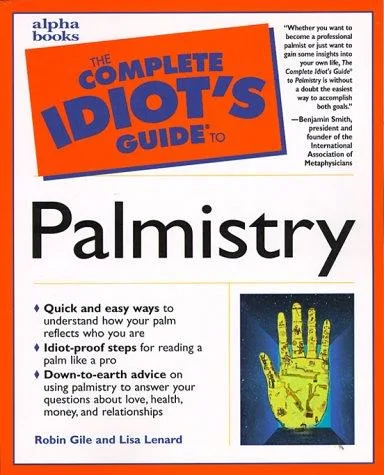
More Free Occult Philosophy Books
View all →