Your word is fire
 80
80

Your word is fire
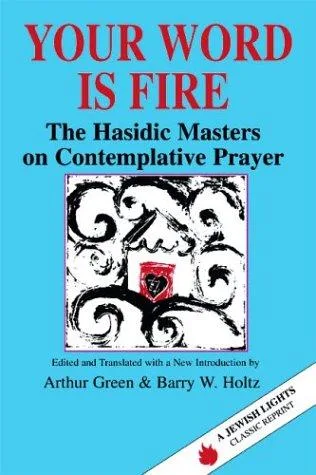
Arthur Green and Barry W. Holtz’s 1977 work, 'Your Word Is Fire,' offers a compelling examination of language as a generative force, moving beyond linguistic theory into the realm of symbolic power. Its strength lies in its meticulous exploration of how ancient traditions understood and utilized the spoken word, drawing connections between seemingly disparate mystical practices. The chapter discussing the Kabbalistic concept of divine names, for instance, provides a lucid explanation of how specific appellations were believed to channel cosmic energies. However, the book occasionally falters in its accessibility for readers unfamiliar with the complex symbolic systems it discusses. While the authors endeavor to explain intricate concepts, certain passages assume a pre-existing familiarity with esoteric terminology that may leave some readers adrift. The exploration of how pronunciation and intention intertwine to create effect is particularly noteworthy. Ultimately, 'Your Word Is Fire' serves as a valuable, albeit demanding, study for those interested in the occult dimensions of language.
📝 Description
80
Published in 1977, 'Your Word Is Fire' examines the transformative power of language and intention.
Arthur Green and Barry W. Holtz's 1977 book, 'Your Word Is Fire,' investigates how focused consciousness imbues spoken and written words with the power to shape reality. The authors move beyond simple semantics, discussing the energetic and symbolic dimensions of communication. They present language as a primal force, capable of influencing the world through focused intent. This work delves into the belief that specific linguistic structures and sounds hold inherent magical properties.
It explores concepts such as the 'divine name' as a source of creative energy and the function of mantra and incantation in altering consciousness. The authors argue that language is not simply descriptive but performative, capable of invoking spiritual forces or manifesting physical changes. This perspective is particularly relevant for practitioners of ritual magic and students of comparative mythology, as well as linguists interested in the occult dimensions of etymology.
This book emerged during a resurgence of esoteric studies in the 1970s, a time when interest in Jungian psychology, Eastern mysticism, and Western occultism was prominent. Green and Holtz bridged academic inquiry into religious texts with practical applications of symbolic language. Their work offered a synthesis that differed from purely academic scripture analyses or more dogmatic occult manuals, appealing to those who saw efficacy in focused intent and ancient wisdom traditions for contemporary spiritual practice.
💡 Why Read This Book?
• Gain practical understanding of how focused language can influence perception and reality, drawing from the book's analysis of ancient incantations and divine names. • Explore the symbolic power of specific terms and sounds, learning how their energetic properties were understood within traditions like Kabbalah, as detailed in the text. • Discover the historical interplay between linguistics, mysticism, and ritual, particularly how the 1977 publication engaged with esoteric thought of its era.
⭐ Reader Reviews
Honest opinions from readers who have explored this book.
❓ Frequently Asked Questions
What is the primary focus of 'Your Word Is Fire' by Arthur Green and Barry W. Holtz?
The book primarily focuses on the power of language and intention within esoteric and mystical traditions, exploring how words, imbued with consciousness, can shape reality and act as a primal creative force.
When was 'Your Word Is Fire' first published?
The book was first published in 1977, a period marked by a growing interest in esoteric studies and the synthesis of academic and practical mystical approaches.
Does 'Your Word Is Fire' discuss specific mystical traditions?
Yes, it delves into traditions such as Kabbalah, examining concepts like divine names and their perceived energetic properties, and touches upon Gnostic ideas and comparative mythology.
Who would benefit most from reading 'Your Word Is Fire'?
Practitioners of ritual magic, students of comparative mythology, linguists interested in the occult roots of language, and those seeking to understand sacred texts from a symbolic and energetic perspective would find it beneficial.
What distinguishes 'Your Word Is Fire' from other books on language and mysticism?
Its unique synthesis of academic inquiry into religious texts with practical applications of symbolic language, moving beyond mere semantics to explore the energetic dimensions of communication as a generative force.
Are there specific concepts of language power explored in the book?
Yes, the book explores concepts such as the 'divine name' as a locus of creative energy, the role of mantra and incantation in consciousness alteration, and language as a performative rather than just descriptive tool.
🔮 Key Themes & Symbolism
Language as Creative Force
The core of 'Your Word Is Fire' posits that language is not merely a tool for communication but a fundamental power capable of shaping existence. This theme is explored through ancient traditions where names of deities or sacred utterances were believed to hold inherent creative or destructive potential. The work investigates how focused intent behind spoken or written words can act as a catalyst for manifestation, drawing parallels with magical practices and the concept of the Logos in various mythologies. It suggests that understanding the energetic resonance of words is key to unlocking their transformative capabilities.
Symbolism of Divine Names
A significant focus is placed on the profound significance attributed to divine names across different esoteric traditions, particularly within Kabbalah. The book examines the belief that specific names of God or spiritual beings are not arbitrary labels but contain the essence or power of the entity they represent. This section looks at how these names were utilized in ritual and meditation to invoke spiritual presence, gain understanding, or effect change. The power is seen as inherent in the sound, form, and meaning of the name itself when approached with reverence and focused consciousness.
Intentionality in Communication
Beyond the words themselves, 'Your Word Is Fire' emphasizes the critical role of human consciousness and intention in activating the power of language. It explores how the focused will and emotional state of the speaker or writer can amplify or diminish the energetic impact of their words. This concept extends to practices like mantra, prayer, and incantation, where precise articulation combined with deep inner conviction is paramount. The work suggests that true mastery of language's power lies in aligning one's inner state with the outer expression.
Linguistic Roots of Mysticism
The book traces the intersection of language, mysticism, and esoteric practice, suggesting that many spiritual insights and rituals have their origins in the understanding of language as a sacred and potent force. It explores how etymological connections and the symbolic nature of early scripts or alphabets reveal deeper layers of meaning that have been instrumental in developing various mystical systems. This theme highlights how the structure and evolution of language itself can be seen as a reflection of cosmic order and divine expression.
💬 Memorable Quotes
Direct passages from the work, attributed to the author.
“To speak the divine name is to align oneself with cosmic creative will.”
— This interpretation highlights the Kabbalistic concept that uttering specific divine names is not merely an act of worship but a direct participation in the universe's fundamental creative processes, linking personal intent with universal power.
“Ancient cultures understood language as a primary force in creation, not merely description.”
— This interpretation reflects the book's exploration of how early societies viewed language as a fundamental element in the universe's formation and ongoing existence, contrasting this with modern utilitarian views of communication.
💡 Key Ideas
Editorial paraphrase of the work's core concepts — not direct quotes.
The word is not a symbol of a thing, but the thing itself, alive with potent energy.
This paraphrase captures the book's central argument: language possesses an inherent, active power. It moves beyond representation to suggest that words, when properly invoked, can become the very forces they describe, influencing reality directly.
Intention imbues utterance with its true magical efficacy.
This paraphrased concept emphasizes that the power of spoken or written words is amplified or diminished by the focused consciousness and inner state of the speaker, underscoring the role of will in magical language.
The structure of sacred language reflects the structure of the cosmos.
This paraphrase suggests a deep connection between the patterns found in mystical texts and linguistic forms, implying that the universe itself is ordered according to principles that can be perceived through the careful study of sacred words.
🌙 Esoteric Significance
Tradition
This work draws heavily from Hermetic, Gnostic, and Kabbalistic traditions, exploring the concept of the creative power of the divine word (Logos) found in these lineages. It positions language not just as a human construct but as a primal force that mirrors divine creation. The book departs from purely theoretical explorations by suggesting practical applications of understanding this power, aligning with traditions that emphasize gnosis and direct experience of the sacred through symbolic means.
Symbolism
Key symbols include the 'Divine Name,' representing the inherent power and essence of a deity or cosmic principle within Kabbalah. The concept of the 'Logos' itself is central, symbolizing the primordial word or reason that underpins reality. Another motif is the idea of 'sound as vibration,' where specific frequencies or pronunciations are believed to directly interact with the subtle energetic bodies and the environment, a concept echoed in mantra traditions.
Modern Relevance
Contemporary thinkers in fields like consciousness studies, quantum mysticism, and even certain branches of transpersonal psychology echo the book's core ideas about language and intention shaping reality. Practitioners of modern ritual magic, ceremonial magic, and those interested in the power of sacred geometry and sound healing often reference the foundational concepts explored in works like this. It remains a touchstone for understanding the energetic and symbolic dimensions of communication beyond its literal meaning.
👥 Who Should Read This Book
• Students of comparative religion and mysticism: To understand how different traditions conceptualize the power of sacred texts and divine utterances. • Practitioners of ritual and ceremonial magic: To deepen their understanding of the role of spoken word, names, and intention in magical workings. • Linguists and philosophers of language interested in esoteric traditions: To explore the non-literal, energetic, and symbolic dimensions of communication that transcend conventional linguistic theory.
📜 Historical Context
Published in 1977, 'Your Word Is Fire' emerged during a vibrant period for esoteric and religious studies. The post-1960s era saw a surge in interest in non-Western spiritual traditions, Jungian psychology's exploration of archetypes, and a renewed engagement with Western occultism. Green and Holtz's work offered a unique synthesis, bridging academic textual analysis with the practical implications of symbolic language in mystical traditions. This differentiated it from purely anthropological studies of religion or the more dogmatic approaches found in some occult circles. At the time, scholars like Gershom Scholem were influential in the academic study of Kabbalah, providing a context for deeper engagement with Jewish mysticism, a subject the book touches upon. The work positioned itself as exploring the very foundation of creation through language, a concept that resonated with thinkers exploring consciousness and reality.
📔 Journal Prompts
The inherent power of the Divine Name: How might articulating specific names or titles alter your perception of a concept?
Reflect on the efficacy of intention: Consider a time your focused will amplified your spoken words.
Linguistic resonance: Explore a word or phrase that carries significant personal energy for you.
The Logos concept: How does the idea of a primordial creative word influence your understanding of reality?
Sacred sound: Experiment with reciting a phrase with different vocal tones and emotional states to observe any shifts.
🗂️ Glossary
Logos
In esoteric philosophy, the primordial creative word or divine reason that underlies and orders the universe. It represents the principle of divine intelligence and expression.
Divine Name
In Kabbalistic and other mystical traditions, a specific name or appellation of God or a spiritual entity believed to contain its essence and power, used for invocation or manifestation.
Incantation
A spoken charm or spell, often in verse, that is believed to have magical power when recited with specific intent and pronunciation.
Mantra
A sacred utterance, syllable, word, or phrase, typically from Sanskrit, used in meditation and ritual for its spiritual or psychological effect.
Gnosis
Spiritual knowledge or insight, particularly in Gnostic traditions, achieved through direct experience rather than intellectual understanding.
Hermeticism
A philosophical and religious tradition based on writings attributed to Hermes Trismegistus, emphasizing divine wisdom, alchemy, and the interconnectedness of all things.
Kabbalah
A system of Jewish mysticism that explores the nature of God and the universe through esoteric interpretations of scripture and symbolic practices.
🔮 Readers Also Liked
Browse all →







More by Arthur Green, Barry W. Holtz
All books →


More Free Occult Philosophy Books
View all →