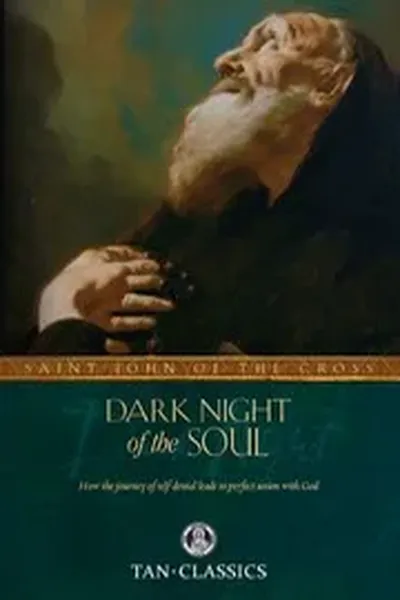
The Collected Works of St. John of the Cross, Volume II: The Dark Night of the Soul, Spiritual Canticle of the Soul and the Bridegroom Christ, the LIV
 83
83

The Collected Works of St. John of the Cross, Volume II: The Dark Night of the Soul, Spiritual Canticle of the Soul and the Bridegroom Christ, the LIV
The Collected Works of St. John of the Cross, Volume II, offers an unvarnished look into the stark realities of mystical ascent. John's unflinching description of the "dark night of the spirit," where even spiritual aids are withdrawn, is particularly arresting. He doesn't offer easy comforts but rather a rigorous path of detachment. The "Spiritual Canticle," while beautiful in its longing, can feel dense with theological argument for the uninitiated. A significant strength lies in John's precision; he meticulously maps the soul's internal landscape. However, the sheer intensity and theological framework might present a barrier to those expecting a gentler introduction to contemplative practice. The work stands as a monument to radical faith. This volume is a demanding but ultimately rewarding exploration of the soul's deepest journey.
📝 Description
83
Written in the 16th century, this volume details the soul's path to divine union.
The Collected Works of St. John of the Cross, Volume II, contains key theological expositions on Christian mysticism. This collection includes "The Dark Night of the Soul," "Spiritual Canticle of the Soul and the Bridegroom Christ," and "The Living Flame of Love." These are not simple meditations but detailed accounts of the spiritual disciplines and stages required for deep mystical experience.
Saint John of the Cross, a Spanish Carmelite friar, wrote these works during the Counter-Reformation, a period of religious upheaval. His writings reflect a rigorous, ascetical path that set him apart from other intellectual currents of his time. Teresa of Ávila, a fellow reformer, acknowledged the spiritual merit of his texts, even as others viewed his theology with caution. The writings describe the soul's arduous ascent toward union with the divine, often under difficult personal circumstances.
Saint John of the Cross's writings are central to the Christian mystical tradition. His concepts of the "dark night" describe a process of spiritual purification, a withdrawal from both sensory and spiritual consolations, leading to a more direct encounter with God. This tradition emphasizes an inner transformation and direct experience of the divine, often expressed through allegorical poetry and theological reflection. His work stands as a significant articulation of the contemplative path within Western esotericism.
💡 Why Read This Book?
• Gain a precise understanding of the "dark night of the spirit," a crucial concept in contemplative traditions, and its role in spiritual purification as detailed in "The Dark Night of the Soul." • Explore the allegorical language and theological arguments used to describe divine union in "The Spiritual Canticle of the Soul and the Bridegroom Christ," a hallmark of 16th-century Spanish mystical literature. • Grasp the transformative power of divine love as articulated in "The Living Flame of Love," understanding how God's presence refines the soul through intense spiritual experiences.
⭐ Reader Reviews
Honest opinions from readers who have explored this book.
❓ Frequently Asked Questions
What is the primary focus of 'The Dark Night of the Soul' by St. John of the Cross?
'The Dark Night of the Soul' describes the stages of spiritual purification where the soul experiences a profound sense of dryness and detachment from both sensory and spiritual consolations, leading to deeper union with God.
When did St. John of the Cross write these works?
Saint John of the Cross wrote these seminal mystical texts during the latter half of the 16th century, primarily while he was imprisoned and suffering persecution within his own Carmelite order.
What is the relationship between St. John of the Cross and Teresa of Ávila?
Saint John of the Cross and Teresa of Ávila were contemporaries and co-reformers of the Carmelite Order. She recognized the profound spiritual value of his writings, and they influenced each other's mystical theology and reforms.
How does 'The Spiritual Canticle' differ from 'The Dark Night of the Soul'?
While 'The Dark Night' focuses on the painful process of purification, 'The Spiritual Canticle' describes the soul's joyful longing for God and the subsequent ecstatic union, using rich allegorical language.
Is this volume suitable for beginners in mysticism?
This volume is best suited for those with some background in theological or mystical literature. While profound, St. John's dense prose and theological arguments can be challenging for absolute beginners.
What is the 'Living Flame of Love' about?
'The Living Flame of Love' explores the soul's transformation after experiencing divine union, likening God's purifying presence to a flame that consumes and refines the soul, making it wholly divine.
🔮 Key Themes & Symbolism
The Dark Night of the Soul
This central theme details the two phases of spiritual purification: the dark night of the senses, where attachment to worldly pleasures is severed, and the more profound dark night of the spirit, where even spiritual consolations are withdrawn. It is presented not as punishment, but as a necessary process for the soul to detach from all created things, including its own spiritual activities, to achieve a direct, unmediated union with God.
Divine Union and Longing
Expressed most poetically in 'The Spiritual Canticle,' this theme captures the soul's intense desire for God and the ecstatic, transformative state of union achieved through mystical experience. Using the allegory of a bride and bridegroom, John of the Cross illustrates the reciprocal love and profound intimacy between the soul and Christ, often employing vivid natural imagery and spiritual theology.
Active and Passive Purification
The works differentiate between active purification, where the individual consciously practices asceticism and detachment, and passive purification, where God directly intervenes to cleanse the soul. This latter stage, particularly in the dark night of the spirit, involves the soul surrendering to God's transformative work, often through trials and a sense of abandonment.
The Transforming Power of Divine Love
In 'The Living Flame of Love,' John of the Cross depicts the soul that has undergone purification and achieved union. Divine love is portrayed as an active, incandescent force that not only unites the soul to God but also transforms its very being, making it 'partaker of the divine nature.' This state is characterized by profound peace, spiritual joy, and an ongoing communion with God.
💬 Memorable Quotes
Direct passages from the work, attributed to the author.
“To guide you in the path of perfection, you must be detached from all things.”
— This statement underscores the core ascetic principle that spiritual progress requires a radical detachment not only from material possessions and worldly desires but also from the very spiritual consolations that can become objects of attachment.
“The soul that is attached to anything cannot advance.”
— This highlights the absolute necessity of non-attachment for spiritual growth. Any clinging, whether to comfort, success, or even spiritual experiences, acts as an impediment to the soul's direct encounter with the divine.
“I gave myself and surrendered my life for you, then I ought to give you all my understanding.”
— This expresses the divine lover's (Christ's) perspective on the soul's journey, indicating a complete self-offering and a desire for the soul to reciprocate by surrendering its intellect and will to God's transformative love.
“Quitting all things, not desiring them, not loving them, not receiving them, not creating them.”
— This outlines the comprehensive nature of detachment required for spiritual advancement, extending beyond mere avoidance to a profound internal disposition of non-possession and non-affection towards all created things.
💡 Key Ideas
Editorial paraphrase of the work's core concepts — not direct quotes.
In the evening of life, I shall be judged on my love.
This paraphrased concept emphasizes that the ultimate measure of a spiritual life, according to John's teaching, is not the quantity of prayers or penances performed, but the depth and authenticity of one's love for God and neighbor.
🌙 Esoteric Significance
Tradition
Saint John of the Cross is a core part of the Christian mystical tradition, specifically within the Carmelite lineage. His work is deeply rooted in Catholic theology and the contemplative practices of the Desert Fathers and Neoplatonism, but he articulates them with a unique psychological and spiritual rigor. While not typically categorized with Hermetic or Kabbalistic streams, his emphasis on inner transformation, purification, and divine union shares common ground with broader Western esoteric goals of achieving gnosis or spiritual perfection.
Symbolism
The 'dark night' itself is a potent symbol of spiritual trial, divine absence, and purification, representing the necessary shedding of ego and sensory attachment. The 'Spiritual Canticle' employs the imagery of the bride and bridegroom to symbolize the soul's ecstatic union with Christ, drawing on the biblical Song of Solomon. 'The Living Flame' symbolizes the Holy Spirit's intense, transformative presence, purifying and deifying the soul through divine love.
Modern Relevance
Contemporary contemplative practitioners, spiritual directors, and students of comparative religion continue to draw deeply from John of the Cross. His articulation of spiritual dryness and the process of passive purification remains highly relevant for those working through the challenges of modern spiritual life. Thinkers and practitioners in various Christian contemplative movements, as well as some within the broader New Age and self-help spheres seeking depth psychology and spiritual growth, reference his works.
👥 Who Should Read This Book
• Ascetical practitioners and theologians seeking a rigorous, classical exposition of the soul's purification and union with God. • Students of Christian mysticism interested in the historical development of contemplative prayer and the writings of Doctors of the Church. • Individuals experiencing spiritual dryness or seeking to understand the deeper meaning of trials in their spiritual journey.
📜 Historical Context
Saint John of the Cross penned these profound mystical treatises during a turbulent period in 16th-century Spain, a time marked by the Counter-Reformation and intense religious fervor. As a Carmelite friar, he engaged in significant reforms alongside Teresa of Ávila, a parallel movement that often drew suspicion from ecclesiastical authorities and rivals like the Dominicans. His writings, particularly 'The Dark Night of the Soul,' were largely conceived during his imprisonment in Toledo in 1577-1578, a harsh experience that fueled his theological reflections. The intellectual climate was dominated by scholasticism and a renewed emphasis on Thomistic theology, yet John's mystical path offered a more direct, experiential route to God, sometimes placing him at odds with more academic theologians who questioned his visions and ecstatic experiences.
📔 Journal Prompts
The soul's detachment from sensory pleasures in the first dark night.
The nature of the soul's longing for God in the Spiritual Canticle.
The experience of the Living Flame of Love transforming the soul.
The role of active versus passive purification in spiritual growth.
The balance between human effort and divine action in mystical ascent.
🗂️ Glossary
Dark Night of the Senses
The initial stage of spiritual purification where the soul detaches from the pleasures and satisfactions derived from the external senses and worldly activities.
Dark Night of the Spirit
A deeper, more intense phase of purification where God withdraws spiritual consolations, leaving the soul in a state of profound dryness, testing faith and surrender.
Spiritual Canticle
A poem and commentary by St. John of the Cross describing the soul's joyful journey toward and experience of union with God, using the allegory of a bride seeking her beloved.
Living Flame of Love
A work describing the soul's transformation after achieving union, where divine love acts as an intense, purifying flame that imbues the soul with divine qualities.
Detachment (Desapego)
The voluntary renunciation of attachment to all created things, including spiritual consolations, as a prerequisite for achieving union with God.
Union
The ultimate goal of mystical ascent, a state of profound communion and transformation where the soul is united with God, becoming 'partaker of the divine nature.'
Humility
A foundational virtue emphasizing the soul's recognition of its absolute dependence on God and its own nothingness apart from Him, crucial for spiritual progress.
This book appears in 1 collection
🔮 Readers Also Liked
Browse all →








From the “Dark Night of the Soul” Collection
View all →





More Free Occult Philosophy Books
View all →