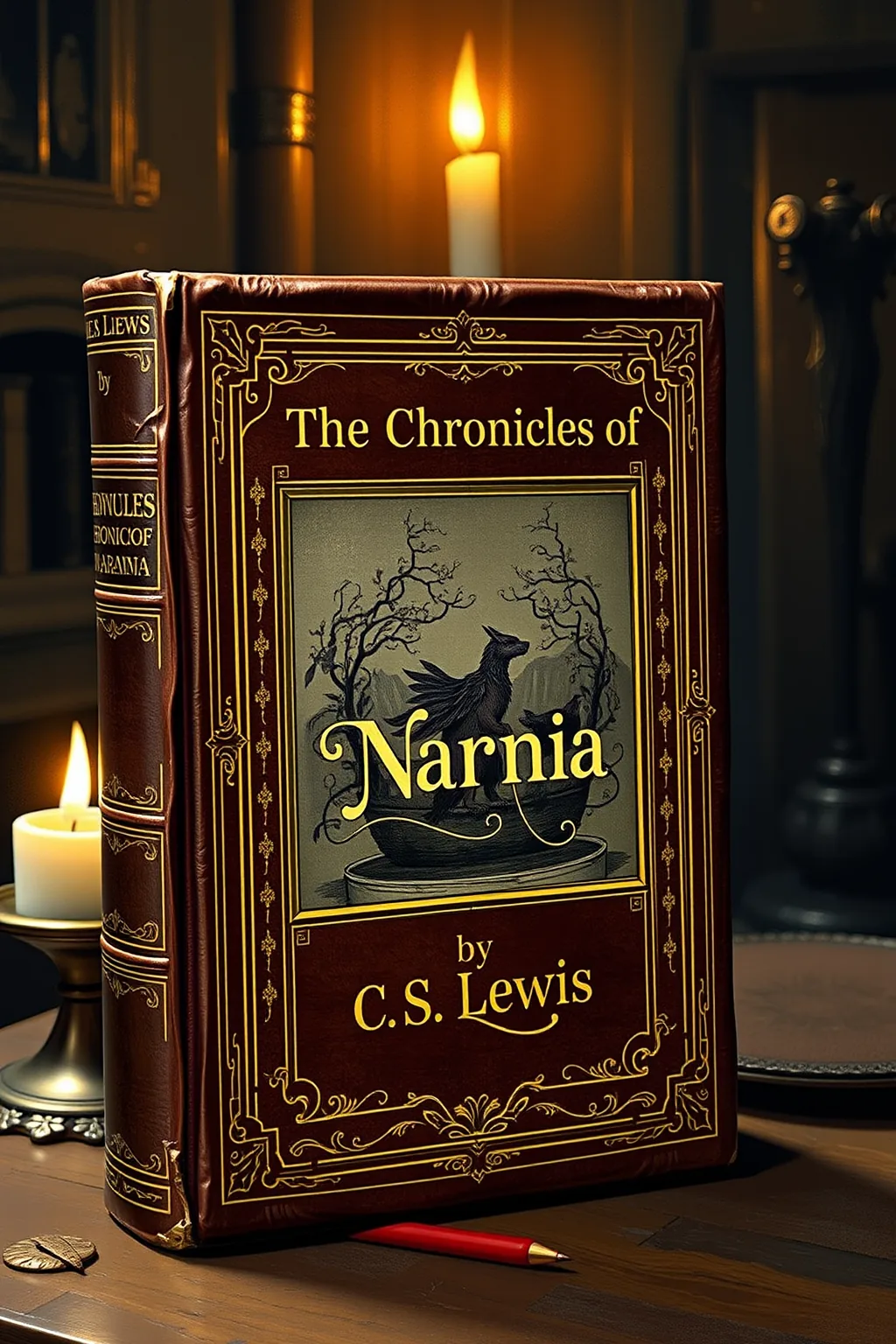
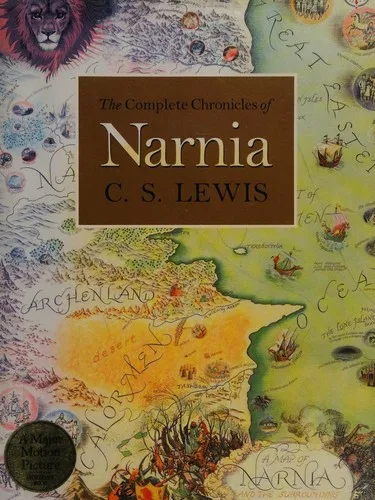
The Chronicles of Narnia
 74
74

The Chronicles of Narnia
C. S. Lewis's The Chronicles of Narnia presents a potent, if at times overt, fusion of Christian theology and mythological archetypes. The construction of Narnia, from its talking animals to its elemental magic, is imaginative, but its allegorical underpinnings can feel less like organic narrative and more like a prescribed lesson. The character of Aslan, while intended as a divine figure, sometimes strains credulity with his omniscient pronouncements and convenient interventions, particularly in passages concerning the 'Deep Magic'. However, the series' enduring appeal lies in its foundational exploration of sacrifice and redemption, most clearly illustrated in *The Lion, the Witch and the Wardrobe*. The narrative's primary strength is its ability to render complex spiritual concepts accessible through vivid, albeit simple, fantasy. Lewis’s prose, while functional, rarely surprises, making the magical elements feel somewhat grounded, perhaps intentionally so. The series remains a significant work for its accessible allegorical framework, even if its literary artistry is occasionally overshadowed by its didactic purpose.
📝 Description
74
C. S. Lewis published the seven Narnia novels between 1950 and 1956.
The Chronicles of Narnia is a series of seven fantasy novels by C. S. Lewis. Though often seen as children's books, they contain complex allegorical and mythological elements that appeal to all ages. The stories follow children who find their way from England into the magical land of Narnia. This world is inhabited by talking animals, mythical beings, and the great lion Aslan.
Lewis, a scholar of medieval literature and a member of the Inklings group, wrote these books during a time of interest in mythology and allegory. He drew on his academic knowledge and Christian beliefs to create a fantasy world with theological depth. The series reflects themes of good versus evil, sacrifice, redemption, and faith, with Aslan acting as a Christ-like figure. Concepts like 'Deep Magic' and 'Deeper Magic' suggest a spiritual order that dictates justice and mercy.
Published in the mid-20th century, The Chronicles of Narnia emerged in a period where authors like J.R.R. Tolkien were also engaged in mythmaking. Lewis, however, more directly embedded Christian theology and classical mythology into his narrative structure. His work draws on the tradition of allegorical storytelling, using fantastical elements to represent spiritual truths and moral concepts. The series can be seen as an entry point into deeper theological and mythological discussions, presented through a children's fantasy lens.
💡 Why Read This Book?
• You will learn how C. S. Lewis uses the character of Aslan to represent sacrificial redemption, a core concept in Christian theology, as seen in *The Lion, the Witch and the Wardrobe*. • You will feel the archetypal journey of children transitioning from the mundane world to a realm governed by spiritual laws, exploring themes of faith and courage as they encounter figures like the White Witch. • You will gain insight into how mythological creatures and symbolic landscapes, such as the talking beasts and the magical world of Narnia itself, serve as vehicles for exploring moral and spiritual dilemmas.
⭐ Reader Reviews
Honest opinions from readers who have explored this book.
❓ Frequently Asked Questions
When was C. S. Lewis's The Chronicles of Narnia first published?
The Chronicles of Narnia were published as a series between 1950 and 1956, with *The Lion, the Witch and the Wardrobe* being the first installment released in 1950.
What are the main allegorical themes in The Chronicles of Narnia?
The primary allegorical themes revolve around Christian concepts such as sacrifice, redemption, resurrection, and the battle between good and evil, often embodied by Aslan and the various antagonists.
Are the books suitable for young adults and adults, not just children?
Yes, while written for children, the complex allegorical, mythological, and theological layers provide significant depth for adult readers interested in symbolic literature and comparative religion.
What is the significance of the 'Deep Magic' in Narnia?
The 'Deep Magic' represents the ancient, foundational laws of Narnia, suggesting a divinely ordained order. Its counterpart, the 'Deeper Magic', signifies a higher law of mercy and sacrifice that transcends the initial pacts.
How does C. S. Lewis's academic background influence the series?
Lewis's extensive knowledge of medieval literature and mythology is evident in his creation of Narnia, its creatures, and its narrative structures, drawing parallels to classical and Norse myths while embedding Christian theology.
What is the main purpose of the Pevensie children's journey to Narnia?
The Pevensie children's journey serves as an initiation, allowing them to learn about faith, courage, and sacrifice, and to play crucial roles in Narnia's destiny, mirroring archetypal hero narratives.
🔮 Key Themes & Symbolism
Sacrifice and Redemption
Central to the series is the theme of sacrifice, most powerfully embodied by Aslan. His voluntary death on the Stone Table and subsequent resurrection in *The Lion, the Witch and the Wardrobe* directly mirrors the Christian narrative of Christ's atonement. This act redeems Edmund from his betrayal and breaks the White Witch's power, illustrating a fundamental spiritual law: that a willing victim, innocent and blameless, can cancel the Witch's claim. This concept of redemption through sacrifice is a recurrent motif, underscoring the belief that true liberation often comes at a great personal cost.
The Nature of Kingship and Leadership
The series explores different forms of leadership, contrasting benevolent, divinely-ordained rule with tyranny. Aslan's kingship is characterized by wisdom, justice, and self-sacrifice, representing an ideal spiritual monarch. The Pevensie children, upon becoming Kings and Queens of Narnia, learn the responsibilities and virtues required of righteous rulers. Conversely, figures like the White Witch represent absolute power divorced from morality, leading to oppression and suffering. The narrative suggests that true leadership is intrinsically linked to moral integrity and service to a higher order.
Faith and Doubt
The journey into Narnia often involves a test of faith for the human characters. Edmund's initial temptation by the White Witch and his subsequent repentance highlight the struggle between worldly desire and spiritual truth. Lucy's unwavering belief in Aslan and Narnia, often met with skepticism from her siblings, underscores the importance of maintaining faith in the face of doubt or disbelief. The narrative posits that belief in unseen realities and trust in divine providence are essential for navigating spiritual trials and achieving ultimate victory.
Mythopoeia and Archetypes
Lewis masterfully integrates elements from various mythologies—Greek, Roman, Norse, and Arthurian—into the fabric of Narnia. Talking animals, centaurs, fauns, and dryads populate the land, drawing on ancient folkloric traditions. Aslan himself is an archetypal figure, embodying the divine king and the sacrificial savior. The children’s repeated journeys to and from Narnia echo the myth of the hero's journey, a pattern of departure, initiation, and return, suggesting universal patterns in human experience and spiritual development.
💬 Memorable Quotes
Direct passages from the work, attributed to the author.
“‘Wrong will be right, when Aslan comes in sight, At the turn of the tide.’”
— This couplet, spoken by Father Christmas, captures a core prophecy and theological concept within Narnia. It suggests that true justice and resolution, symbolized by 'right', will be established through the intervention of Aslan, the Christ-like figure. The 'turn of the tide' implies a dramatic reversal of fortune, a moment of divine intervention that corrects the wrongs inflicted by evil forces.
“‘It is not the courage we are in want of,’ said the King, ‘but the sense to use it properly.’”
— This statement, often attributed to King Peter, addresses the difference between bravery and wisdom. It suggests that courage alone is insufficient; it must be guided by good judgment and an understanding of the right course of action. This highlights the series' emphasis on moral discernment and the proper application of one's strengths in the face of adversity.
“‘But that’s just the way things are,’ said Mr. Beaver. ‘We must go on and see what happens.’”
— This reflects a pragmatic approach to the unknown, a sentiment often voiced by characters facing daunting circumstances. It encourages acceptance of current realities while still moving forward with hope and determination, trusting that unfolding events will reveal the path. It underscores the importance of perseverance and faith even when the outcome is uncertain.
“‘All their courage, all their wiles, all their magic and strength, had not been able to keep the Dwarf out of Narnia.’”
— This observation, often made by characters like the Beavers, points to the limitations of earthly power and cunning against a higher, divinely-ordained order. It suggests that despite all efforts, the predetermined course of events, often guided by Aslan, will prevail, highlighting the ultimate sovereignty of good.
“‘The deeper magic from before the dawn of time.’”
— This refers to a higher, more potent form of magic in Narnia, distinct from the 'Deep Magic'. It represents a law of mercy and sacrifice, embodying divine grace that can override even the most ancient decrees. Aslan invokes this deeper magic to return from death, symbolizing resurrection and ultimate redemption.
🌙 Esoteric Significance
Tradition
While not strictly an esoteric text in the sense of occult practice, Narnia draws deeply from Christian Gnosticism and Neoplatonism in its portrayal of a dualistic reality where a higher spiritual realm influences the material world. The concept of Aslan as a divine emanation and the existence of a spiritual order ('Deep Magic') governing Narnia echo Gnostic ideas of a transcendent God and a created world that requires redemption. Lewis's work, therefore, can be seen as a literary exploration of these themes, making them accessible through allegory rather than direct instruction.
Symbolism
The Lion, particularly Aslan, is a potent symbol of divine power, sacrifice, and resurrection, drawing from biblical imagery (the Lion of Judah) and ancient Near Eastern fertility gods. The Wardrobe itself functions as a portal, symbolizing the transition from the mundane, materialistic world to a spiritual or archetypal reality, a common motif in shamanic and mystical traditions. The White Witch represents the forces of death, decay, and arid materialism, a destructive principle opposed to the life-giving force of Aslan.
Modern Relevance
Contemporary thinkers and writers continue to engage with Narnia's symbolic language. Its exploration of the hero's journey and the archetypal battle between good and evil remains relevant in popular culture and Jungian psychology. Furthermore, its accessible approach to complex theological and philosophical ideas makes it a valuable text for comparative religious studies and for individuals seeking to understand allegorical storytelling as a means of spiritual exploration, often referenced in discussions of mythopoeia and symbolic literature.
👥 Who Should Read This Book
• Students of comparative mythology and religious allegory seeking to understand how Christian themes can be integrated into fantasy narratives. • Readers interested in the works of C. S. Lewis and the Inklings literary circle, providing context for his broader philosophical and theological explorations. • Younger readers and educators looking for engaging stories that subtly introduce concepts of morality, sacrifice, and the nature of good versus evil.
📜 Historical Context
The Chronicles of Narnia emerged in the post-World War II era, a period marked by a profound societal introspection and a renewed interest in mythology and allegory, partly as a response to the horrors of war. C. S. Lewis, a respected academic at Oxford and Cambridge and a member of the influential Inklings literary circle, was uniquely positioned to blend his scholarly expertise in medieval literature with his Christian faith. His contemporaries, most notably J.R.R. Tolkien, were also engaged in mythopoeia, though Tolkien's approach in *The Lord of the Rings* was generally less overtly allegorical than Lewis's. Lewis drew heavily on classical, biblical, and Norse mythology, creating a synthesized world that allowed him to explore theological concepts in an accessible format. The series, first published in 1950, resonated with readers seeking meaning and order in a fractured world, though some critics at the time found its Christian allegories too explicit for children's literature.
📔 Journal Prompts
Aslan's sacrifice on the Stone Table and its aftermath.
The contrasting nature of the Deep Magic and the Deeper Magic.
Edmund Pevensie's journey from betrayal to redemption.
The symbolic function of the wardrobe as a portal.
The characteristics of benevolent leadership as demonstrated by Aslan and the Pevensies.
🗂️ Glossary
Aslan
The great Lion and rightful King of Narnia. He serves as the central Christ-figure in the series, embodying divine power, sacrifice, and ultimate goodness.
Deep Magic
The ancient laws and principles that govern Narnia, established at its creation. These laws dictate justice and order, but can be circumvented by a greater power.
Deeper Magic
A higher, more fundamental law of mercy and sacrifice that transcends the Deep Magic. It is invoked by Aslan to bring about resurrection and ultimate redemption.
Stone Table
An ancient stone slab used as a sacrificial altar. Aslan is sacrificed upon it by the White Witch, fulfilling the Deep Magic's requirements and paving the way for its overthrow by the Deeper Magic.
White Witch
Jadis, the primary antagonist in *The Lion, the Witch and the Wardrobe*. She represents evil, tyranny, and the forces of death and winter that Narnia must overcome.
Talking Beasts
Animals in Narnia who possess the ability to speak and reason like humans, reflecting a mythological or enchanted state of nature.
Pevensie Children
Peter, Susan, Edmund, and Lucy, the four siblings who travel from our world to Narnia and play significant roles in its history, often becoming Kings and Queens.
🔮 Readers Also Liked
Browse all →






More by C. S. Lewis
All books →




More Free Occult Philosophy Books
View all →