George William Russell
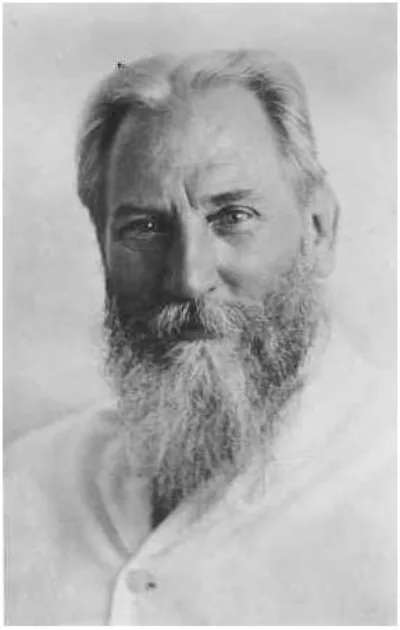
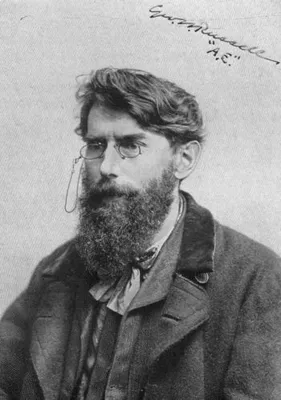
George William Russell, known as Æ, was an Irish writer, poet, painter, and mystic influential in Irish nationalism and theosophy.
George William Russell, who wrote under the pseudonym Æ, was a multifaceted Irish figure known for his contributions to literature, art, and Irish nationalism. Born in 1867, he developed a deep interest in mysticism and theosophy, becoming a central figure in a Dublin group dedicated to these beliefs. Russell's career spanned various roles, including a writer on mysticism, poet, painter, and editor of influential publications like the Irish Homestead and The Irish Statesman. He was also actively involved in agricultural reform, working for the Irish Agricultural Organisation Society, where he championed cooperative movements and credit societies. His nationalist sentiments led him to support the Dublin Lockout and sympathize with the Easter Rising, though his involvement was primarily through writing and editing due to his pacifist leanings. Russell's life was marked by a profound engagement with visionary experiences, which he believed offered insights into past lives and the nature of the soul, influencing his creative and philosophical output. He was widely respected for his generosity and mentorship towards younger writers, earning him a reputation as a significant cultural patron in Ireland.
Mystical Visions and Theosophy
From a young age, George William Russell experienced profound visions, which he believed offered glimpses into deeper realities and ancient histories. These experiences intensified around age 17, coinciding with his developing friendship with W. B. Yeats. Russell became a member of the Theosophical Society, finding a community of like-minded individuals in Dublin. He explored concepts of reincarnation and the soul's complex journey through time, suggesting that the soul is not a new entity but one marked by extensive experience and learning across various existences. His writings and paintings often sought to illustrate these inner visions, depicting spiritual beings and landscapes of extraordinary luminosity. Russell's pseudonym, Æ, derived from 'Aeon,' reflecting his lifelong pursuit of understanding the human quest and spiritual evolution.
Literary and Artistic Contributions
Russell was a significant figure in the Irish Literary Revival, publishing his first poetry collection, 'Homeward: Songs by the Way,' in 1894. He encountered and influenced many prominent Irish writers, including James Joyce, who featured him as a character in 'Ulysses.' Beyond poetry, Russell was a painter whose work often reflected his mystical insights. His home in Dublin became a hub for intellectual and artistic gatherings, fostering discussions on Ireland's cultural and economic future. He also designed the Starry Plough flag for the Irish Citizen Army, which was notably flown during the Easter Rising. His generosity extended to supporting emerging writers, with figures like Frank O'Connor and P. L. Travers acknowledging his pivotal role in their careers.
Nationalism and Social Advocacy
Russell was a committed Irish nationalist who played a crucial role in promoting agricultural cooperation through his work with the Irish Agricultural Organisation Society. As Assistant Secretary, he was instrumental in developing credit societies and establishing cooperative banks across Ireland. Although his position within the IAOS limited overt political expression, he openly supported the strikers during the Dublin Lockout and sympathized with the ideals of the Easter Rising, viewing it as aligned with traditional nationalist communism. His involvement in political discourse included serving as a delegate to the Irish Convention and participating in the Irish Dominion League, advocating for Irish self-governance.
Key Ideas
- Theosophy and spiritual evolution
- Reincarnation and the soul's long journey
- Mystical visions as sources of knowledge
- Irish nationalism and agricultural cooperation
- The interconnectedness of art, spirituality, and social reform
Notable Quotes
“Earth revealed itself to me as a living being, and rock and clay were made transparent so that I saw lovelier and lordlier beings than I had known before, and was made partner in memory of mighty things, happenings in ages long sunken behind time.”
“But the luminous quality gradually became normal in me, and at times in meditation there broke in on me an almost intolerable lustre of light, pure and shining faces, dazzling processions of figures, most ancient, ancient places and peoples, and landscapes lovely as the lost Eden. These appeared at first to have no more relation to myself than images from a street without one sees reflected in a glass; but at times meditation prolonged itself into spheres which were radiant with actuality.”
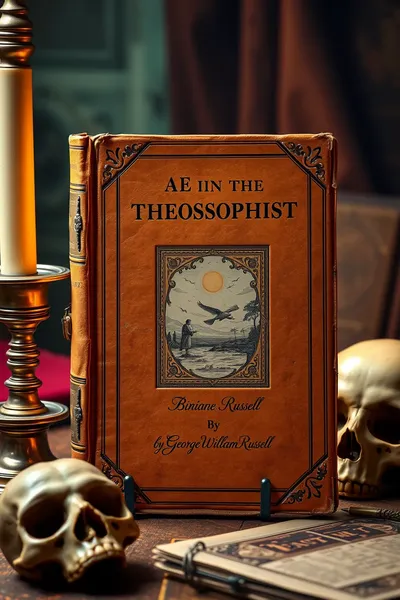
Books by George William Russell
3 free public domain books · Read online or download