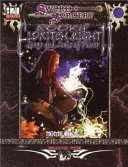
The Book of Eldritch Might II
 76
76

The Book of Eldritch Might II
Monte Cook’s The Book of Eldritch Might II offers a commendable expansion on arcane themes, particularly with its introduction of soul magic. The concept of sentient spells, where a caster’s creation can develop its own will or purpose, presents a fascinating narrative and mechanical challenge that moves beyond mere spell slot expenditure. The inclusion of a music-focused bard variant also provides a welcome alternative to the standard performer archetype. However, the sheer volume of new options, while a strength, can also be a hurdle; some players might find the integration of soul magic and the numerous new feats and prestige classes requires significant effort to balance within an existing campaign. The work’s ambition is clear, especially in its creation of unique monsters like the arcane angels. Ultimately, The Book of Eldritch Might II is a valuable, albeit dense, addition for those dedicated to pushing the boundaries of magical systems in their games.
📝 Description
76
Published in May 2002, The Book of Eldritch Might II expands arcane magic for role-playing games.
This 2002 sourcebook introduces new mechanics and options for characters who use magical power, moving beyond standard spellcasting in role-playing games. It details specific types of magic and their associated creatures, giving game masters and players fresh content for their campaigns. The book is primarily for experienced players and game masters seeking to deepen their magical systems. It appeals to those who enjoy creating unique character builds through specialized classes, feats, and spells. Players interested in darker or more complex magical paradigms will find it particularly useful.
Released during a period of growth in tabletop role-playing, particularly following the Dungeons & Dragons 3rd Edition ruleset, this book reflects a trend towards granular customization for magic users. Monte Cook, a prominent designer, contributed to this era. The work focuses on novel approaches to magic, including 'soul magic' where spells can gain sentience. It also re-imagines traditional archetypes with a variant bard class focused on musical enchantment and includes a bestiary of new magical entities.
While presented as a role-playing game supplement, The Book of Eldritch Might II touches upon esoteric themes through its reimagining of magic. The concept of 'soul magic,' where spells develop sentience, echoes ideas found in certain occult traditions concerning the animation of magical forces or the inherent consciousness within spiritual constructs. The focus on specialized, potentially darker magical paradigms also aligns with explorations of forbidden or less conventional occult arts that seek power beyond mainstream spiritual or magical frameworks.
💡 Why Read This Book?
• Gain access to the unique mechanics of soul magic, allowing for spells that develop sentience and agency, a concept not widely explored in other arcane sourcebooks. • Explore a variant bard class explicitly designed around music-based magic, offering a distinct flavor and mechanical approach to performance-based spellcasting first detailed in 2002. • Discover new arcane monsters, such as the unholy riven and arcane angels, to challenge player characters with unique magical threats beyond standard creature types.
⭐ Reader Reviews
Honest opinions from readers who have explored this book.
❓ Frequently Asked Questions
What kind of magic does The Book of Eldritch Might II focus on?
The book concentrates on expanding arcane magic systems, introducing concepts like soul magic, where spells can become sentient. It also details new feats, prestige classes, spells, and magical monsters.
Who is the author of The Book of Eldritch Might II?
The author is Monte Cook, a well-regarded designer in the role-playing game industry, with the first publication date listed as May 2002.
Are there new character options in this book?
Yes, it features a new variant bard class focused on music-based magic, alongside original feats and prestige classes for players to customize their characters.
What are some of the new monsters introduced?
The book includes original magical monsters such as the unholy riven and arcane angels, offering new challenges for game masters to present to their players.
Is this book compatible with the original D&D 3rd Edition?
While not explicitly stated in the blurb, it was published in 2002, aligning with the release and popularity of the D&D 3rd Edition ruleset, suggesting high compatibility.
What is 'soul magic' as presented in the book?
Soul magic is a new type of arcane power described as involving the creation and use of sentient spells, giving them a degree of independence or will.
🔮 Key Themes & Symbolism
Sentient Spellcraft
This sourcebook introduces the radical concept of soul magic, where spells are not merely inert energies but can achieve sentience. This allows for a dynamic where a caster's own magical creations might possess a will, personality, or even independence, fundamentally altering the relationship between sorcerer and spell. It moves beyond simple spell effects to explore the potential for magic to become a character in its own right, adding layers of narrative and ethical consideration to its use.
Musical Enchantment
A significant feature is the reimagining of the bard class. Instead of a generic performer, this variant focuses on music as the direct conduit for arcane power. This approach grounds magical effects in sonic vibrations and melodic structures, offering a distinct flavor of magic that is both performative and potent. It provides a framework for spellcasters who manipulate emotions and reality through harmony and rhythm, as detailed in the 2002 publication.
Aberrant Arcana and Monstrosities
The book expands the bestiary with original creatures that embody strange and potent forms of magic. Entities like the unholy riven and arcane angels are presented not just as combat encounters, but as manifestations of unique magical forces. Their existence suggests a broader, sometimes unsettling, cosmology where magic can birth beings of peculiar power and disturbing appearance, challenging conventional understandings of the supernatural.
Advanced Magical Customization
Beyond new classes and monsters, The Book of Eldritch Might II offers a wealth of new feats and spells. This emphasis on customization allows players to finely tune their characters' magical abilities, creating highly specialized arcane practitioners. It caters to a desire for mechanical depth, enabling the construction of unique spellcasting archetypes that deviate from standard templates and explore niche magical disciplines.
💬 Memorable Quotes
Direct passages from the work, attributed to the author.
“Rules for using soul magic, a new type of arcane power that involves the creation and use of sentient spells.”
— This highlights the book's most innovative contribution: the idea that magic itself can be alive. It suggests spells are not just tools but potentially independent entities that a caster must contend with or guide.
“A new variant version of the bard class, including rules for music-based magic.”
— This points to a specific mechanical and thematic overhaul of a classic class, grounding its magic in the principles of music and sound, offering a unique playstyle.
“New original feats, prestige classes and dozens of new spells and magic items.”
— This emphasizes the sheer volume of new content designed to expand character options and provide game masters with a wide array of tools for magical customization.
“The unholy riven, arcane angels and other all-new magical monsters.”
— This indicates the book's contribution to the game's bestiary, introducing unique creatures that represent unconventional or unsettling magical phenomena.
“The power of magic can be summoned in many ways.”
— This opening statement sets the stage for the book's exploration of diverse and unconventional magical systems beyond the typical framework presented in core rulebooks.
🌙 Esoteric Significance
Tradition
While not directly tied to a single historical esoteric tradition like Kabbalah or Theosophy, The Book of Eldritch Might II taps into a modern, secularized form of occultism prevalent in fantasy gaming. It explores themes of forbidden knowledge, the nature of consciousness within magical constructs (sentient spells), and the creation of powerful, often unsettling, entities. This aligns with a broader contemporary interest in exploring the 'shadow' aspects of magic and the psyche, often found in Western occult fiction and gaming.
Symbolism
The 'unholy riven' and 'arcane angels' serve as potent symbols within the book's magical cosmology. The riven might symbolize broken or corrupted divine/arcane power, while arcane angels represent a perversion of celestial order through raw magical force. These figures are not mere monsters but embodiments of specific magical principles or paradoxes, suggesting that the book's magic operates in a realm where traditional binaries of good and evil are blurred or inverted.
Modern Relevance
Contemporary game designers and players continue to draw inspiration from the innovative mechanical concepts presented in The Book of Eldritch Might II. The idea of soul magic, in particular, has influenced discussions and homebrew content related to artificial intelligence, emergent properties in complex systems, and the philosophical implications of creating sentient magical constructs. It remains a reference point for those seeking to inject greater narrative depth and ethical quandaries into their game's magic systems.
👥 Who Should Read This Book
• Game Masters seeking to introduce novel magical systems and unique creature encounters into their campaigns, particularly those running games in 2002 or compatible eras. • Players who enjoy deep character customization and wish to explore specialized arcane archetypes beyond standard spellcasting classes. • Enthusiasts of dark fantasy and occult themes in gaming who appreciate the creation of imaginative, often unsettling, magical entities and powers.
📜 Historical Context
The Book of Eldritch Might II emerged in May 2002, a period when tabletop role-playing games, particularly those utilizing the Dungeons & Dragons 3rd Edition ruleset, were experiencing a renaissance. Designers like Monte Cook were instrumental in this era, pushing the boundaries of game mechanics and world-building. This book arrived during a trend of increasing player agency and character customization, offering more intricate magical options than earlier systems. While not directly engaging with a specific philosophical movement like Hermeticism, it contributed to a broader cultural interest in fantasy and the occult, often seen in media of the time. It was part of a wave of supplemental materials that allowed for deeper dives into specific game mechanics, contrasting with the more generalized approaches of earlier decades. The reception was generally positive among players seeking more complex magical systems, though it demanded a higher level of system mastery.
📔 Journal Prompts
The concept of sentient spells, as detailed in soul magic rules.
The specific mechanics of music-based magic for the variant bard class.
Your personal interpretation of the 'unholy riven' as a magical entity.
New feats and prestige classes: which ones offer the most unique playstyles?
How the introduction of arcane angels challenges traditional fantasy creature roles.
🗂️ Glossary
Soul Magic
A system of arcane power introduced in the book where spells are developed to achieve sentience, potentially acting with a will of their own beyond the caster's direct control.
Variant Bard Class
A modified version of the traditional bard class presented in the book, with specific rules emphasizing music as the primary conduit for casting spells and magical effects.
Unholy Riven
An original magical monster created for the book, representing a dark or corrupted form of arcane or divine power, designed to challenge players.
Arcane Angels
Another new type of magical creature detailed in the sourcebook, these entities represent a fusion of celestial concepts with raw, perhaps aberrant, magical energies.
Sentient Spells
Magical effects that, through the principles of soul magic, gain a form of consciousness or independent agency, blurring the line between spell and creature.
Prestige Classes
Advanced character classes that players can join after meeting specific prerequisites, offering specialized abilities and thematic progression beyond core class options.
Feats
Special abilities or talents that characters can acquire, typically chosen during character creation or advancement, allowing for detailed customization of a character's capabilities.
This book appears in 1 collection
🔮 Readers Also Liked
Browse all →







From the “Scrying” Collection
View all →







More Free Occult Philosophy Books
View all →