Practical reiki

 75
75

Practical reiki
Richard Ellis's 'Practical Reiki' presents the system with an admirable clarity that belies its esoteric subject matter. The strength of this 1999 volume lies in its straightforward approach, which makes the energetic mechanics of Reiki feel approachable, even for skeptics. Ellis doesn't shy away from the spiritual underpinnings but grounds them in observable results and practical application. A particularly effective section details the hand positions, offering a precise roadmap for channeling energy. However, the book's limitation is its adherence to a somewhat conventional, almost clinical, presentation of Reiki, which may not fully capture the profound subjective states some practitioners experience. The work explores the foundational elements of the Usui system, yet it sometimes feels like a manual rather than an exploration of deeper consciousness. It is a competent guide, but perhaps less evocative than other texts on the subject.
📝 Description
75
Richard Ellis's 'Practical Reiki', published in 1999, offers a clear guide to Japanese energy healing.
This 1999 book acts as a straightforward manual for understanding and practicing Reiki. Richard Ellis breaks down the Japanese energy healing technique into manageable steps, making its principles and methods accessible. The text covers Reiki's history and core concepts, aiming to demystify the practice for personal well-being and for helping others. Ellis presents Reiki as a tangible system, moving beyond abstract notions of energy work. It is written for those new to energy healing, especially those interested in Eastern philosophies or alternative wellness. The book also benefits practitioners seeking a more structured approach to Reiki's origins and application. Readers interested in the connection between spirituality and practical self-care will find this work valuable.
Published in 1999, 'Practical Reiki' arrived during a time of growing interest in complementary and alternative medicine and New Age spirituality. Reiki, originating with Mikao Usui in early 20th century Japan, had been gaining international traction since the late 1970s. Ellis's book addressed a Western audience looking for codified explanations of such practices. It coincided with a broader cultural embrace of holistic health and spiritual exploration, distinguishing itself from older, more formal esoteric traditions.
💡 Why Read This Book?
• Learn the fundamental hand positions for channeling universal life force energy, as detailed in Ellis's methodical approach, allowing for practical self-treatment. • Understand the historical development of Reiki, tracing its roots to Mikao Usui and its spread as a distinct healing modality. • Gain insight into the concept of 'Ki' (universal life force energy) and its role in promoting balance and well-being, as explained through practical application.
⭐ Reader Reviews
Honest opinions from readers who have explored this book.
❓ Frequently Asked Questions
When was Richard Ellis's 'Practical Reiki' first published?
'Practical Reiki' by Richard Ellis was first published in 1999, positioning it as a guide from a period of growing interest in energy healing.
What is the primary focus of 'Practical Reiki'?
The book's primary focus is on providing a clear, instructional approach to understanding and applying Reiki, detailing its principles, history, and practical methods for self-healing and assisting others.
Does 'Practical Reiki' discuss the origins of the practice?
Yes, the book touches upon the history of Reiki, crediting its modern development to Mikao Usui, a key figure in the practice's lineage.
What is 'Ki' as explained in 'Practical Reiki'?
'Ki' is explained as the universal life force energy that Reiki practitioners learn to channel, central to the practice's ability to promote balance and well-being.
Is 'Practical Reiki' suitable for absolute beginners?
Yes, the book is designed to be accessible for beginners, demystifying Reiki concepts and providing actionable steps for those new to energy healing.
What are the main components of Reiki practice covered in the book?
The book covers core components including the concept of 'Ki', specific hand positions for energy channeling, and the progression through different levels of Reiki initiation.
🔮 Key Themes & Symbolism
The Nature of Ki
Ellis's work looks at the concept of 'Ki,' often translated as universal life force energy, which is fundamental to Reiki. The book explains Ki not as an abstract philosophical notion but as a tangible energetic current that can be consciously directed. It posits that imbalances or blockages in Ki are often the root cause of physical and emotional distress. By learning to channel and apply Reiki, practitioners aim to restore the natural flow of Ki, promoting a state of equilibrium and healing. This exploration grounds the spiritual practice in a concept of energetic vitalism, making it relatable to those familiar with concepts like 'Qi' or 'Prana'.
Practical Application and Hand Positions
A significant theme is the systematic and practical application of Reiki. The book meticulously details the specific hand positions used to deliver Reiki energy to oneself and others. These sequences are presented as a structured method for directing the universal life force to areas requiring balance. Ellis emphasizes that these positions are not arbitrary but are designed to optimize the flow of Ki to various chakras and organs. This focus on precise technique distinguishes Reiki as a learnable skill, accessible through dedicated practice and study of the prescribed methods.
Historical Lineage and Mikao Usui
The book situates Reiki within its historical context, acknowledging its development by Mikao Usui in Japan. Ellis outlines the lineage of the practice, providing readers with an understanding of its origins and the philosophical underpinnings established by its founder. This historical grounding is crucial for practitioners, offering a sense of legitimacy and continuity with the original teachings. By referencing Usui, the work connects contemporary practice to its roots, highlighting the enduring principles that have guided Reiki practitioners for decades.
Levels of Initiation and Practice
Ellis explains the typical progression of Reiki practitioners through different levels of initiation. These levels, often referred to as attunements, are presented as a means of deepening one's connection to the universal life force and enhancing the ability to channel it. The book outlines what can be expected at each stage, from foundational understanding to more advanced applications. This tiered approach provides a structured pathway for learning and development, suggesting that Reiki mastery is a process that unfolds over time with dedicated study and practice.
💬 Memorable Quotes
Direct passages from the work, attributed to the author.
“Ki is the universal life force energy that flows through all living things.”
— This statement captures the core energetic principle of Reiki. It posits a fundamental, omnipresent energy that sustains life and whose flow is directly related to health and well-being.
“The hand positions are a map for directing this energy.”
— This interpretation highlights the practical, instructional aspect of Reiki as taught by Ellis. The hand placements are presented not as arbitrary gestures but as a deliberate system for guiding the 'Ki' to specific areas.
“Reiki's development is largely attributed to Mikao Usui.”
— This acknowledges the historical founder of modern Reiki, grounding the practice in a specific lineage and person, providing context for its origins and transmission.
“Balance of energy is key to physical and emotional wellness.”
— This succinctly states the therapeutic aim of Reiki: to correct energetic imbalances, thereby fostering improved health and emotional stability in the recipient.
💡 Key Ideas
Editorial paraphrase of the work's core concepts — not direct quotes.
Each level of initiation offers a deeper connection to the energy.
This paraphrase suggests a progressive learning structure within Reiki, where formal attunements facilitate an enhanced capacity to channel and utilize the universal life force.
🌙 Esoteric Significance
Tradition
While not strictly tied to ancient Western esoteric lineages like Hermeticism or Gnosticism, 'Practical Reiki' draws from a broader spiritual-naturalist tradition influenced by Eastern philosophies. It shares conceptual ground with vitalistic theories and energy-based healing systems prevalent in Taoism (Qi) and Hinduism (Prana). Its departure lies in its specific, formalized methodology attributed to Mikao Usui, which presents a distinct system for channeling universal life force, setting it apart from more generalized energy manipulation techniques.
Symbolism
The primary symbolism in Reiki, as presented by Ellis, resides in the hand positions themselves. Each placement acts as a symbolic conduit, directing the flow of 'Ki' to specific energetic centers or physical areas. The concept of 'Ki' itself is symbolic of the animating force of the universe, a life-giving principle. The idea of healing through touch, a fundamental human gesture, is imbued with symbolic power, representing connection, care, and the transmission of restorative energy from practitioner to recipient.
Modern Relevance
Contemporary interest in mindfulness, stress reduction, and holistic wellness continues to fuel the relevance of works like 'Practical Reiki.' Practices derived from or influenced by Reiki are integrated into hospital settings, wellness centers, and personal self-care routines globally. Modern practitioners and researchers in fields like energy psychology and integrative medicine may reference the foundational principles and techniques detailed by Ellis, seeking accessible methods for promoting relaxation and alleviating discomfort.
👥 Who Should Read This Book
• Individuals new to energy healing modalities seeking a clear, step-by-step introduction to Reiki principles and practice. • Those interested in self-care and stress reduction techniques who want to explore practical methods for personal well-being. • Students of comparative spirituality and alternative medicine researching the development and application of Japanese healing arts in the West.
📜 Historical Context
Published in 1999, 'Practical Reiki' entered a burgeoning Western market for New Age and alternative healing practices. Reiki, developed by Mikao Usui in Japan in the early 20th century, had gained significant international traction since the 1970s, spearheaded by figures like Hawayo Takata. Ellis's work arrived at a time when numerous authors were attempting to codify and present these Japanese healing arts to a Western audience. This period saw a proliferation of books on energy work, complementary medicine, and spiritual disciplines, often drawing from Eastern philosophies but adapted for Western sensibilities. The intellectual climate was receptive to holistic health approaches, moving beyond purely biomedical models. While not directly engaging with established esoteric traditions like Hermeticism or Kabbalah in the same way earlier texts might have, 'Practical Reiki' represented a more accessible, technique-focused branch of spiritual practice that resonated with a broad public seeking personal well-being and stress reduction.
📔 Journal Prompts
The concept of 'Ki' as universal life force energy.
Reflect on the historical development of Reiki attributed to Mikao Usui.
Consider the symbolic meaning of specific hand positions in Reiki practice.
Analyze the progression through Reiki initiation levels.
Evaluate the role of energy balance in personal wellness.
🗂️ Glossary
Ki
The Japanese term for universal life force energy, believed to be present in all living things and essential for vitality and well-being. Reiki practitioners aim to channel this energy.
Usui Reiki Ryoho
The original system of Reiki healing founded by Mikao Usui in Japan in the early 20th century. It emphasizes self-healing and healing of others through energy channeling.
Hand Positions
Specific placements of the hands used by a Reiki practitioner to direct the flow of 'Ki' to various parts of the body for healing and balance.
Initiation/Attunement
A process performed by a Reiki Master to pass on the ability to channel Reiki energy to a student. Often associated with different levels of practice.
Chakra
Energy centers within the body, originating from Indian yogic traditions, which are believed to influence physical, emotional, and spiritual well-being. Reiki often works with these centers.
Energy Balance
The state where the flow of life force energy ('Ki') within the body is harmonious and unimpeded, considered crucial for good health.
Holistic Health
An approach to wellness that considers the interconnectedness of the mind, body, and spirit, rather than focusing solely on treating symptoms.
🔮 Readers Also Liked
Browse all →








More by Richard Ellis
All books →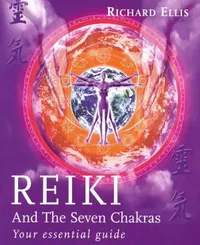


More Free Occult Philosophy Books
View all →