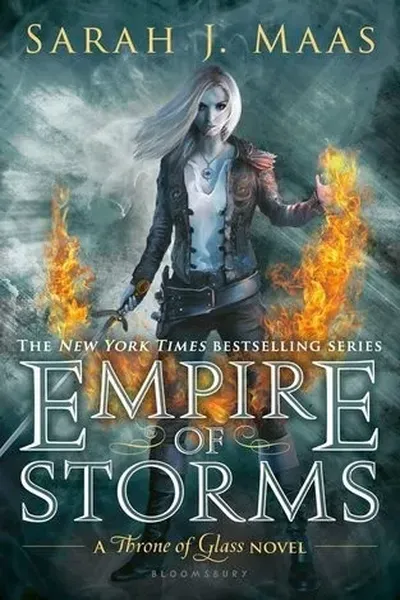
Empire of Storms

 82
82

Empire of Storms
The fifth entry in Maas's sprawling Throne of Glass saga, Empire of Storms, attempts to juggle a dizzying array of plot threads and character perspectives, largely succeeding through sheer narrative momentum. The novel excels in its depiction of large-scale conflict and the devastating personal tolls it exacts, particularly on Celaena. The introduction of new magical elements and the expansion of the world's history provide a compelling backdrop. However, the sheer density of events and the constant shifts between characters can, at times, feel overwhelming, occasionally sacrificing deeper emotional exploration for plot progression. A specific strength lies in the portrayal of the evolving relationship dynamics, particularly between Celaena and Rowan, which feel earned through shared hardship. Conversely, some secondary plotlines feel slightly underdeveloped amidst the grander cosmic struggle. Empire of Storms is a necessary, albeit dense, escalation in the series, pushing characters to their absolute limits.
📝 Description
82
Empire of Storms, published in 2016, is the fifth book in Sarah J. Maas's Throne of Glass series.
This high fantasy novel continues the saga of Celaena Sardothien as she confronts a world on the verge of war. The narrative expands the continent of Erilea, introducing new regions and deepening the understanding of its ancient history and magical foundations. The plot features a large cast of characters and rising stakes as various factions compete for control.
Empire of Storms is best suited for established fans of the series who are invested in the characters' development and ongoing plotlines. Readers who enjoy detailed world-building, political machinations, and complex character arcs will find material to engage with. The book also appeals to those who like epic fantasy narratives that blend romance, action, and explorations of magic and destiny. It is appropriate for young adult readers interested in mature themes and high-stakes fantasy adventures.
Published in 2016, Empire of Storms arrived during a period of significant growth in the young adult fantasy genre. Sarah J. Maas had already built a dedicated readership with her previous works. The novel's release occurred as epic fantasy series, especially those featuring strong female leads and complex magic systems, gained considerable popularity. The success of authors like Maas, alongside others such as Leigh Bardugo and Cassandra Clare, affirmed the market's demand for expansive, character-driven fantasy worlds. The book contributed to the ongoing trend of serialized fantasy narratives that develop over multiple installments.
💡 Why Read This Book?
• Gain insight into the nuanced portrayal of prophecy and free will, as demonstrated by Celaena's struggle against the Valg's influence in the latter half of the book, offering a unique perspective on agency. • Experience the intricate dynamics of inter-species conflict and alliance, exemplified by the fragile pacts formed between humans and the Fae against a common enemy in the lands of Erilea. • Understand the thematic exploration of sacrifice and leadership, as characters like Aelin are forced into morally ambiguous decisions to protect their people, providing a complex look at the burdens of command.
⭐ Reader Reviews
Honest opinions from readers who have explored this book.
❓ Frequently Asked Questions
What is the primary conflict in Empire of Storms?
The primary conflict revolves around the looming invasion by the Valg empire, a demonic force from another realm, and Aelin Galathynius's efforts to unite the disparate kingdoms of Erilea and awaken ancient magic to combat them.
Who are the main characters introduced or significantly developed in Empire of Storms?
While continuing the arcs of established characters like Aelin, Rowan, Dorian, and Manon, Empire of Storms significantly develops their relationships and roles, and introduces or expands upon the influence of characters like Maeve.
What is the significance of the Fae in Empire of Storms?
The Fae, particularly Queen Maeve and Rowan Whitethorn, are central to the plot. Their ancient powers, political machinations, and connection to Aelin's own heritage are crucial for understanding the magical and political landscape of Erilea.
Does Empire of Storms resolve the main plot of the Throne of Glass series?
No, Empire of Storms is the fifth book in a planned eight-book series (later revised to seven main books). It escalates the conflict but does not provide a final resolution, leading into the penultimate installment.
What is the role of magic in Empire of Storms?
Magic is a pervasive force, with characters wielding elemental powers, ancient Fae magic, and dark Valg sorcery. The reawakening of dormant magic and its control are critical plot points for Aelin and her allies.
What is the historical context of the Valg in Maas's world?
The Valg are an ancient, malevolent race from another dimension, known for their parasitic nature and desire to conquer worlds. They have a long, dark history with Erilea, having been repelled centuries before the events of the series.
🔮 Key Themes & Symbolism
Destiny and Free Will
The narrative grapples with the weight of prophecy and the inherent struggle for self-determination. Characters like Aelin are burdened by ancient foretellings and the expectations of their lineage, particularly concerning her Fae heritage and the role of the Fae Queen. Yet, the work constantly questions whether these destinies are immutable or if individual choices can forge new paths, even against overwhelming cosmic forces. The Valg's attempts to control fate highlight the tension between predetermined outcomes and the power of conscious action.
The Nature of Power
Empire of Storms scrutinizes the corrupting influence of power, both political and magical. From the tyrannical ambitions of the Valg to the intricate manipulations of Fae royalty like Maeve, the book illustrates how power can erode morality and distort intentions. It examines the responsibilities that come with wielding significant influence, showcasing characters who struggle to maintain their integrity while making difficult, often brutal, decisions for the perceived greater good of their kingdoms.
Sacrifice and Loyalty
The cost of war and the necessity of sacrifice are central to the book's emotional core. Characters face profound choices that demand the relinquishing of personal desires, safety, or even lives for the sake of their people and allies. Loyalty is tested repeatedly, not just between romantic partners but among friends and political factions. The formation of alliances, often forged in the crucible of shared adversity and mutual respect, underscores the importance of trust in the face of existential threats.
Ancient Magic and Hidden Histories
The reawakening of ancient magic and the uncovering of long-buried histories are critical plot drivers. The lore surrounding the Fae, the origins of magic in Erilea, and the cyclical nature of conflict with entities like the Valg are gradually revealed. This exploration adds depth to the world-building, suggesting that present struggles are traces of past events and that understanding history is key to overcoming current challenges. The discovery of forgotten artifacts and lost knowledge plays a vital role in the unfolding conflict.
💬 Memorable Quotes
Direct passages from the work, attributed to the author.
“Aelin is a fire that can either consume or cleanse.”
— This interpretation captures the dual nature of Aelin's power and personality. She possesses immense destructive potential, capable of wielding fire as a weapon, but also the capacity for purification and renewal, representing her journey towards responsible leadership.
“The Fae are not human. They do not love as humans do.”
— This statement highlights the fundamental differences between Fae and human nature, particularly concerning emotional expression and attachment. It suggests that Fae relationships are governed by different rules, often perceived as colder or more possessive, which impacts interactions with human characters.
“War is a beast that feeds on souls.”
— This metaphorical statement emphasizes the devastating spiritual and psychological toll of prolonged conflict. It suggests that war not only causes physical destruction but also corrupts and diminishes the humanity of those involved, leaving lasting scars on individuals and societies.
“Destiny is not a promise; it is a threat.”
— This reinterpretation of the concept of destiny frames it not as a benevolent guiding force, but as a dangerous, potentially inescapable fate. It underscores the characters' struggle against predetermined paths and the fear associated with fulfilling prophecies, especially those with dire consequences.
“The gods are silent, and mortals must forge their own salvation.”
— This reflects a theme of divine abandonment or indifference, placing the onus of survival and salvation squarely on the shoulders of humanity and other sentient races. It champions self-reliance and the active pursuit of solutions rather than passive waiting for external intervention.
🌙 Esoteric Significance
Tradition
While not strictly adhering to a single esoteric lineage, Empire of Storms draws heavily from archetypal themes found in Western esotericism, particularly Gnosticism and Hermeticism, regarding the nature of reality, hidden knowledge, and the struggle against malevolent forces. The concept of a corrupting influence from another dimension (the Valg) echoes Gnostic ideas of a flawed creator or an Archon-ruled material world. The emphasis on awakening inner power and uncovering ancient truths aligns with Hermetic principles of "as above, so below" and the potential for human apotheosis through gnosis (knowledge).
Symbolism
The recurring motif of fire, particularly associated with Aelin, symbolizes purification, destruction, and rebirth – core concepts in many esoteric traditions. The Fae, representing an ancient, powerful, and often morally ambiguous race, embody primal forces and hidden knowledge, akin to elemental spirits or fallen celestial beings in various mythologies. The concept of the 'blood oath' and inherited power speaks to themes of lineage, karma, and the inescapable nature of one's ancestral ties, a common thread in esoteric thought concerning destiny and spiritual inheritance.
Modern Relevance
Contemporary fantasy literature, particularly within the YA sphere, continues to be influenced by the narrative structures and character archetypes popularized by authors like Maas. Modern practitioners of self-discovery and empowerment narratives often find resonance in Aelin's journey of claiming her heritage and power. The exploration of complex moral landscapes and the intersection of personal will with seemingly predetermined fates are themes frequently revisited in contemporary fiction and personal development literature that touches upon existential questions.
👥 Who Should Read This Book
• Readers fascinated by the interplay of destiny and free will, especially those interested in how ancient prophecies influence character choices against the backdrop of a looming cosmic threat. • Fans of epic fantasy seeking intricate world-building and complex political maneuvering, particularly those drawn to narratives involving warring kingdoms, ancient magical races like the Fae, and large-scale conflicts. • Young adult readers who appreciate character-driven stories with strong female protagonists, exploring themes of sacrifice, loyalty, and the burden of leadership in the face of overwhelming adversity.
📜 Historical Context
Empire of Storms, released in 2016, emerged within a flourishing young adult fantasy market. Sarah J. Maas had already cemented her reputation with the preceding Throne of Glass novels, building a dedicated fanbase hungry for the series' continuation. The early to mid-2010s saw a surge in popularity for epic, character-driven fantasy, with authors like Leigh Bardugo (Shadow and Bone, 2012) and Cassandra Clare (The Mortal Instruments series, ongoing) also achieving significant success. Maas's work contributed to this trend by offering intricate world-building, strong female leads, and a blend of action, romance, and political intrigue. While not facing overt censorship, the series' mature themes and complex plots distinguished it within the YA space. Its publication occurred during a period where long-form, multi-book fantasy series were increasingly viable commercial ventures, demonstrating a significant reader appetite for immersive, ongoing narratives.
📔 Journal Prompts
The weight of Aelin's Fae heritage and its prophetic implications.
Rowan's perspective on loyalty and the cost of duty.
Manon's internal conflict between duty to her coven and personal morality.
The symbolic meaning of the Valg's invasion for Erilea's spiritual state.
Dorian's journey to control his magic amidst political turmoil.
🗂️ Glossary
Valg
A malevolent, parasitic race from another dimension that seeks to conquer and corrupt worlds. They are known for their demonic appearance and their ability to possess hosts, feeding on life force and spreading darkness.
Fae
An ancient, powerful, and long-lived race possessing significant magical abilities. They have a complex history with humans and play an important role in the political and magical range of Erilea, often with their own agendas.
Wyrdmarks
Mystical symbols that hold ancient power, often related to fate, destiny, and magic. They are integral to understanding the magical system and prophecies within the Throne of Glass world.
Erilea
The primary continent and world setting for the Throne of Glass series, composed of various kingdoms with distinct cultures, histories, and political structures.
Aelin Ashryver Galathynius
The protagonist of the series, rightful Queen of Terrasen, and a powerful Fae-blooded individual. Her journey involves reclaiming her throne, mastering her powers, and leading the fight against the Valg.
Crochan Queen
A title held by the leader of the Crochan people, a matriarchal society known for their connection to nature and ancient magic. Aelin is destined to become the Crochan Queen.
The Wyrdkeys
Ancient artifacts of immense power, often associated with the Wyrd and the creation of the world. They are sought after by various factions for their ability to manipulate fate and reality.
🔮 Readers Also Liked
Browse all →









More by Sarah J. Maas
All books →



More Free Magic & Ritual Books
View all →